What our patients are actually telling us at Waverly DermSpa
A look at the words patients choose when they talk about their visits, and why we keep listening to them.
WAVERLY DERMSPA STAFFTurn your social into search
We turn your posts into editorial stories that bring new search traffic to waverlydermspa.com. Three of yours will be on this page.
Book a demo
waverlydermspa Nothing means more to us than hearing about your experience at Waverly DermSpa. We’re so grateful for every patient who trusts us with their skin and takes the time to share such kind words. Thank you for choosing Waverly. 🤍 #WaverlyDermSpa #FortLauderdaleDermatology #FortLauderdaleDermatologist #MedicalDermatology #CosmeticDermatology PatientLove FortLauderdaleMedSpa
A look at the words patients choose when they talk about their visits, and why we keep listening to them.
WAVERLY DERMSPA STAFFHow it works
Same as today. Nothing changes on Instagram.
We turn your post into a full story in your voice within the hour.
One click publishes it to waverlydermspa.com. Nothing goes live without you.
Your stories
Nothing was published anywhere. You decide that. Every word will come from your own posts, your own photos and your own treatments.
Patient Notes · From your post
A look at the words patients choose when they talk about their visits, and why we keep listening to them.
“Nothing means more to us than hearing about your experience at Waverly DermSpa. We’re so grateful for every patient who trusts us with their skin and takes the time to share such kind words. Thank you for choosing Waverly. 🤍 #WaverlyDermSpa #FortLauderdaleDermatology #FortLauderdaleDermatologist #MedicalDermatology #CosmeticDermatology PatientLove FortLauderdaleMedSpa”
Skin Notes · From your post
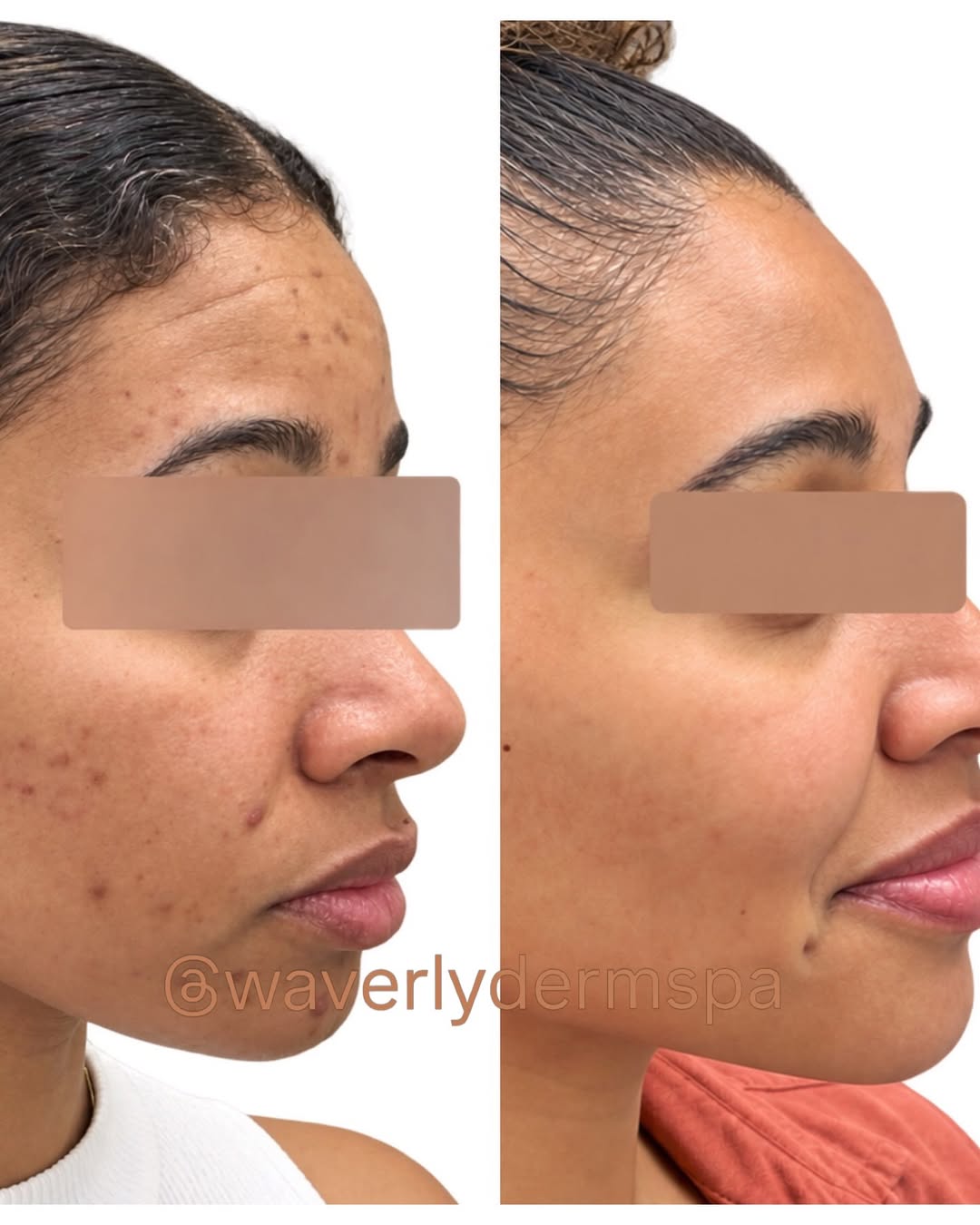
What a real acne treatment timeline looks like when patience is part of the plan.
“Acne won’t disappear overnight, but with the right treatment, a good regimen and some patience, you can achieve clear skin. 💕 #acnetreatment #acnetreatmentfortlauderdale”
Sun Damage · From your post
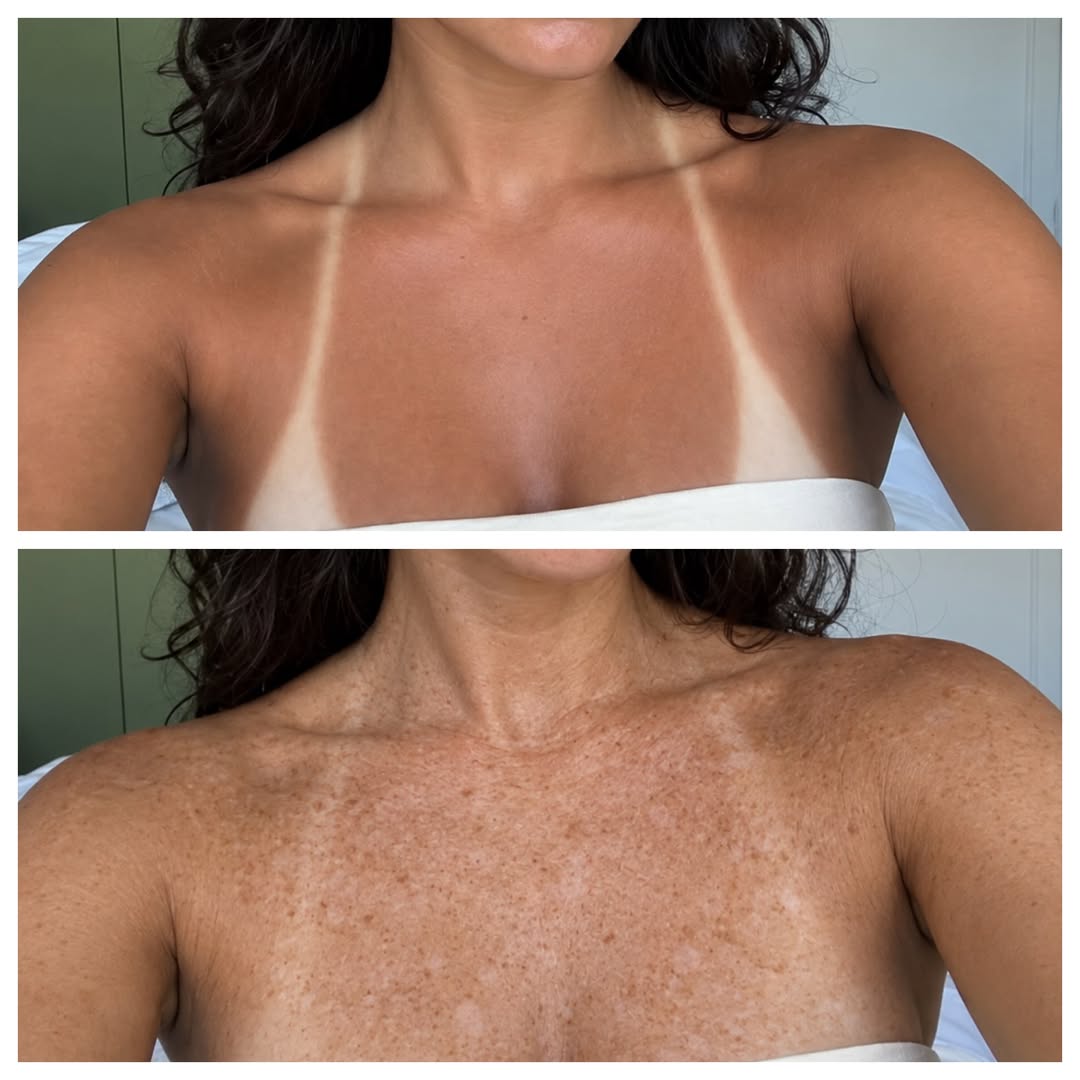
A before and after of sun exposed skin shows why what looks fine at seventeen shows up differently by forty.
“If this is your teen’s décolletage today, here is what it will look like in 20 years. #Tanningtrends #SunDamage #Photoaging #Sunscreen #FortLauderdaleDermatology”
One social post becomes another searchable entry point to Waverly DermSpa.
Our own magazine. Clicks and citations from Google Search Console, as of September 15, 2026.
Draft story for waverlydermspa.com · Patient Notes
A look at the words patients choose when they talk about their visits, and why we keep listening to them.
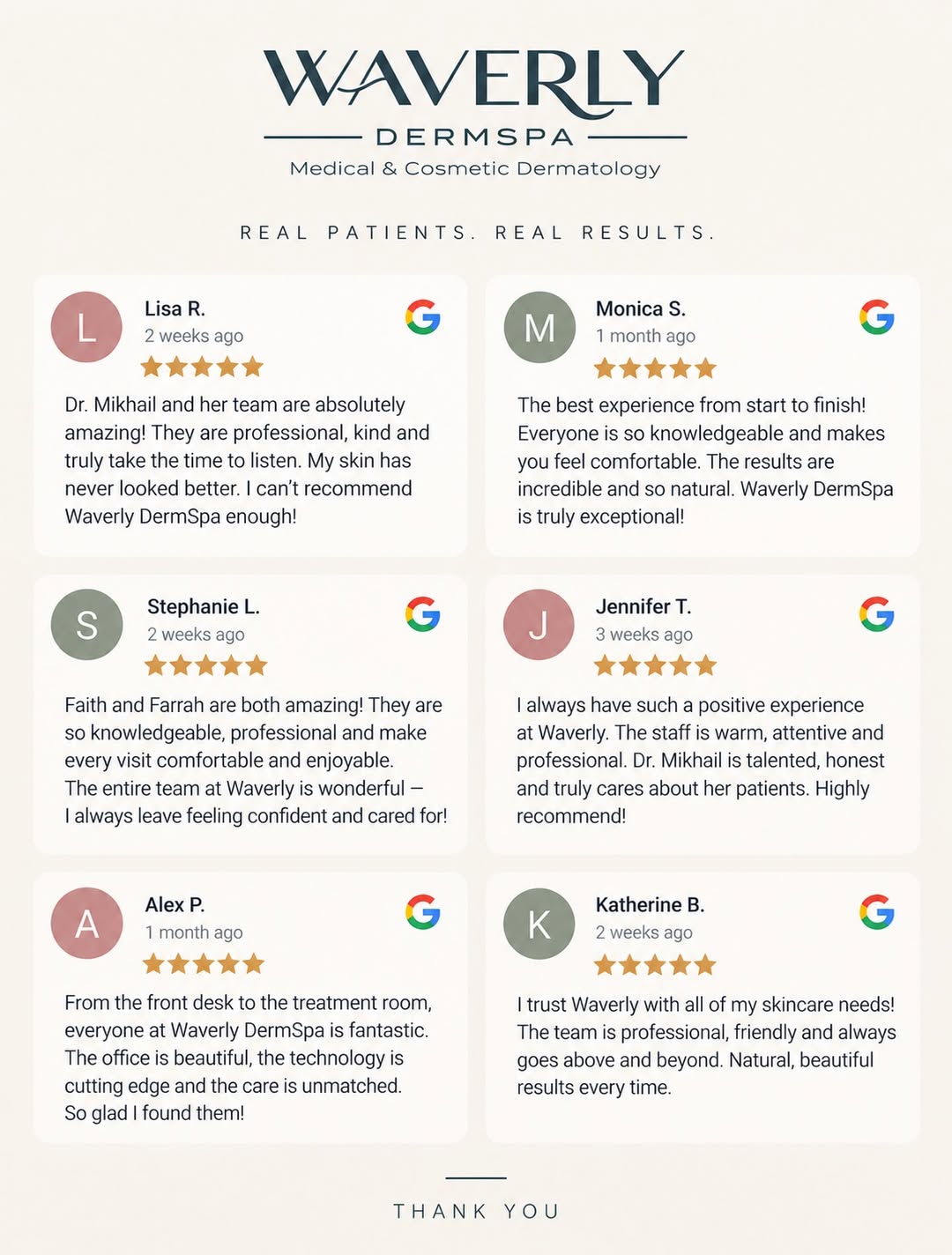
We read every review that comes in, and we do not read them the way a business reads feedback. We read them the way we read a patient's chart, looking for the specific detail that tells us something worked. A phrase repeated across different names and different weeks tends to point at something real happening in the treatment room, not just a polite thank you.
This time, the pattern is about how people feel while they are here. Words like comfortable, warm, and attentive show up again and again, next to names like Dr. Mikhail, Faith, and Farrah. That is not a coincidence. It tells us patients are noticing the tone of a visit as much as the outcome, and that both are part of the same experience for them.
Skin care is rarely a solo effort, and the notes we receive reflect that. Patients mention the front desk, the treatment room, and the people guiding them through each step, not just the provider who performs the procedure. One patient wrote that everyone at Waverly DermSpa is fantastic, from the moment they walk in to the moment treatment begins.
That kind of comment matters to us because it means the experience feels consistent, not dependent on one person having a good day. When a patient credits the entire team at Waverly as wonderful, we take it as confirmation that the coordination behind the scenes, scheduling, listening, explaining, is landing the way we intend it to.
Another word patients keep choosing is natural. It appears next to results, next to skin, next to the phrase truly cares about her patients. We hear this as a reflection of the philosophy behind the work: results that hold up under normal light, in normal conversation, without announcing themselves. That is a harder thing to achieve than a dramatic before and after, and patients seem to notice the difference.
Trust is the other word that surfaces often, sometimes directly, as in one note that reads simply, I trust Waverly with all of my skincare needs. Trust is built slowly, through visits where a patient feels heard rather than sold to, and where the technology and the care behind it are explained rather than just applied.
We do not treat these comments as a highlight reel. We treat them as a map of what to protect as we grow: the listening, the warmth at the front desk, the honesty patients mention when they talk about Dr. Mikhail. Every kind word carries information about what a patient needed that day and whether they found it here in Fort Lauderdale.
So when we say thank you for choosing Waverly, we mean it as more than a courtesy. It is an acknowledgment that someone trusted us with something personal and took the time afterward to tell us how it went. That exchange, patient to practice, is the one we are most interested in getting right, visit after visit.
Draft story for waverlydermspa.com · Skin Notes
What a real acne treatment timeline looks like when patience is part of the plan.
Clear skin is one of the most requested outcomes we hear in consultations, and it is also one of the most misunderstood. People come in expecting a fast fix, something closer to a switch flipping than a process unfolding. The truth is simpler and less exciting: acne does not disappear overnight. It responds to consistency, to the right treatment matched to the right skin, and to the patience to let that treatment actually work.
That framing matters because it changes how someone approaches their own skin. Instead of judging a treatment plan after one week, we ask clients to judge it after a full cycle of skin renewal, which naturally takes longer than anyone wants. Expecting instant results is often what causes people to quit right before a regimen starts showing its effect, switching products or treatments before either has had a fair chance.
Side by side, the difference is not subtle, but it is not sudden either. One profile shows visible texture, deeper toned patches, and active breakouts along the jaw and cheek. The other shows calmer, more even skin with less visible discoloration and a smoother surface overall. That kind of change reflects weeks of steady care, not a single appointment, and it is the realistic version of transformation that we actually see in practice.
A regimen only works if it is followed the way it is designed to be followed. That means using the right products in the right order, protecting the skin while it heals, and not overloading it with extra actives out of impatience. We spend real time on this part of the conversation because the treatment itself is only half the equation. The other half is what happens at home, every day, between visits.
Patience is not passive. It is an active decision to let a regimen finish what it started instead of interrupting it. Skin that is actively clearing can look uneven or reactive in the middle of the process, which is exactly the point where people are most tempted to change course. Sticking with a plan through that stage is usually what separates a temporary improvement from a lasting one.
This is also why we build treatment plans around a person's specific skin rather than a generic acne protocol. What clears one person's breakouts in a certain number of weeks may need a different pace or a different combination for someone else. Skin tone, skin type, and the pattern of the acne itself all shape how quickly and how visibly a regimen takes hold.
Before anyone starts a plan with us, we talk through what the timeline realistically looks like, including the stretch in the middle where things feel slow. That conversation is not meant to discourage anyone. It is meant to keep them in the process long enough to see it through, because the biggest variable in clearing acne is rarely the treatment itself. It is whether someone stays with it.
Clear skin is achievable, and the two profiles here are proof of that. But the more useful takeaway is not the result, it is the mindset behind it: a plan followed with consistency, adjusted with care, and given the time it actually needs. That is the difference between chasing clear skin and eventually just having it.
Draft story for waverlydermspa.com · Sun Damage
A before and after of sun exposed skin shows why what looks fine at seventeen shows up differently by forty.
The two images sit stacked on top of each other for a reason. On top, sharp tan lines cut across a collarbone in clean triangles, the kind of tan line that used to feel like proof of a good summer. Underneath, the same stretch of skin decades later, but without the lines. What is left instead is an even scatter of brown spots across the chest and shoulders.
That contrast is the whole point. A crisp tan line looks harmless at the time. It fades in a few weeks, the skin evens back out, and there is no visible reminder that anything happened underneath the surface. But sun exposure does not actually disappear when the color does. It accumulates in the deeper layers of skin, quietly, for years before it becomes visible again.
What eventually surfaces is pigmentation that spreads rather than lines that fade. The second image shows freckling and sun spots distributed fairly evenly across the chest, shoulders, and upper neck, the classic pattern of cumulative sun damage rather than a single burn. It is not dramatic or alarming on its own. It simply reads as skin that has spent a lot of years in direct sun.
The décolletage is one of the areas we see this on most often, and one of the areas people protect the least. It gets sunscreen as an afterthought if at all, it is exposed constantly in swimsuits and sundresses, and the skin there is thinner than on the face, which means damage tends to show earlier and more visibly than people expect.
We framed this specifically around a teenager's décolletage today versus what that same skin looks like twenty years out. That framing matters because sun damage in your teens and twenties is the damage you are still dealing with decades later. It is not a separate issue that starts later in life. It is the same exposure, just given time to become visible.
None of this requires giving up the sun entirely or panicking over a tan line. It requires treating sunscreen on the chest and shoulders with the same seriousness given to the face, reapplying it the same way, and not assuming that skin which tans easily is skin that is protected. Tanning is still a sign that damage is occurring, even when it looks good in the moment.
In the spa, this is one of the areas we get asked about most as people move into their thirties and forties, long after the tan lines themselves are a memory. The pigmentation that shows up on the chest is treatable, but treating it is always a longer conversation than preventing it would have been. Prevention is simply cheaper, in time and in effort, than correction.
So the pairing works less as a warning and more as a timeline. What is on top is temporary and cosmetic. What is on the bottom is what accumulates underneath it, unseen, for twenty years. The décolletage does not get a break from the sun just because it is easy to forget about, and skin there keeps a longer memory than most people assume.
Keep reading