Why fall is the season to actually treat hyperpigmentation
Before another in office procedure, we start with the skincare routine that determines how much of a result you will see and how long it lasts.
VIDA LEE MD STAFFTurn your social into search
We turn your posts into editorial stories that bring new search traffic to vidaleemd.com. Three of yours will be on this page.
Book a demo
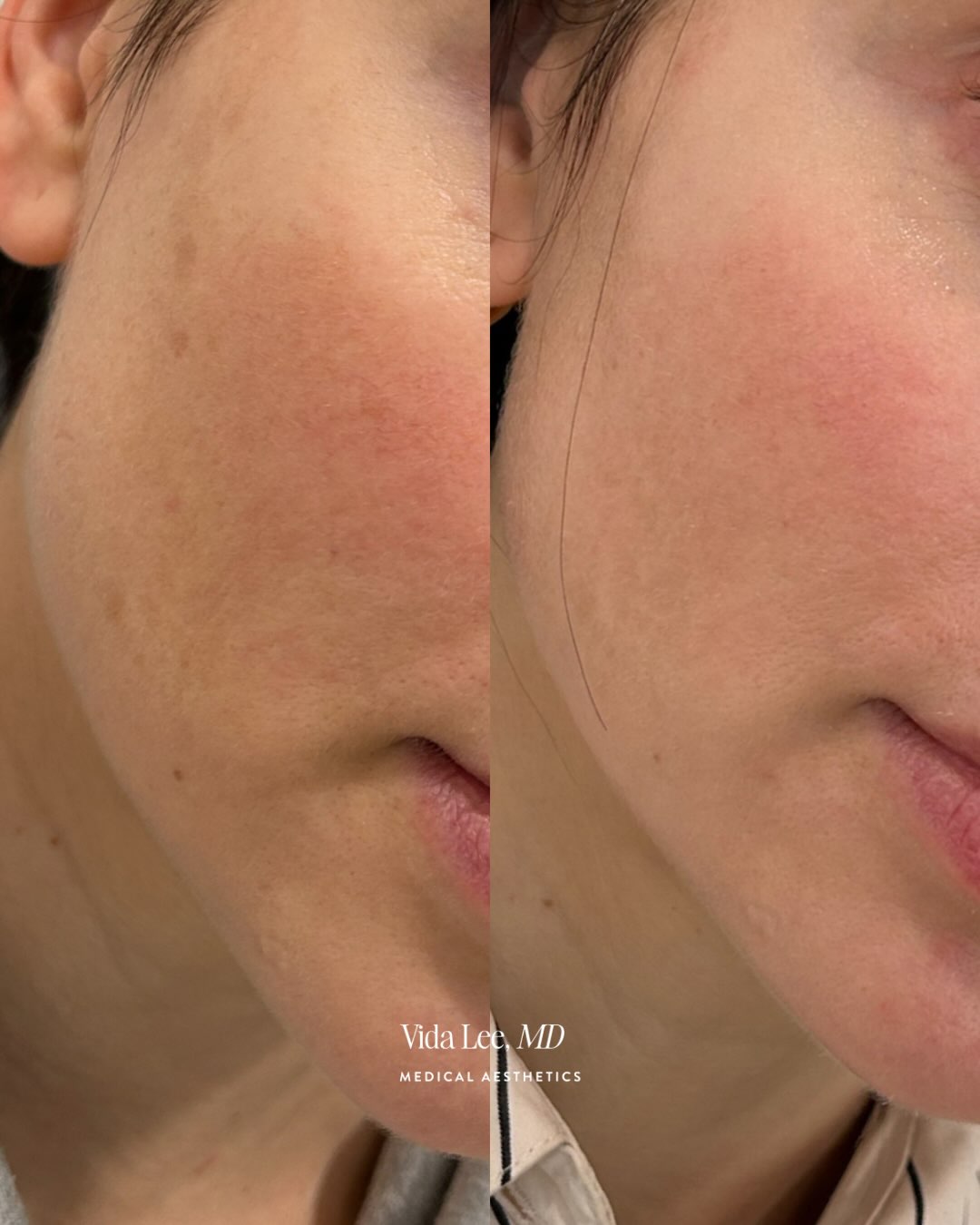
vidaleemd It’s time to start working on your summer hyperpigmentation ☀️ Fall is a great time for treatments that target hyperpigmentation. From chemical peels, to Sylfirmx, to BBL and lasers. there are many options. Whatever in office procedures you decide to do, the skincare routine you use at home will be the foundation of the results you are able to achieve and will determine how long lasting your results are. I love using the @zoskinhealth skincare protocols for pigmentation. they are truly unparalleled. The results you see in these photos were achieved with ZO skincare alone. Pro tip. start with the skincare regimen first for several weeks, instead of a deeper treatment, and you’ll see so much more of a result from your treatments. #hyperpigmentation #zoskinhealth #melasma #melasmatreatment
Before another in office procedure, we start with the skincare routine that determines how much of a result you will see and how long it lasts.
VIDA LEE MD STAFFHow it works
Same as today. Nothing changes on Instagram.
We turn your post into a full story in your voice within the hour.
One click publishes it to vidaleemd.com. Nothing goes live without you.
Your stories
Nothing was published anywhere. You decide that. Every word will come from your own posts, your own photos and your own treatments.
Skin Notes · From your post
Before another in office procedure, we start with the skincare routine that determines how much of a result you will see and how long it lasts.
“It’s time to start working on your summer hyperpigmentation ☀️ Fall is a great time for treatments that target hyperpigmentation. From chemical peels, to Sylfirmx, to BBL and lasers. there are many options. Whatever in office procedures you decide to do, the skincare routine you use at home will be the foundation of the results you are able to achieve and will determine how long lasting your results are. I love using the @zoskinhealth skincare protocols for pigmentation. they are truly unparalleled. The results you see in these photos were achieved with ZO skincare alone. Pro tip. start with the skincare regimen first for several weeks, instead of a deeper treatment, and you’ll see so much more of a result from your treatments. #hyperpigmentation #zoskinhealth #melasma #melasmatreatment”
Skin Strategy · From your post
A higher dose is not the only lever. Building healthier skin underneath your Botox changes how those results age.
“THIS is how you get your Botox to last longer. Sure. a higher Botox dosage will make it last longer. But, my preferred way to make your Botox results last longer is to boost your skin up so that it is inherently smoother, firmer, and healthier. That way, as your Botox starts to wear off, you’re not relying on Botox alone to keep those lines looking smooth. A well designed medical grade skincare regimen can transform the skin and is one of the most underrated, yet highest yield things you can do for your skin. Add in collagen stimulating treatments like chemical peels or Microneedling and now you have a well rounded routine for your best skin. #glowtox #botoxnyc #nycskincare #medspanyc”

Fall Skincare · From your post
Two beach chairs and an umbrella mark the end of summer, and the beginning of our busiest season for skin.
“Things I’m looking forward to this fall with my patients. Upping the retinols. Microneedling with exosomes. Chemical peels. Hydroquinone. More time to lay low after filler or Sculptra What are you looking forward to most this fall? #fallskincare #chemicalpeelseason #microneedling #facialbalancing”
One social post becomes another searchable entry point to Vida Lee Md.
Our own magazine. Clicks and citations from Google Search Console, as of September 15, 2026.
Draft story for vidaleemd.com · Skin Notes
Before another in office procedure, we start with the skincare routine that determines how much of a result you will see and how long it lasts.
Summer leaves a record on the skin long after the tan fades. Sun exposure over months shows up as uneven tone, deeper patches along the cheeks, and a general loss of clarity that becomes obvious once the weather cools. Fall is when we start hearing about it most, and it is also the best window to begin correcting it, since lower sun intensity means less risk of making pigmentation worse mid treatment.
There is no shortage of ways to treat hyperpigmentation. Chemical peels, Sylfirmx, BBL, and various lasers all have a place depending on the depth and pattern of the discoloration. But the in office procedure is only one part of the equation. What happens at home between visits is what decides whether the improvement holds or fades back within a few months.
Our pro tip, and the one we repeat most often, is to start with a dedicated skincare regimen for several weeks before booking a deeper treatment. Building that foundation first means the skin is better prepared to respond, and it means the in office work is amplifying progress that has already begun rather than trying to create it from nothing on its own.
The results pictured here were achieved with skincare alone, no procedure involved. Comparing the two angles, the redness across the cheek is noticeably calmer and the overall tone reads more even, with less contrast between the flushed areas and the surrounding skin. That is a meaningful result to get from a home routine, and it is exactly why we lead with skincare before anything else.
We use ZO Skin Health protocols for pigmentation specifically because the formulations are built around consistent, layered use rather than a single active ingredient doing all the work. The regimen addresses tone, texture, and barrier support together, which matters for melasma and sun related discoloration, since both tend to respond better to sustained treatment than to isolated, occasional intervention.
If summer left visible marks, fall is the time to act, not spring. Committing to a skincare regimen now, well ahead of any peel or laser session, gives the skin weeks to respond and gives us a clearer picture of what still needs correcting when a deeper treatment is actually appropriate. Patience at this stage tends to shorten the path to a lasting result.
Melasma and hyperpigmentation are stubborn precisely because they respond to inconsistency by relapsing. A routine followed loosely for a week here and there will not hold up against sun exposure, hormonal shifts, or heat. The goal this fall is simple: get the daily regimen right first, then layer in procedures as reinforcement rather than as the entire strategy.
Draft story for vidaleemd.com · Skin Strategy
A higher dose is not the only lever. Building healthier skin underneath your Botox changes how those results age.
A higher Botox dosage will make it last longer. That much is true, and it is the easiest lever to reach for. But dosage alone is not the strategy we lean on most with patients who want their results to hold. The more durable approach starts underneath the injection, with the condition of the skin itself, long before a needle is involved.
The idea is simple. If your skin is inherently smoother, firmer, and healthier, you are not depending on Botox alone to keep lines looking soft as it wears off. Botox relaxes muscle movement, but it does nothing to improve the quality of the skin sitting on top of it. That work has to come from somewhere else in the routine.
A well designed medical grade skincare regimen is one of the most underrated, highest yield things you can do for your skin. It is not the flashiest part of a treatment plan, and it will not show up as a single dramatic before and after. Its value shows up gradually, in how skin behaves and holds up over weeks and months, including in between appointments.
That is exactly why it pairs so well with Botox. Medical grade skincare is not competing with injectables, it is reinforcing them. When the skin barrier is stronger and better supported day to day, the smoothing effect of Botox is not fighting against dehydrated, thin, or reactive skin underneath. The two are working the same direction instead of one compensating for the other.
From there, the next layer is collagen stimulating treatment. Chemical peels and microneedling both work by prompting the skin to rebuild collagen over time, which is a different mechanism entirely from relaxing muscle movement. Together with a solid daily regimen, they round out a routine that is addressing skin quality, texture, and firmness rather than just the appearance of movement.
That is the well rounded version of the routine we point patients toward: daily skincare doing the maintenance work, periodic treatments like peels or microneedling doing the rebuilding work, and Botox doing what it does best, which is softening the lines caused by repeated muscle movement. None of the three pieces is designed to carry the whole result alone.
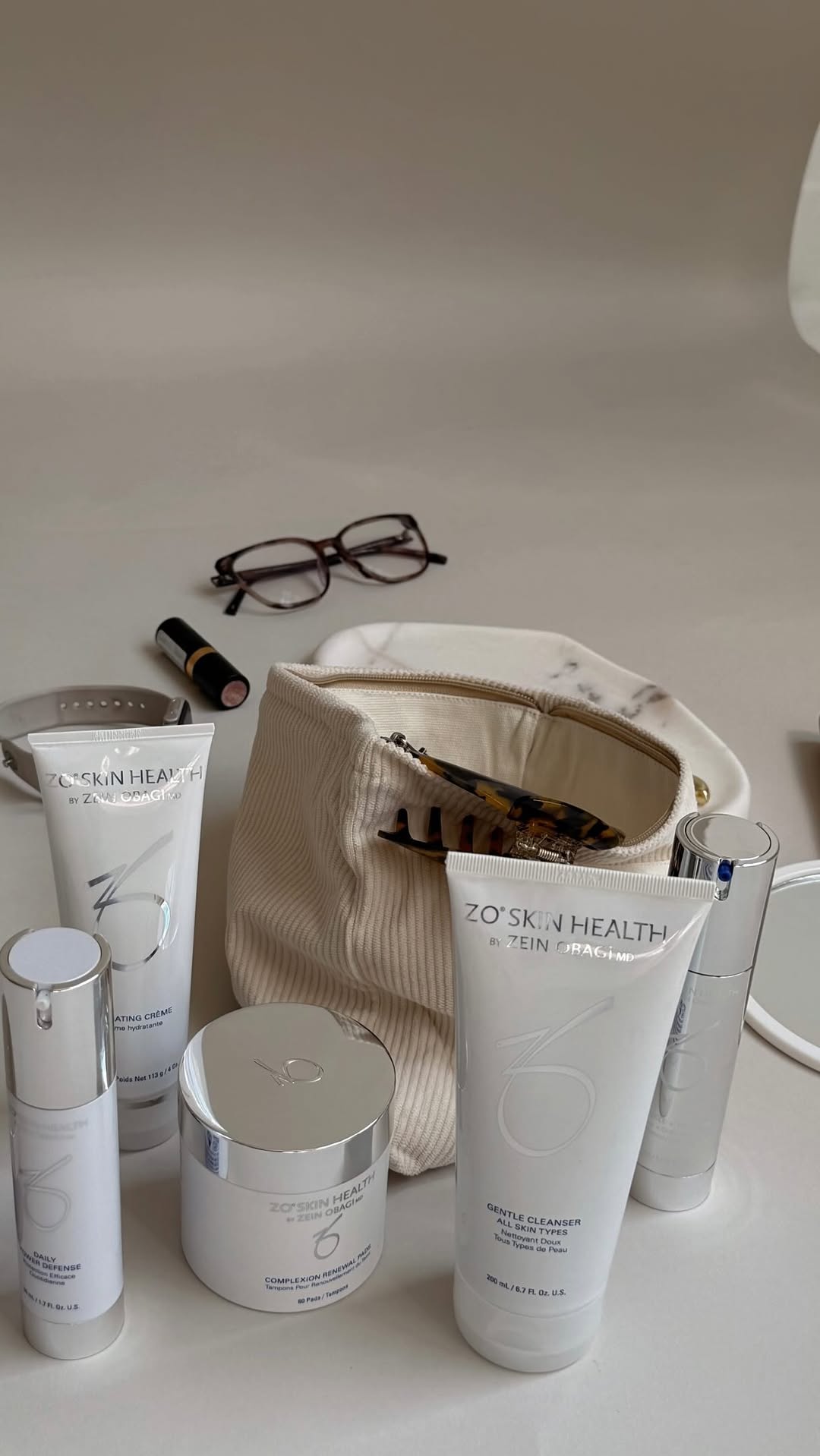
In practice, this often looks like a small, consistent product lineup rather than a long list. A gentle cleanser, a targeted serum, a hydrating cream, and a treatment step used regularly build the kind of baseline skin health that Botox results sit on top of. It is less about adding more products and more about using the right ones consistently.
None of this replaces Botox, and none of it is meant to. It changes what Botox is working with. Skin that is already smoother and firmer gives injectable results more to hold onto as they gradually wear off, which is the real reason a thoughtful skincare and treatment routine belongs in the same conversation as dosage.
Draft story for vidaleemd.com · Fall Skincare
Two beach chairs and an umbrella mark the end of summer, and the beginning of our busiest season for skin.
The umbrella comes down, the chairs get packed up, and something shifts. Summer is the season of protection: sunscreen, hats, staying out of the worst of the light. Fall is the season of correction. Once the beach days taper off, we start seeing patients ready to actually treat what the sun did, rather than just guard against more of it.
That shift shapes what we plan for the months ahead. Retinols go back into rotation, and we start increasing strength for patients who eased off over the summer. Sun exposure and retinol use do not mix well, so most people naturally pull back between June and August. Fall is when we can push that percentage back up without the risk of irritation meeting sunburn.
Chemical peels are the clearest example of why timing matters. A peel removes a layer of skin and leaves it more reactive to UV light for a period afterward. Doing that work in July is asking for trouble. Doing it in October, with shorter days and less intense sun, gives the skin room to heal properly before it faces real exposure again.
Hydroquinone works the same way. It is one of the most effective tools we have for fading discoluration, but it needs consistent, careful sun avoidance to actually work and to avoid making pigment worse. Patients who start it in fall have months of lower intensity sun ahead of them, which makes it far easier to stay compliant and actually see the fading it is meant to produce.
Microneedling with exosomes fits the same logic. The treatment creates controlled micro injury to prompt the skin to rebuild collagen, and exosomes are added to support that repair process. Like peels, it leaves skin temporarily more sensitive. Cooler months mean patients can go about their routines without worrying as much about sweat, humidity, or direct sun interfering with recovery.
Filler and Sculptra both benefit from a quieter stretch afterward. Swelling needs time to resolve, and Sculptra in particular works gradually, stimulating collagen production over weeks rather than delivering an immediate result. Summer schedules full of travel, pool days, and events do not leave much room for that. Fall tends to open up more of that low key time between appointments and normal life.
None of this is about doing more for the sake of it. It is about sequencing treatments so each one has the conditions it needs to actually work. Retinols need consistency, peels need recovery time, hydroquinone needs sun avoidance, and injectables need patience. Fall happens to line up with most of those requirements at once, which is part of why we look forward to it every year.
So the question we are asking our patients right now is a practical one: what does your skin actually need heading into the next few months, and what has this past summer left behind that is worth addressing? That answer looks different for everyone, but fall is consistently the season where the plan can finally match the treatment.
Keep reading