Union Pasadena brings back a four course dinner made for two
A limited run Monday and Tuesday menu at Union Pasadena pairs bread, an appetizer, pasta, and dessert for one shared price.
UNION STAFFTurn your social into search
We turn your posts into editorial stories that bring new search traffic to unionpasadena.com. Three of yours will be on this page.
Book a demo
unionpasadena Dinner for two. For a limited time, join us Mondays + Tuesdays for a four course dinner made for sharing. Bread, appetizer, pasta + dessert. Four courses for two · $110. As the heat fades and fall settles in, it’s a good time to slow down, grab a table, and spend the evening over dinner. inside or out. Mondays + Tuesdays $110 for two Limited time at Union Pasadena.
A limited run Monday and Tuesday menu at Union Pasadena pairs bread, an appetizer, pasta, and dessert for one shared price.
UNION STAFFHow it works
Same as today. Nothing changes on Instagram.
We turn your post into a full story in your voice within the hour.
One click publishes it to unionpasadena.com. Nothing goes live without you.
Your stories
Nothing was published anywhere. You decide that. Every word will come from your own posts, your own photos and your own menu.
Dinner Menu · From your post
A limited run Monday and Tuesday menu at Union Pasadena pairs bread, an appetizer, pasta, and dessert for one shared price.
“Dinner for two. For a limited time, join us Mondays + Tuesdays for a four course dinner made for sharing. Bread, appetizer, pasta + dessert. Four courses for two · $110. As the heat fades and fall settles in, it’s a good time to slow down, grab a table, and spend the evening over dinner. inside or out. Mondays + Tuesdays $110 for two Limited time at Union Pasadena.”
Wine Notes · From your post
A small piece of advice from behind the bar at Union turns into the whole point of the evening.
“Our Head Chef said it best. consider this your sign to order the bottle. 🍷 A good meal deserves a good pour. and maybe one more for the table. See you at Union tonight.”
Dining Room · From your post
A look at the unhurried dining room in Pasadena where the table and the bottle do most of the talking.
“A table, a bottle, and nowhere else you need to be. Spend the evening with us at Union.”
One social post becomes another searchable entry point to Union.
Our own magazine. Clicks and citations from Google Search Console, as of September 15, 2026.
Draft story for unionpasadena.com · Dinner Menu
A limited run Monday and Tuesday menu at Union Pasadena pairs bread, an appetizer, pasta, and dessert for one shared price.
Some meals work better when nobody is ordering for themselves. That is the idea behind the new four course dinner at Union Pasadena, a menu built specifically for two people to share across a full evening rather than split a single entree down the middle. Bread starts things off, followed by an appetizer, a pasta course, and dessert to close, all for one hundred ten dollars for the table.
The timing matters here. Mondays and Tuesdays tend to be the nights people cook at home or skip dinner out altogether, which makes them the right nights for a menu that asks for a little more time at the table. This one is only available those two nights, and only for a limited stretch, which turns what could be a routine weeknight into something worth planning around.
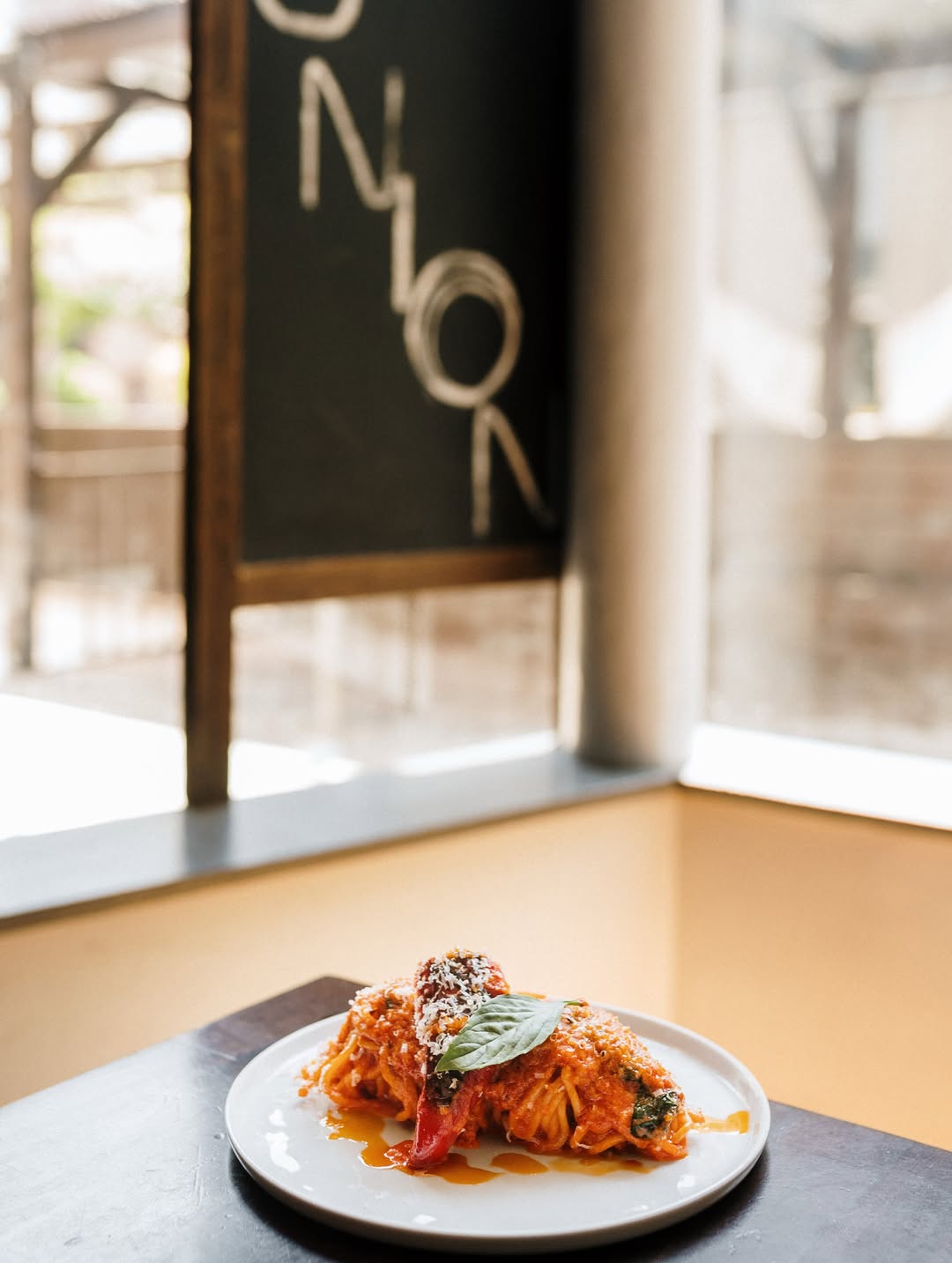
The pasta pictured on the pass gives a sense of what a shared course looks like in practice. It arrives on one plate, sauced in red, topped with shaved cheese and a whole basil leaf laid across the top rather than torn into pieces. It is served family style, not portioned onto two separate plates, which keeps the meal feeling like something two people are actually doing together.
There is a rhythm to a four course dinner that a single entree does not offer. Bread arrives first and gives the table something to do while settling in. The appetizer follows, then the pasta course takes center stage, and dessert closes things out once the pace has already slowed. Each course gives the evening another checkpoint, another reason to stay rather than rush through a meal.
We built this dinner around the shift in weather, noting that as the heat fades and fall settles in, it is a good time to slow down and spend an evening over dinner. That framing matters more than it might seem. A shared four course meal is not just a value built around price, it is a format that only really works when there is time to sit through it fully.
Seating is available inside or outside, which matters in Pasadena as the evenings start to cool without turning cold. Outdoor seating in early fall carries a different feel than it does in July, less about escaping the heat and more about being comfortable enough to stay through four courses without wanting to move things indoors partway through the meal.
The details are straightforward. Four courses for two people costs one hundred ten dollars, available exclusively on Mondays and Tuesdays for a limited time at Union Pasadena. The format leaves little to figure out on arrival: bread, an appetizer, pasta, and dessert, already built around sharing rather than requiring a table to coordinate a shared order from a full menu on their own.
A dinner like this rewards showing up without much of an agenda. There is no need to debate what to order or whether to split something, since the format already answers that question before the table sits down. What is left is simply the evening itself, four courses in, on a night of the week that does not usually ask for that kind of attention from anyone.
Draft story for unionpasadena.com · Wine Notes
A small piece of advice from behind the bar at Union turns into the whole point of the evening.
There is a moment at the table, usually somewhere between the appetizer and the entree, when the question comes up: glass or bottle. Our head chef has an answer for that, and he does not hesitate to give it. Order the bottle. It is not a rule written anywhere on the menu, but it is the kind of advice that comes from actually watching how people eat and drink here night after night.
The logic is simple enough that it barely needs explaining, but it is worth saying out loud anyway. A good meal deserves a good pour, and one glass rarely does the whole evening justice. A bottle changes the rhythm of dinner. It gives the table something to return to between courses, something that keeps pace with the food instead of running out halfway through the main.
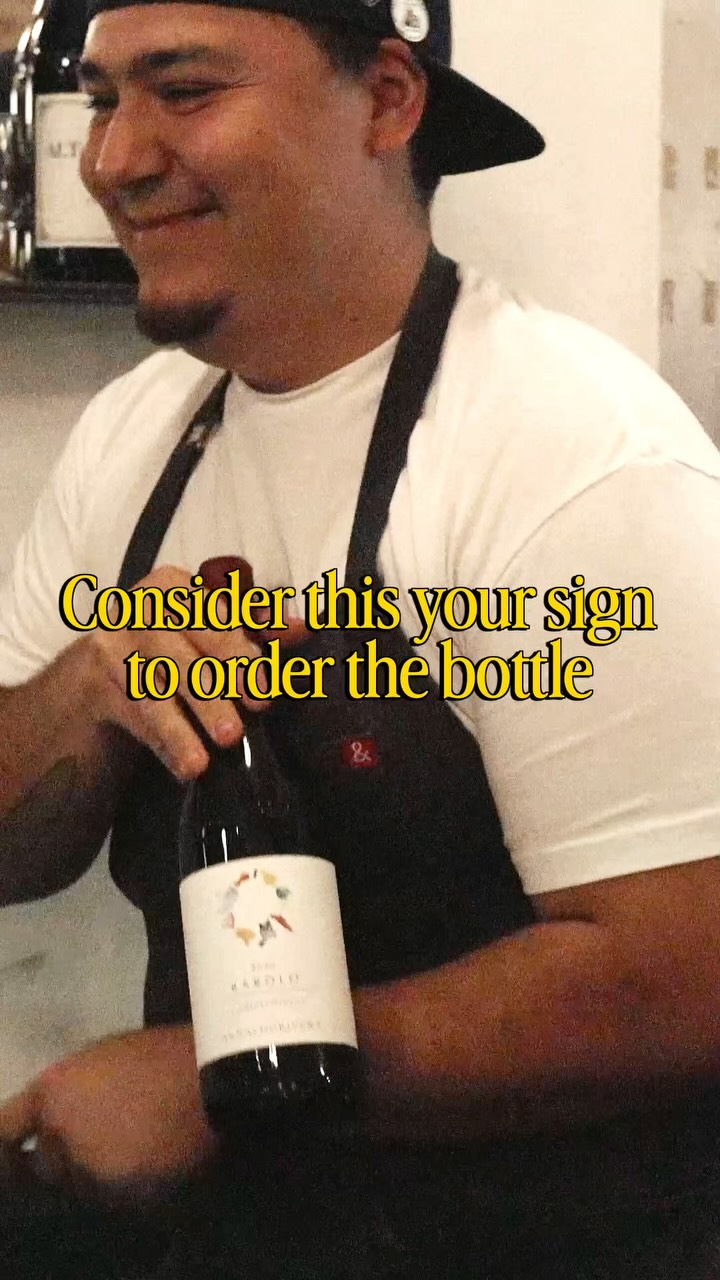
Behind the bar, a bottle of Barolo gets uncorked and held up for a second before it is poured, the kind of small pause that says this one is worth paying attention to. Barolo is not a wine that wants to be rushed through a single glass. It opens slowly, changes as it breathes, and rewards the table that sticks with it course after course rather than switching things up.
That is really the heart of the advice. A glass is a decision made once. A bottle is a decision that keeps paying off, poured again as the food shifts from something lighter to something heavier, tracking the meal instead of sitting apart from it. It also means nobody has to flag down the table for a second round when the first glass runs dry too early.
There is also the matter of the table itself, not just the individual glass in front of one person. A bottle in the middle means everyone gets poured from the same source, at the same pace, sharing in whatever that particular wine is doing over the course of the night. It turns a private choice into a shared one, which changes the feeling of the meal more than people expect.
And if one bottle finishes before the night does, that is not really a problem so much as an invitation. Maybe one more for the table, as the suggestion goes, especially if the food is still coming and the conversation has not slowed down. There is no obligation in it, just an acknowledgment that a great pour deserves a sequel when the evening allows for one.
None of this requires much planning ahead. It is really just a small shift in how the question gets answered when the server or the bartender asks what everyone is drinking. Consider the bottle first, the glass second. It changes very little about the mechanics of dinner and quite a lot about the feeling of it, which is the whole point of asking in the first place.
We will be pouring tonight the same way we do most nights, one bottle at a time, watching how it moves through a table over the course of a meal. If that sounds like the kind of evening worth having, we will see you at Union tonight, glass ready, bottle already in mind.
Draft story for unionpasadena.com · Dining Room
A look at the unhurried dining room in Pasadena where the table and the bottle do most of the talking.
A table, a bottle, and nowhere else you need to be. That is the whole premise of an evening at Union, and it is a simple enough idea that it is easy to overlook how rare it actually is. No countdown, no pressure to turn the table, just a room built for people to sit down and stay a while.
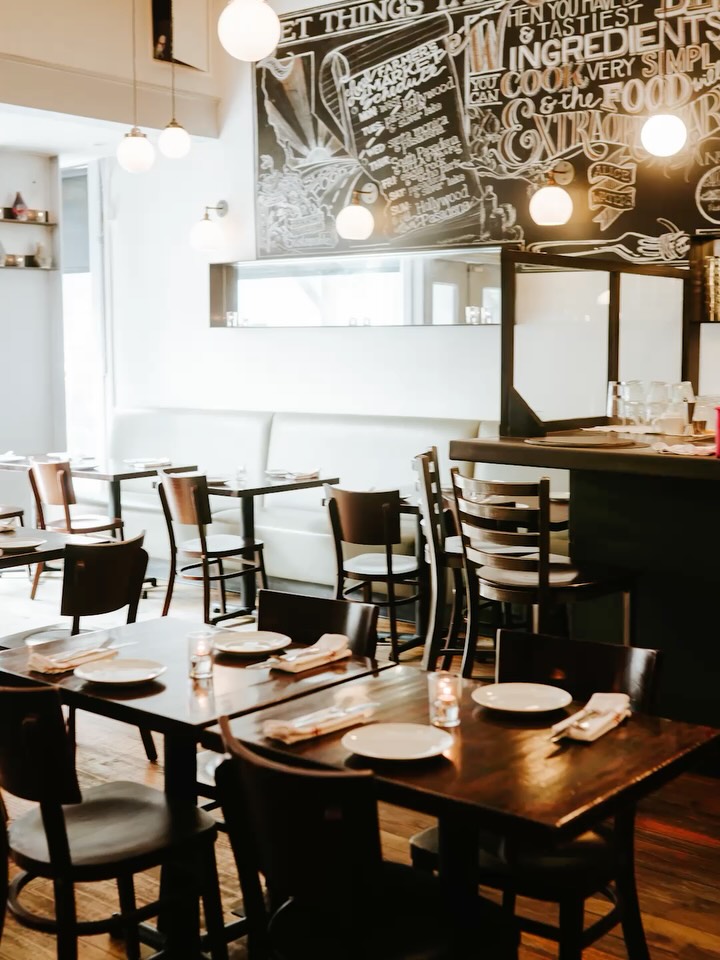
Look at the dining room and you notice how little is fighting for attention. Wooden tables sit close but not cramped, each one set with white plates, folded napkins, and a low candle in glass. The lighting comes from a run of round globe bulbs overhead, warm rather than bright, the kind that makes a Tuesday feel a little more considered.
Behind the tables, a wraparound chalkboard runs the length of the wall, hand lettered with phrases about ingredients and cooking things simply. It is not decoration so much as a mission statement, written where every seat can see it. The words are worn into the space the same way the wood floors are, part of the room rather than added to it.
The bar sits at the back of the room, glassware lined up and ready, a quiet counterpoint to the softer seating up front. A cushioned banquette runs along one wall, the kind of seat that suggests a long dinner rather than a quick one. Mismatched chair styles, some wood, some black metal, keep the room from feeling too matched or too formal.
None of it reads as staged for a single moment. The tables are close enough to hear the room breathe but far enough apart that a conversation stays yours. It is a dining room designed around the idea that dinner is not a transaction, it is a stretch of time you get to spend exactly how you want to spend it.
A bottle on the table changes the rhythm of a night. It slows the ordering down, gives people a reason to linger between courses, and turns dinner into something closer to a visit than a meal. Union leans into that pace rather than around it, building a room where a second glass does not feel like it is holding anyone up.
Spend the evening with us at Union is not a pitch for a special occasion. It reads more like an open door on an ordinary night, the kind where nothing in particular is being celebrated except having somewhere unhurried to sit. The chalkboard, the candlelight, the close set tables all point toward the same idea: come as you are, and stay as long as you like.
Keep reading