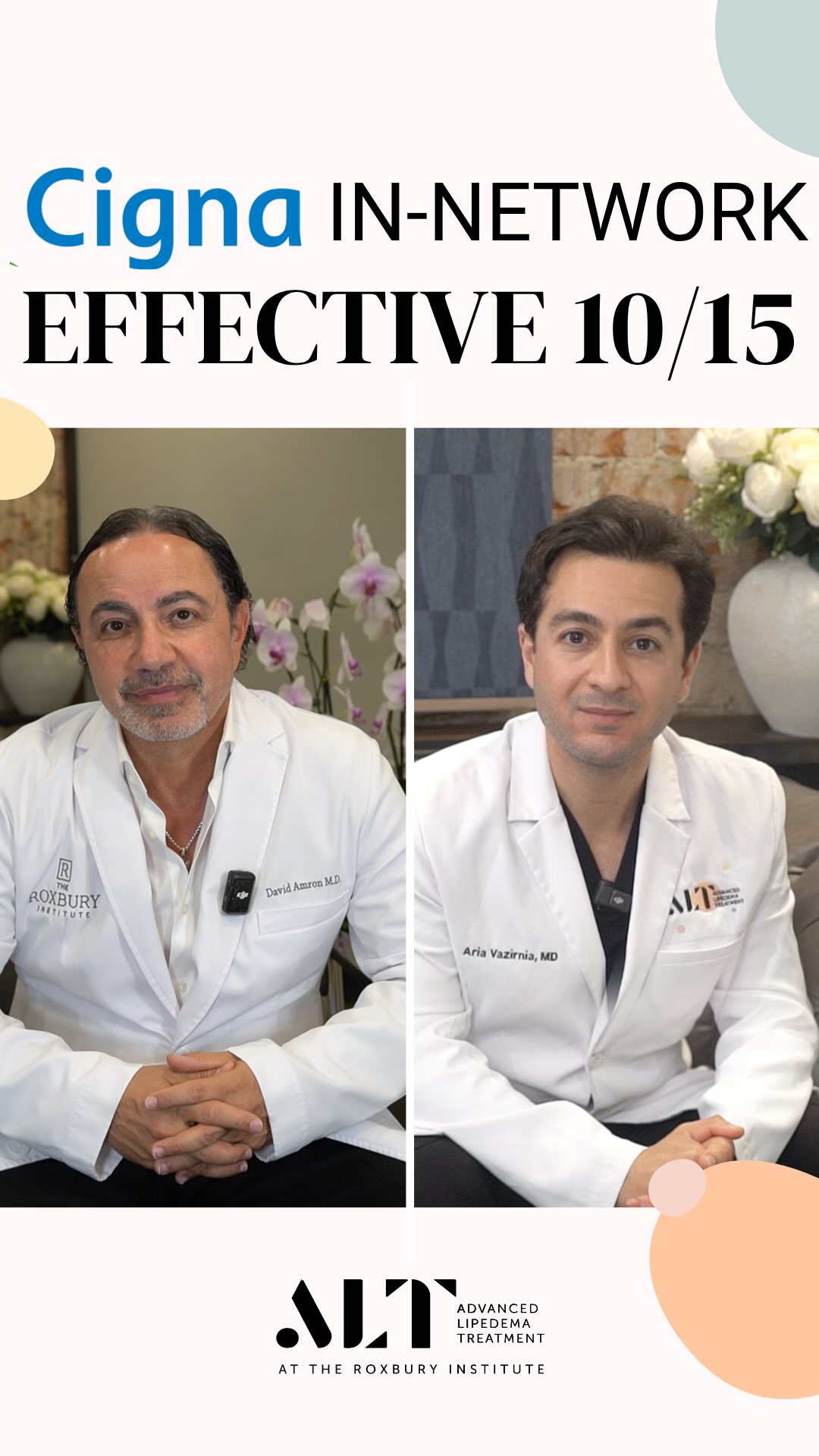
Cigna in network coverage for lipedema treatment begins October 15
Starting October 15, 2026, eligible Cigna patients can access specialized lipedema care at The Roxbury Institute with in network benefits.
THE ROXBURY INSTITUTE DERMATOLOGY STAFFTurn your social into search
We turn your posts into editorial stories that bring new search traffic to theroxburyinstitute.com. Three of yours will be on this page.
Book a demo
theroxburyinstitute We’re proud to share an important step forward in expanding access to specialized lipedema care. The Roxbury Institute will be in network with Cigna effective October 15, 2026, for eligible patients seeking specialized lipedema treatment in California, including care with Dr. David Amron, Dr. Aria Vazirnia, and The Roxbury Institute Surgical Center in Los Angeles For years, lipedema patients have faced delayed diagnoses, misunderstanding, and significant barriers to medically necessary treatment. This milestone represents continued progress toward improving access to knowledgeable, specialized care for those living with this chronic and often painful disease. Coverage remains subject to benefits verification, medical necessity determination, and prior authorization requirements. Out of state patients may also qualify on a case by case basis. If you have a Cigna PPO or EPO plan and are interested in connecting to set up a consultation, comment INSURANCE below. Our team is here to help guide you through the next steps. 📲 424.333.9944 📧 lipedema@theroxburyinstitute.com 👩💻 AdvancedLipedemaTreatment.com 📍 Los Angeles, CA • Salt Lake City, UT • Tucson, AZ • • • #Lipedema #LipedemaAwareness #LipedemaTreatment #WeAreTheRoxburyInstitute #LipedemaSurgery
Starting October 15, 2026, eligible Cigna patients can access specialized lipedema care at The Roxbury Institute with in network benefits.
THE ROXBURY INSTITUTE DERMATOLOGY STAFFHow it works
Same as today. Nothing changes on Instagram.
We turn your post into a full story in your voice within the hour.
One click publishes it to theroxburyinstitute.com. Nothing goes live without you.
Your stories
Nothing was published anywhere. You decide that. Every word will come from your own posts, your own photos and your own treatments.
Access & Care · From your post
Starting October 15, 2026, eligible Cigna patients can access specialized lipedema care at The Roxbury Institute with in network benefits.
“We’re proud to share an important step forward in expanding access to specialized lipedema care. The Roxbury Institute will be in network with Cigna effective October 15, 2026, for eligible patients seeking specialized lipedema treatment in California, including care with Dr. David Amron, Dr. Aria Vazirnia, and The Roxbury Institute Surgical Center in Los Angeles For years, lipedema patients have faced delayed diagnoses, misunderstanding, and significant barriers to medically necessary treatment. This milestone represents continued progress toward improving access to knowledgeable, specialized care for those living with this chronic and often painful disease. Coverage remains subject to benefits verification, medical necessity determination, and prior authorization requirements. Out of state patients may also qualify on a case by case basis. If you have a Cigna PPO or EPO plan and are interested in connecting to set up a consultation, comment INSURANCE below. Our team is here to help guide you through the next steps. 📲 424.333.9944 📧 lipedema@theroxburyinstitute.com 👩💻 AdvancedLipedemaTreatment.com 📍 Los Angeles, CA • Salt Lake City, UT • Tucson, AZ • • • #Lipedema #LipedemaAwareness #LipedemaTreatment #WeAreTheRoxburyInstitute #LipedemaSurgery”
Lipedema Research · From your post
Patients having lipedema surgery can now donate tissue samples that may help researchers understand why the condition affects everyone differently.
“Introducing our lipedema biobank. 🔬 At The Roxbury Institute, we are building an in house biobank dedicated to helping us better understand lipedema. Eligible patients undergoing surgery have the opportunity to participate in research by donating tissue samples, including blood, lipoaspirate fat collected during surgery, and a small punch biopsy. These samples are stored anonymously and may help researchers uncover more about the causes of lipedema and why the condition affects every patient differently. By collecting and studying a wide range of tissue samples, our goal is to generate the data needed to advance research and move toward more personalized treatments. The Roxbury Institute Biobank is an important step toward a deeper understanding of lipedema and every contribution has the potential to help shape the future of care. #lipedema #lipedemaresearch #biobank #lipedemasurgery #heavylegs l”

Patient Care · From your post
Women's Health spotlighted a condition often mistaken for weight gain, and we were honored to help tell that story.
“Thank you to Women’s Health for bringing critical attention to lipedema, a condition that affects millions of women yet remains widely misunderstood and underdiagnosed. It was an honor to be featured alongside @DrKarenHerbst and to contribute to this important discussion around earlier diagnosis, greater understanding, and improved standards of care for women living with lipedema. A special thank you to journalist Amy Wilkinson for thoughtfully telling this story and helping elevate an issue that deserves far greater recognition. Comment WOMENSHEALTH below to receive a link to the full article. #lipedema #lipoedema #lipedemaawareness #lipedemacommunity #lipedemawarrior”
One social post becomes another searchable entry point to The Roxbury Institute Dermatology.
Our own magazine. Clicks and citations from Google Search Console, as of September 15, 2026.
Draft story for theroxburyinstitute.com · Access & Care
Starting October 15, 2026, eligible Cigna patients can access specialized lipedema care at The Roxbury Institute with in network benefits.
Beginning October 15, 2026, The Roxbury Institute will be in network with Cigna for eligible patients seeking specialized lipedema treatment in California. This change applies to care with Dr. David Amron and Dr. Aria Vazirnia, as well as procedures performed at The Roxbury Institute Surgical Center in Los Angeles, and it marks a shift in how patients with this condition can access the specific type of care they need.
Lipedema is a chronic condition, and for many patients, getting an accurate diagnosis has historically taken longer than it should. Even after diagnosis, finding a provider who understands the disease and offers medically necessary treatment options has often meant navigating limited insurance support. In network status with Cigna addresses one of the most persistent obstacles: the financial and administrative distance between diagnosis and treatment.
For patients with a Cigna PPO or EPO plan, in network status means treatment at The Roxbury Institute can now be considered under standard plan benefits rather than handled entirely out of network. That distinction matters for lipedema care specifically, where treatment is often ongoing and where the cost of specialized surgical intervention has kept some patients from pursuing it at all.
This does not mean every patient is automatically covered the moment the effective date arrives. Coverage remains subject to benefits verification, a determination of medical necessity, and prior authorization requirements, which is standard for specialized surgical care. Patients interested in moving forward will still go through an individual review process, but that process can now begin within the structure of an in network relationship.
While the in network coverage applies to eligible patients in California, the practice has noted that out of state patients may also qualify on a case by case basis. That detail matters given how few providers nationally specialize in lipedema treatment at this level. Patients traveling from outside California for care with Dr. Amron, Dr. Vazirnia, or the surgical center may still have a path toward coverage worth exploring directly with the team.
The practice operates across three locations, Los Angeles, Salt Lake City, and Tucson, which reflects the reality that lipedema patients are not concentrated in one region. Centralizing surgical care in Los Angeles while maintaining a presence in other cities allows the practice to stay connected to patients throughout the diagnosis and consultation process, even before they travel for treatment itself.
Patients with a Cigna PPO or EPO plan who want to explore a consultation are encouraged to reach out directly, either by phone at 424.333.9944, by email at lipedema@theroxburyinstitute.com, or through AdvancedLipedemaTreatment.com. The team has said it will help guide interested patients through the next steps, which includes working through the benefits verification and authorization process that determines individual coverage.
For a condition that has long been misunderstood and under treated, expanding in network access is a practical step rather than a symbolic one. It changes what a first conversation about treatment can look like for someone who has spent years managing lipedema without a clear path forward, and it puts a specific date, October 15, 2026, behind that shift.
Draft story for theroxburyinstitute.com · Lipedema Research
Patients having lipedema surgery can now donate tissue samples that may help researchers understand why the condition affects everyone differently.
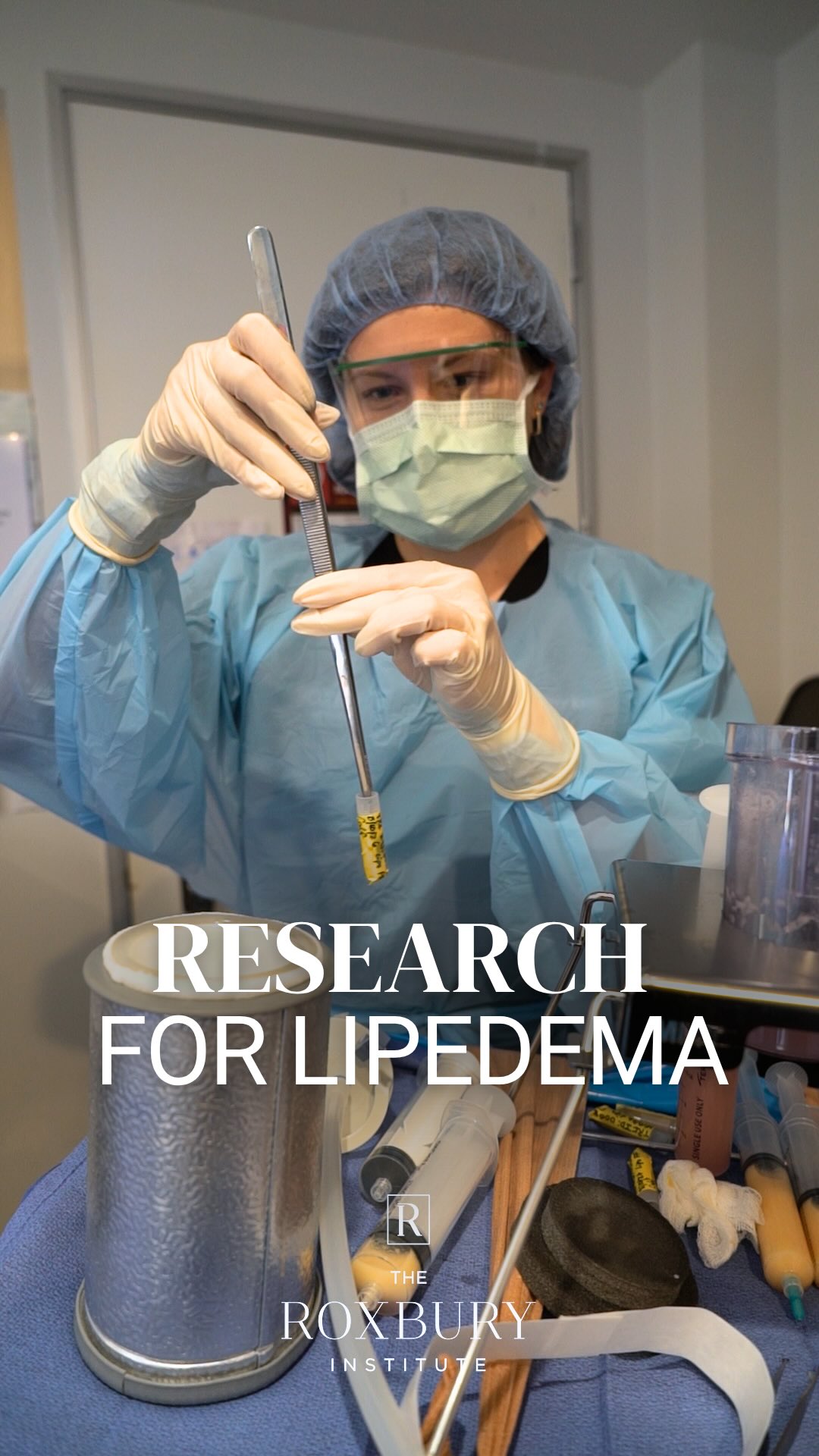
A gloved hand holds a labeled specimen tube steady in the operating room, the kind of small, careful gesture that rarely gets noticed but matters enormously. That tube is the starting point of something we have been building quietly at The Roxbury Institute: a biobank dedicated entirely to lipedema, made up of tissue donated by our own patients during their surgeries.
Lipedema is a condition we treat often, and one that still holds more questions than answers. It shows up differently in nearly every patient we see, in ways that are not fully explained by current research. Building a biobank is our attempt to do something about that gap directly, using the surgeries we already perform as an opportunity to collect real data rather than let it go unused.
Eligible patients undergoing surgery with us can choose to participate. Donations include blood, lipoaspirate fat collected during the procedure itself, and a small punch biopsy. None of it requires an extra visit or a separate procedure. It simply means that tissue already being removed during surgery can serve a second purpose beyond the patient's own treatment, if they choose to allow it.
Every sample is stored anonymously, disconnected from any identifying information about the patient it came from. Researchers studying the biobank will be working with data, not names. The goal is to eventually have a wide enough range of tissue on hand that patterns start to emerge, patterns that might explain why lipedema presents so differently from one person to the next.
That variability is one of the hardest parts of treating lipedema well. Two patients can have similar diagnoses and completely different experiences of the condition, different tissue characteristics, different responses to treatment. A biobank gives researchers the raw material to start asking why, using actual samples instead of relying only on observation and clinical history.
Our hope is that this collection becomes useful well beyond our own practice. The more tissue samples that are gathered and studied over time, the more researchers have to work with when trying to understand what drives lipedema at a cellular level. That kind of foundational data is usually the slow, unglamorous part of research that eventually makes more targeted treatment possible.
None of this depends on a single breakthrough moment. It depends on patients being willing to donate a sample during a surgery they were already scheduled for, and on those samples accumulating steadily enough to become genuinely useful. Every tube collected in that operating room is a small, specific contribution to a larger effort we believe is worth building.
We see this as an early but meaningful step, one built directly into the surgical care we already provide rather than sitting apart from it. As the biobank grows, so does the possibility of understanding lipedema with more precision, and of eventually offering patients treatment that reflects what actually makes their case different, not just what the diagnosis has in common with others.
Draft story for theroxburyinstitute.com · Patient Care
Women's Health spotlighted a condition often mistaken for weight gain, and we were honored to help tell that story.
Millions of women live with a condition that looks like ordinary weight gain but behaves nothing like it. Lipedema causes fat to accumulate disproportionately, often in the legs and arms, and it does not respond to diet, exercise, or medication the way typical weight gain does. For years, that mismatch between appearance and biology has led to missed diagnoses and misplaced blame.
Women's Health recently took on this exact problem, publishing a feature that traced one woman's search for answers through years of frustration before she finally found a name for what she was experiencing. We were honored to be part of that reporting, contributing perspective alongside endocrinologist Dr Karen Herbst, whose research has shaped how lipedema is understood clinically.
Lipedema is frequently mistaken for obesity, which means patients are often told to simply eat less or move more. That advice does not address the underlying issue, and it can leave people feeling blamed for a condition that has nothing to do with willpower. Recognizing the difference matters because it changes what kind of care a patient should actually receive.
Part of what makes lipedema so easy to overlook is how ordinary it can appear at first. The fat distribution can look like typical body variation, and symptoms like tenderness, easy bruising, or a heavy feeling in the limbs are sometimes dismissed rather than investigated. Without a clinician trained to spot those patterns, the condition can go unnamed for a long time.
The value of a story like this is not just awareness for its own sake. When more women recognize the signs, they can bring specific language to their doctors instead of vague complaints that get brushed aside. Earlier diagnosis opens the door to management strategies suited to lipedema specifically, rather than generic weight loss recommendations that were never going to work.
Standards of care for lipedema are still catching up to the reality of how many women are affected. That gap is exactly why coverage from a publication with reach like Women's Health matters. It puts accurate information in front of readers who may be living with unexplained symptoms right now, some of whom may never have heard the word lipedema before.
We want to thank journalist Amy Wilkinson for handling this subject with the care it deserves, and Dr Karen Herbst for the research and clinical expertise she brought to the piece. Getting a condition like this right in print requires patience with nuance, and that came through in how the story was reported and framed for readers.
If you want to read the full feature, comment WOMENSHEALTH below and we will send the link directly. The more women who see accurate information about lipedema, the more likely someone recognizes their own experience in it, possibly for the first time, and that recognition is often the first real step toward getting the right kind of help.
Keep reading