Why the temple is the quiet engine behind the ponytail lift
A closer look at how Sculptra placed in the temporal area creates lift without touching the brow or hairline.
THE MASTER INJECTOR INC STAFFTurn your social into search
We turn your posts into editorial stories that bring new search traffic to themasterinjector.com. Three of yours will be on this page.
Book a demo
themasterinjector Let’s talk about Sculptra in the temples for a ponytail lift ✨ The temple is a key area when creating the subtle lift and support that gives the ponytail lift its signature effect. By restoring volume and stimulating collagen in the temporal area, we can help elevate and support the upper face in a very natural way. Technique is especially important here because the temple is a high vascular zone. Instead of placing a bolus of product, the product is injected while slowly retracting the needle so it’s evenly distributed. This helps avoid placing too much product in one spot and allows for a smoother, safer result. Sculptra works by stimulating collagen, so the improvement happens gradually as the skin rebuilds its own structure and support. If you’re an injector who wants to learn more about Sculptra techniques, facial anatomy, and treatments like the ponytail lift, this is exactly the type of approach we cover inside my course. Interested in learning more? Head to the link in my bio or comment “SCULPTRA” for the link.
A closer look at how Sculptra placed in the temporal area creates lift without touching the brow or hairline.
THE MASTER INJECTOR INC STAFFHow it works
Same as today. Nothing changes on Instagram.
We turn your post into a full story in your voice within the hour.
One click publishes it to themasterinjector.com. Nothing goes live without you.
Your stories
Nothing was published anywhere. You decide that. Every word will come from your own posts, your own photos and your own treatments.
Injection Technique · From your post
A closer look at how Sculptra placed in the temporal area creates lift without touching the brow or hairline.
“Let’s talk about Sculptra in the temples for a ponytail lift ✨ The temple is a key area when creating the subtle lift and support that gives the ponytail lift its signature effect. By restoring volume and stimulating collagen in the temporal area, we can help elevate and support the upper face in a very natural way. Technique is especially important here because the temple is a high vascular zone. Instead of placing a bolus of product, the product is injected while slowly retracting the needle so it’s evenly distributed. This helps avoid placing too much product in one spot and allows for a smoother, safer result. Sculptra works by stimulating collagen, so the improvement happens gradually as the skin rebuilds its own structure and support. If you’re an injector who wants to learn more about Sculptra techniques, facial anatomy, and treatments like the ponytail lift, this is exactly the type of approach we cover inside my course. Interested in learning more? Head to the link in my bio or comment “SCULPTRA” for the link.”

Live Webinar · From your post
Bernice hosts two live sessions to walk through her Renuva course and a new cannula, then takes questions in real time.
“Join us live and Ask the Master Injector your very own! She will be discussing her latest Renuva course, new cannula, and answering all your questions live! SEPTEMBER 22 at 5pm PT SEPTEMBER 26 at 12pm PT Details and registration through the link in bio.”

From your post
One social post becomes another searchable entry point to The Master Injector Inc.
Our own magazine. Clicks and citations from Google Search Console, as of September 15, 2026.
Draft story for themasterinjector.com · Injection Technique
A closer look at how Sculptra placed in the temporal area creates lift without touching the brow or hairline.
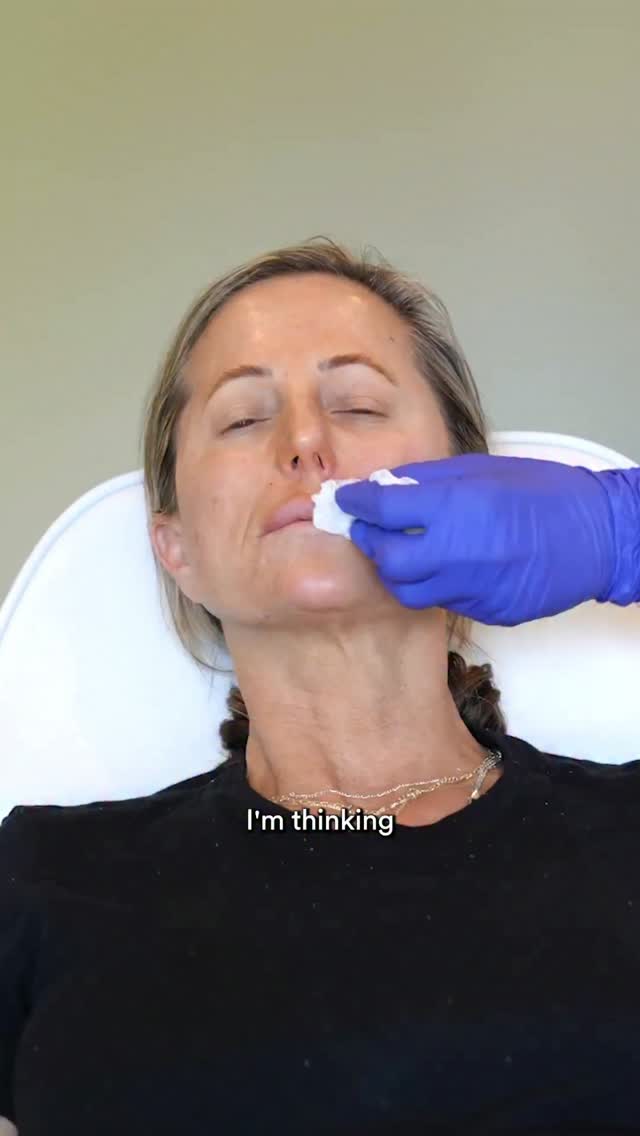
A gloved hand wipes the skin clean just under the nose, the patient's eyes closed, her hair pulled back off her face. It looks like a small, almost unremarkable moment before treatment. But the area getting attention here, the temple, is doing more work than its size suggests when the goal is a natural upper face lift rather than a change anyone can immediately name.
We think about the ponytail lift as an effect, not a single injection point. It's the look of a face that appears slightly lifted and supported, the way skin sits when hair is pulled back tightly. Getting there without surgery means finding the structural reason a face reads that way in the first place, and that reason often starts at the temple, not the brow or the jawline.
As we lose volume in the temporal area, the whole upper face loses a kind of scaffolding. The skin there has less to rest on, so it drifts downward and outward, pulling on everything below it. Restoring volume in that spot does more than fill a hollow. It reestablishes support that the rest of the face was quietly missing, which is why the effect reads as lift rather than fullness.
Sculptra is suited to this because it doesn't sit in the skin the way a filler does. It stimulates the body's own collagen, so the structure rebuilds gradually rather than appearing all at once. That gradual timeline matters in a spot like the temple, where the goal is subtle support, not a visible change someone can point to and name the day after treatment.
The temple is also a high vascular area, which changes how the product has to go in. Rather than placing one concentrated amount in a single spot, the needle is slowly retracted while injecting, spreading the product evenly along its path. That distribution lowers the risk of placing too much in one place and is part of what keeps the result smooth rather than lumpy or uneven.
This is technique in the truest sense, not styling but sequencing. Where the needle enters, how it moves, how slowly the product is released, all of it determines whether the collagen stimulation happens evenly across the area or concentrates unpredictably. In a zone this vascular, that careful, unhurried movement is what separates a safe result from one that simply got lucky.
None of this is visible in the moment of treatment. What's visible is a wipe, a gloved hand, a relaxed patient waiting. The actual work, the vascular mapping, the angle of retraction, the reasoning behind choosing the temple over the brow, happens in the injector's judgment before the needle ever moves, which is exactly the layer that's hardest to teach from a photo alone.
That's the gap our course is built to close, for injectors who want to understand Sculptra technique, facial anatomy, and treatments like the ponytail lift at this level of detail. It's less about a single product and more about knowing why a specific area, placed a specific way, changes how an entire face reads. Comment SCULPTRA or check the link in bio to learn more.
Draft story for themasterinjector.com · Live Webinar
Bernice hosts two live sessions to walk through her Renuva course and a new cannula, then takes questions in real time.
We are opening up a live session called Ask the Master Injector, and the format is exactly what it sounds like. Bernice sits down, walks through what is new in her world of injectable training, and then takes questions directly from whoever shows up. No script, no filtered comments section, just a real conversation about the work.
The first thing on the agenda is a look inside her latest Renuva course. For anyone who has wondered what that training actually covers, this is a chance to see it described firsthand rather than secondhand. It is less a sales pitch and more a walkthrough, the kind of detail that usually only comes up once someone has already enrolled.
The second topic is a new cannula, and Bernice will be going into what makes it different. Cannulas matter more than people outside the field tend to realize, since the design affects how the product moves under the skin and how a patient feels afterward. Talking through the specifics live gives that detail more room than a caption ever could.
Then there is the open Q&A, which is really the heart of the whole thing. Bring your questions is not a throwaway line here, it is the point of hosting this live in the first place. Whatever has been sitting unanswered, whether it is about technique, training, or the cannula itself, this is the moment built for asking it directly.
The webinar runs twice, once on September 22 and again on September 26, so there is flexibility built into the format from the start. Someone with a weekday schedule that will not bend can catch the Tuesday date, and anyone who prefers a weekend slot has the Saturday option instead. Either way, the content covered is the same.
That kind of repeat scheduling also reflects how this audience actually works. Injectors, students, and anyone considering the Renuva course are not all free at the same hour on the same day, and a single live session tends to leave people out. Offering it twice is a small logistical choice that makes the whole thing more usable.
Registration happens through the link in our bio, and that single step is what puts a seat on the calendar for either date. Once registered, showing up live means access to Bernice directly, not a recording watched after the fact with no way to weigh in. The live component is really what separates this from a typical course preview.
For anyone weighing whether to make time for it, the value sits in that directness. Hearing about a new cannula or a training course update straight from the person who built it, with the option to ask a follow up question on the spot, is not something that happens often. That is the entire reason this one is worth putting on the calendar.
Draft story for themasterinjector.com
Keep reading