Saint Andre cheese and strawberry jam turn brioche into dessert at The Arbour
A slab of triple cream cheese, a swipe of strawberry jam and toasted brioche make the case for keeping dessert simple.
THE ARBOUR STAFFTurn your social into search
We turn your posts into editorial stories that bring new search traffic to thearbourpasadena.com. Three of yours will be on this page.
Book a demo
thearbourpasadena Saint André Cheese • Strawberry Jam • Toasted Brioche. Sweet, savory and beautifully simple.
A slab of triple cream cheese, a swipe of strawberry jam and toasted brioche make the case for keeping dessert simple.
THE ARBOUR STAFFHow it works
Same as today. Nothing changes on Instagram.
We turn your post into a full story in your voice within the hour.
One click publishes it to thearbourpasadena.com. Nothing goes live without you.
Your stories
Nothing was published anywhere. You decide that. Every word will come from your own posts, your own photos and your own menu.
On The Menu · From your post
A slab of triple cream cheese, a swipe of strawberry jam and toasted brioche make the case for keeping dessert simple.
“Saint André Cheese • Strawberry Jam • Toasted Brioche. Sweet, savory and beautifully simple.”
On The Plate · From your post
A closer look at how filet mignon, pomme anna potato, gai lan and bordelaise come together on one plate at The Arbour.
“Filet Mignon • Pomme Anna Potato • Gai Lan Broccoli • Bordelaise Sauce • Herb Butter”
From your post
One social post becomes another searchable entry point to The Arbour.
Our own magazine. Clicks and citations from Google Search Console, as of September 15, 2026.
Draft story for thearbourpasadena.com · On The Menu
A slab of triple cream cheese, a swipe of strawberry jam and toasted brioche make the case for keeping dessert simple.
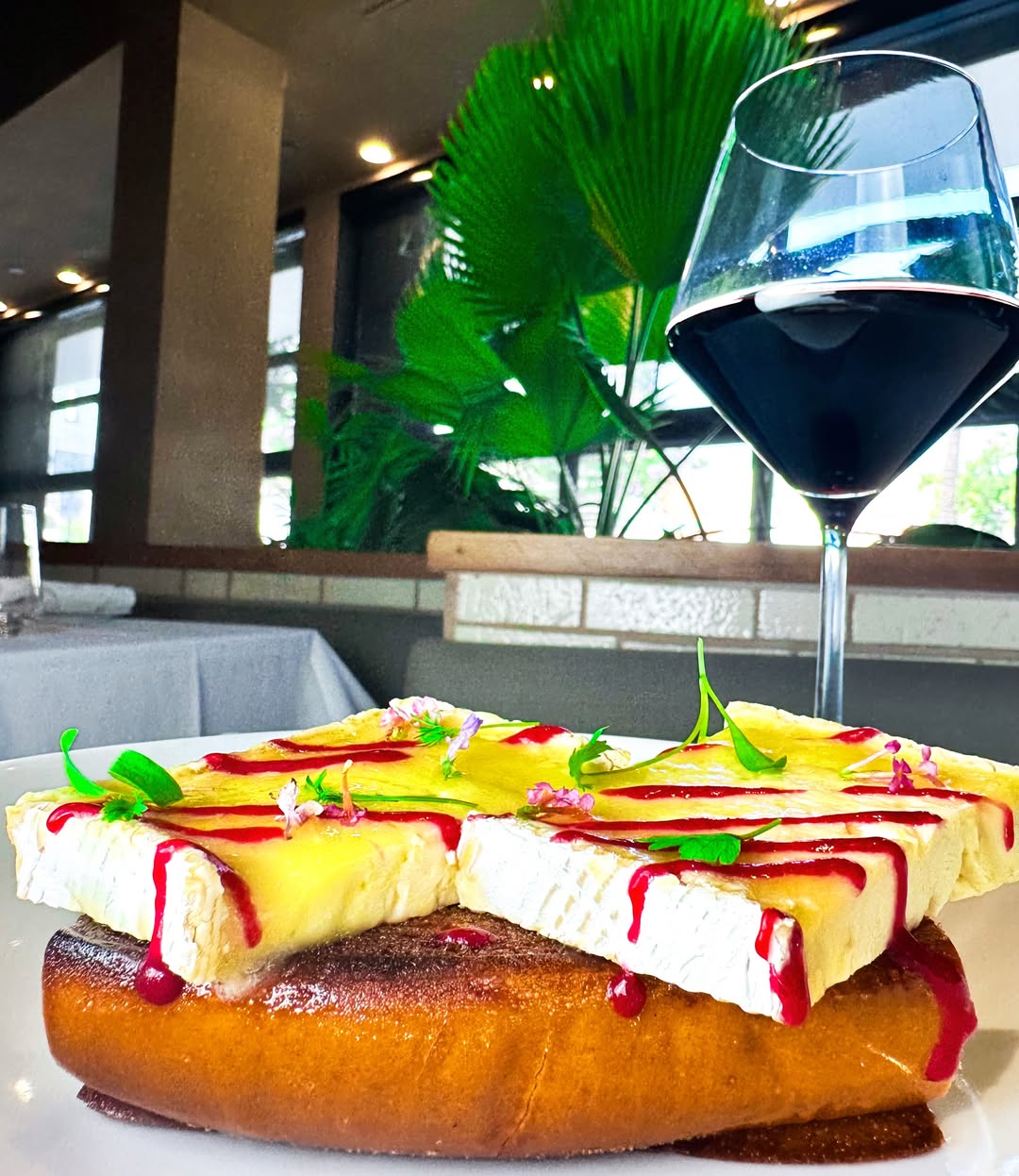
Three ingredients, one plate, and nothing extra standing between them. Saint Andre cheese, strawberry jam and toasted brioche make up the whole idea here, and the pairing works because none of the three try to do too much. It reads more like a composed course than a typical dessert, closer to something you would find capping off a cheese board than closing out a dinner.
Saint Andre is a triple cream cow's milk cheese, and the thick, pale wedge sitting across the toast shows exactly why that richness matters. Cut into wide strips and layered over the bread, it holds its shape while staying soft enough to give under a fork, which is the balance that makes this plate work as dessert rather than as a cheese course pretending to be one.
Strawberry jam is drizzled across the cheese in thin red lines, cutting through the richness rather than adding more sweetness on top of it. It is a small amount, used with restraint, which keeps the dish from tipping into something heavier. The result is a plate where sweet and savory sit close together without one canceling out the other, each bite landing a little differently depending on where the fork lands.
Underneath all of it is toasted brioche, dark at the edges and clearly built to hold weight. Brioche brings its own sweetness to the plate before the jam ever touches it, and toasting it firms up the bread enough to support a full slab of cheese without going soft. It is the part of the dish doing the most structural work while asking for none of the attention.
Fresh microgreens and small edible flowers sit across the top, more texture than flavor, giving the plate a little lift without changing what it actually tastes like. It is a garnish that acknowledges presentation matters without letting presentation take over the dish. The cheese and jam and bread are still doing all the talking. The greens just make sure the plate looks as considered as it tastes.
There is a glass of red wine set beside the plate, and it is easy to see why. A dish built around triple cream cheese and fruit jam has the kind of richness and acidity that holds up well against a glass of red, making this feel like a course meant to be lingered over rather than rushed through on the way to the check.
Calling something simple is not always a compliment in a restaurant setting, but here it reads as the actual intention. Three components, each doing one job well, assembled without extra flourishes or competing flavors. There is no long list of components to sort through, just cheese, jam and bread, arranged so each one is easy to taste on its own and easy to taste together.
It is the kind of dish that works precisely because nothing was added just to add it. Saint Andre, strawberry jam and toasted brioche make their case plainly, and the wine beside it makes the argument for staying a little longer. Sometimes the shortest ingredient list on the table is the one worth paying the closest attention to.
Draft story for thearbourpasadena.com · On The Plate
A closer look at how filet mignon, pomme anna potato, gai lan and bordelaise come together on one plate at The Arbour.
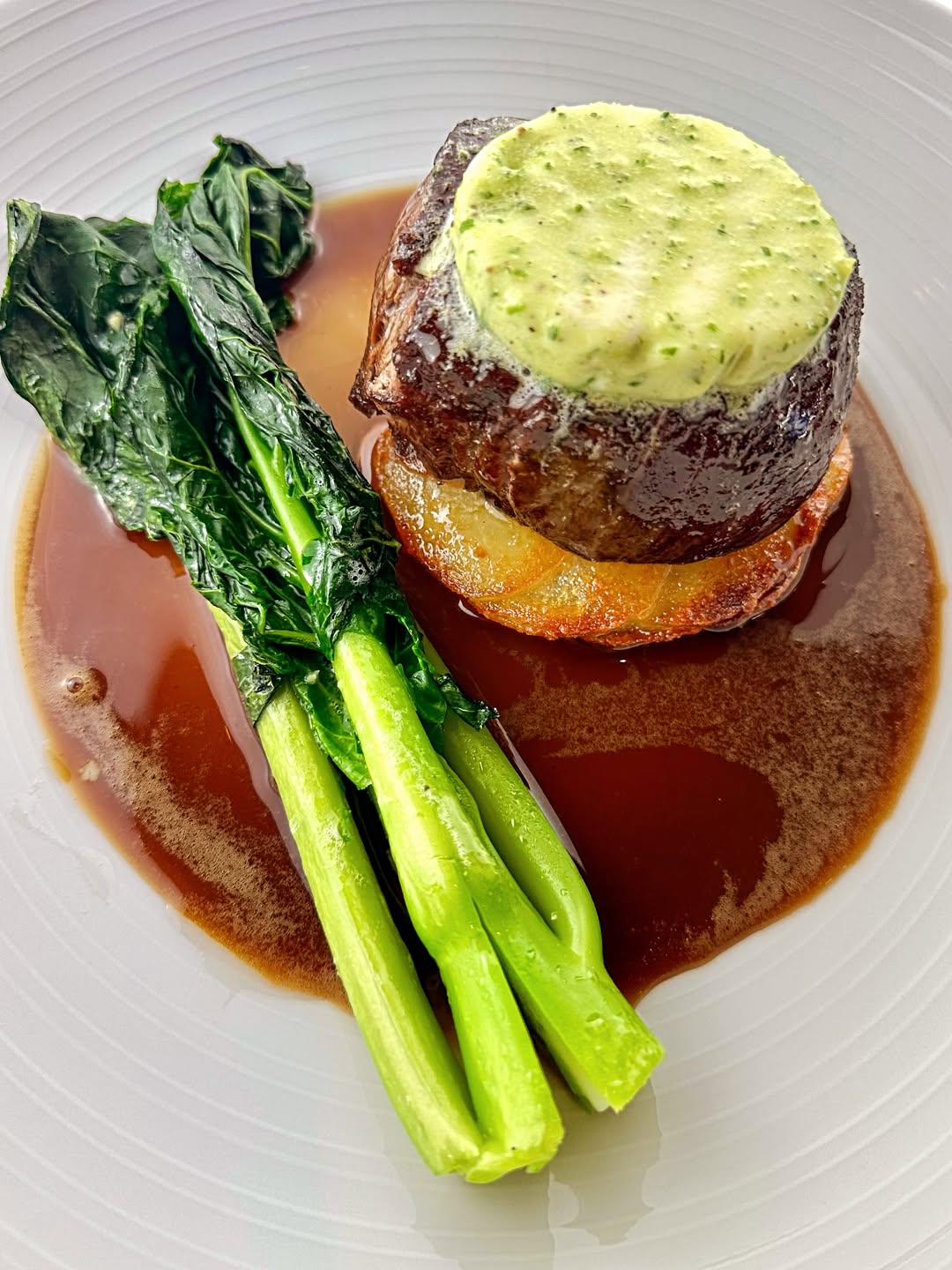
The first thing to register on this plate is the color. A pale green disc of herb butter sits on top of the filet like a lid, flecked through with chopped herbs and holding its shape just long enough for the plate to reach the table. Underneath it, the surface of the beef has already gone dark from the pan, a real crust rather than a suggestion of one.
That butter is doing more than sitting there for effect. As it warms against the hot filet, it starts to loosen and run down the sides, meeting the seared edges of the meat and pooling into the sauce underneath. It is a plated dish designed to keep changing after it lands in front of you, which is part of the point of building a steak this way.
Beneath the filet is a round of pomme anna, thin layers of potato pressed and cooked until the edges turn deep gold and slightly crisp. Instead of serving it as a separate side, we tuck it directly under the beef so it catches the juices as they release. The potato works as a base, a textural contrast, and a way to soak up flavor the moment it starts moving across the plate.
It is a small structural decision, but it changes how the dish reads. Cutting into the filet means going through the crust, then the layered potato beneath it, so each bite carries a bit of both. There is no separate starch waiting on the side to be addressed later. Everything on that half of the plate is built to be eaten together, in the same motion, the same forkful.
On the other side, a bundle of gai lan lies stacked in a loose fan, the leaves darker and slightly blistered where they hit direct heat, the stems left pale green and firm enough to hold their bite. It is a vegetable with more structure than most greens on a steak plate, sturdy stalks that need real cooking to soften while the leaves char faster and pick up a slightly bitter edge.
That contrast between stem and leaf gives the dish a second texture to work against the beef. The stalks offer something closer to a vegetable course in its own right, not a garnish meant to be pushed aside. Set next to a cut of meat this rich, gai lan reads as a deliberate counterweight rather than an afterthought scattered on for color.
The bordelaise pools around the base of the filet and the potato, a dark, glossy sauce reduced down until it holds a slight sheen across the plate. It is the element that ties the seared meat, the crisp potato, and the greens into a single dish rather than three components arranged near each other. Where the herb butter runs into it, the sauce picks up a faint green tint at the edges.
Sauce work like this is where a steak dinner separates itself from a home cooked one. The reduction takes time most kitchens do not have on a weeknight, built slowly enough to concentrate rather than thin out. By the time it reaches the plate, it is less a topping than a foundation the rest of the dish sits inside, quietly doing the work that holds everything together.
Draft story for thearbourpasadena.com
Keep reading