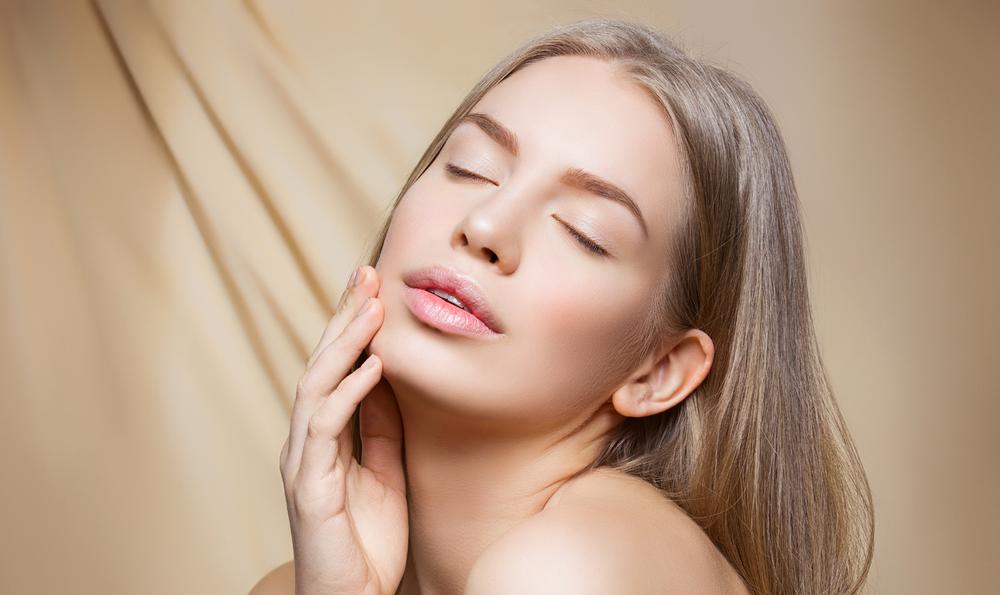
What we actually mean by the Signature Pout
A closer look at how soft volume and balanced proportions define our approach to natural lip enhancement.
TDAESTHETICS MEDSPA & WELLNESS STAFFTurn your social into search
We turn your posts into editorial stories that bring new search traffic to tdaesthetic.com. Three of yours will be on this page.
Book a demo
td.aesthetic 💋 The Signature Pout™ Sometimes, it’s not about changing your look. it’s about finally seeing the version of yourself you’ve been wanting to see. ✨ This transformation was thoughtfully tailored to enhance her natural shape with soft volume, refined definition, and beautifully balanced proportions. The kind of result that makes you look in the mirror and smile a little bigger. 🤍 Feel confident. Feel beautiful. Feel like you. #TheSignaturePout #LipFiller #LuxuryAesthetics #NaturalLipFiller #tdaesthetics
A closer look at how soft volume and balanced proportions define our approach to natural lip enhancement.
TDAESTHETICS MEDSPA & WELLNESS STAFFHow it works
Same as today. Nothing changes on Instagram.
We turn your post into a full story in your voice within the hour.
One click publishes it to tdaesthetic.com. Nothing goes live without you.
Your stories
Nothing was published anywhere. You decide that. Every word will come from your own posts, your own photos and your own treatments.
Signature Treatments · From your site
A closer look at how soft volume and balanced proportions define our approach to natural lip enhancement.
“💋 The Signature Pout™ Sometimes, it’s not about changing your look. it’s about finally seeing the version of yourself you’ve been wanting to see. ✨ This transformation was thoughtfully tailored to enhance her natural shape with soft volume, refined definition, and beautifully balanced proportions. The kind of result that makes you look in the mirror and smile a little bigger. 🤍 Feel confident. Feel beautiful. Feel like you. #TheSignaturePout #LipFiller #LuxuryAesthetics #NaturalLipFiller #tdaesthetics”

Skin Progress · From your site
One client's still peeling skin shows why melasma improvement is measured in patience, not a single before and after.
“If you have melasma, you know how hard it is. 🤎 You try products. You try treatments. You cover it with makeup… and still wonder, “Will my skin ever look better?” This is her progress after Microneedling + BioRePeel. and she’s still peeling. So this isn’t even the final result. 🥹 Melasma takes time. Don’t lose hope. Keep going. Trust the process. ✨ 📲 818 875 9899 #Melasma #MelasmaJourney #BioRePeel #Microneedling #TdAesthetics”

Lower Face · From your site
Marionette lines form for specific structural reasons, and treating them well is about restraint as much as correction.
“Those lines running from the corners of your mouth toward your chin can change the entire look of the lower face. They’re commonly called marionette lines or simply mouth to chin lines. With the right treatment, we can soften their appearance while keeping your results natural. not overfilled. ✨ Ready for a refreshed look? DM/text/call 818 875 9899 #Radiesse #MouthToChinLines #LowerFace #NaturalResults #TdAesthetics”
One social post becomes another searchable entry point to TdAesthetics MedSpa & Wellness.
Our own magazine. Clicks and citations from Google Search Console, as of September 15, 2026.
Draft story for tdaesthetic.com · Signature Treatments
A closer look at how soft volume and balanced proportions define our approach to natural lip enhancement.
The Signature Pout is not a single look we recreate on every client who sits in our chair. It is a process built around one question: what would this specific mouth look like with soft volume, refined definition, and proportions that feel balanced rather than obvious. The result shown here started from her own natural shape, not a template layered on top of it.
That distinction matters more than it sounds like it should. A lot of lip work fails not because the technique is wrong but because it ignores the starting point. The upper and lower lip have their own natural ratio, their own curve at the cupid's bow, their own resting shape at rest and in movement. Working with that shape, instead of overriding it, is what keeps a result looking like a face rather than a procedure.
In the after image, the change reads as fuller lips that still move and rest naturally, with definition along the border that was not as pronounced before. Nothing about the shape looks stretched or overfilled. That balance between visible improvement and natural movement is the actual craft in lip filler, more than the amount of product used or how dramatic the before and after appears.
We describe this as tailoring for a reason. Two people can ask for the same amount of volume and need completely different placement to get a result that suits them. Someone with a shorter upper lip needs different attention than someone with more asymmetry between the left and right side. The goal is always proportion first, volume second, because volume without proportion just looks like more lip, not better lip.
The idea behind this transformation is simple: it is not about changing how someone looks, it is about finally seeing the version of themselves they had been picturing. That framing is worth taking seriously. Most people who come in for lip filler are not asking to look like someone else. They are asking for their own features to feel a little more finished, a little more like what they already imagined.
That is a different goal than dramatic transformation, and it changes how we approach the appointment. We are listening for what someone already likes about their face and building from there, rather than starting with a generic idea of what a fuller lip should look like. Soft volume and refined definition only work as a phrase if the definition is actually specific to the person in the chair.
A result this subtle takes more attention, not less. It would be easier to add volume everywhere and call it finished. Balancing proportions on one specific mouth, so the after photo still looks unmistakably like her, requires slowing down and treating each lip as its own shape to work with rather than a canvas for a fixed idea of fullness.
That is the standard we hold the Signature Pout to every time, because the smile in the mirror afterward is the actual measure of whether the work succeeded.
Draft story for tdaesthetic.com · Skin Progress
One client's still peeling skin shows why melasma improvement is measured in patience, not a single before and after.
Melasma is one of the most stubborn things we treat, and it rarely responds to just one approach. The clients who come to us with it have usually already tried products, tried covering it with makeup, and tried treatments that promised more than they delivered. What we see in our chair is the frustration underneath all of that, the quiet question of whether their skin will ever actually look different.
The progress pictured here comes from a combination of Microneedling and BioRePeel, and what makes it worth sharing is the honesty of the timing. Her skin is still peeling in the after photo. That is not a finished result. It is the middle of a process, which is exactly why it matters, because melasma improvement almost never shows up as one dramatic reveal.
Peeling is part of how BioRePeel works. The treatment encourages the skin to shed layers that hold pigment, which is why the days after a session can look uneven or in transition rather than clean and even. It is tempting to judge results too early, but the visible peeling is a sign the skin is actively working through the process, not a setback or a sign that something went wrong.
Microneedling adds another layer to that work by creating controlled micro injuries that prompt the skin to repair itself. Paired with BioRePeel, the combination targets pigment from two directions at once, resurfacing and stimulating renewal together. Neither treatment alone tends to move melasma this visibly. It is the pairing, done consistently, that gives stubborn pigment somewhere to go instead of just sitting on the surface.
Anyone who has dealt with melasma knows it can fade and then seem to come back, especially with sun exposure or hormonal shifts. That unpredictability is part of why we tell clients not to measure their skin against a single appointment. Real change tends to happen in stages, with some sessions showing dramatic shifts and others feeling slower, quieter, less obviously different day to day.
That is also why we keep sharing progress instead of only finished results. A photo taken mid peel is less polished, but it is more useful, because it reflects what the middle of treatment actually looks like for someone going through it right now. If your own skin looks uneven a few days after a session, that discomfort is often part of the timeline, not a step backward.
Melasma responds to consistency more than intensity. A single aggressive session will not undo pigment that took months or years to form, but a steady combination of treatments, given enough time between sessions, tends to move it in the right direction. We build treatment plans around that reality rather than promising a quick fix that pigmentation this deep rarely allows for.
If you are in the middle of your own melasma treatment and wondering whether it is working, this is the kind of progress worth paying attention to. Still healing, still peeling, still not finished, and still moving forward. We are continuing to track her results as her skin finishes healing, and we will keep sharing what that actually looks like along the way.
Draft story for tdaesthetic.com · Lower Face
Marionette lines form for specific structural reasons, and treating them well is about restraint as much as correction.
The lines that run from the corners of the mouth down toward the chin have a name most people learn only once they start noticing their own. Marionette lines, or mouth to chin lines, sit right where expression lives. They show up in conversation, in laughter, in every closeup photo, which is part of why their appearance can feel like it changes the whole lower face at once.
These lines do not appear out of nowhere. They form along a natural crease where the lower face folds during movement, and over time that fold becomes visible even when the face is at rest. The result is a look that can read as tired or stern regardless of what a person actually feels. Understanding where the line comes from is the first step in treating it with any precision.
Our approach starts with that structural reality rather than the symptom alone. Softening a mouth to chin line is not about erasing a crease that exists for a reason. It is about supporting the area around it so the fold has less depth to fall into. That distinction matters, because it changes what a good outcome actually looks like once treatment is complete.
We use Radiesse for this concern because of how it behaves in the lower face specifically. It adds structure in a way that supports the tissue rather than simply plumping the line itself. That support is what allows the crease to soften from underneath instead of being masked on the surface, which tends to hold up better through normal expression and movement.
Natural results depend on restraint as much as technique. Overfilling this particular area is an easy mistake, since the temptation is to chase a completely smooth line rather than a naturally balanced one. Our goal is always the second option. The lower face should still move like a lower face. It should just no longer carry the heaviness that these lines can create.
Marionette lines tend to become more noticeable gradually, which is part of why they can be hard to evaluate in the mirror day to day. A single photograph, especially one taken straight on, often shows the change more clearly than casual observation does. That is usually the moment people start asking what can actually be done, and it is a fair question with a specific answer.
A refreshed look in this context is not a different face. It is the same lower face with less pull toward the chin and less shadow sitting in that corner of the mouth. Clients tend to notice it most in the moments they interact with people, since expression is exactly where these lines were drawing the most attention in the first place.
If mouth to chin lines have started to bother you, it helps to talk through what is actually happening in that area before deciding on a plan. We are available by DM, text, or call at 818 875 9899 to walk through options and what a natural result would realistically look like for your own face.
Keep reading