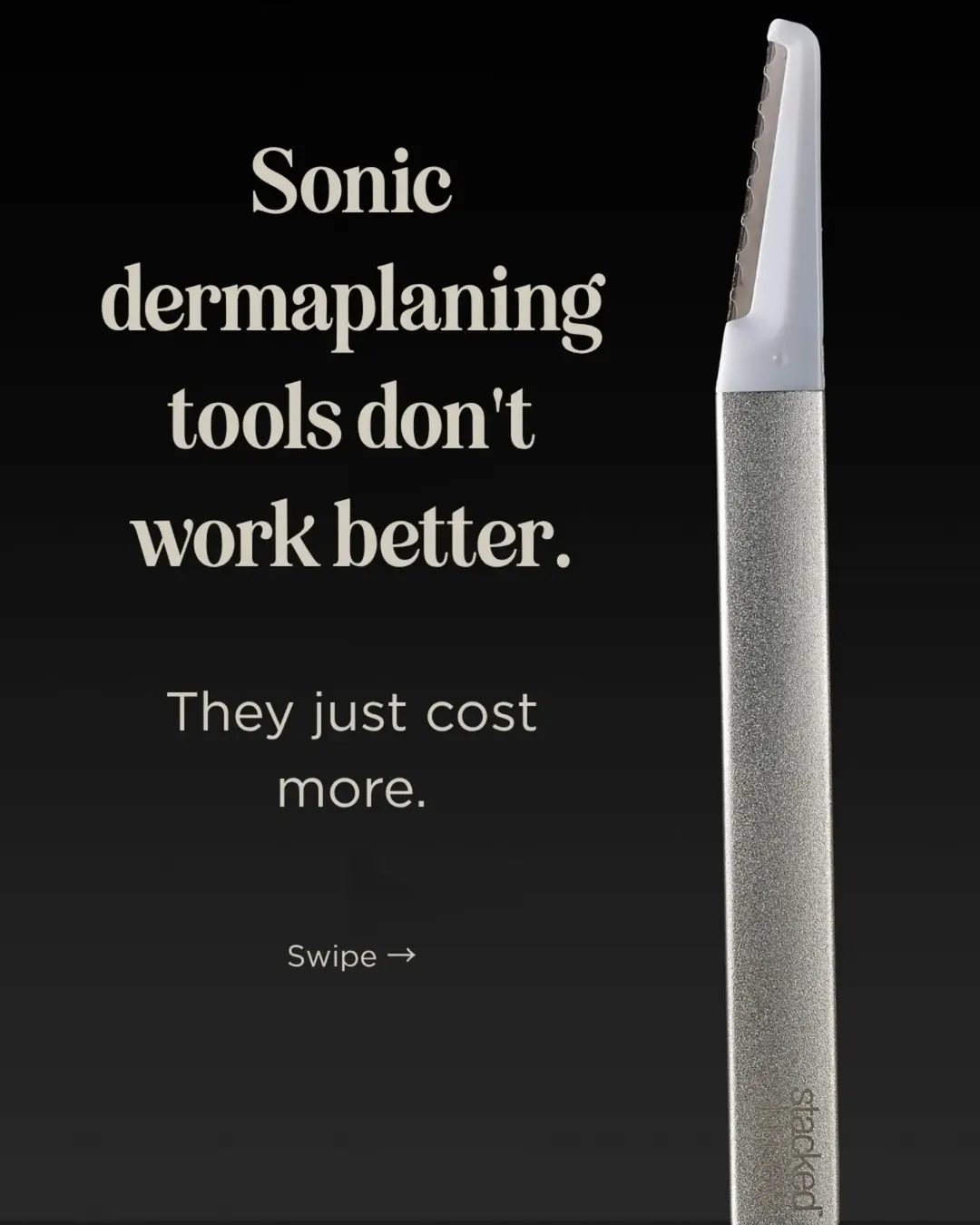
What a dermaplaning tool should actually do to your skin
A sonic motor does not make a blade work better, so here is what actually determines whether a dermaplaning tool exfoliates or just removes hair.
STACKEDSKINCARE STAFFTurn your social into search
We turn your posts into editorial stories that bring new search traffic to stackedskincare.com. Three of yours will be on this page.
Book a demo
stackedskincare Your dermaplaning tool should exfoliate, not just remove hair. Swipe to learn what to look for. →
A sonic motor does not make a blade work better, so here is what actually determines whether a dermaplaning tool exfoliates or just removes hair.
STACKEDSKINCARE STAFFHow it works
Same as today. Nothing changes on Instagram.
We turn your post into a full story in your voice within the hour.
One click publishes it to stackedskincare.com. Nothing goes live without you.
Your stories
Nothing was published anywhere. You decide that. Every word will come from your own posts, your own photos and your own treatments.
Skin Tools · From your post
A sonic motor does not make a blade work better, so here is what actually determines whether a dermaplaning tool exfoliates or just removes hair.
“Your dermaplaning tool should exfoliate, not just remove hair. Swipe to learn what to look for. →”
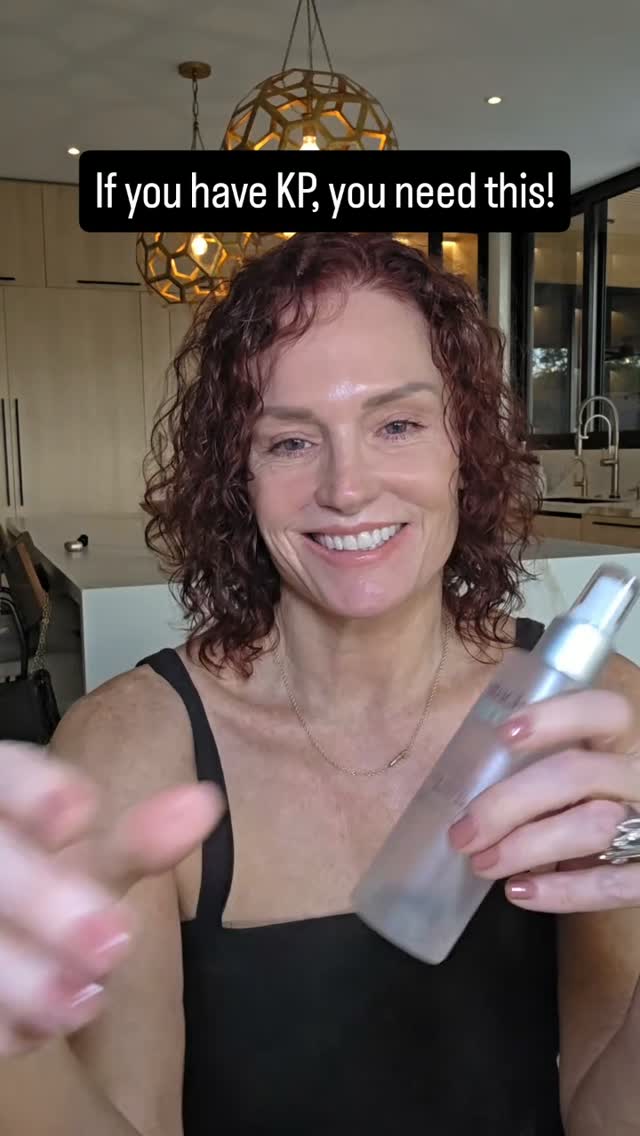
Body Care · From your post
A body peel offers a straightforward approach to keratosis pilaris and the rough texture that comes with it.
“Get rid of your rough bumpy skin and KP with our body peel!”

From your post
One social post becomes another searchable entry point to StackedSkincare.
Our own magazine. Clicks and citations from Google Search Console, as of September 15, 2026.
Draft story for stackedskincare.com · Skin Tools
A sonic motor does not make a blade work better, so here is what actually determines whether a dermaplaning tool exfoliates or just removes hair.
We keep seeing the same assumption about dermaplaning tools, that a battery and a sonic motor must mean better results. It is a reasonable guess. More moving parts sounds like more technology, and more technology sounds like more effective skincare. But dermaplaning is not about vibration. It is about what happens at the point where a blade meets skin, and that has nothing to do with a motor.
A dermaplaning tool has exactly one job at the edge, and it is either doing it or it is not. It should be lifting away the top layer of dead skin cells at the same time it removes the fine vellus hair on the surface. Hair removal alone is only half the function. The other half, the exfoliation, is what actually changes how the skin looks and feels afterward.
The tool in our hands here is a plain example of that principle. No batteries, no charging, no motor housing. Just a stainless blade set into a solid handle with a textured grip section built for control. There is nothing to turn on because there is nothing that needs power to do the actual work. The blade angle and the hand doing the moving are what matter.
A sonic tool moves the blade rapidly back and forth against the skin, and the marketing suggests that motion improves the shave. In practice, the vibration does not change the sharpness of the edge or the angle it meets the skin at. It just adds a mechanical layer between your hand and the blade, which can actually make it harder to feel exactly how much pressure you are applying.
That loss of feedback matters more than it sounds like it should. Dermaplaning works best when the person holding the tool can sense the blade gliding across skin and adjust in real time, pulling skin taut, adjusting the angle, moving slower over drier patches. A motor buzzing in your hand does not improve that feedback loop. It just sits between you and the thing you are actually trying to control.
So what should you look for instead of a battery compartment. Start with the blade itself: is it a true dermaplaning edge designed to catch dead skin along with hair, or a razor blade repurposed for the job. Look at the handle too. A grip with actual texture, like the sandblasted finish and ridged section on ours, gives you the control that a smooth or overly bulky sonic housing takes away.
Cost is the other piece worth naming directly, since it is the part most people never question. Sonic dermaplaning devices carry a higher price built around the motor and the batteries, not around a sharper or more effective blade. You are paying for a feature that does not improve exfoliation, while a manual tool routes that same cost into the one part of the design that actually touches your skin.
None of this means dermaplaning itself is complicated. It means the tool doing it does not need to be. A well made blade, held steadily and angled correctly, will exfoliate and remove hair in the same pass every time, no charging required. Before assuming a fancier tool works better, it is worth asking what the extra parts are actually doing for your skin, and whether the answer is anything at all.
Draft story for stackedskincare.com · Body Care
A body peel offers a straightforward approach to keratosis pilaris and the rough texture that comes with it.
Rough patches on the arms, thighs, or wherever KP tends to show up are common enough that most people just learn to live with them. The texture rarely responds to a regular lotion, and scrubbing harder usually makes things worse. We built our body peel specifically for this kind of skin, the kind that needs more than moisture to actually feel smoother.
Keratosis pilaris happens when keratin builds up around hair follicles, creating those small, stubborn bumps that can feel like sandpaper under your fingers. It is not something that goes away on its own, and it is not something dryness alone explains. That is why a peel formulated for the body, rather than a body lotion with exfoliating claims, makes a real difference in how the skin actually behaves over time.
A peel works by encouraging the skin to let go of the built up keratin instead of just softening it temporarily. That is the distinction that matters with KP specifically. Moisturizer can make bumps feel less rough for a few hours, but it does not address what is causing them. A formula designed to exfoliate at the follicle level gets closer to the actual problem sitting under the surface.
The application shown is simple: a pump bottle, a small amount worked directly into the skin, no elaborate routine required. That matters for a body treatment, because anything too complicated tends to get skipped after a week or two. A body peel only works if it is easy enough to reach for consistently, especially on the areas people are most self conscious about.
KP commonly appears on the upper arms, thighs, and sometimes the cheeks, areas that see plenty of friction from clothing and daily movement. Because it is textural rather than painful, people often address it inconsistently, using a scrub one week and forgetting about it the next. A dedicated peel gives that routine somewhere to land, something specific to reach for instead of general body wash or a random exfoliating glove.
There is also a confidence piece here that is easy to underestimate. Rough patches on the arms or legs can change what someone wears, especially sleeveless tops or shorts in warmer months. Addressing the texture directly, rather than just covering it with self tanner or long sleeves, changes that calculation. It is a practical result, not a dramatic one, but it is the one that actually matters day to day.
The instinct with rough skin is often to exfoliate aggressively, thinking harder pressure means faster results. With KP, that approach tends to backfire, leaving skin irritated without actually clearing the bumps. A peel formulated for this purpose is meant to be used consistently rather than intensely, giving the skin time to actually process the exfoliation instead of just reacting to it.
Smoother skin on the arms and legs is not about a single application. It is about giving the body the same kind of consistent, targeted care that most people already give their face. A peel built specifically for KP and rough texture gives that routine a clear starting point, one bottle instead of a shelf of products that were never quite formulated for this particular problem.
Draft story for stackedskincare.com
Keep reading