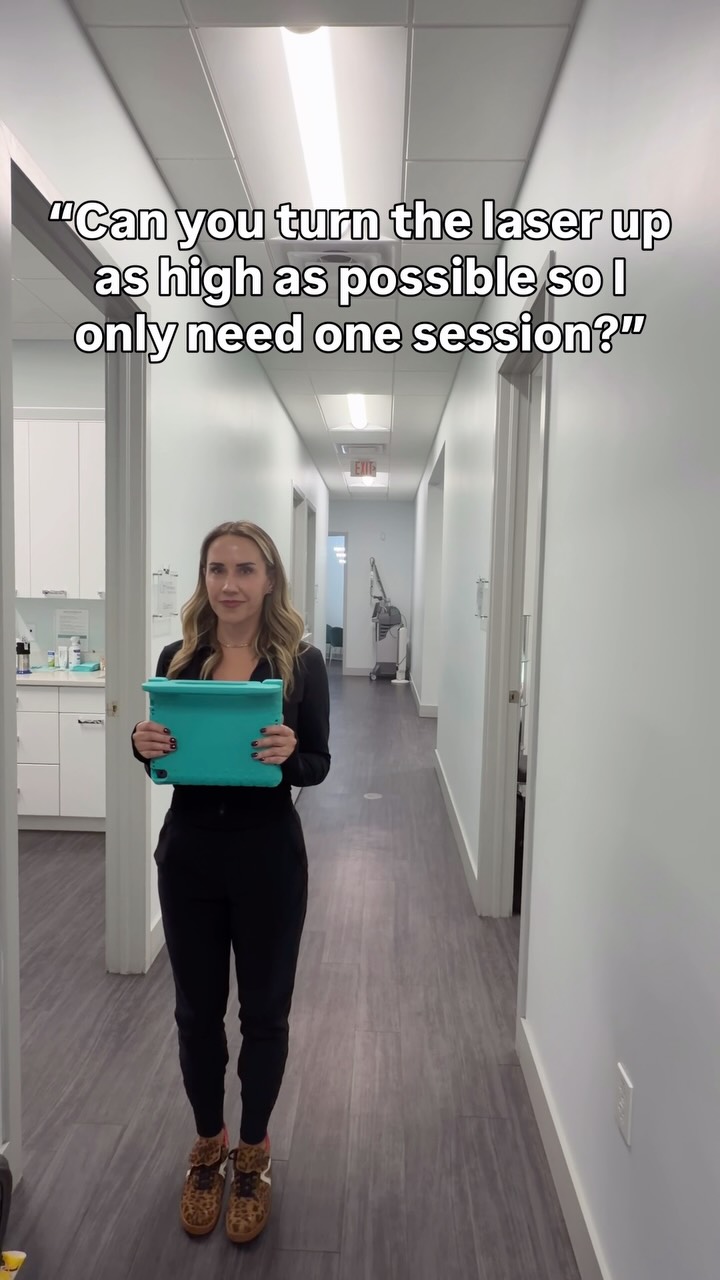
Why we will not turn the laser all the way up just to save you a session
The request comes up often, and the answer explains how we actually think about laser settings and safety.
SIPERSTEIN DERMATOLOGY GROUP STAFFTurn your social into search
We turn your posts into editorial stories that bring new search traffic to sipderm.com. Three of yours will be on this page.
Book a demo
sip_derm Just us walking away after hearing. “Can we just turn the laser all the way up so I only need one session?” Or “Can we skip the consultation?” When it comes to laser treatments, achieving great results starts with treating your skin safely and appropriately. Every patient is different. Skin type, treatment goals, medical history, medications, previous treatments, and individual skin response can all influence which laser and settings are appropriate. That’s why a thorough consultation prior to treatment is such an important part of the process. It allows our providers to evaluate your skin and develop a personalized treatment plan designed specifically for you. It’s also important to remember that with lasers, stronger settings do not necessarily mean better or faster results. Turning a laser up to its highest setting in an effort to reduce the number of treatments can increase the risk of burns, prolonged redness, pigmentation changes, scarring, and other unwanted side effects. Our goal is never simply to use the strongest setting possible, it’s to achieve the best possible result while protecting the health and integrity of your skin. We want beautiful results just as much as you do, and sometimes the safest, most thoughtful approach is also the one that produces the best long term outcome. ❤️ #lasertreatment #moxilaser #bbllaser #sciton #glowyskin
The request comes up often, and the answer explains how we actually think about laser settings and safety.
SIPERSTEIN DERMATOLOGY GROUP STAFFHow it works
Same as today. Nothing changes on Instagram.
We turn your post into a full story in your voice within the hour.
One click publishes it to sipderm.com. Nothing goes live without you.
Your stories
Nothing was published anywhere. You decide that. Every word will come from your own posts, your own photos and your own treatments.
Laser treatments · From your post
The request comes up often, and the answer explains how we actually think about laser settings and safety.
“Just us walking away after hearing. “Can we just turn the laser all the way up so I only need one session?” Or “Can we skip the consultation?” When it comes to laser treatments, achieving great results starts with treating your skin safely and appropriately. Every patient is different. Skin type, treatment goals, medical history, medications, previous treatments, and individual skin response can all influence which laser and settings are appropriate. That’s why a thorough consultation prior to treatment is such an important part of the process. It allows our providers to evaluate your skin and develop a personalized treatment plan designed specifically for you. It’s also important to remember that with lasers, stronger settings do not necessarily mean better or faster results. Turning a laser up to its highest setting in an effort to reduce the number of treatments can increase the risk of burns, prolonged redness, pigmentation changes, scarring, and other unwanted side effects. Our goal is never simply to use the strongest setting possible, it’s to achieve the best possible result while protecting the health and integrity of your skin. We want beautiful results just as much as you do, and sometimes the safest, most thoughtful approach is also the one that produces the best long term outcome. ❤️ #lasertreatment #moxilaser #bbllaser #sciton #glowyskin”
Sculptra results · From your post
A closer look at the thinking behind a sculptra and dysport combination built around structure, not just volume.
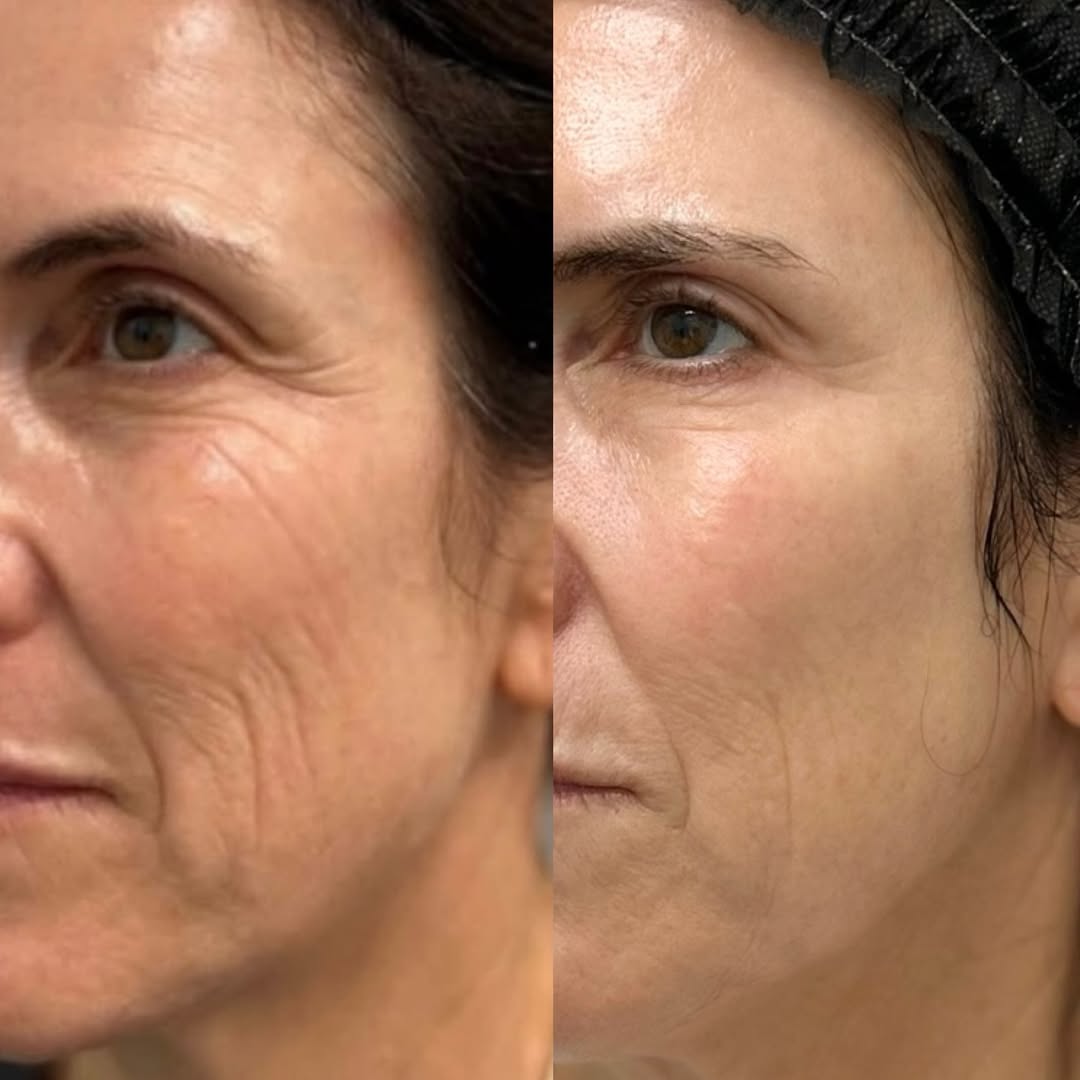
“Sculptra is all about playing the long game 🙌🏼 Why did I choose sculptra over a resurfacing laser? 1. Skin structure support AND volume were needed. Sculptra can address both! 2. Smoothing the transition between the cheek and the lateral face, as well as the temple region and marionette was important in this case. 3. The patient was a part of her treatment plan and chose sculptra for its benefits and less downtime than a resurfacing laser. She has very little sun damage and takes care of her skin so well with at home skincare! Sculptra yearly combined with dysport (upper and lower face) is what makes this result so transformative ✨ #aesthetics #sculptra #filler #fyp #facialbalancing”
From your post
One social post becomes another searchable entry point to Siperstein Dermatology Group.
Our own magazine. Clicks and citations from Google Search Console, as of September 15, 2026.
Draft story for sipderm.com · Laser treatments
The request comes up often, and the answer explains how we actually think about laser settings and safety.
We hear it often enough that it barely surprises us anymore: can you just turn the laser all the way up so I only need one session? Sometimes it comes with a follow up question, can we skip the consultation entirely? Both requests come from a good place. Patients want results and they want them fast. But both requests miss how laser treatments actually work.
Every patient who sits in our chair is different. Skin type, treatment goals, medical history, medications, previous treatments, and how an individual's skin responds all factor into which laser and which setting is appropriate for that person. None of that can be known before we look closely at your skin, which is exactly why the consultation is not a formality we tack on before the real appointment.
A consultation lets our providers evaluate your skin in person and build a treatment plan designed specifically for you, not a generic plan borrowed from the last patient in the chair. That evaluation shapes which laser we use and at what strength. Skipping it does not save meaningful time. It just means the plan we build is a guess instead of something based on your actual skin.
There is also a common misunderstanding worth addressing directly: a stronger setting does not mean a better or faster result. It is tempting to think of laser strength like a dial that trades comfort for speed, where turning it up just gets you there sooner. That is not how skin responds to lasers, and treating it that way puts your results and your skin at real risk.
Pushing a laser to its highest setting in an attempt to reduce the number of sessions increases the risk of burns, prolonged redness, changes in pigmentation, scarring, and other side effects that can take far longer to resolve than the extra session would have taken. What looks like a shortcut on paper can turn into weeks of recovery, or damage that never fully reverses. That tradeoff is not one we are willing to make on your behalf.
Our goal in every treatment room is never to find the strongest setting a laser will allow. It is to find the setting that gets you the best possible result while protecting the health and integrity of your skin. Those two goals usually point in the same direction, but when they do not, we choose the one that keeps your skin intact for the long run.
We want the results you are hoping for just as much as you do. Nobody sits down for a laser treatment hoping for a mediocre outcome, and nobody on our side wants that either. But we have seen enough skin up close to know that the safest, most thoughtful approach is usually the same approach that produces the best outcome once the redness fades and the healing is done.
So if you come in asking for the highest setting or a treatment plan without a consultation, expect us to slow things down instead of speeding them up. That is not us being cautious for its own sake. It is us doing the part of the job that actually determines whether your skin looks better in six months, not just whether the appointment ended sooner.
Draft story for sipderm.com · Sculptra results
A closer look at the thinking behind a sculptra and dysport combination built around structure, not just volume.
Every treatment plan starts with a question we ask ourselves before we ask which device or injectable to reach for: what is actually happening under the skin. In this case, the need was not simply volume loss. It was a loss of underlying skin structure paired with volume loss, which meant the plan had to address both at once rather than treating one and hoping the other followed.
That distinction is the reason we chose sculptra instead of a resurfacing laser. A laser can improve texture and surface quality, but it does not rebuild the structural support that skin loses over time. Sculptra works differently. It stimulates the skin to produce its own collagen gradually, which means it can support structure and restore volume in the same course of treatment.
Some of the most visible aging happens not in one spot but in the transitions between areas of the face. In this case, smoothing the shift between the cheek and the lateral face mattered, along with the transition from the temple region down into the marionette area. Those blended zones are where a face can start to look tired even when no single feature looks dramatically different.
This plan was not decided for the patient, it was decided with her. She was part of the conversation about her own treatment, and she chose sculptra specifically for its benefits and for the shorter downtime compared with a resurfacing laser. That choice reflects her lifestyle and her comfort level, not just a clinical recommendation handed down without discussion.
Her skin gave us a good foundation to work with. She has very little sun damage, which is not an accident. She takes care of her skin consistently at home, and that kind of daily maintenance matters just as much as anything done in office. Sculptra tends to perform well on skin that has already been cared for, since there is less damage competing with the results.
The transformation in this result did not come from a single treatment. It came from sculptra used on a yearly basis combined with dysport across the upper and lower face. Sculptra builds structural support and volume slowly over time, while dysport addresses the movement based lines that form from repeated expression. Used together, they work on two different causes of aging at once.
Sculptra is often described as a long game, and that framing matters here. It is not an overnight change. It is a gradual process of collagen stimulation that continues to build over months, which is part of why yearly treatment is built into the plan rather than a single appointment. Patients who understand that timeline tend to have realistic expectations and better long term satisfaction.
What stands out most in this case is how deliberate every decision was, from the choice of sculptra over a laser, to the specific facial zones targeted, to the patient's own role in selecting her approach. Facial balancing works best when structure, volume, and movement are all considered together, and when the person receiving treatment understands exactly why each piece is there.
Draft story for sipderm.com
Keep reading