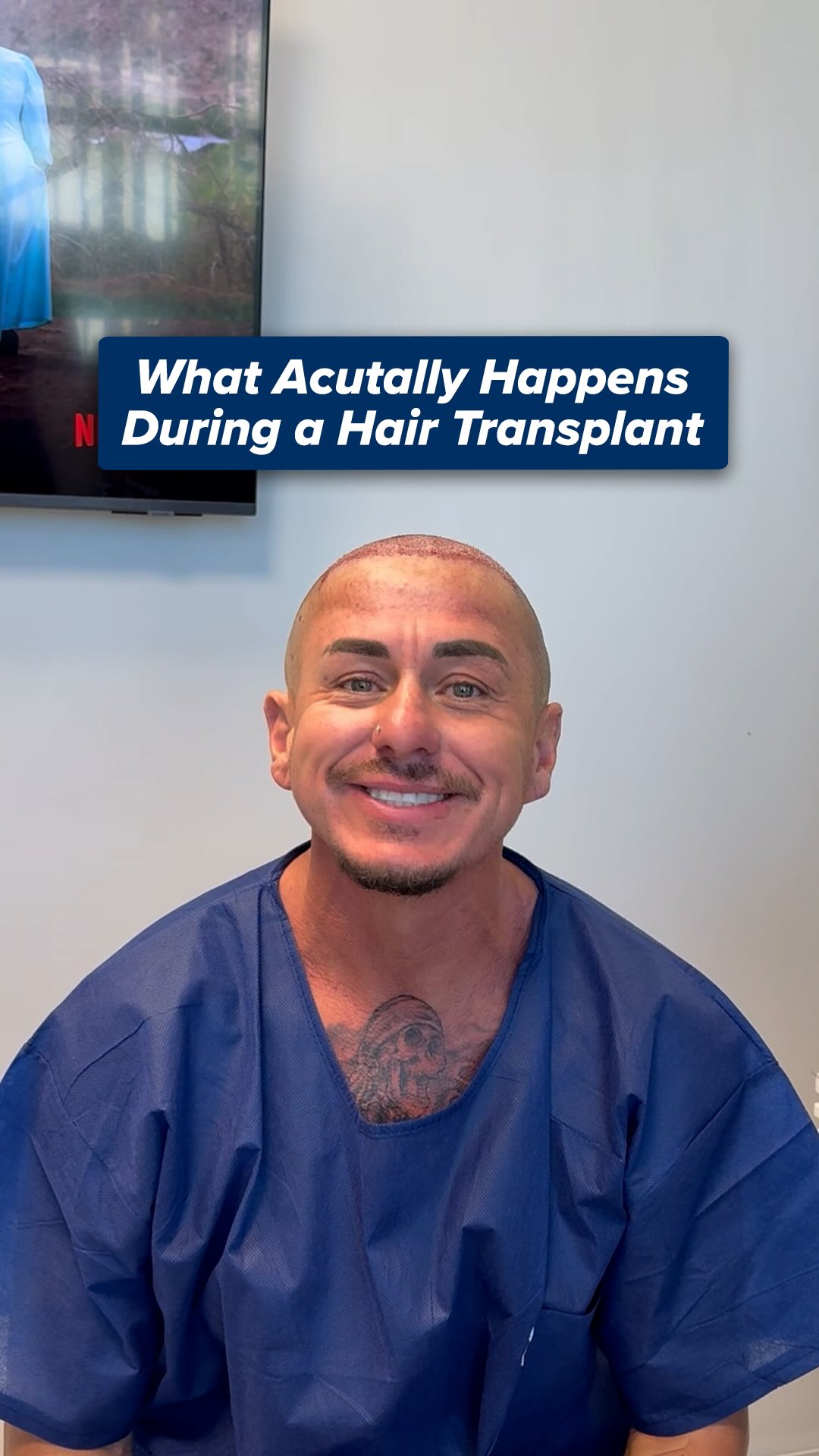
Inside the planning and placement behind a single day hair transplant
A look at how a hairline gets designed, how follicles get placed, and why the donor area heals without looking touched.
PURE HAIR RESTORATION CENTER STAFFTurn your social into search
We turn your posts into editorial stories that bring new search traffic to purehairrestoration.com. Three of yours will be on this page.
Book a demo
hairclinicmd What actually happens during a hair transplant? 👀 It starts with a plan. We design the hairline based on the patient’s natural anatomy, identify areas of recession and thinning, and determine exactly where additional density is needed. We advanced our patient’s hairline by about 1 centimeter, filled in the recessed areas, and added density through the thinning areas on top, placing follicles strategically between his existing hairs. We transplanted approximately 2,000 follicles, carefully harvesting from the back of the scalp by taking select follicles while leaving surrounding hairs intact. Once those hairs grow back in, they help camouflage the donor area so it doesn’t look like anything was taken. Comfortable and easy process that you sit back and relax with Netflix or take a nap, have some lunch, and walk out with a new hairline by the end of the day🙌 Interested in restoring your hairline or adding density to thinning areas? DM us to get started on your hair growth journey! #HairRestoration #HairTransplantDoctor #HairLossSolution #thinninghair #hairlosstreatment
A look at how a hairline gets designed, how follicles get placed, and why the donor area heals without looking touched.
PURE HAIR RESTORATION CENTER STAFFHow it works
Same as today. Nothing changes on Instagram.
We turn your post into a full story in your voice within the hour.
One click publishes it to purehairrestoration.com. Nothing goes live without you.
Your stories
Nothing was published anywhere. You decide that. Every word will come from your own posts, your own photos and your own treatments.
Hair Restoration · From your post
A look at how a hairline gets designed, how follicles get placed, and why the donor area heals without looking touched.
“What actually happens during a hair transplant? 👀 It starts with a plan. We design the hairline based on the patient’s natural anatomy, identify areas of recession and thinning, and determine exactly where additional density is needed. We advanced our patient’s hairline by about 1 centimeter, filled in the recessed areas, and added density through the thinning areas on top, placing follicles strategically between his existing hairs. We transplanted approximately 2,000 follicles, carefully harvesting from the back of the scalp by taking select follicles while leaving surrounding hairs intact. Once those hairs grow back in, they help camouflage the donor area so it doesn’t look like anything was taken. Comfortable and easy process that you sit back and relax with Netflix or take a nap, have some lunch, and walk out with a new hairline by the end of the day🙌 Interested in restoring your hairline or adding density to thinning areas? DM us to get started on your hair growth journey! #HairRestoration #HairTransplantDoctor #HairLossSolution #thinninghair #hairlosstreatment”
Patient Results · From your post
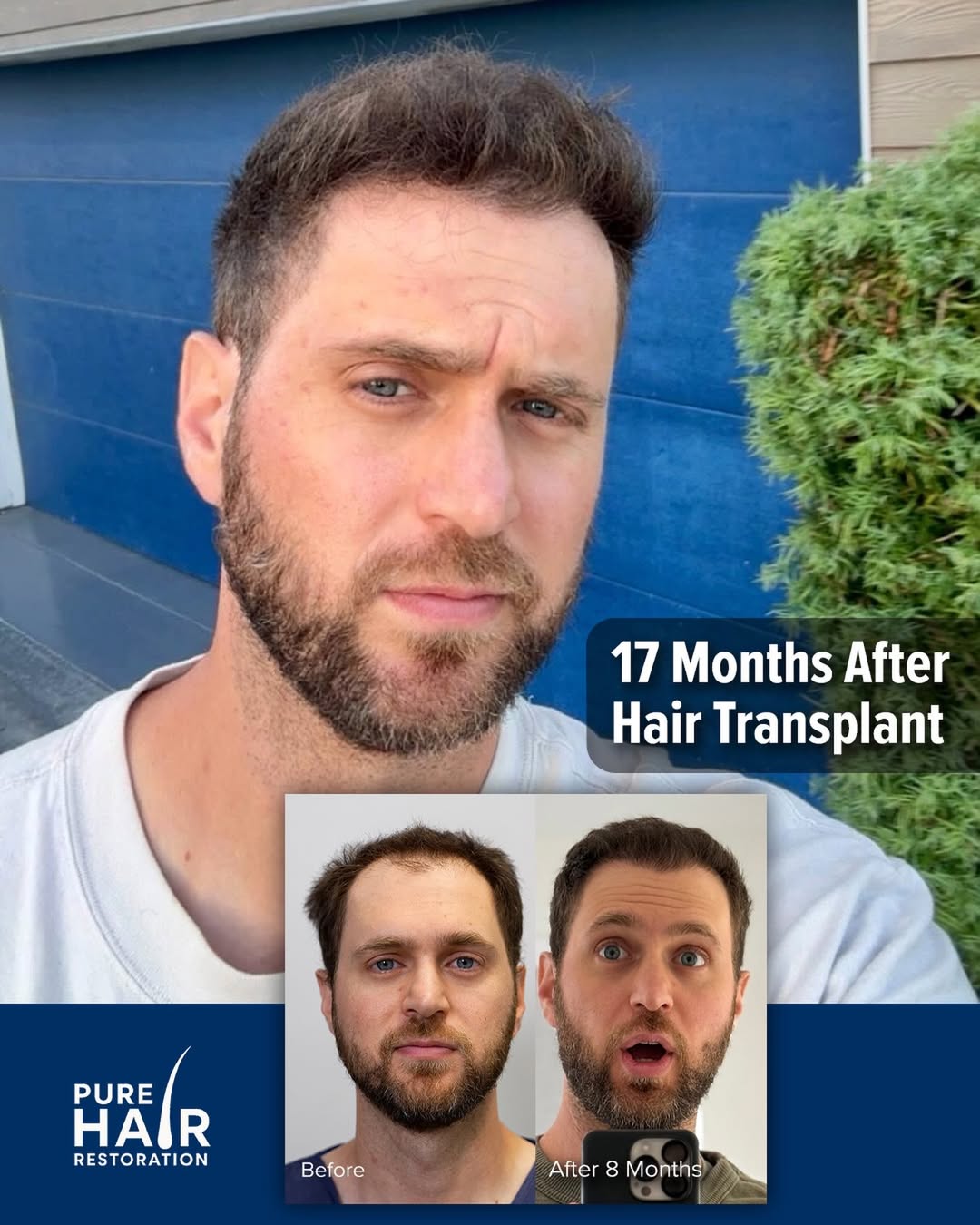
A patient's timeline shows what permanent hair restoration actually looks like once the growth cycle finishes.
“Can you believe @halfcubandave ’s hairline?!👀 All we can say is GOALS🏆 He is 17 months post op from his hair transplant. Since then he maintained his hair growth with monthly PRP which helped sustain a nutrient rich environment for his hair to grow in strong and healthy. His hairline looks completely natural as if he never even had hair loss in the first place. Since hair transplants are follicles taken from a genetically stronger area in the back of the head that are less prone to hair loss, his hair is permanent and here to stay! 🌱 We are so happy for him and grateful he has shared his incredible hair transformation journey. What questions do you have about hair loss treatment or hair transplants? Let us know in the comments!💬👇 #hairrestoration #hairloss #hairtransplantresult #beforeandafterhairtransplant”
Hair Restoration · From your post
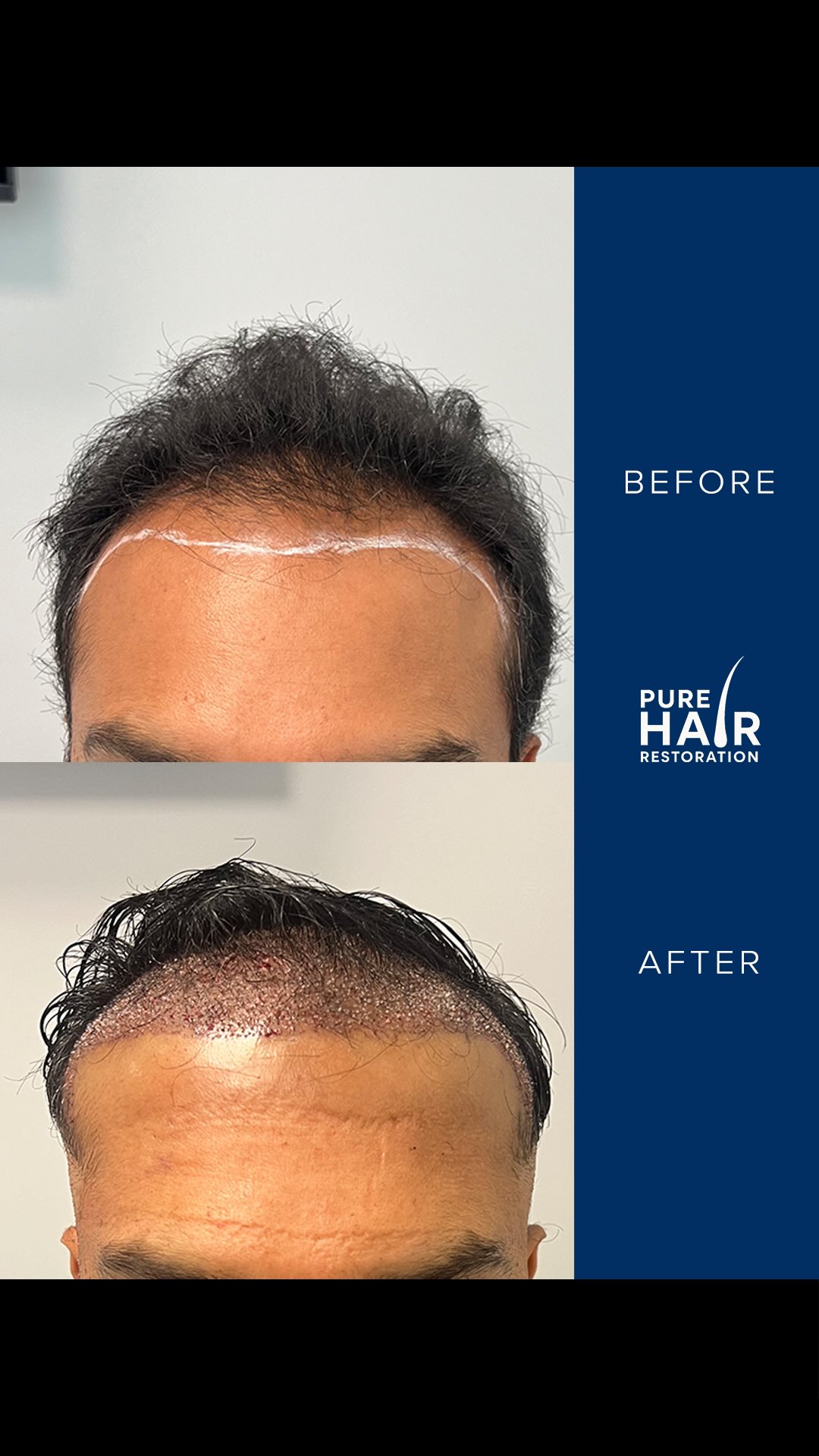
A before and after from Pure Hair Restoration shows the frontal hairline immediately post procedure, before the growth cycle even begins.
“A restored hairline, immediately after transplant. ✨ For this patient, we focused on rebuilding the frontal hairline and filling areas of recession and thinning to create a fuller, more balanced frame for the face. Over the coming months, these follicles will go through the normal growth cycle as the final density gradually develops. Interested in restoring your hairline or adding density to thinning areas? DM us to get started on your hair growth journey! #HairRestoration #HairTransplantDoctor #HairLossSolution #thinninghair #hairlosstreatment”
One social post becomes another searchable entry point to Pure Hair Restoration Center.
Our own magazine. Clicks and citations from Google Search Console, as of September 15, 2026.
Draft story for purehairrestoration.com · Hair Restoration
A look at how a hairline gets designed, how follicles get placed, and why the donor area heals without looking touched.
Before a single follicle moves, a hair transplant starts as a drawing problem. We look at where the hairline currently sits, where it has receded, and where the scalp has thinned out on top. From there we sketch a new hairline based on the patient's own anatomy, not a generic template, so the shape looks like something that could have grown in naturally on its own.
In one recent case, that plan meant moving the hairline forward by about one centimeter. That number sounds small, but on a scalp it changes the whole framing of the face. The recessed corners on either side of the hairline get filled in first, since those areas usually show age and thinning before anywhere else does, and they matter most for how natural the final line reads.
Once the hairline itself is set, attention moves to the top of the scalp, where hair has thinned rather than disappeared completely. Instead of clearing space and starting over, follicles get placed strategically between the hairs that are already there. That approach lets existing hair and transplanted hair grow together, so the density increase looks gradual instead of abrupt.
For this procedure, that meant transplanting approximately 2,000 follicles across the hairline and the thinning areas on top. Each follicle is placed with a specific purpose, whether that is sharpening the new hairline's edge or adding coverage through a patch of scalp that has been visibly thinning. Nothing is placed at random, since the placement pattern is what ultimately determines how natural the result looks once it grows in.
The follicles used for both the hairline and the density work come from the back of the scalp, an area that tends to hold onto hair longer and is less affected by pattern thinning. Harvesting is done by selecting individual follicles and leaving the surrounding hair untouched, rather than removing hair from one continuous strip. That selective approach is what keeps the donor area from looking depleted afterward.
Once the surrounding hair in the donor area grows back in around the harvested spots, it naturally covers where follicles were taken. There is no bald patch left behind and no obvious sign that hair was removed from the back of the scalp at all. That healing pattern is part of why the donor area can be used again in the future if a patient wants further density work down the line.
From the patient's side, the actual experience is far less clinical than the planning behind it. Once the hairline is mapped and the harvesting begins, patients are settled in and can watch something on Netflix, take a nap, or eat lunch while the placement work continues around them. There is no dramatic recovery period built into the day itself, just time spent sitting comfortably while the procedure happens.
By the end of that same day, the patient walks out with a new hairline already in place and the donor area quietly healing in the back. The results are not visible immediately in full, since transplanted follicles take time to grow, but the framework for the new hairline and the added density on top is set before anyone leaves the chair that afternoon.
Draft story for purehairrestoration.com · Patient Results
A patient's timeline shows what permanent hair restoration actually looks like once the growth cycle finishes.
Seventeen months after his hair transplant, Dave's hairline sits low, dense, and completely natural along his temples. There is no telltale line, no patchiness, no sign that points back to where he started. Set beside his earlier photos, the change is obvious, but what stands out most is how ordinary it looks now. That is the actual goal of this work.
The comparison images tell the timeline in three parts. Before, his hairline had receded and thinned at the crown. At eight months, new growth had come in but still looked young, finer and less settled. By seventeen months, the hair has matured into its final texture and density, filling in exactly where his natural hairline used to sit years earlier.
Hair transplant results do not appear overnight, and Dave's photos are useful precisely because they show the middle and the end, not just the finish. Transplanted follicles go through a growth cycle that takes months to complete. Patients often see thin, wispy hair well before they see the fuller, natural texture that eventually settles in around the one year mark and beyond.
Since his procedure, Dave has maintained his results with monthly PRP treatments. PRP uses the growth factors in a patient's own blood to support a healthier scalp environment, which helps sustain the density and strength of the hair as it continues to mature. It is a maintenance step, not the procedure itself, but it plays a real role in how the final result holds up over time.
The permanence in Dave's case comes down to where his follicles were sourced. Hair transplants relocate follicles from the back of the head, an area that is genetically resistant to the pattern of hair loss that affects the crown and hairline. Once those follicles are moved and take root in a new location, they keep that same resistance, which is why the results are considered permanent rather than temporary.
That genetic detail explains why his hairline holds up under close inspection rather than reading as an obvious repair job. The follicles were never going to thin the way his original hairline did, because they never carried that same vulnerability. Seventeen months in, the hair simply behaves like hair that was always meant to be there.
We are grateful Dave chose to share this stretch of his transformation, since a single before and after photo rarely captures how gradual and specific this process really is. Seeing eight months next to seventeen months gives a far more honest picture of what patience looks like, and why timeline matters as much as the transplant itself when evaluating results.
If you are weighing a hair transplant or wondering how PRP fits into long term maintenance, Dave's timeline is a useful reference point rather than a highlight reel. Growth takes time, texture keeps changing, and the version you see at eight months is not the final answer. Seventeen months in, his hairline looks like it was simply always his.
Draft story for purehairrestoration.com · Hair Restoration
A before and after from Pure Hair Restoration shows the frontal hairline immediately post procedure, before the growth cycle even begins.
The pairing above is not a finished result. It is a hairline caught at its most vulnerable moment, hours after transplant, before anything has had the chance to heal or grow. We think this stage deserves more attention than it usually gets, because it explains what patients are actually walking through on the way to density.
In the before frame, the recession is visible along the temples and frontal scalp, with thinning that has pulled the hairline back and left the frame of the face looking unbalanced. That imbalance is the starting point for almost every consultation we run. People rarely come in chasing a dramatic change. They come in wanting their forehead to look proportional again.
The after frame shows redness and visible grafts across the reconstructed hairline, which is completely expected immediately following the procedure. For this patient, the work centered on rebuilding the frontal hairline specifically and filling the areas of recession and thinning that had developed there, rather than treating the whole scalp as one uniform zone.
That distinction matters. A frontal hairline sets the frame for the entire face, so even a focused restoration in that one area can change how balanced someone looks. The grafts placed here are positioned to follow a natural line, not a straight or overly dense one, which is part of why the immediate result looks raw rather than styled.
The follicles seen in this result are not finished doing their work. Over the coming months they move through a normal growth cycle, which means shedding, dormancy, and regrowth before final density is visible. It is a slow biological process, not a switch that flips once the procedure ends, and that timeline is part of what we walk patients through before anything is scheduled.
We show this stage openly because it sets honest expectations. Anyone researching hair restoration deserves to see the redness and the grafts, not just a polished outcome months later with no context for how it got there. The gap between these two frames is where the real work of healing happens, mostly out of view, day after day.
If recession or thinning has changed the frame of your face the way it did here, the frontal hairline is often the first area worth addressing before considering the rest of the scalp. Rebuilding that line can restore balance on its own, which is why so many consultations at Pure Hair Restoration begin with a close look at exactly this region.
For anyone weighing whether to start, the honest answer is that results take patience measured in months, not days. What this pairing offers is a real look at the middle of that timeline, the part usually left out of the conversation, so the eventual density means something more concrete when it finally arrives.
Keep reading