
Why rosacea gets mistaken for acne so often
Dr. Lodha discusses rosacea diagnosis and treatment during a national television appearance for Rosacea Awareness Month.
PURA DERMATOLOGY STAFFTurn your social into search
We turn your posts into editorial stories that bring new search traffic to puradermatology.com. Three of yours will be on this page.
Book a demo
puradermatology Lights, camera, action 🥸😅. It was such a pleasure discussing rosacea on “The Balancing Act” with Montel Williams and Olga Villaverdeduring last year’s Rosacea Awareness Month. Rosacea is one of my favorite conditions to diagnose and treat, and an area I’ve developed a special expertise in over the years. Many patients don’t realize they have rosacea until they finally receive the right diagnosis, often misdiagnosed as having acne. If you missed the show last year, click the link below to watch Dr. Lodha! https.//www.youtube.com/watch?v=seMmi4XZsyY&t=70s
Dr. Lodha discusses rosacea diagnosis and treatment during a national television appearance for Rosacea Awareness Month.
PURA DERMATOLOGY STAFFHow it works
Same as today. Nothing changes on Instagram.
We turn your post into a full story in your voice within the hour.
One click publishes it to puradermatology.com. Nothing goes live without you.
Your stories
Nothing was published anywhere. You decide that. Every word will come from your own posts, your own photos and your own treatments.
Rosacea Care · From your post
Dr. Lodha discusses rosacea diagnosis and treatment during a national television appearance for Rosacea Awareness Month.
“Lights, camera, action 🥸😅. It was such a pleasure discussing rosacea on “The Balancing Act” with Montel Williams and Olga Villaverdeduring last year’s Rosacea Awareness Month. Rosacea is one of my favorite conditions to diagnose and treat, and an area I’ve developed a special expertise in over the years. Many patients don’t realize they have rosacea until they finally receive the right diagnosis, often misdiagnosed as having acne. If you missed the show last year, click the link below to watch Dr. Lodha! https.//www.youtube.com/watch?v=seMmi4XZsyY&t=70s”
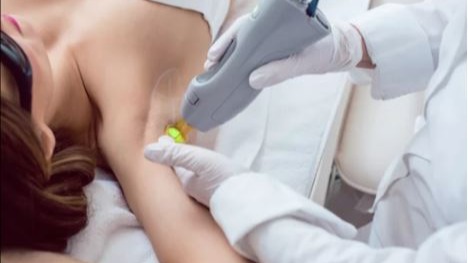
In The Treatment Room · From your post
A closer look at the Clarity II system now offered at Pura Dermatology and what it changes about the routine.
“🌟 Say goodbye to shaving & waxing! 🌟 Pura Dermatology is now offering Clarity II Advanced Laser Hair Removal. the strongest, most effective, and least painful system available! ✨ Faster treatments ✨ Comfortable & precise ✨ Safe for multiple skin types ✨ Long lasting results Smooth skin is just a session away! Perfect for your back, chest, legs, face, or underarms. 💫 📅 Book now & experience laser precision like never before! #PuraDermatology #LaserHairRemoval #SmoothSkin #HairFreeCare #ClarityII #BeautyTech #SkincareGoals #NYCderm #Dermatology #LHR; #Hairremoval; #Skinlaser #hudsonyards #selfcare #beauty”
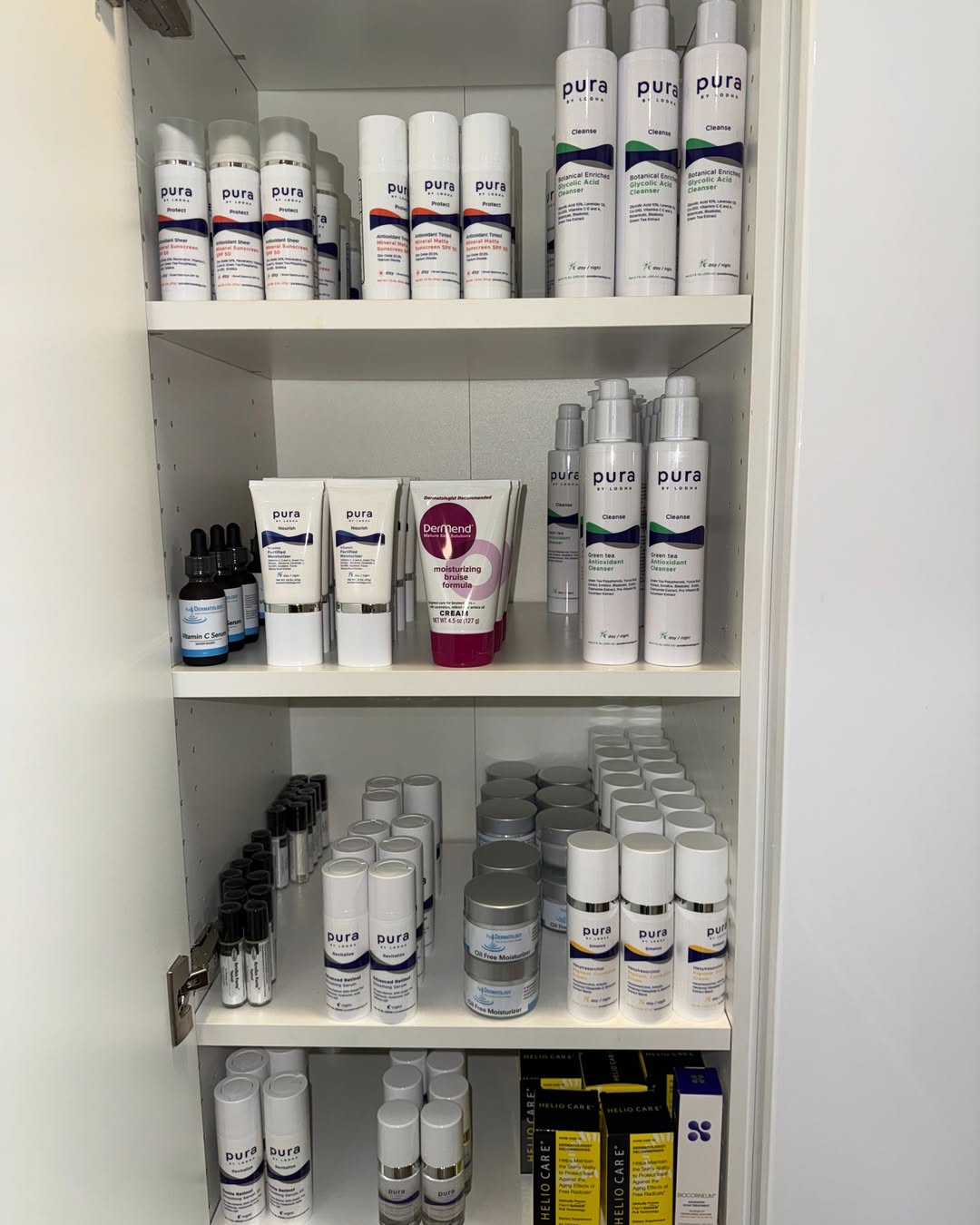
In The Cabinet · From your post
A shelf by shelf look at the cleansers, serums, and daily essentials we keep on hand for patients.
“Skincare goals, fully stocked. ✨ From purifying cleansers to powerful serums and everyday essentials. We've got your glow covered. 💧 #SkinCare #PuraSkinCare #Glow #HealthySkinStartsHere #NYCderm #puradermatology”
One social post becomes another searchable entry point to Pura Dermatology.
Our own magazine. Clicks and citations from Google Search Console, as of September 15, 2026.
Draft story for puradermatology.com · Rosacea Care
Dr. Lodha discusses rosacea diagnosis and treatment during a national television appearance for Rosacea Awareness Month.
We sat down on the set of The Balancing Act with Montel Williams and Olga Villaverde to talk about a condition we see misread more often than almost any other: rosacea. The round white sofas, the soft green rug, the skyline backdrop behind the anchor desk, all of it made for a warm setting to discuss something patients often carry quietly for years before getting an accurate name for it.
Rosacea is one of our favorite conditions to diagnose and treat. That might sound like an unusual thing to say about a skin condition, but there is real satisfaction in giving someone clarity after they have spent time treating the wrong problem entirely. Over the years we have developed a particular expertise in spotting it, partly because it hides so well behind a much more familiar diagnosis.
That familiar diagnosis is acne. Many patients come in believing they have adult acne, using products meant for clogged pores and breakouts, and wondering why nothing improves. Rosacea causes redness, bumps, and visible vessels that can look similar on the surface, but it behaves differently and responds to a different approach entirely. Without the right diagnosis, the standard acne routine can actually make rosacea worse.
Part of what makes rosacea tricky is that it does not always look dramatic. It can show up as persistent flushing, a tendency to redden with heat or certain foods, or small bumps that come and go. Patients often assume this is just sensitive skin or occasional irritation, not a diagnosable condition with its own name and its own treatment path, so they never bring it up directly.
That is exactly why we wanted to use the conversation on national television to talk plainly about it. Rosacea Awareness Month exists for a reason: the more people understand what the condition actually looks like, the sooner they get an accurate read on their own skin. A short segment cannot replace an exam, but it can plant the idea that redness is worth asking about.
Once rosacea is correctly identified, treatment looks nothing like a standard acne regimen. It is about calming the skin barrier, reducing triggers, and using approaches suited to chronic redness and sensitivity rather than aggressive exfoliation or drying agents built for clogged pores. Getting that distinction right from the start saves patients months, sometimes years, of using the wrong products for the wrong reason.
The full segment from last year is still available to watch, and we filmed it because the conversation felt bigger than a single appointment. Rosacea deserves the same clear, direct discussion that other skin conditions get, without the confusion that keeps people guessing. If any part of what we described sounds familiar, that recognition alone is often the first real step toward an answer.
We keep coming back to rosacea in our own practice because the difference between the wrong diagnosis and the right one is so visible in how patients respond once treatment actually matches the condition. A studio segment can only cover so much ground, but it is a starting point, and starting points are usually all that is needed to finally ask the right question.
Draft story for puradermatology.com · In The Treatment Room
A closer look at the Clarity II system now offered at Pura Dermatology and what it changes about the routine.
At Pura Dermatology, laser hair removal has moved away from the old idea of gritting through pain for the sake of smooth skin. We now offer the Clarity II Advanced Laser system, and the shift is less about novelty and more about what happens during an actual session: shorter appointments, steadier comfort, and results that hold up over time instead of fading within days like a razor pass or a wax.
The setup itself is simple. A handheld laser device passes over the skin while the treatment area stays cool and protected, with eye protection worn throughout for safety. It is a clinical process, not a spa gimmick, and that shows in how deliberate each pass is. Precision matters here, since the goal is targeting hair follicles without unnecessary discomfort to the surrounding skin.
Not all laser hair removal machines are built the same, and that is the actual case for Clarity II. It is designed to work faster than older systems, which shortens the time spent in the chair for larger areas like the back or legs. It is also built to be gentler on the skin during treatment, which matters most for anyone who has tried laser removal before and found it uncomfortable.
Skin type has always been the limiting factor with laser hair removal, since older lasers were calibrated mostly for lighter skin tones and left other patients with fewer safe options. Clarity II is built to work safely across multiple skin types, which widens who can actually use the treatment. That inclusivity is not a small feature. It is the difference between a treatment being broadly available or narrowly limited.
The areas we treat most are the ones people manage constantly: underarms, legs, chest, back, and face. Each comes with its own texture and hair density, so the laser settings and pacing shift accordingly. A session on the back looks different from one on the upper lip, even though the same system and the same underlying goal, permanently reducing regrowth, carries through every area we treat.
What patients notice first is usually the time saved. Shaving is a daily task and waxing requires waiting for regrowth before booking again. Laser treatment works on a different rhythm entirely, spacing sessions out while hair follicles are gradually damaged and regrowth slows. Over a series of appointments, the maintenance routine that used to happen weekly starts to disappear from the calendar altogether.
Pain tolerance is often the real reason people avoid laser hair removal, not cost or time. Clarity II was built with that hesitation in mind, using technology designed to minimize discomfort during treatment rather than simply pushing through it. For someone who tried laser removal years ago and remembers it as painful, that difference in how the system feels during a session is worth paying attention to.
Smooth skin, in the end, is really about subtraction: one less daily task, one less recurring appointment, one less thing to plan a summer wardrobe or a swim schedule around. That is the practical case for laser hair removal done well. At Pura Dermatology, the Clarity II system is our answer to what that subtraction should feel like in the chair, session after session.
Draft story for puradermatology.com · In The Cabinet
A shelf by shelf look at the cleansers, serums, and daily essentials we keep on hand for patients.
A cabinet like this one is not decoration. Every shelf holds something a patient will actually use, from the first cleanse of the morning to the last step before bed. Nothing here is arranged for show. It is arranged for function, which is a different kind of order entirely, one built around what people reach for and when.
The top shelf is dense with Pura cleansers, lined up in matching white bottles with their blue and red detailing facing out. Multiples of the same product sit side by side, which is less about volume and more about consistency. When a patient finds a cleanser that works for their skin, we want it in stock and ready, not something they have to wait on.
One shelf down, the lineup gets more varied. Vitamin C serum bottles with dropper tops sit next to tubes of moisturizer and a jar labeled DerMend for dry, compromised skin. A few more Pura cleanser cans anchor the right side. It is a shelf that spans several steps of a routine at once, cleanse, treat, and repair, rather than just one category.
Below that, the shelf gets busier still. Small dark glass bottles are grouped on the left, the kind used for concentrated treatments measured in drops rather than pumps. Next to them, cylindrical jars and containers in silver and white sit in tighter clusters, suggesting a shelf that turns over often enough to need constant restocking rather than one that sits untouched.
The bottom shelf holds sunscreen, and it is worth noticing what that says about priority. Heliocare boxes in black and yellow sit alongside more Pura bottles, positioned within easy reach rather than tucked away. Sun protection is often the step patients skip first when a routine gets shortened, so keeping it visible and accessible is a small, deliberate choice.
Look at the whole cabinet together and a pattern shows up. Cleansers dominate the top, treatment serums and correctives take the middle two shelves, and protection sits at the bottom, ready to grab on the way out. It roughly mirrors the order of an actual routine, morning or night, which makes restocking simple and makes it easier for patients to see what they are missing.
A glow does not come from one product working alone. It comes from a cleanser that suits your skin, a serum that addresses what is actually happening underneath it, and a sunscreen that protects the progress both are making. Keeping all three in reach, in enough supply that a patient never has to wait, is a quieter kind of care that happens before anyone walks in the door.
Skincare goals are easy to talk about and harder to sustain without the right products nearby at the right time. That is what a shelf like this is for. It is not about having everything. It is about having what works, in enough supply, organized so the next step is always obvious and the routine never has to pause.
Keep reading