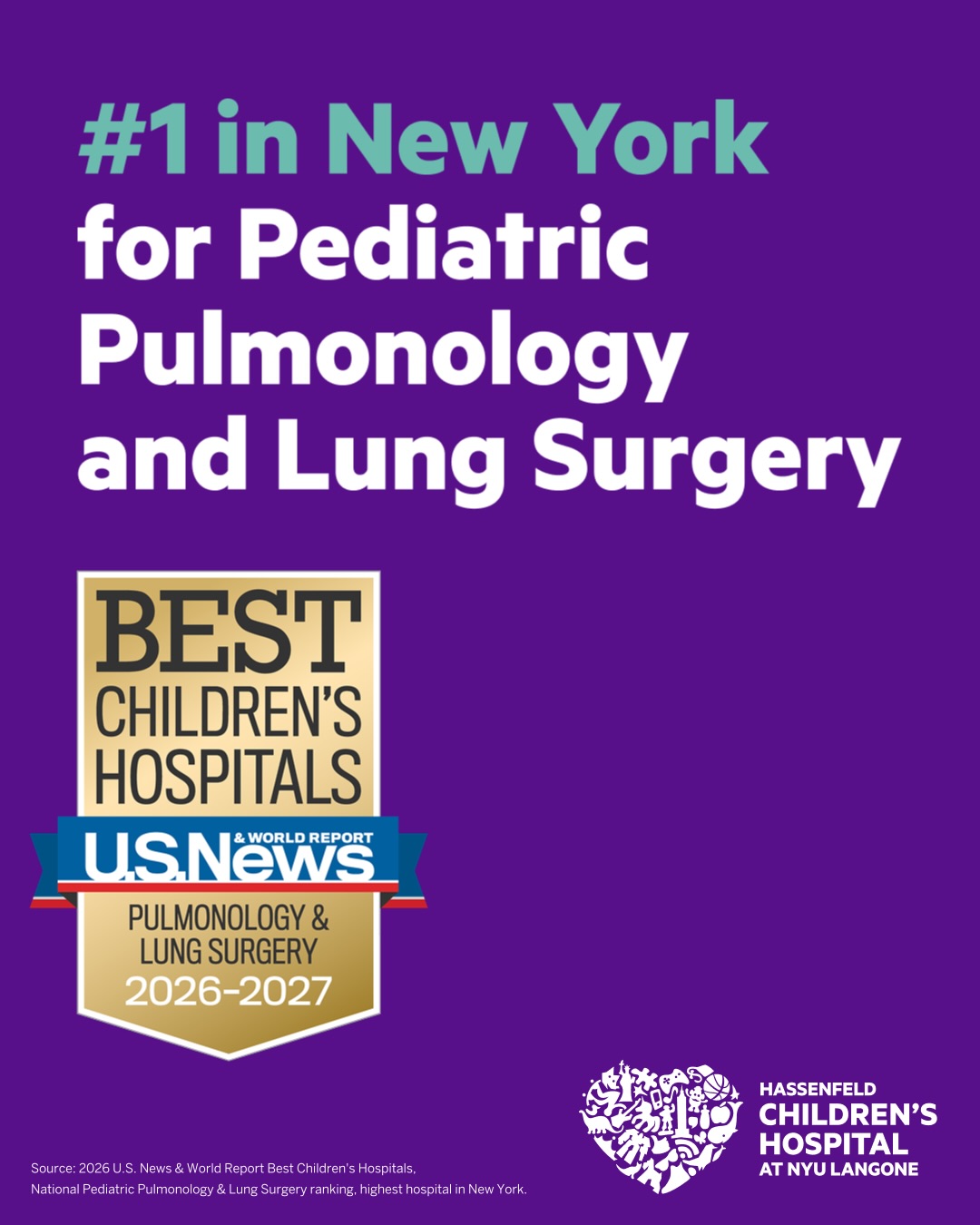
Hassenfeld Children's Hospital ranks No. 1 in New York for pediatric pulmonology and lung surgery
U.S. News and World Report names Hassenfeld Children's Hospital the top program in the state for children's lung care.
PRINCE ADOTAMA, MD STAFFTurn your social into search
We turn your posts into editorial stories that bring new search traffic to nyulangone.org. Three of yours will be on this page.
Book a demo
nyulangone We’re proud to share that Hassenfeld Children’s Hospital is ranked No. 1 in New York State for pediatric pulmonology and lung surgery, according to U.S. News & World Report’s [secret hidden. carrier 2]. 2027 Best Children’s Hospitals guide! The recognition highlights the depth of pediatric pulmonology care provided across NYU Langone Health, with specialists caring for children at Hassenfeld Children’s Hospital and its outpatient locations, as well as NYU Langone Hospital. Long Island and NYU Langone Hospital. Brooklyn. Across the health system, specialists collaborate to diagnose and treat children with conditions ranging from asthma, the most common chronic disease among children, to rare and complex disorders requiring highly specialized, multidisciplinary treatment, including pediatric lung transplant. “This ranking reflects the extraordinary expertise and dedication of our entire team, as well as the trust families place in us during some of the most challenging moments in their children’s lives,” says Mikhail Kazachkov, MD, director of the Division of Pediatric Pulmonary Medicine. Hassenfeld Children’s Hospital also ranked among the nation’s top 50 in four additional pediatric specialties, including cardiology, endocrinology, gastroenterology and GI surgery, and neonatology. Congratulations to our faculty, nurses, staff, and care teams who made this achievement possible! Learn more about this recognition at the link in our bio.
U.S. News and World Report names Hassenfeld Children's Hospital the top program in the state for children's lung care.
PRINCE ADOTAMA, MD STAFFHow it works
Same as today. Nothing changes on Instagram.
We turn your post into a full story in your voice within the hour.
One click publishes it to nyulangone.org. Nothing goes live without you.
Your stories
Nothing was published anywhere. You decide that. Every word will come from your own posts, your own photos and your own treatments.
Pediatric Care · From your post
U.S. News and World Report names Hassenfeld Children's Hospital the top program in the state for children's lung care.
“We’re proud to share that Hassenfeld Children’s Hospital is ranked No. 1 in New York State for pediatric pulmonology and lung surgery, according to U.S. News & World Report’s [secret hidden. carrier 2]. 2027 Best Children’s Hospitals guide! The recognition highlights the depth of pediatric pulmonology care provided across NYU Langone Health, with specialists caring for children at Hassenfeld Children’s Hospital and its outpatient locations, as well as NYU Langone Hospital. Long Island and NYU Langone Hospital. Brooklyn. Across the health system, specialists collaborate to diagnose and treat children with conditions ranging from asthma, the most common chronic disease among children, to rare and complex disorders requiring highly specialized, multidisciplinary treatment, including pediatric lung transplant. “This ranking reflects the extraordinary expertise and dedication of our entire team, as well as the trust families place in us during some of the most challenging moments in their children’s lives,” says Mikhail Kazachkov, MD, director of the Division of Pediatric Pulmonary Medicine. Hassenfeld Children’s Hospital also ranked among the nation’s top 50 in four additional pediatric specialties, including cardiology, endocrinology, gastroenterology and GI surgery, and neonatology. Congratulations to our faculty, nurses, staff, and care teams who made this achievement possible! Learn more about this recognition at the link in our bio.”
Patient Care · From your post
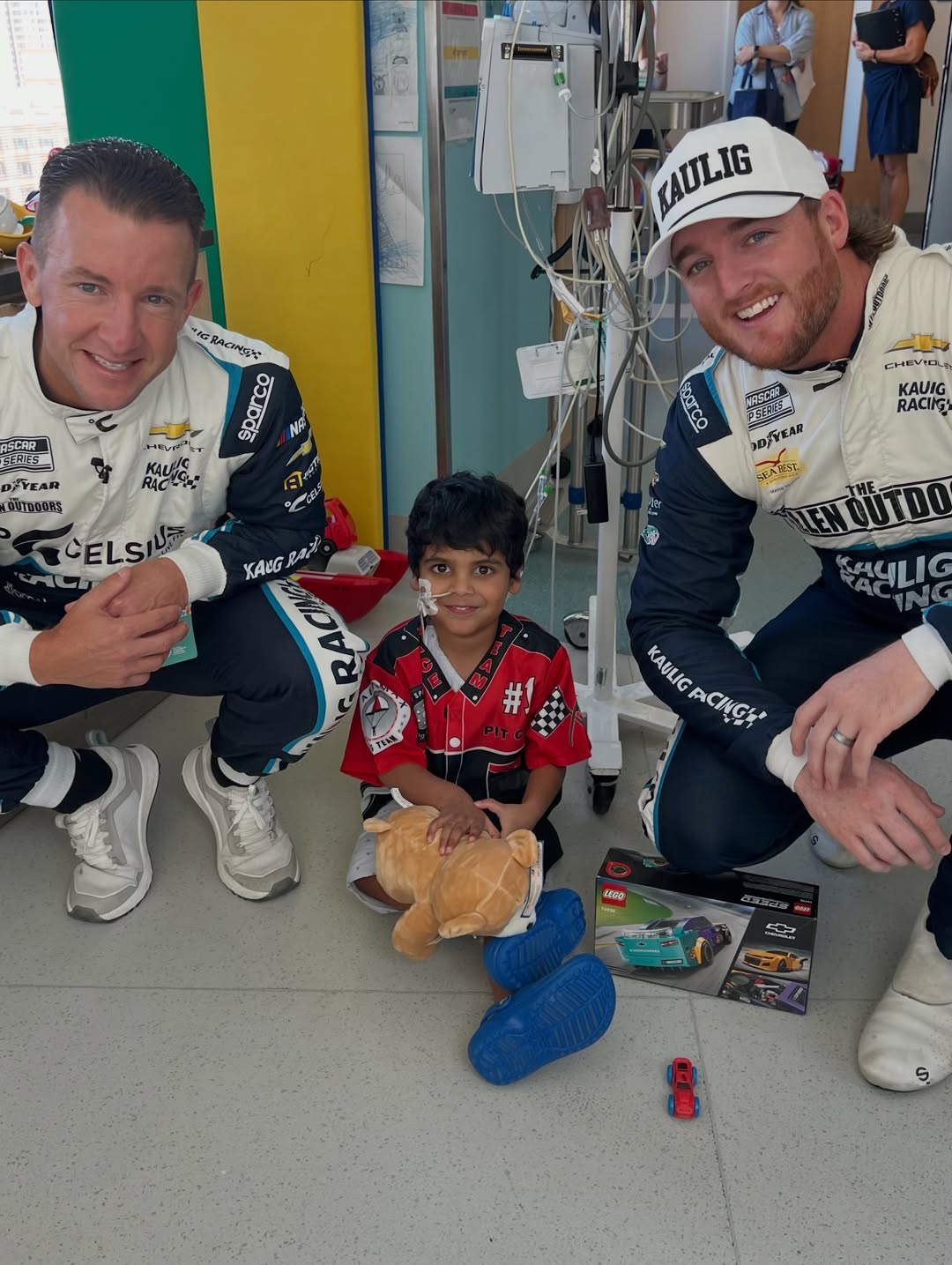
AJ Allmendinger and Ty Dillon traded the track for a hospital hallway, bringing bears, bingo and toy cars to patients at Hassenfeld Children's Hospital.
“National Teddy Bear Day was off to the races at Hassenfeld Children’s Hospital last week! 🧸🏁 As part of the NASCAR Foundation’s Speedy Bear Brigade, @nascar drivers AJ Allmendinger (@aj_allmendinger_official) and Ty Dillon (@ty_dillon) stopped by with NASCAR themed teddy bears for patients. The NASCAR Foundation also made a generous gift to support the hospital! Speedy Bears were shared with patients throughout the hospital, and the drivers joined in on bingo, handed out toy race cars to winners and even got down on the floor to race with patients. We’re grateful to @nascar_fdn and @kauligracing for their support! Together with certified child life specialists and creative arts therapists who are part of our Sala Institute for Child and Family Centered Care, they helped make the day possible and create memorable moments for our patients and families.”
Adaptive Sports · From your post
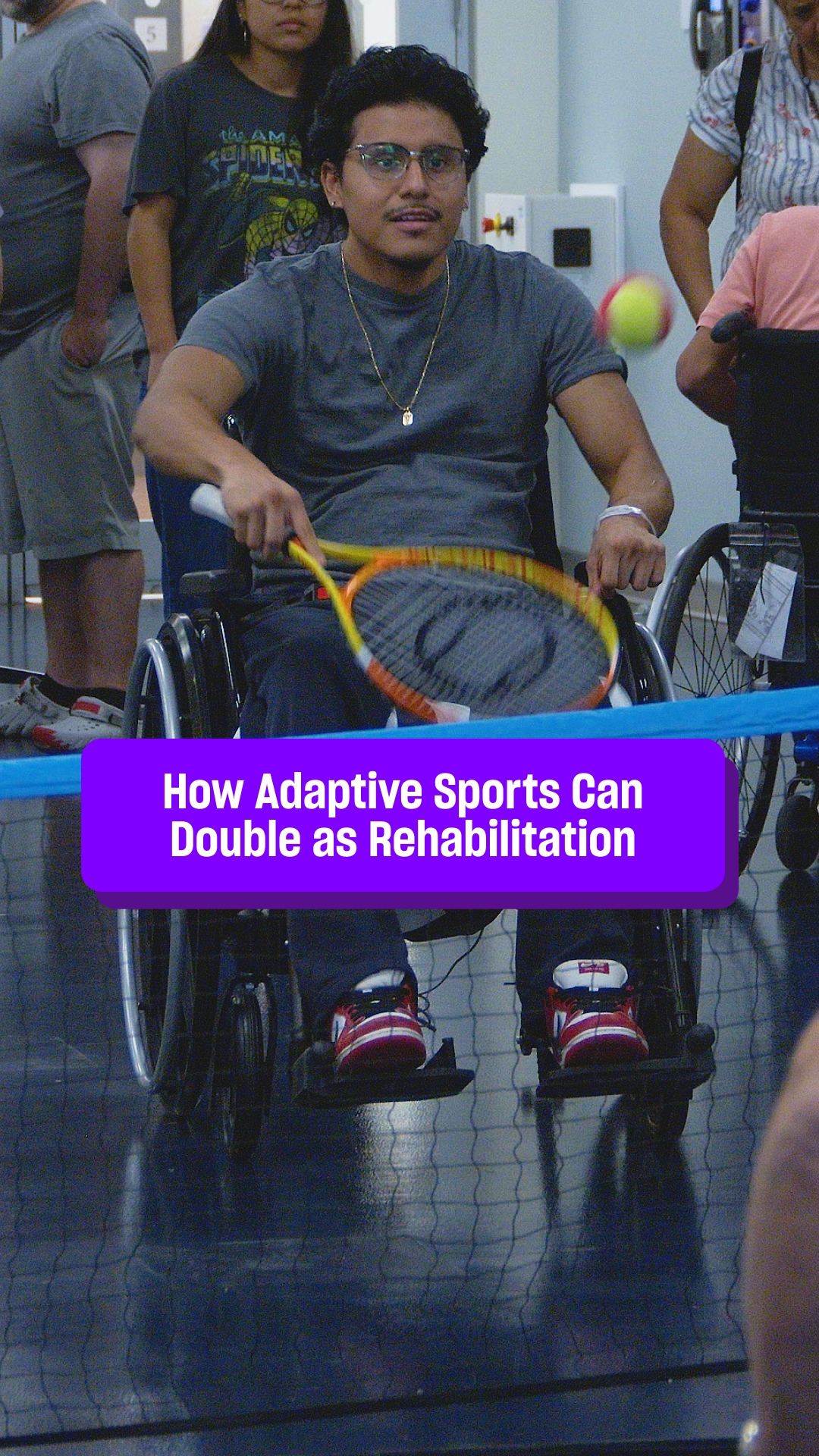
A visit from professional wheelchair tennis players showed patients how a racquet and a court can double as physical therapy.
“Whether you get around on two feet or two wheels, anyone can play sports 🏓🎾 To celebrate 50 years of professional wheelchair tennis, @worldtennisofficial and @usta recently brought the sport to NYU Langone’s Rusk Rehabilitation, where patients had the chance to try it for the first time alongside pros Monique Kalkman van den Bosch and David Hall. Adaptive sports like wheelchair tennis can be a great complement to rehabilitation, helping patients build strength, balance, and coordination. At Rusk, our experts work to incorporate adaptive sports into patients’ care plans whenever possible. Thank you to World Tennis and USTA for bringing wheelchair tennis to our patients!”
One social post becomes another searchable entry point to Prince Adotama, MD.
Our own magazine. Clicks and citations from Google Search Console, as of September 15, 2026.
Draft story for nyulangone.org · Pediatric Care
U.S. News and World Report names Hassenfeld Children's Hospital the top program in the state for children's lung care.
Hassenfeld Children's Hospital has been ranked No. 1 in New York State for pediatric pulmonology and lung surgery in U.S. News and World Report's Best Children's Hospitals guide. It is a recognition that reflects the scale and depth of pediatric lung care built across NYU Langone Health, not a single unit or a single building, but a coordinated system of specialists working on behalf of children across the region.
That system reaches well beyond one hospital campus. Specialists care for children at Hassenfeld Children's Hospital and its outpatient locations, as well as at NYU Langone Hospital, Long Island and NYU Langone Hospital, Brooklyn. Families in different parts of the region can reach pediatric pulmonology expertise without that care being confined to a single address, which matters enormously when a child's condition requires ongoing, specialized attention.
The range of conditions treated is wide by design. Teams manage asthma, described as the most common chronic disease among children, alongside rare and complex lung disorders that require highly specialized, multidisciplinary treatment. That spectrum includes pediatric lung transplant, among the most demanding interventions in pediatric medicine, requiring coordination across surgical, medical, and long term care teams working toward the same outcome.
Mikhail Kazachkov, MD, director of the Division of Pediatric Pulmonary Medicine, said the ranking reflects the expertise and dedication of the entire team, along with the trust families place in that team during some of the most challenging moments in their children's lives. That trust is earned in exam rooms and hospital units, in conversations with parents who are often navigating a diagnosis they never expected to face.
A ranking like this is built from many smaller decisions made consistently over time: how a diagnosis is reached, how a treatment plan is explained to a family, how a rare case gets routed to the right specialists quickly. None of that shows up in a single headline, but all of it is what a No. 1 ranking in a state as large and as competitive as New York actually requires.
Pediatric pulmonology is not the only area where Hassenfeld Children's Hospital stands out nationally. The hospital also ranked among the top 50 programs in the country in four additional pediatric specialties: cardiology, endocrinology, gastroenterology and GI surgery, and neonatology. Recognition across that many specialties points to institutional depth, not a single standout department, but a broader base of pediatric expertise supporting children with very different medical needs.
For families searching for pediatric lung care in New York, a ranking is only useful if it points to something real: specialists who see complex cases regularly, locations that make ongoing care manageable, and teams built to handle everything from a child's first asthma diagnosis to a lung transplant. That is the substance behind this particular distinction.
Congratulations go to the faculty, nurses, staff, and care teams across NYU Langone Health whose work made this recognition possible. It belongs to the people who show up for these appointments, these procedures, and these families day after day, across every location where this care is delivered, not to a single hospital wing or a single name on a door.
Draft story for nyulangone.org · Patient Care
AJ Allmendinger and Ty Dillon traded the track for a hospital hallway, bringing bears, bingo and toy cars to patients at Hassenfeld Children's Hospital.
National Teddy Bear Day landed differently this year at Hassenfeld Children's Hospital. Instead of a quiet exchange of stuffed animals, patients got two NASCAR drivers kneeling on the tile in full racing suits, a stuffed bear tucked into a child's lap, and a pair of small blue sneakers kicked out mid conversation. It was a hospital hallway turned into something closer to a pit lane.
AJ Allmendinger and Ty Dillon arrived as part of the NASCAR Foundation's Speedy Bear Brigade, a program built around exactly this kind of visit: drivers showing up with NASCAR themed teddy bears for patients throughout the hospital. The bears made their way room to room, but the visit did not stop at a handoff. Both drivers stayed, and stayed close to the floor, literally.
The afternoon turned into a full slate of activity. Patients played bingo with the drivers calling numbers alongside them, and winners walked away with toy race cars instead of the usual prize table items. In one photographed moment, a small red and blue car sits on the floor next to a Lego race set, evidence of just how far the prizes extended beyond the bears themselves.
What stood out was the posture of the visit itself. Allmendinger and Dillon did not stand over patients for a quick photo and move on. They crouched, sat, and raced cars across the floor with kids still connected to monitoring equipment, meeting them exactly where they were instead of asking them to come to a photo line.
None of this happens without coordination behind it. Certified child life specialists and creative arts therapists from our Sala Institute for Child and Family Centered Care helped shape the visit so it worked around each patient's day, not the other way around. Their role is easy to overlook in a moment built around drivers and bears, but it is the reason the day ran the way it did.
The NASCAR Foundation also made a gift to support the hospital alongside the visit, pairing the in person time with something longer lasting. Kaulig Racing's support helped make the appearance possible as well, putting its name behind a day built less around branding and more around a few hours of distraction for kids who do not get many of them.
The child life team's job is to soften the edges of a hospital stay, and days like this one give them new material to work with for weeks afterward. A stuffed bear becomes something to hold during a procedure. A memory of racing toy cars on the floor becomes something to talk about instead of what brought a patient to the unit in the first place.
We are grateful to the NASCAR Foundation and Kaulig Racing for spending their time this way, and to the specialists who turned a single afternoon into something patients will carry with them. It was a short visit measured against a hospital stay, but for a few hours, the hallway felt less like a hospital and more like a place built entirely around a kid and his bear.
Draft story for nyulangone.org · Adaptive Sports
A visit from professional wheelchair tennis players showed patients how a racquet and a court can double as physical therapy.
A tennis court is not where most people expect to find a rehabilitation session, but for a group of patients at Rusk Rehabilitation, that is exactly where progress happened. Racquets in hand, they rolled onto the court to try wheelchair tennis for the first time, some of them only recently learning to maneuver a wheelchair at all, let alone chase a ball across a net.
The occasion was a fifty year milestone for professional wheelchair tennis, marked with a visit from World Tennis and the USTA. Patients did not just watch from the sideline. They played alongside professional athletes Monique Kalkman van den Bosch and David Hall, learning the sport's rhythm directly from two people who have spent their careers mastering it.
Anyone can play sports, whether they get around on two feet or two wheels, and that idea sits at the center of what adaptive sports offer patients. It is not a modified version of exercise or a consolation activity. It is a full sport with its own skills, strategy, and physical demands, and those demands happen to align closely with what rehabilitation is trying to build.
Wheelchair tennis asks a player to track a moving ball, judge distance, and adjust a chair's position in real time, all while keeping a racquet steady enough to make contact. Every one of those actions draws on strength, balance, and coordination, the same three things physical therapy sessions are designed to develop. The difference is that on a court, the work stops feeling like a set of repetitions.
That shift matters more than it might seem. A patient pushing through a strength building exercise is thinking about the exercise. A patient chasing down a return is thinking about the point. The physical gains are the same, but the attention moves outward, toward a ball, a partner, a next shot, rather than inward toward the effort of recovery itself.
At Rusk, incorporating adaptive sports into a patient's care plan is treated as a real option rather than an occasional extra, used whenever it fits what a patient needs. That means a session on a court can sit alongside more traditional rehabilitation work, not replacing it but expanding what recovery looks like day to day and giving patients another way to measure their own progress.
Watching a patient rally with an experienced player also does something less measurable but just as real. It shows what is possible further down the road, not as an abstract goal but as something happening a few feet away, in real time, with a coach who has built an entire career around the same sport a patient is only beginning to learn.
We are grateful to World Tennis and the USTA for bringing wheelchair tennis to our patients and for treating the court as a place where recovery and competition can share the same afternoon. A racquet, a chair, and a net turned out to be enough to make that point clearly, no additional explanation required.
Keep reading