A close look at what a full smile restoration actually changes
Before and after images of one restoration with Dr. Harry Elyassi show the small structural shifts that reshape how a smile reads.
PRIMODENT STUDIO STAFFTurn your social into search
We turn your posts into editorial stories that bring new search traffic to primodentstudio.com. Three of yours will be on this page.
Book a demo
officialprimodentlab One of our favorite restorations with @drharryelyassi transforming smiles one tooth at a time.
Before and after images of one restoration with Dr. Harry Elyassi show the small structural shifts that reshape how a smile reads.
PRIMODENT STUDIO STAFFHow it works
Same as today. Nothing changes on Instagram.
We turn your post into a full story in your voice within the hour.
One click publishes it to primodentstudio.com. Nothing goes live without you.
Your stories
Nothing was published anywhere. You decide that. Every word will come from your own posts, your own photos and your own treatments.
Smile Restorations · From your site
Before and after images of one restoration with Dr. Harry Elyassi show the small structural shifts that reshape how a smile reads.
“One of our favorite restorations with @drharryelyassi transforming smiles one tooth at a time.”
From your site
From your site
One social post becomes another searchable entry point to Primodent Studio.
Our own magazine. Clicks and citations from Google Search Console, as of September 15, 2026.
Draft story for primodentstudio.com · Smile Restorations
Before and after images of one restoration with Dr. Harry Elyassi show the small structural shifts that reshape how a smile reads.
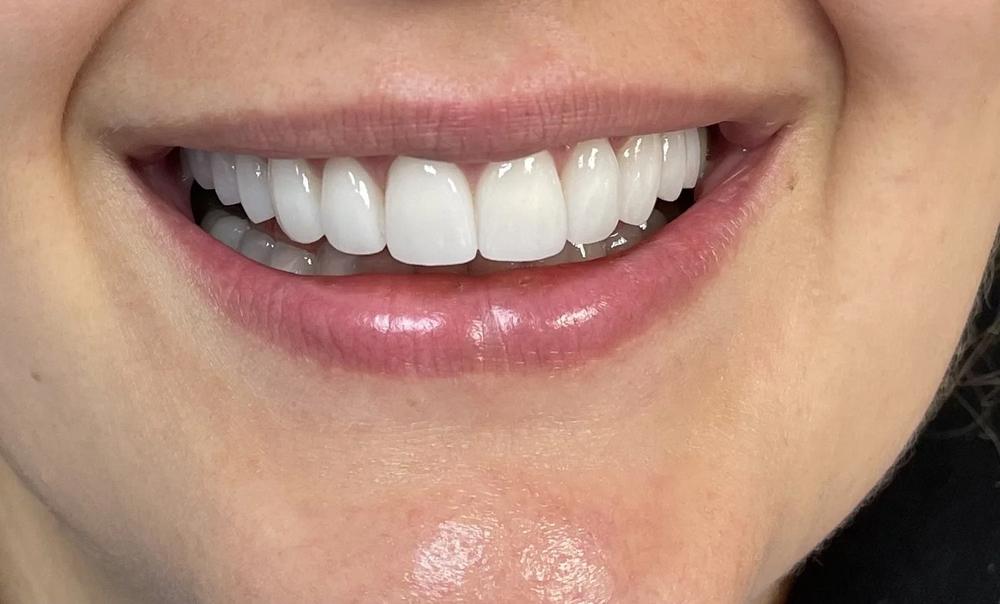
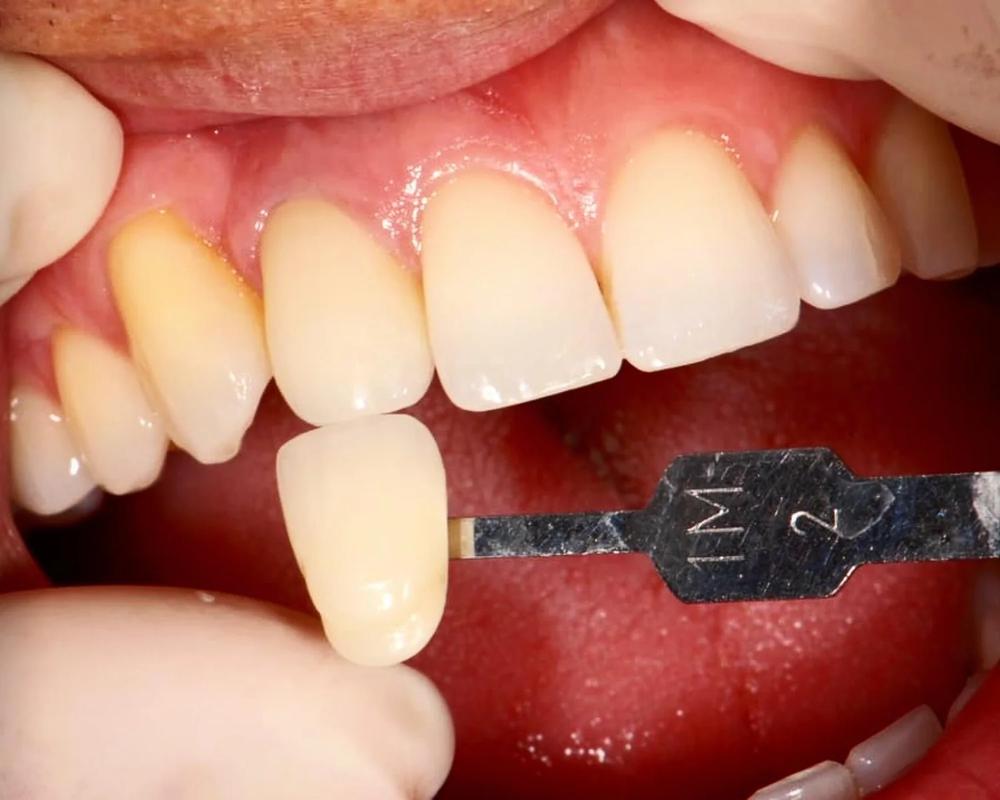
The two images sit stacked on top of each other for a reason. Above the line, the upper teeth show natural variation in shape, spacing, and a visible gap between the front two teeth. Below the line, that same mouth shows a top row that is even in width, tightly aligned, and uniform in shade from corner to corner.
We work with Dr. Harry Elyassi on restorations like this one, where the goal is not to erase what a smile looked like before but to correct the specific things that were working against it. In this case, that meant closing a central gap and evening out teeth that varied slightly in size and edge shape across the arch.
Look closely at the before image and the details are ordinary in the best sense. The teeth are healthy looking, the color is not discolored, and the smile already functions fine. That is a common starting point for restorative work. Most people who come in are not dealing with damage. They are dealing with small inconsistencies that are only obvious to them.
A gap between the front two teeth, sometimes called a diastema, changes how light and shadow sit across a smile. Even a small one can pull focus every time someone talks or laughs, since the eye naturally goes to the center of the mouth first. Closing it is one of the more common reasons people pursue this kind of restoration in the first place.
In the after image, that center point is gone. The two front teeth now share a clean, straight midline, and the rest of the row falls into a consistent rhythm on either side. Nothing about the shape looks exaggerated or overly uniform. Each tooth still reads as its own tooth, just corrected to align with the ones next to it.
Color plays a quieter role in the transformation but it is doing real work. The after image shows a bright, consistent white that holds evenly across every tooth, with no darker or more translucent edges breaking up the line. That evenness is part of what makes the row look finished rather than simply lightened.
Shape and shade have to move together for a restoration like this to hold up under normal expression, not just in a still photo. The after smile still has natural curvature at the edges and a slight rounding at the corners, which keeps it from looking flat. It photographs well because it also functions well when the mouth is actually moving.
Restorations like this one are built tooth by tooth rather than as a single blanket change, which is part of why the results can look this deliberate. Every adjustment, from the gap to the shade to the shape of each edge, is decided individually and then checked against the row as a whole so the final smile reads as one unit instead of a set of separate corrections.
Draft story for primodentstudio.com
Draft story for primodentstudio.com
Keep reading