The nonsurgical nose lift that gave one patient proportion, not drama
A subtle lift in length and projection changed how she saw her whole face in the mirror.
PREMIER COSMETIC SURGERY AND MED SPA STAFFTurn your social into search
We turn your posts into editorial stories that bring new search traffic to premiercosmeticla.com. Three of yours will be on this page.
Book a demo
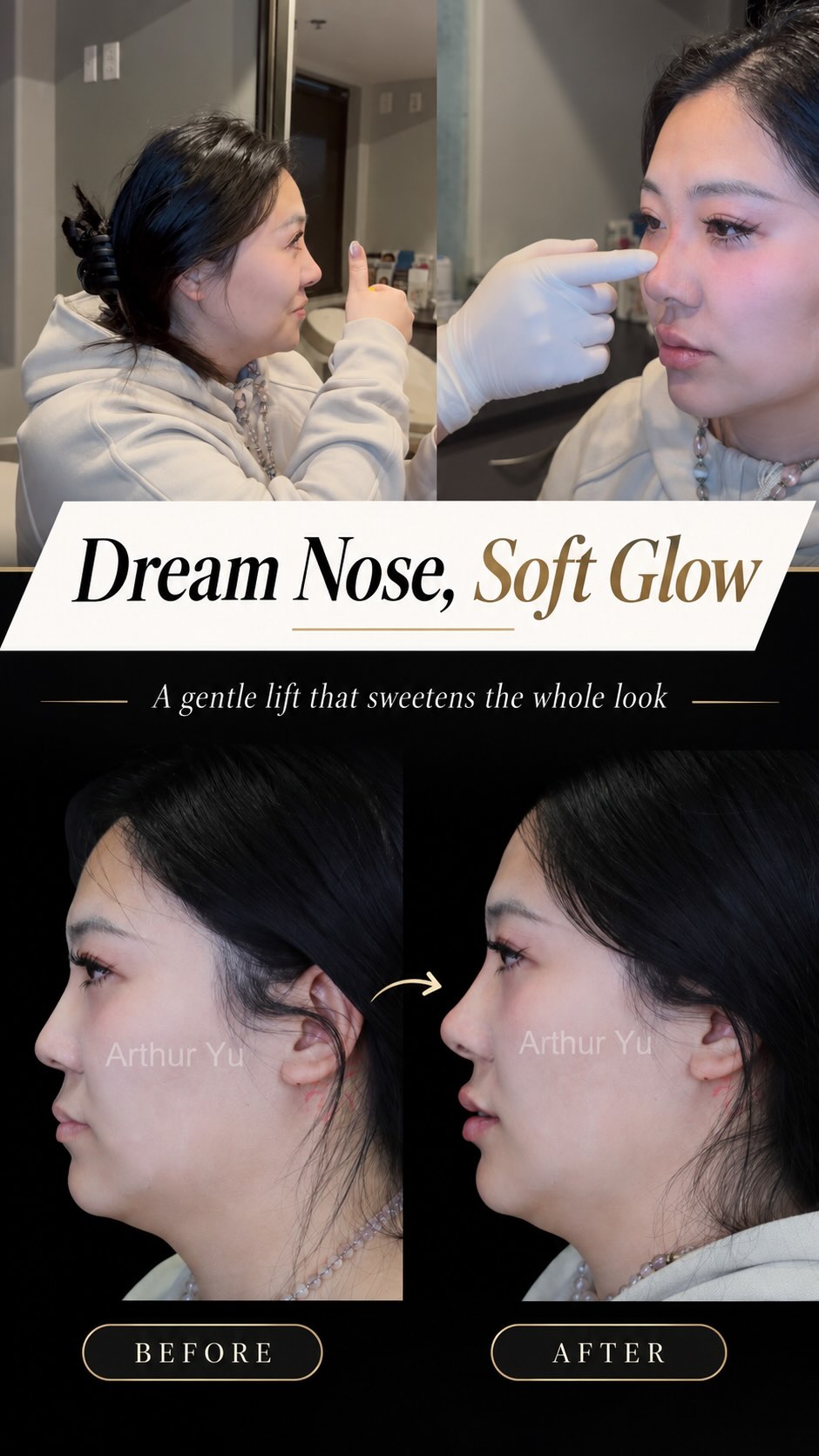
premiercosmeticla “Wait… I actually have a nose now.” 😭✨ Her nose wasn’t “bad” to begin with. it was simply a little short. In this case, Dr. Yu focused on creating more length and projection, while adding subtle elevation through the center and tip. The goal wasn’t an oversized or overly dramatic nose, but a profile that finally felt proportional to her face. And the best part? Watching her discover it in the mirror. Side view. Front view. Back to the side again. 😂 Once the nose came forward, even she noticed how much brighter and more defined her entire face looked. That little “I have a nose now” moment says everything. 🤍 #TipLyft #NonSurgicalNose #NoseTransformation #ProfileBalancing #FacialBalancing NaturalResults NoseEnhancement BeforeAndAfter DrArthurYu PremierCosmeticSurgery
A subtle lift in length and projection changed how she saw her whole face in the mirror.
PREMIER COSMETIC SURGERY AND MED SPA STAFFHow it works
Same as today. Nothing changes on Instagram.
We turn your post into a full story in your voice within the hour.
One click publishes it to premiercosmeticla.com. Nothing goes live without you.
Your stories
Nothing was published anywhere. You decide that. Every word will come from your own posts, your own photos and your own treatments.
Nose Enhancement · From your post
A subtle lift in length and projection changed how she saw her whole face in the mirror.
““Wait… I actually have a nose now.” 😭✨ Her nose wasn’t “bad” to begin with. it was simply a little short. In this case, Dr. Yu focused on creating more length and projection, while adding subtle elevation through the center and tip. The goal wasn’t an oversized or overly dramatic nose, but a profile that finally felt proportional to her face. And the best part? Watching her discover it in the mirror. Side view. Front view. Back to the side again. 😂 Once the nose came forward, even she noticed how much brighter and more defined her entire face looked. That little “I have a nose now” moment says everything. 🤍 #TipLyft #NonSurgicalNose #NoseTransformation #ProfileBalancing #FacialBalancing NaturalResults NoseEnhancement BeforeAndAfter DrArthurYu PremierCosmeticSurgery”
Facial Rejuvenation · From your post
Facial fat grafting at our practice targets lost volume and balance rather than changing how someone looks.
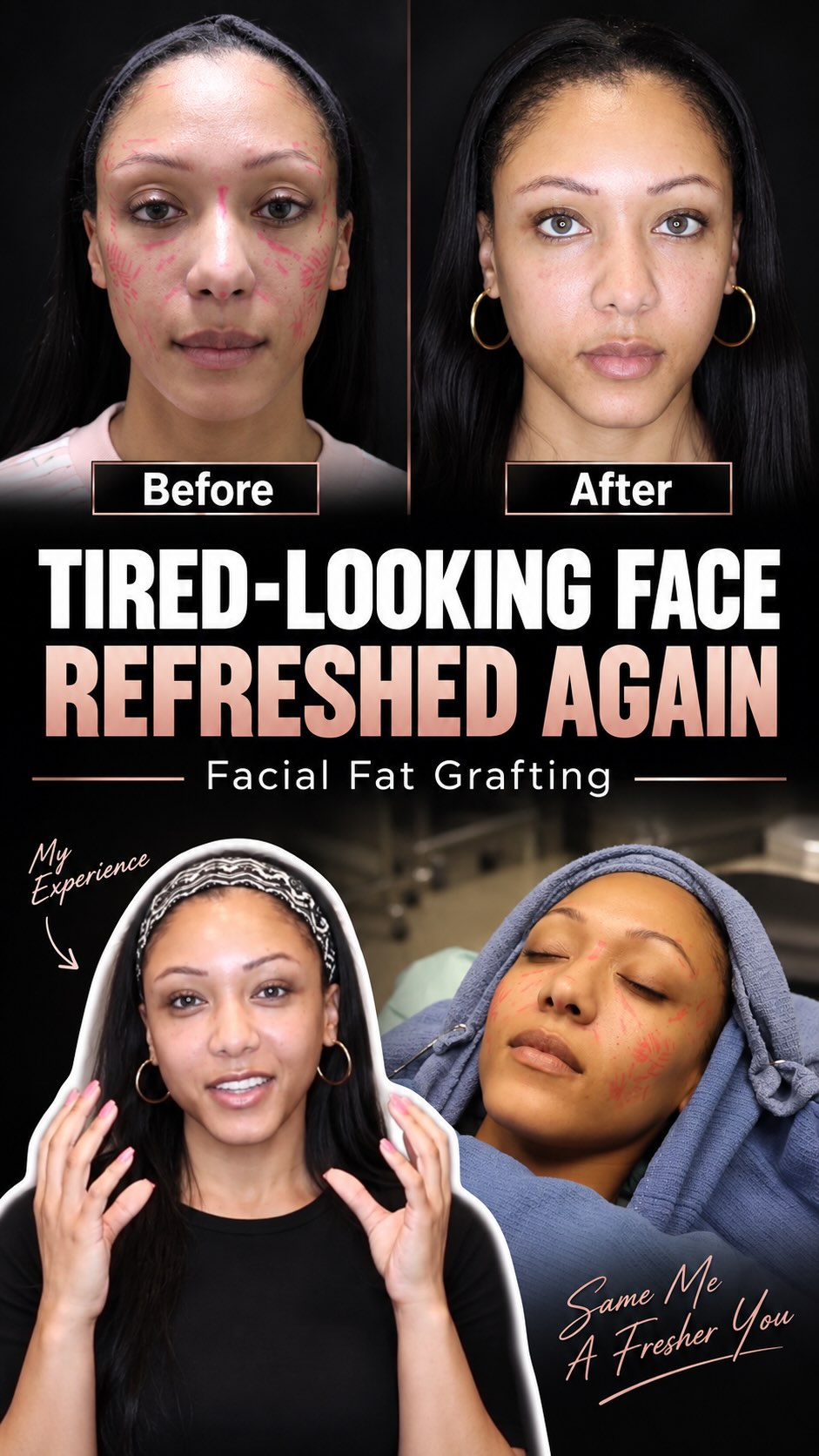
“Sometimes looking tired isn’t about your features. it’s about volume loss and facial balance. ✨ With facial fat grafting, the goal isn’t to look different, but to look more refreshed, softer, and more like yourself again. A subtle change can make the whole face feel more awake. Same you, just fresher. #FacialFatGrafting #FatGrafting #FacialRejuvenation #NaturalResults #BeforeAndAfter AestheticMedicine CosmeticProcedure RefreshedLook BeautyJourney PremierCosmeticSurgery”
Facial Balance · From your post
A closer look at how nonsurgical tip refinement works with existing proportions instead of replacing them.
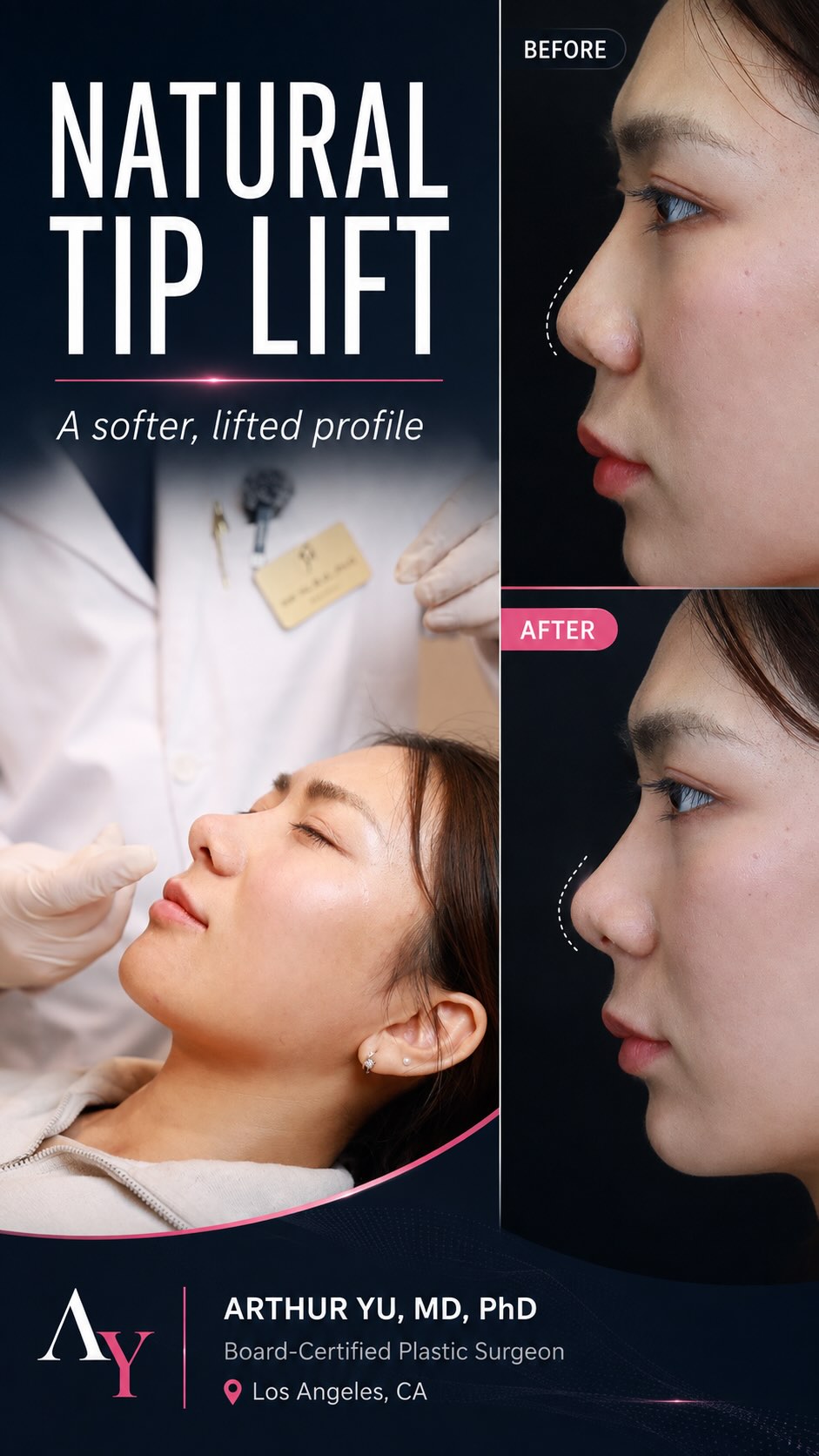
“When the tip sits just right, everything else falls into place. ✨ A more defined angle, a smoother transition, and a profile that feels effortlessly balanced. The goal isn’t to change your nose. it’s to make the proportions work better together. #TipLyft #ProfileRefinement #FacialBalance #NaturalResults #NoseAesthetics NonSurgicalRhinoplasty LosAngelesAesthetics ArthurYuMD”
One social post becomes another searchable entry point to Premier Cosmetic Surgery and Med Spa.
Our own magazine. Clicks and citations from Google Search Console, as of September 15, 2026.
Draft story for premiercosmeticla.com · Nose Enhancement
A subtle lift in length and projection changed how she saw her whole face in the mirror.
Some consultations start with a complaint. This one started with a nuance. Her nose was never described as a problem to fix, just a little short in proportion to the rest of her face. That distinction shaped everything about the approach Dr. Yu took, because the goal was never to build something new. It was to bring forward what was already close to right.
The plan focused on three specific areas: length, projection, and a subtle elevation through the center and tip. Nothing about the request called for size or drama. The work was about proportion, about giving the profile enough forward movement that it finally matched the rest of her features instead of sitting slightly behind them.
The before and after side profiles tell the quieter part of the story. In the first image, the bridge sits low and the tip recedes gently toward the lip. In the second, the same face holds a straighter line from bridge to tip, with just enough lift to change the angle without changing her identity. It reads as refinement, not reconstruction.
That restraint is the actual point. An oversized or overly sharp result would have solved nothing, because the original concern was never about drama. It was about balance. When a profile finally lines up the way it was meant to, the change can look small in a photo and feel enormous in person, which is exactly what played out here.
The moment that mattered most did not happen on the treatment table. It happened afterward, at the mirror, when she checked her reflection from the side, then the front, then back to the side again. That instinct to recheck the same angle repeatedly is a familiar one in our practice. It usually means someone is recognizing their own face in a slightly new way.
Once the nose came forward, she noticed something beyond the nose itself. Her whole face read brighter and more defined, even though nothing else had been touched. That is the practical effect of correcting projection: it changes how light and shadow move across nearby features, which can make cheeks, eyes, and jawline look sharper by association.
That ripple effect is why we treat the nose as a structural piece of the whole face rather than an isolated feature. A shift in length or projection changes the relationships between everything around it. The result is not a new nose so much as a face that finally reads the way it was always going to, once the proportions caught up to it.
Her reaction summed it up better than any technical explanation could. Just the quiet realization that she actually has a nose now, said almost in disbelief. It is a small sentence, but it captures what proportion work is meant to do: not reinvent a face, just let it finally look like itself.
Draft story for premiercosmeticla.com · Facial Rejuvenation
Facial fat grafting at our practice targets lost volume and balance rather than changing how someone looks.
A tired face rarely means someone actually is tired. Redness, hollowing under the eyes, and flattened cheeks can make a person look worn down even after a full night of sleep. What we see again and again in consultations is that patients are not chasing a new look. They want their own face back, the one that felt awake and balanced before volume started to fade.
That distinction matters because it changes the entire approach. Facial fat grafting is not about reshaping features or creating something unfamiliar. It is about restoring what volume loss took away, softening hollow areas and filling in places where the face has started to look tired or drawn. The goal is subtle, not dramatic, which is exactly the point.
Volume loss changes how light and shadow move across the face. Hollow cheeks and thinning under the eyes create shadows that read as fatigue, even in someone who is well rested. Facial balance depends on soft transitions between features, and when volume disappears, those transitions sharpen into lines and hollows that make the whole face look older and more tired than it is.
Fat grafting works by taking a patient's own fat and placing it precisely where volume has been lost. Because it uses the patient's own tissue, results tend to integrate naturally into the face rather than sitting on top of it. The effect is not a new face. It is the same face with the areas that had thinned or flattened gently filled back in.
The change is meant to be felt more than noticed. A subtle shift in volume around the cheeks or under the eyes can make the whole face feel more awake, less strained, without anyone being able to point to exactly what changed. That is the outcome we aim for: someone looking at a patient and simply thinking they look rested, rather than noticing an obvious alteration.
Recovery is part of the honest picture here too. Immediately afterward, patients often show redness and swelling, a visible part of the healing process before the final result settles in. It is a reminder that natural looking results still involve a real procedure and real downtime, not an instant transformation that happens the moment someone leaves the office.
What stands out most in these cases is how little actually changes structurally, and how much that small change affects the overall impression. Cheekbones remain the same. Eyes remain the same shape. What shifts is the volume sitting beneath the skin, and that shift is often enough to move a face from looking tired to looking simply like itself again, just fresher.
For patients considering facial fat grafting, the value is in that word: fresher. Not different, not altered, just restored. Facial balance and volume are quiet things until they are gone, and bringing them back tends to read less like a procedure and more like someone finally getting enough rest. That is the result we are working toward with every consultation.
Draft story for premiercosmeticla.com · Facial Balance
A closer look at how nonsurgical tip refinement works with existing proportions instead of replacing them.
The nasal tip carries more weight in a profile than most people expect. When it sits just slightly off, the eye tends to notice the whole nose rather than the one point that is actually contributing to the imbalance. That is the idea behind a tip lift: a targeted adjustment at a single area that changes how the rest of the profile reads, without touching the bridge or altering the nose as a whole.
In the before and after side views, the change is specific rather than dramatic. The tip sits with a more defined angle, the transition from bridge to tip is smoother, and the overall line of the profile appears more continuous. Nothing about the size of the nose changes. What changes is the relationship between the tip and the rest of the face, which is often the actual source of what feels unbalanced.
This is the distinction we come back to often. The goal is not to change the nose. It is to make the proportions that are already there work better together. A nose does not need to be smaller or narrower to feel more balanced. Sometimes it just needs the tip to sit differently in relation to the forehead, the bridge, and the upper lip.
Nonsurgical rhinoplasty works by adding structure rather than removing it. Filler placed carefully at and around the tip can lift, straighten, or redefine an angle that surgery would otherwise be used to address. It is a tool for refinement, not reconstruction, which is why the results tend to look like a clearer version of the person rather than a different nose altogether.
That precision is also why this treatment depends heavily on who is performing it. The tip is a small, structurally complex area, close to the nostrils and the vascular anatomy of the nose. Small differences in placement change the outcome significantly, which is part of why this work is done by Dr. Arthur Yu, a board certified plastic surgeon, rather than treated as a routine filler appointment.
In the after image, the profile reads as softer and more lifted, with the tip sitting higher relative to the base of the nose and the line down from the bridge flowing more evenly into it. The change holds up from the side, which is the angle most people are actually judging when they describe a nose as balanced or unbalanced in photos and in the mirror.
There is a practical appeal to this approach for people who are curious about rhinoplasty but not ready for surgery, or who simply do not need that level of change. A tip lift addresses a specific concern, on a timeline that does not involve an operating room or an extended recovery, while still working within the same principle that guides surgical rhinoplasty: proportion first.
Profiles are read as a whole, but they are built from small relationships between individual features. The angle of the tip, the slope of the bridge, the way the nose meets the lip. When one of those relationships is adjusted with intention, the rest of the profile does not need to change to look more balanced. It just needs the one piece that was off to fall into place.
Keep reading