The strawberry cake that has held Chinatown together since 1938
At Phoenix Bakery, a family recipe born from homesickness has become one of Los Angeles's longest running traditions.
PHOENIX BAKERY STAFFTurn your social into search
We turn your posts into editorial stories that bring new search traffic to phoenixbakeryinc.com. Three of yours will be on this page.
Book a demo
phoenixbakery Phoenix Bakery has been an anchor in L.A.'s Chinatown since 1938! Founded by immigrant parents who missed the traditional, less sweet pastries of their home country, this historic bakery is famous for its incredible fresh strawberry cakes and almond cookies. CEO Kathryn Chan Ceppi grew up in the neighborhood and is still helping run the family business as she approaches 82. You have to visit this iconic 80+ year old shop to taste a true piece of Los Angeles history. 📍 @phoenixbakery, 969 N. Broadway #culture #mysecretla
At Phoenix Bakery, a family recipe born from homesickness has become one of Los Angeles's longest running traditions.
PHOENIX BAKERY STAFFHow it works
Same as today. Nothing changes on Instagram.
We turn your post into a full story in your voice within the hour.
One click publishes it to phoenixbakeryinc.com. Nothing goes live without you.
Your stories
Nothing was published anywhere. You decide that. Every word will come from your own posts, your own photos and your own menu.
L.A. History · From your post
At Phoenix Bakery, a family recipe born from homesickness has become one of Los Angeles's longest running traditions.
“Phoenix Bakery has been an anchor in L.A.'s Chinatown since 1938! Founded by immigrant parents who missed the traditional, less sweet pastries of their home country, this historic bakery is famous for its incredible fresh strawberry cakes and almond cookies. CEO Kathryn Chan Ceppi grew up in the neighborhood and is still helping run the family business as she approaches 82. You have to visit this iconic 80+ year old shop to taste a true piece of Los Angeles history. 📍 @phoenixbakery, 969 N. Broadway #culture #mysecretla”
Community Events · From your post
The Chinatown bakery brought its cake to a fundraiser supporting the Tucker Family's work across Los Angeles.
“Congrats to @kyletuckerfoundation for a great Beyond the Diamond fundraiser. The Phoenix Bakery Family was glad to be part of the Tucker Family's efforts and contribution to our community in LA and more!”
Family Legacy · From your post
Phoenix Bakery joins fellow family food businesses for a conversation on legacy, culture and journalism.
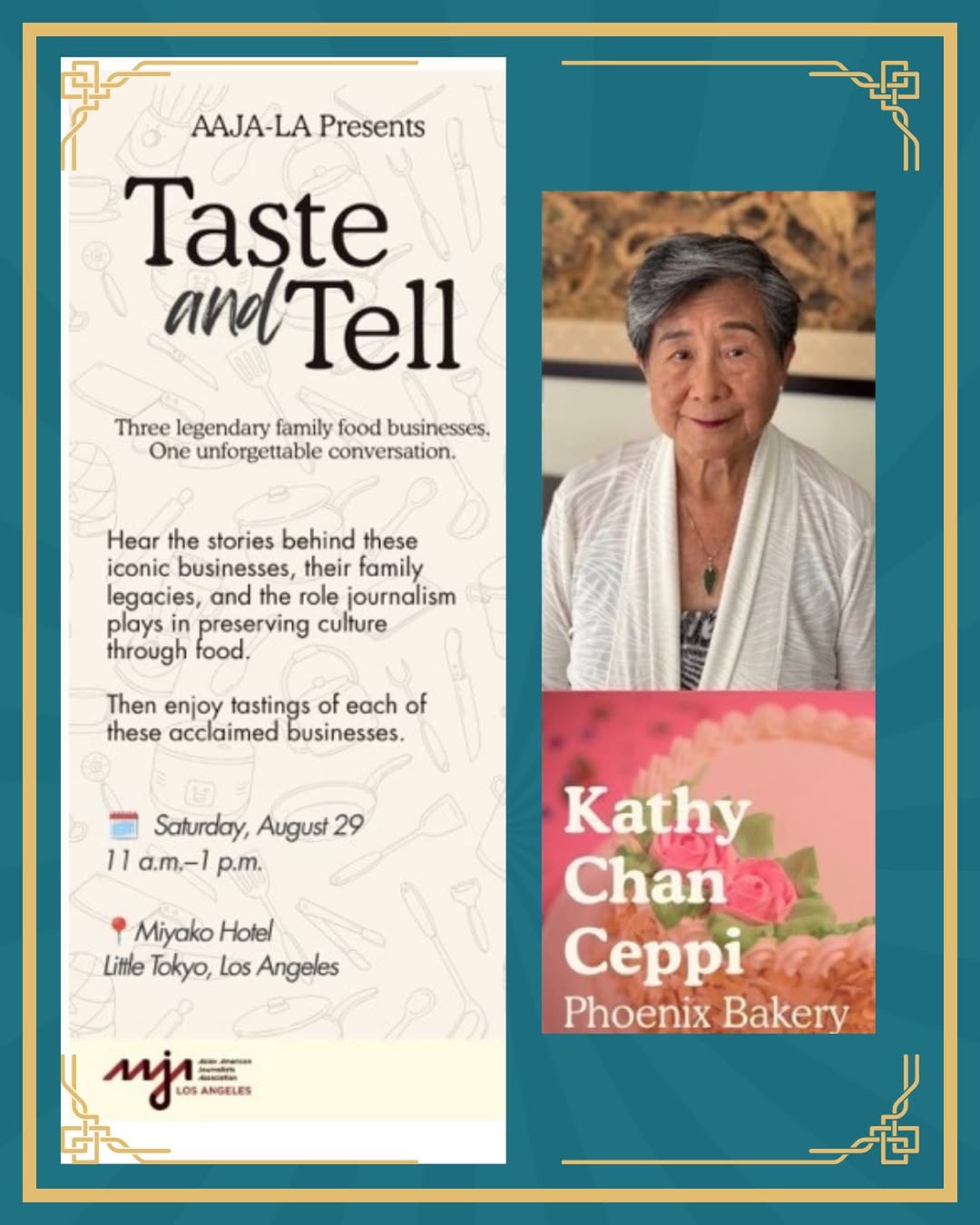
“Join the Asian American Journalist Association panel with our very own Kathy Chan Ceppi and more legendary Asian American Food Pros! @fugetsudo @wahoosfishtaco Led by @susanhirasunatv https.//Aajalosangeles.betterworld.org/events/taste tell aapi food pioneers”
One social post becomes another searchable entry point to Phoenix Bakery.
Our own magazine. Clicks and citations from Google Search Console, as of September 15, 2026.
Draft story for phoenixbakeryinc.com · L.A. History
At Phoenix Bakery, a family recipe born from homesickness has become one of Los Angeles's longest running traditions.
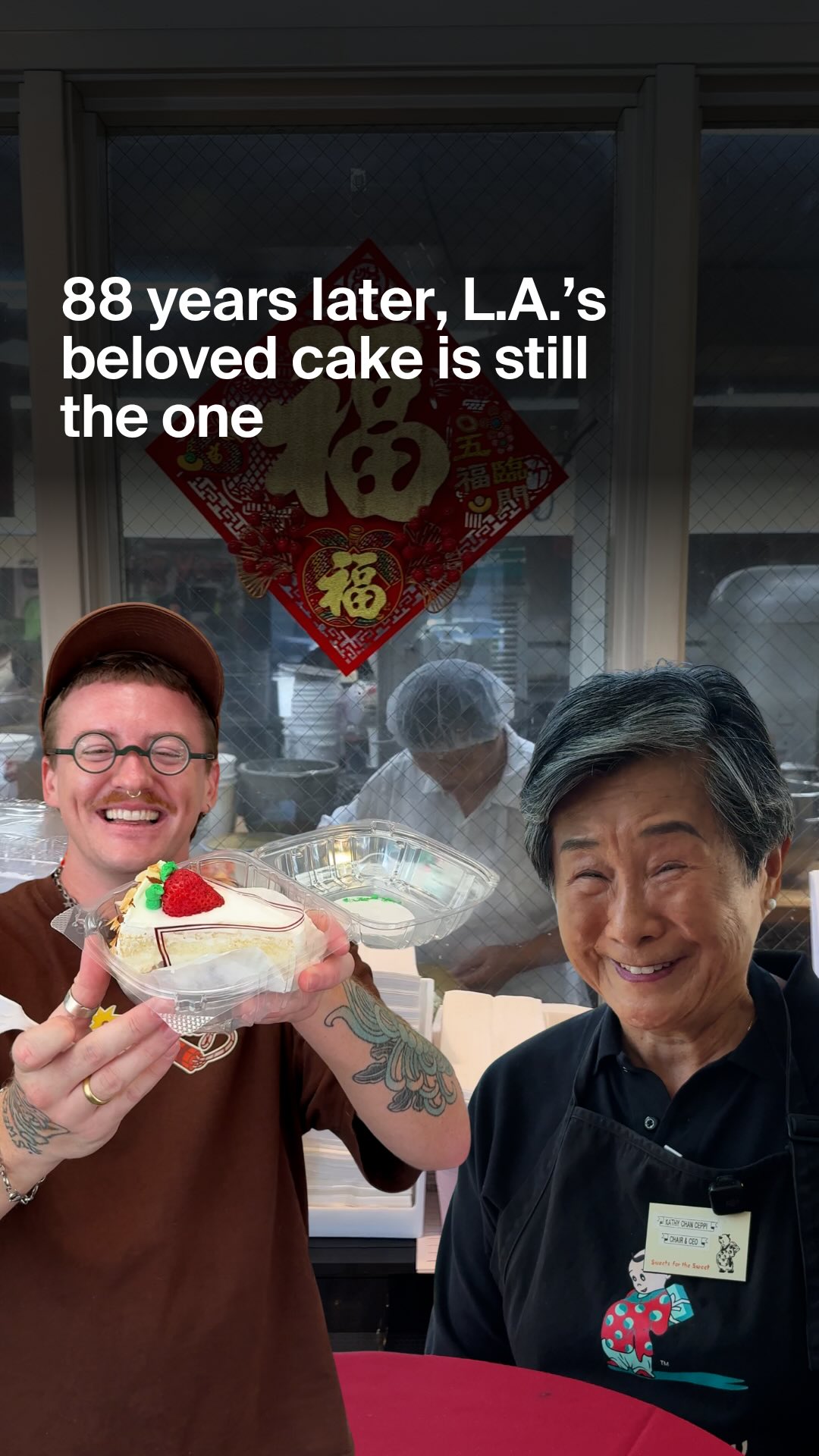
A slice of the strawberry cake still comes the same way it always has: white cream, fresh strawberries, a wedge cut clean and set in a plastic container that gets carried out the door within minutes. It is not fussy. It does not need to be. Eighty eight years in, the cake speaks for itself, and so does the bakery that keeps making it exactly as it was made at the start.
Phoenix Bakery opened in 1938, founded by immigrant parents who wanted something specific and hard to find at the time: pastries that were not overly sweet, closer to what they remembered from home. That instinct became the foundation of everything the bakery still bakes today, from the strawberry cakes to the almond cookies that sit near the counter in trays, waiting for whoever walks in next.
Kathryn Chan Ceppi grew up in this Chinatown neighborhood and now serves as CEO, still involved in the daily running of the bakery as she approaches 82. That kind of continuity is rare anywhere, let alone in a city that changes as fast as Los Angeles does. Her presence behind the counter is not a nostalgic detail. It is the business, still operating the way it has for generations.
Behind her, through the kitchen window, the work continues in real time: trays moving, hairnets on, the steady motion of a bakery that has never really stopped. A red paper decoration hangs nearby, the kind you notice once and then again, a small marker of the neighborhood this bakery has always belonged to. Nothing about the space performs history. It simply keeps living inside it.
Longevity like this is not about a single famous item, even one as loved as the strawberry cake. It is about consistency repeated daily for decades, in a shop that never needed to reinvent itself to stay relevant. The cake works because it has always worked. The almond cookies work for the same reason. Nobody here is chasing a trend, because the original idea never stopped being the right one.
There is something specific about a business that has outlasted almost every other kind of change around it. Storefronts shift. Ownership shifts. Chinatown itself has shifted in a hundred small ways since 1938. Phoenix Bakery has stayed put at 969 N. Broadway, still selling the same cake to people whose parents, and sometimes grandparents, once stood in the same line for the same slice.
Coming in for a slice is not just about the cake, though the cake is reason enough. It is about standing inside a piece of Los Angeles that has held its shape while so much of the surrounding city has not. The bakery does not ask you to notice that. It just keeps doing what it has always done, cake by cake, cookie by cookie, day after day.
If you go, go hungry and go patient, because the counter moves fast and the case fills up quickly. Ask for the strawberry cake if it is your first time. Everyone does, and for good reason. Then take a second look around while you wait, because very few places in this city let you stand inside eighty eight years of continuous, unbroken history quite like this one does.
Draft story for phoenixbakeryinc.com · Community Events
The Chinatown bakery brought its cake to a fundraiser supporting the Tucker Family's work across Los Angeles.
Some nights call for cake that does more than finish a meal. It becomes part of the reason people gathered in the first place. That was the case at Beyond the Diamond, a fundraiser hosted by the Kyle Tucker Foundation, where the Phoenix Bakery Family showed up to be part of an effort aimed at giving back to communities across Los Angeles and beyond.
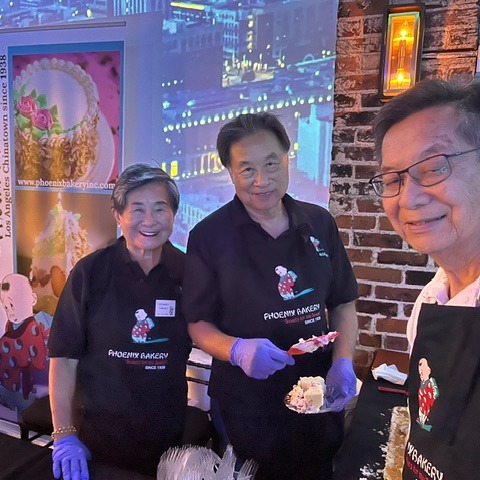
Behind a table lit blue and set against a backdrop of the city skyline, our team wore matching black aprons stitched with our longtime logo, the phrase Los Angeles Chinatown since 1938 printed just above it. Gloved hands sliced and plated pieces of cake for guests moving through the room, a small, steady task that carried the bakery's presence into a much larger night.
A tiered cake finished in white with delicate rose piping sat at the center of the setup, the kind of detail work that takes patience and a practiced hand. It was not simply dessert on a table. It represented decades of craft brought into a room built around generosity, where the cake became a quiet extension of everything the evening was raising money to support.
Fundraisers like Beyond the Diamond depend on more than ticket sales. They rely on people and businesses willing to lend their time, their hands, and their work to a cause bigger than any single night. For us, that meant setting up alongside the Kyle Tucker Foundation and contributing in the most direct way we know how, through cake made and served with care.
The Tucker Family's commitment to community efforts in Los Angeles and beyond gave the evening its purpose, and being included in that work felt meaningful for our own team. Three generations of bakers and staff stood together that night, aprons dusted, gloves on, smiling for photos between service. It was a reminder that community support often looks like ordinary work done with intention.
From the outside, an event like Beyond the Diamond might sound like speeches and checks changing hands. In practice, it looks like a room full of small moments: a slice handed across a table, a shared laugh near the dessert station, a skyline projected on the wall behind volunteers who spent the night on their feet. The cause is large, but the work that supports it is small and specific.
That is where we found our place, in the details rather than the headlines. A dozen small cake boxes were arranged nearby, ready for guests to take a piece of the evening home with them. It was a simple gesture, but one that let the night extend a little further, past the room and into the days that followed.
Congratulations belong to the Kyle Tucker Foundation for putting together a fundraiser that brought people together around a shared purpose. For the Phoenix Bakery Family, being part of Beyond the Diamond was a chance to contribute in the way we know best, through cake made with care and offered in service of something larger than ourselves, right here in our own city.
Draft story for phoenixbakeryinc.com · Family Legacy
Phoenix Bakery joins fellow family food businesses for a conversation on legacy, culture and journalism.
Kathy Chan Ceppi is joining a panel with the Asian American Journalist Association, sharing the stage with other people who have spent their lives building family food businesses. It is a rare kind of gathering, one where the people usually being written about get to be the ones telling the story in their own words, in their own voice, from their own memory.
Alongside Kathy, the panel includes voices from Fugetsu Do and Wahoo's Fish Taco, two more names that carry decades of family history behind them. Each business represents a different community and a different food tradition, but all three share something in common: they were built by families who turned a recipe, a storefront, or a idea into something that outlasted a single generation.
The conversation will be led by Susan Hirasuna, bringing a journalist's eye to a discussion that is as much about storytelling as it is about food. That pairing matters. These are not just business histories, they are cultural ones, shaped by immigration, adaptation, and the day to day work of keeping a family name alive in a bowl, a cake box, or a fish taco.
There is a particular kind of knowledge that lives inside a family business, the kind that does not always make it into official histories. It lives in the way a recipe gets passed down, in the small decisions made during hard years, in the choice to keep going when closing might have been easier. This panel is a chance to put some of that knowledge into words.
Journalism has a role here too, and the event treats that seriously. Food writing often focuses on what is new or trending, but there is real value in the slower work of documenting what has endured. Panels like this one create a record, giving these stories a place to live beyond the people who lived them, and beyond the walls of any single bakery or restaurant.
What connects Phoenix Bakery to Fugetsu Do and Wahoo's Fish Taco is not just longevity, it is the particular weight of running a business that carries a family's name and a community's expectations. Each has its own story of adaptation, its own neighborhood, its own customers who grew up eating there and brought their own children back to do the same.
After the panel, guests will have the chance to taste what each of these businesses actually makes, connecting the conversation back to something concrete. Hearing a story is one thing, but tasting the product that grew out of that history adds a different kind of understanding, one that involves flavor, texture, and the small details that recipes carry forward through decades of practice.
For Phoenix Bakery, being part of this conversation is a chance to talk about the bakery not just as a place people visit, but as a continuation of choices made by family members who came before. It is a chance to sit next to other businesses doing the same work, and to be part of a public record that takes these stories seriously.
Keep reading