Petit Trois keeps its heirloom tomato salad honest to the farmers market
A sherry tomato vinaigrette, sourdough croutons, mint and basil hold steady while the tomatoes themselves keep changing.
PETIT TROIS STAFFTurn your social into search
We turn your posts into editorial stories that bring new search traffic to petittrois.com. Three of yours will be on this page.
Book a demo
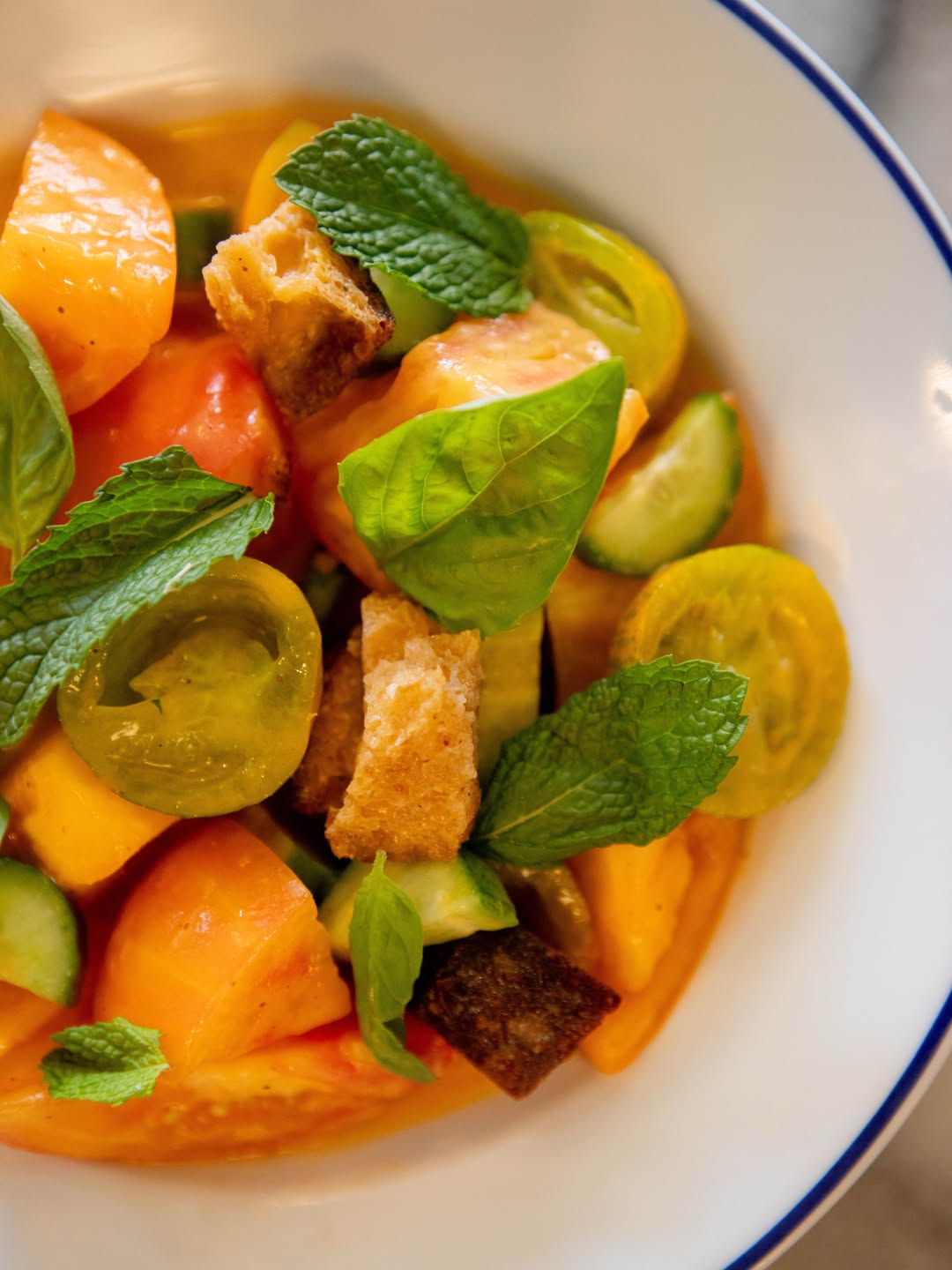
petittroisla It’s still peak tomato season! Our Heirloom Tomato Salad shifts slightly based on the varietals at the farmers market. But it’s always delicious! 🍅 Tossed in a sherry tomato vinaigrette with sourdough croutons, mint and basil. #PetitTrois
A sherry tomato vinaigrette, sourdough croutons, mint and basil hold steady while the tomatoes themselves keep changing.
PETIT TROIS STAFFHow it works
Same as today. Nothing changes on Instagram.
We turn your post into a full story in your voice within the hour.
One click publishes it to petittrois.com. Nothing goes live without you.
Your stories
Nothing was published anywhere. You decide that. Every word will come from your own posts, your own photos and your own menu.
Peak Season · From your post
A sherry tomato vinaigrette, sourdough croutons, mint and basil hold steady while the tomatoes themselves keep changing.
“It’s still peak tomato season! Our Heirloom Tomato Salad shifts slightly based on the varietals at the farmers market. But it’s always delicious! 🍅 Tossed in a sherry tomato vinaigrette with sourdough croutons, mint and basil. #PetitTrois”
Sunday Ritual · From your post
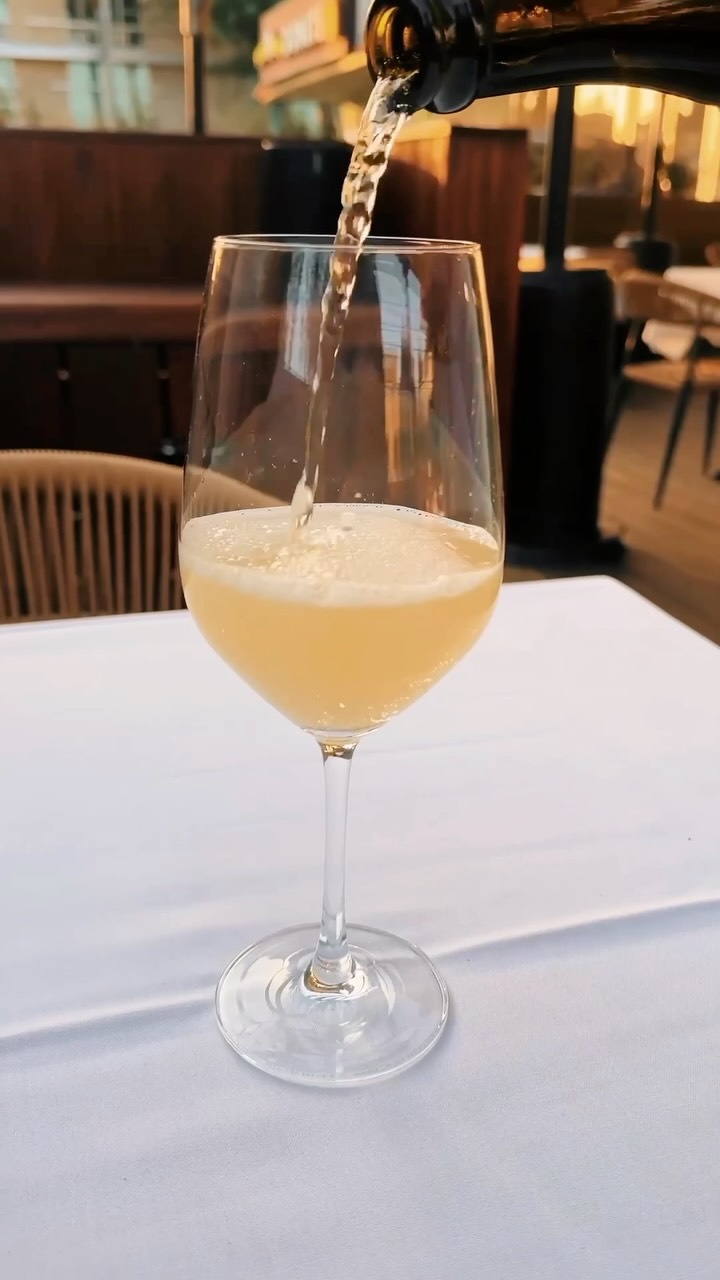
A pour on a white tablecloth outside in Sherman Oaks makes a simple case for slowing Sunday down.
“Name something better than a perfectly chilled glass of wine on a sunny Sunday afternoon. We’ll wait. No Sunday scaries around here. #PetitTrois”
Dining Room Notes · From your post
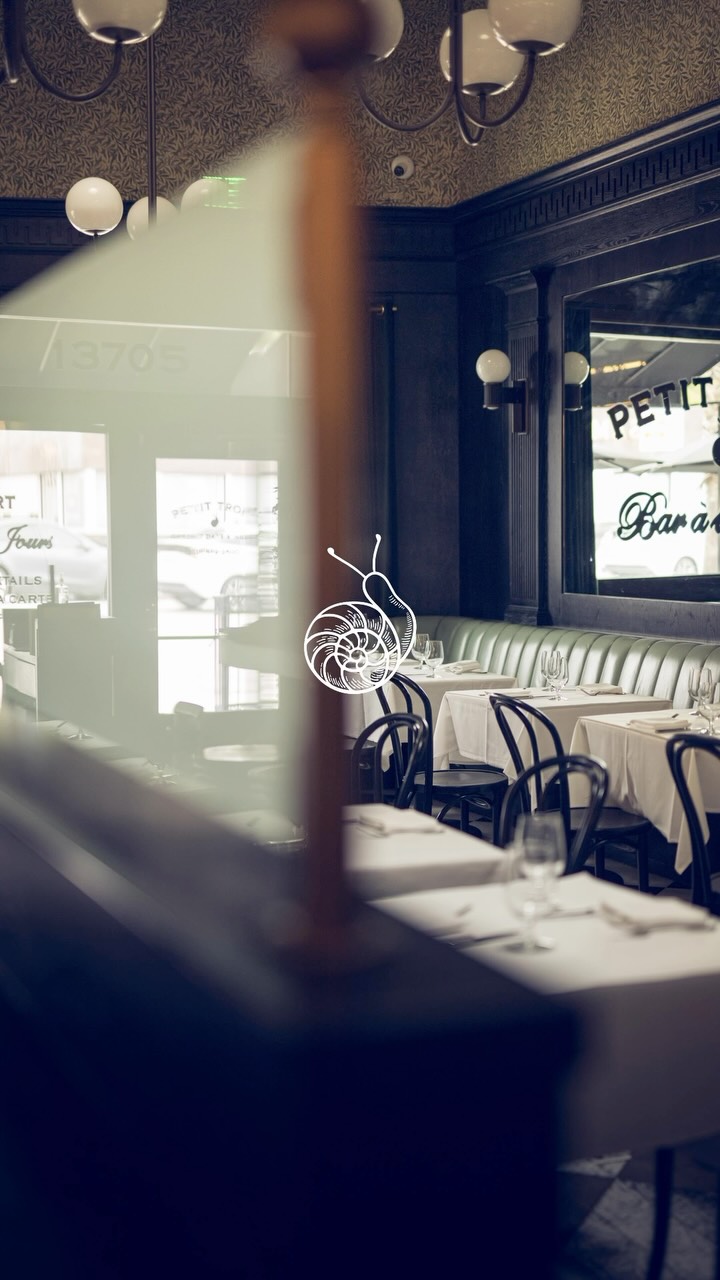
A snail etched in glass, a wall of dark paneling, and a dining room that reads like a scene before anyone sits down.
“Nouvelle Vague but make it a restaurant. A film we definitely want to be in! 🐌 #PetitTrois”
One social post becomes another searchable entry point to Petit Trois.
Our own magazine. Clicks and citations from Google Search Console, as of September 15, 2026.
Draft story for petittrois.com · Peak Season
A sherry tomato vinaigrette, sourdough croutons, mint and basil hold steady while the tomatoes themselves keep changing.
Tomato season does not last long, and we treat our Heirloom Tomato Salad like it. Right now it means a bowl built around whatever varietals are best at the farmers market that week, cut into wedges and rounds, dressed simply, and left alone enough to actually taste like tomato. The dish is not fixed. It moves with what is ripe.
That shifting quality is the whole point. Some weeks the bowl leans deep orange and red with larger heirloom wedges. Other weeks small yellow and green tomatoes take over, sliced into thin coins instead of chunks. The shapes and colors change based on availability, but the format around them stays the same, which is what keeps the salad recognizable from one visit to the next.
Underneath everything is a sherry tomato vinaigrette, which pools at the base of the bowl rather than getting tossed until it disappears. It is there to season the fruit, not mask it. Sherry vinegar brings acidity, the tomato element ties the dressing back into what is already in the bowl, and the result is a dressing that tastes like an extension of the produce.
Sourdough croutons are scattered through rather than piled on top, some cut into thick cubes, others torn into rougher, craggier pieces with a darker, more caramelized edge. That variation in shape and color is not an accident of plating so much as a natural result of tearing bread by hand. The croutons soak up the vinaigrette at different rates, so a bite early on hits different than one at the end.
Mint and basil leaves are used generously and left whole or barely torn, not chiffonaded into confetti. Whole mint leaves in particular do something a small chopped garnish cannot: they hit in one concentrated burst rather than a diffuse hint. Paired with basil, the herbs push the salad toward something brighter and slightly cooler than a straightforward tomato dish would be on its own.
Because the tomatoes come from the market rather than a fixed supplier order, the bowl in front of a guest this week will not be identical to the one from two weeks ago. We are fine with that tradeoff. A salad this dependent on one ingredient only works if that ingredient is allowed to change, and pretending otherwise would mean settling for tomatoes that are not actually at their best.
There is also a practical honesty to naming the dressing after both its components. Calling it a sherry tomato vinaigrette instead of just a vinaigrette signals that tomato is doing work in two places at once, both as the main ingredient and as part of the liquid that seasons it. It is a small detail, but it explains why the dish tastes cohesive rather than like separate parts assembled together.
Peak tomato season will not last forever, and the salad is built around that reality rather than around a fixed idea of what it should always look like. What stays constant is the structure: acid, bread, herb, fruit. What changes is everything the market decides to hand over that particular week, which is exactly why it is worth asking what is in the bowl on any given visit.
Draft story for petittrois.com · Sunday Ritual
A pour on a white tablecloth outside in Sherman Oaks makes a simple case for slowing Sunday down.
There is a particular hour on a Sunday when the light goes gold and the week has not yet caught up with anyone. That is the hour we are talking about when we say a chilled glass of wine on a sunny afternoon is hard to beat. Not dinner, not a whole bottle, just one glass, poured slowly, with nowhere else to be.
The pour itself tells you what kind of afternoon this is. Pale, cool, catching a little bit of fizz as it hits the glass, settling into that soft golden color against a white tablecloth outside. It is not fussy. It does not ask you to think hard about it. It just asks you to sit still long enough to enjoy it, which on a Sunday is usually the harder request.
We built our patio in Sherman Oaks for exactly this kind of stretch of time, the one between lunch and evening when the tables are set, the wicker chairs are out, and the string lights above the patio are waiting for dusk. It is outdoor seating that does not try too hard, just a clean table, good light, and enough room to let a glass of wine be the whole point of sitting down.
Sundays carry a reputation they do not deserve. Somewhere along the way the day became shorthand for dread, for bracing against Monday instead of enjoying the hours actually in front of you. We would rather treat Sunday afternoon as its own destination, not a waiting room for the week ahead. A glass of wine outside, taken slowly, is a fairly direct way of pushing back on that.
There is no scarcity language needed here, no urgency, no countdown. The idea is almost stubbornly simple: pour something cold, sit outside while the light is good, let the afternoon move at its own pace. We are not asking anyone to rush through it or capture it perfectly. We are asking people to actually have it, which is a smaller thing to ask than it sounds.
Look closely at the pour and you can see why the timing matters. The wine goes in fast enough to build a thin collar of foam at the top, pale and effervescent, before it settles into something calmer and more golden underneath. That brief moment of motion against all that stillness, the empty chairs, the quiet patio, the tablecloth catching the afternoon light, is basically the whole afternoon in miniature.
None of this requires an occasion. No holiday, no special order, no reservation built around it. It is simply what a Sunday afternoon at Petit Trois can look like if you let it: one glass, one table outside, one stretch of time that belongs to nobody but you. We will keep pouring them the same way, slow and unhurried, for as long as Sundays keep showing up.
So we will say it again, and we are genuinely fine waiting for an answer: name something better than a properly chilled glass of wine on a sunny Sunday afternoon. Until someone does, we will keep the patio set, the glasses cold, and the afternoon light doing exactly what it does best around here, which is convince people to stay a little longer than they planned.
Draft story for petittrois.com · Dining Room Notes
A snail etched in glass, a wall of dark paneling, and a dining room that reads like a scene before anyone sits down.
There is a moment before service starts, before the first glass is poured or the first napkin unfolded, when a dining room is only itself. At Petit Trois in Sherman Oaks, that moment looks like something out of a film we would want to be in. The tables are set. The light is low and warm. Nothing has happened yet, and somehow that is the whole point.
The room does the talking. Dark wood paneling runs along the walls, catching the glow from small round sconces and a low chandelier overhead. A mirrored panel etched with the words Bar a and Petit sits behind the banquette, half sign and half set piece, the kind of detail that makes a space feel considered rather than decorated for effect.
Green leather booths line the far wall, paired with black bistro chairs pulled close to white clothed tables. Each setting holds two wine glasses, folded napkins, and cutlery squared off with the kind of precision that only shows up before anyone has touched anything. It is a small choreography, repeated table after table, waiting for the room to fill.
Etched into the front window is a snail, rendered in delicate white line work, antennae curling upward like it is mid step. It is a playful signature for a French restaurant to carry, a wink toward escargot without needing to say the word. Seen through the glass from outside, it frames the whole dining room beyond it, turning the window into part of the scene.
Outside, the number 1376 is visible on the storefront glass, along with the blurred shapes of parked cars and the ordinary rhythm of a Sherman Oaks street. That contrast matters. Step past the window and the outside world falls away fast, replaced by the hush of a room built for lingering rather than passing through.
Calling the space Nouvelle Vague is not a stretch when you look at how it is lit. The palette leans dark, moody, almost monochrome, broken up by the warmth of brass fixtures and the soft glow bouncing off polished glassware. It has the visual restraint of a film still, a room that knows exactly how it wants to be seen before a single guest walks in.
What makes the room work is not one single detail but the accumulation of them: the etched snail, the mirrored lettering, the booths lined up in quiet symmetry, the empty glasses waiting to be filled. Together they build atmosphere before anyone has ordered a thing. It is the kind of dining room that rewards a second look, especially in that brief window before it fills with people.
Come evening, all of it activates. The chairs get pulled out, the glasses get poured, and the room stops being a still frame and starts being a restaurant again. But for now, in this quiet setup shot of a moment, Petit Trois in Sherman Oaks looks exactly like the kind of scene worth walking into.
Keep reading