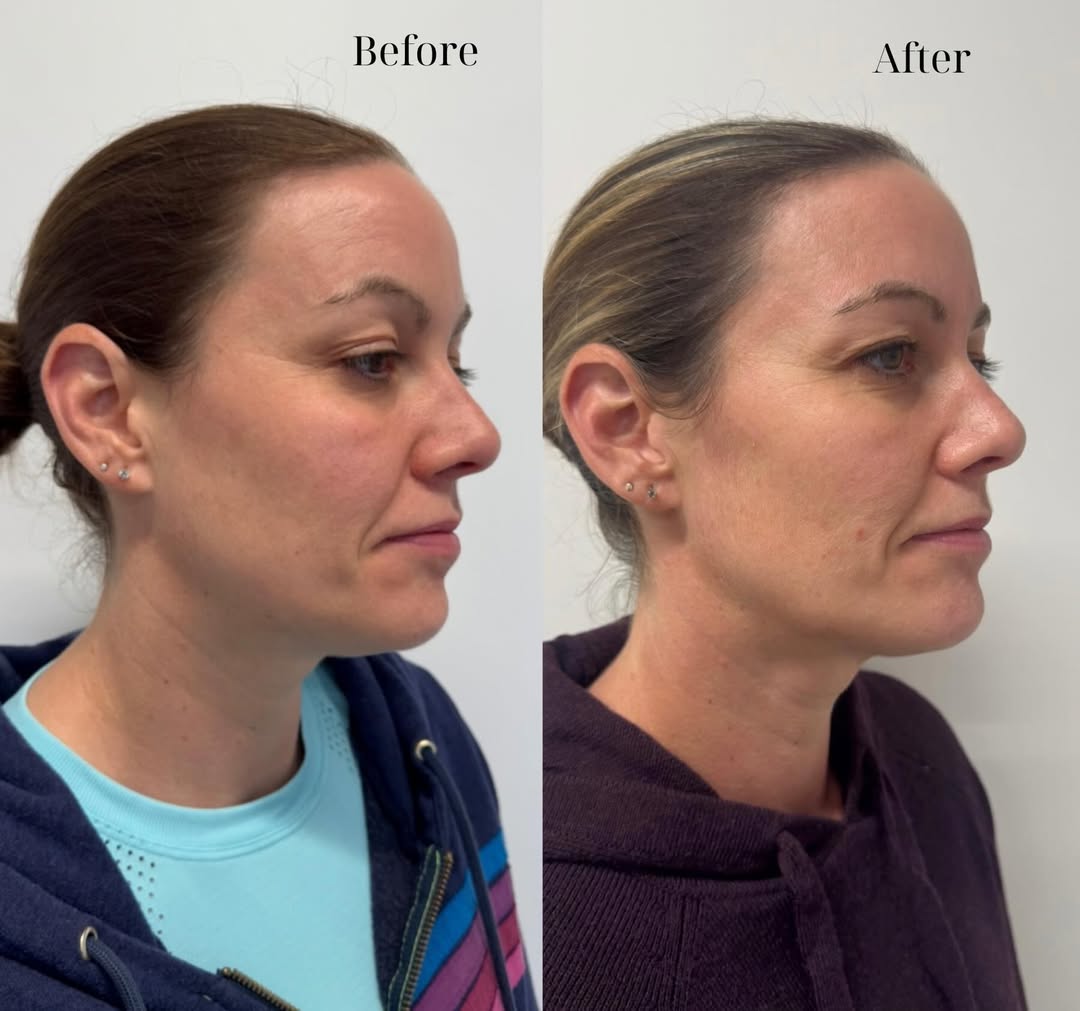
One Ultherapy Prime session, a visibly tighter jawline in profile
A single treatment with focused ultrasound energy shows what non surgical lifting can do along the jawline, neck, and under the chin.
OHARA AIVAZ STAFFTurn your social into search
We turn your posts into editorial stories that bring new search traffic to oharaderm.com. Three of yours will be on this page.
Book a demo
oharaaivaz.md A little lift can make a BIG difference 👏🏼👏🏼 And this is after just one Ultherapy PRIME treatment📡 Ultherapy PRIME uses focused ultrasound energy to target the deeper layers beneath the skin, helping stimulate fresh collagen and elastin without surgery or significant downtime. It’s one of my favorite options for patients looking to tighten and lift the jawline, neck and under the chin while still looking completely natural. We can even use this to tighten some areas on the body too! We have Ultherapy PRIME right here in the office, and I’m so excited to be able to offer it to our patients🙌🏼 Swipe to see what ONE session can do ➡️.. #ultherapyprime #dermatology #dermatologistapproved
A single treatment with focused ultrasound energy shows what non surgical lifting can do along the jawline, neck, and under the chin.
OHARA AIVAZ STAFFHow it works
Same as today. Nothing changes on Instagram.
We turn your post into a full story in your voice within the hour.
One click publishes it to oharaderm.com. Nothing goes live without you.
Your stories
Nothing was published anywhere. You decide that. Every word will come from your own posts, your own photos and your own treatments.
Skin Tightening · From your post
A single treatment with focused ultrasound energy shows what non surgical lifting can do along the jawline, neck, and under the chin.
“A little lift can make a BIG difference 👏🏼👏🏼 And this is after just one Ultherapy PRIME treatment📡 Ultherapy PRIME uses focused ultrasound energy to target the deeper layers beneath the skin, helping stimulate fresh collagen and elastin without surgery or significant downtime. It’s one of my favorite options for patients looking to tighten and lift the jawline, neck and under the chin while still looking completely natural. We can even use this to tighten some areas on the body too! We have Ultherapy PRIME right here in the office, and I’m so excited to be able to offer it to our patients🙌🏼 Swipe to see what ONE session can do ➡️.. #ultherapyprime #dermatology #dermatologistapproved”
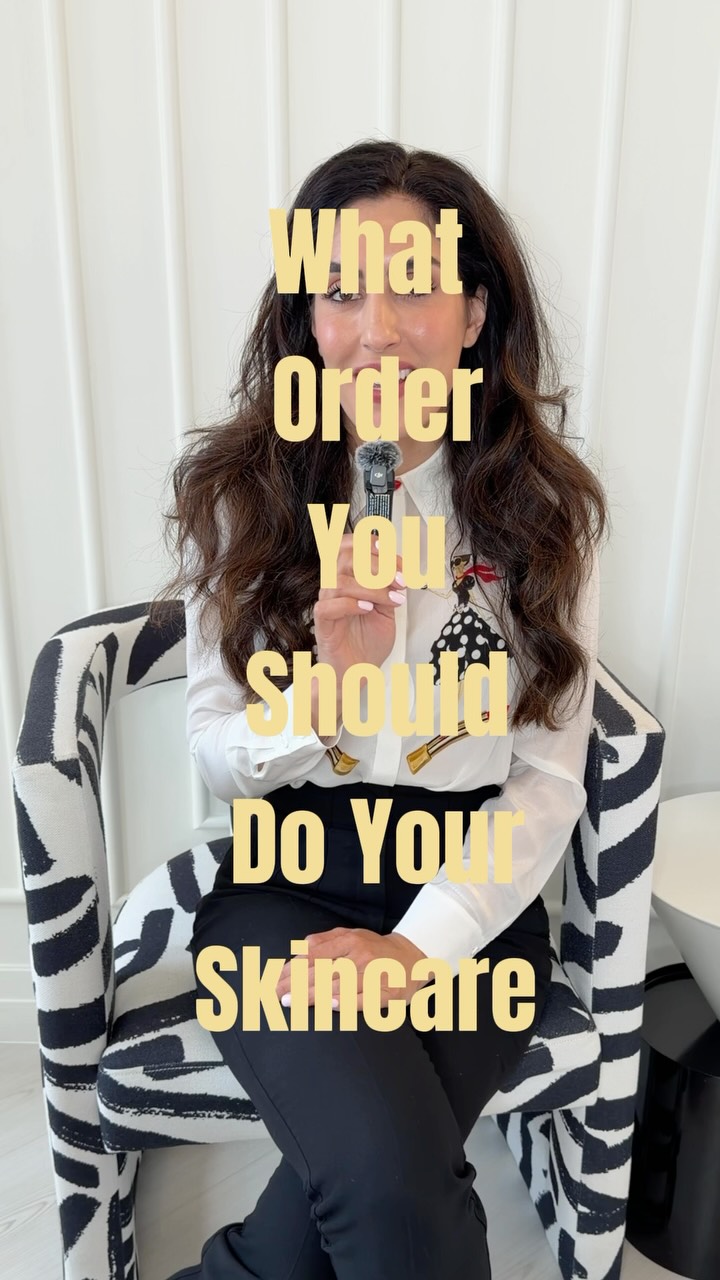
Skincare Order · From your post
The right products only work as well as the sequence you put them on in.
“You can have all the right skincare products…but if you’re applying them incorrectly, you may not be getting the full benefit🫣 The order you apply your skincare matters. Proper layering can impact how well your products absorb, how active ingredients perform, and ultimately, the results you see from your routine. A great skincare regimen isn’t just about what you’re using. it’s about knowing how to use it effectively🫡 Save this as your reminder that when it comes to skincare, order matters☝🏼... #dermatologistapproved #skincareroutine #dermatology #skincareorder”
Skincare Advice · From your post
A patient arrived with a chatbot built skincare plan, so we sat down and reviewed it line by line.
“ChatGPT built my patient a skincare routine… so naturally, I had to review it👀 Some solid advice, a few things I’d switch up, and a good reminder that skincare is never one size fits all!👩🏻⚕️.. #dermatologistapproved #skincareroutine #chatgpt #oharaaivazmd #dermatologist”
One social post becomes another searchable entry point to Ohara Aivaz.
Our own magazine. Clicks and citations from Google Search Console, as of September 15, 2026.
Draft story for oharaderm.com · Skin Tightening
A single treatment with focused ultrasound energy shows what non surgical lifting can do along the jawline, neck, and under the chin.
The side by side profile tells the story better than any explanation could. Same angle, same hairline pulled back, same earrings. What changes between the two photos is the line running from ear to chin, which reads noticeably tighter and more defined in the second frame. That shift came from one treatment, not a series, not months of maintenance visits.
The treatment behind it is Ultherapy PRIME, and we now offer it directly in our Beverly Hills office. It works by delivering focused ultrasound energy beneath the surface of the skin, reaching layers that topical products and most in office treatments cannot touch. That depth is what makes the difference along the jaw and under the chin, areas where loose skin is structural rather than superficial.
Ultrasound energy at that level does not resurface skin so much as it wakes up the collagen and elastin sitting underneath it. Those two proteins are what give skin its structure and bounce, and they naturally decline over time. By stimulating fresh production in that deeper layer, the treatment encourages the skin to rebuild its own support system rather than relying on a filler or an implant to fake it.
That is also why there is no surgery and no significant downtime involved. Patients leave the office and go back to their normal routines the same day. For anyone who has looked into a more surgical route for jawline definition and hesitated at the recovery time, this is the middle ground: real physiological change, achieved without an incision, a suture, or weeks of healing.
The jawline and under chin area tend to be the most requested zones, and it is easy to see why once you look at the photos. But the same ultrasound technology also has a place on the neck, which is often the first area to show looser skin and the hardest to treat with anything other than surgery. We have started using it on select body areas too, wherever tightening is the goal.
It is worth being clear about what this comparison represents: one session, not a package. Results from Ultherapy build gradually as collagen regenerates, so what shows up in the after photo is really just the early stage of that process. Patients considering it should think of a single treatment as a starting point rather than a finished result, with continued improvement expected as the skin keeps rebuilding.
What makes this particular case worth sharing is how natural the result looks. There is no pulled or overdone quality to the after photo, just a jawline that reads cleaner in profile and a neck that sits a little closer to the chin. That is the outcome we are aiming for with this treatment: change that looks like the patient, only tighter.
Draft story for oharaderm.com · Skincare Order
The right products only work as well as the sequence you put them on in.
A shelf full of good products does not guarantee good skin. We hear this constantly from patients who have invested in serums, creams, and treatments, only to feel like their routine is not delivering. Often the products are fine. The problem is the order. Layering skincare correctly is not a small detail. It determines how much of what you are applying actually reaches the skin instead of sitting on top of something else.
Think about what layering is actually doing. Each product is formulated to work at a certain point in the routine, whether that is delivering active ingredients deep into the skin or sealing in hydration at the very end. When the order is off, a heavier product can block a lighter one from absorbing at all. You can apply every step correctly and still lose most of the benefit simply because of sequence.
The general principle is to move from thinnest to thickest consistency. Lightweight, water based products go first, since they are designed to absorb quickly and penetrate before anything else is layered on top. Heavier creams and oils come later, acting as a seal rather than a delivery system. This is why a serum applied after a moisturizer behaves completely differently than the same serum applied before it.
This matters most with active ingredients, which are often the reason people are using a specific product in the first place. An active applied at the wrong point in the routine may not perform the way it is intended to, simply because it never fully makes contact with the skin. The active itself is not the issue. The sequencing around it is what determines whether it gets the chance to do its job.
A strong routine is not measured by how many products are in it. It is measured by how well those products are being used together. Two or three steps applied in the correct order can outperform a longer routine applied without much thought to sequence. This is a distinction we bring up often, because it shifts the focus from buying more to using what you already have correctly.
This is also why we encourage patients to think of their routine as a system rather than a collection of individual products. Each step is meant to set up the next one, whether that means allowing an active to absorb before introducing hydration, or making sure a heavier layer is not applied too early. Skincare works cumulatively, and the order is part of what makes that cumulation possible.
None of this requires a complicated routine or new products. It simply requires paying attention to the order you already have on hand. Lighter formulas before heavier ones, targeted treatments before broad hydration, and a consistent sequence you can repeat without having to think it through each time. Once the order becomes habit, the routine itself becomes far more effective without adding a single extra step.
The next time you go through your routine, notice the order you are reaching for things in. Small adjustments to sequence can change how your skin responds to products you already trust and already own. Getting the order right does not cost anything extra. It simply makes sure the effort you are already putting in actually reaches the skin it is meant for.
Draft story for oharaderm.com · Skincare Advice
A patient arrived with a chatbot built skincare plan, so we sat down and reviewed it line by line.
A patient recently came to us holding a skincare routine that was not written by a dermatologist, a friend, or even a magazine. It came from a chatbot. She had typed in her concerns, gotten back a full list of products and steps, and wanted to know if it actually made sense for her skin before she spent the money and the time following it every day.
So we did what we would do with any routine a patient brings in. We went through it piece by piece, out loud, in the room. Some of the advice held up fine. Certain steps were reasonable, some of the sequencing made sense, and there was nothing dangerous or wildly off base sitting in the plan. That part deserves to be said plainly.
But a few things needed to be switched out, and those changes mattered more than they might sound. A generic routine is built for an average skin type that does not actually belong to any one person. It cannot account for sensitivity, for a history of breakouts, for how someone's skin reacts to actives, or for what they are already using in their cabinet at home.
The value of sitting across from a dermatologist is not access to information. Information is everywhere now, and a lot of it is genuinely useful as a starting point. The value is in knowing which parts of that information apply to the person actually in the room, and which parts were written for a version of skin that does not match hers.
That is the piece a routine generated from a prompt cannot see. It does not know how her skin has behaved over years, what triggered past irritation, or how it responds to a new ingredient introduced too quickly. It cannot look at her in person and adjust in real time the way we did, swapping one step and keeping another because the reasoning behind each one is different.
This is really a reminder of something we say often in the office: skincare is never one size fits all. Two people can read the exact same list of steps and get two completely different results, because the skin underneath that list is not the same. A routine is only as good as its fit to the person following it.
None of this means the tools people are turning to are useless, and we are not interested in telling patients to ignore them. It just means a generated routine works best as a starting point, not a finished plan. Bring it in, and we will tell you what is worth keeping, what should change, and why, based on your skin rather than an average.
So if a patient hands us a printout or a screenshot next time, that is a welcome conversation, not an inconvenience. It gives us something concrete to react to, and it usually means we can get to the useful adjustments faster. The routine itself is rarely the whole story. The skin wearing it always is.
Keep reading