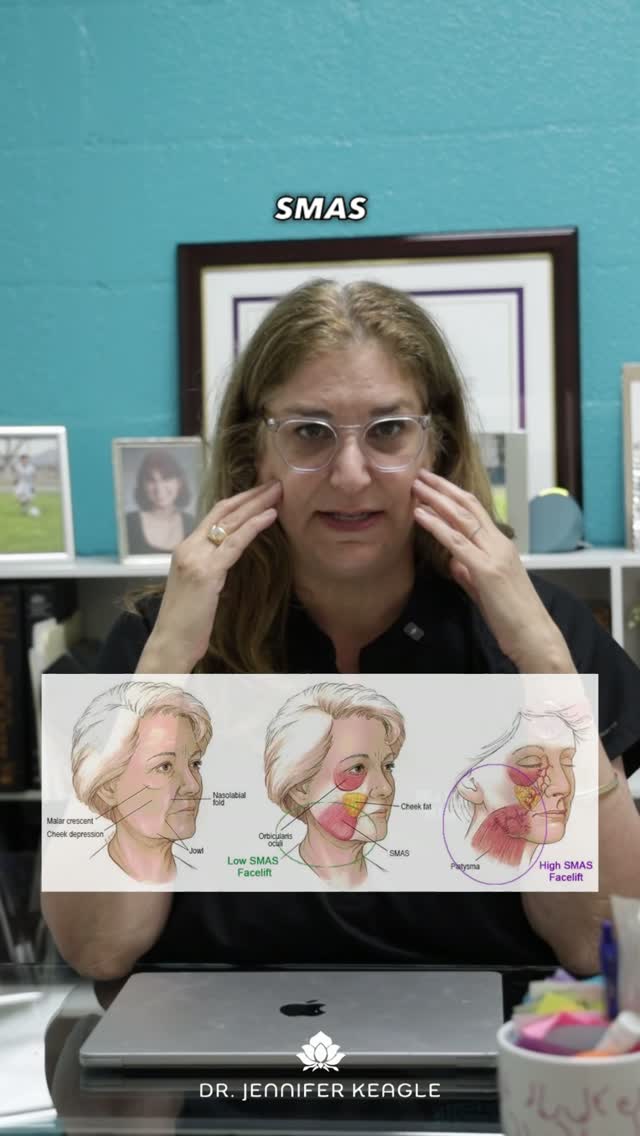
Why we choose the SMAS facelift over the deep plane approach
The right facelift technique is the one that fits the patient, not the one with the trendiest name.
NELA AESTHETICS AND PLASTIC SURGERY STAFFTurn your social into search
We turn your posts into editorial stories that bring new search traffic to drkeagle.com. Three of yours will be on this page.
Book a demo
drjenniferkeagle SMAS vs. Deep Plane Facelift, what’s actually the difference? Both techniques reposition deeper facial tissues rather than simply tightening skin, and studies comparing facelift techniques have found little to no meaningful difference in long term aesthetic outcomes between SMAS based and deep plane approaches. I prefer the SMAS facelift because it gives me greater control over how I reposition and tighten the tissues, while avoiding some of the deeper dissection required with a deep plane facelift. This can mean less disruption to deeper structures while still creating a natural, refreshed result. The goal isn’t to choose the procedure with the trendiest name. It’s to choose the technique that safely creates the right result for the individual patient. 📞 (213) 250 1300 🌐 www.DrKeagle.com #drkeagle #nelaaesthetics #SMASFacelift #FaceliftSurgery #Facelift
The right facelift technique is the one that fits the patient, not the one with the trendiest name.
NELA AESTHETICS AND PLASTIC SURGERY STAFFHow it works
Same as today. Nothing changes on Instagram.
We turn your post into a full story in your voice within the hour.
One click publishes it to drkeagle.com. Nothing goes live without you.
Your stories
Nothing was published anywhere. You decide that. Every word will come from your own posts, your own photos and your own treatments.
Facial Surgery · From your post
The right facelift technique is the one that fits the patient, not the one with the trendiest name.
“SMAS vs. Deep Plane Facelift, what’s actually the difference? Both techniques reposition deeper facial tissues rather than simply tightening skin, and studies comparing facelift techniques have found little to no meaningful difference in long term aesthetic outcomes between SMAS based and deep plane approaches. I prefer the SMAS facelift because it gives me greater control over how I reposition and tighten the tissues, while avoiding some of the deeper dissection required with a deep plane facelift. This can mean less disruption to deeper structures while still creating a natural, refreshed result. The goal isn’t to choose the procedure with the trendiest name. It’s to choose the technique that safely creates the right result for the individual patient. 📞 (213) 250 1300 🌐 www.DrKeagle.com #drkeagle #nelaaesthetics #SMASFacelift #FaceliftSurgery #Facelift”
Facial Aging · From your post
Volume loss and tissue laxity are different problems, and the right approach depends on which one is actually happening.
“Gravity isn’t exactly our friend as we age. 👩⚕️ Over time, we lose facial volume while the tissues naturally begin to descend. The right treatment depends on what’s actually causing the changes you’re seeing. 💉 Fillers can restore targeted volume, soften folds, enhance cheeks, and improve facial balance. ✨ Fat transfer uses your own fat to restore volume more broadly and can provide a longer lasting option. 👩⚕️ Facelift surgery may eventually make more sense when the issue becomes significant tissue laxity rather than volume loss alone. It’s not about doing everything. It’s about choosing the right treatment at the right time. 📞 (213) 250 1300 🌐 www.DrKeagle.com #drkeagle #nelaaesthetics #FacialAging #FatTransfer #Facelift”

Patient Review · From your post
A five star review lays out the three things one patient wanted before booking, and why proximity was never the whole story.
“Reviews like this mean so much to me. 🤍 I want every patient who walks into my office to feel comfortable being completely honest, asking every question, and taking the time they need to make the decision that feels right for them. My job isn’t to sell you a procedure, it’s to listen, educate, and help you understand your options. Thank you, Claudette, for trusting me and my team with your care. It truly means a lot. 📞 (213) 250 1300 🌐 www.DrKeagle.com #drkeagle #nelaaesthetics #PatientReview #PlasticSurgeryLosAngeles”
One social post becomes another searchable entry point to NELA Aesthetics and Plastic Surgery.
Our own magazine. Clicks and citations from Google Search Console, as of September 15, 2026.
Draft story for drkeagle.com · Facial Surgery
The right facelift technique is the one that fits the patient, not the one with the trendiest name.
Facelift consultations often start with a question we hear again and again: SMAS or deep plane, and which one is better. It is a fair question, but it assumes there is a single correct answer that applies to every face. In practice, both techniques are working toward the same goal, and the differences between them are more technical than dramatic.
Both approaches reposition the deeper facial tissues rather than simply pulling and tightening the skin. That distinction matters more than the specific name of the technique. Skin only lifts belong to an older era of facelift surgery. Whether the deeper layer is addressed through an SMAS or a deep plane method, the underlying support structure is what actually creates a lasting, natural looking result.
Studies comparing SMAS based and deep plane facelift techniques have found little to no meaningful difference in long term aesthetic outcomes between the two. That is worth sitting with, because so much of the public conversation treats deep plane as the newer, superior option. The data does not support a clear winner. It supports the idea that skill, judgment, and technique selection for the individual patient matter more than the label.
We prefer the SMAS facelift because of the control it offers during surgery. Working at this tissue plane allows for precise repositioning and tightening without requiring some of the deeper dissection involved in a deep plane approach. That control lets us shape the result tissue by tissue rather than relying on a single sweeping maneuver to do all the work.
Avoiding the deepest dissection can mean less disruption to structures beneath the surface, including nerves and connective tissue that a deep plane technique reaches more aggressively. Less disruption does not mean less effective. The SMAS approach still repositions the deeper tissue layer meaningfully, which is what actually produces a refreshed, natural appearance rather than a pulled or overly tight one.
None of this makes SMAS the automatic right choice for every patient either. Facial anatomy varies, prior surgical history varies, and the degree of aging varies from one person to the next. What we are describing is a preference built on experience and control, not a claim that one technique is universally superior. Good surgical judgment means matching the method to the person, not the reverse.
The goal was never to choose the procedure with the trendiest name. It is to choose the technique that safely creates the right result for that specific patient's face and goals. Deep plane facelifts get a lot of attention online, but attention is not the same as evidence of a better outcome, and the research on long term results simply does not draw that sharp a line.
If you are weighing facelift options and trying to sort marketing language from surgical substance, that conversation belongs in a consultation, not a comment section. We walk through anatomy, technique, and what each approach realistically changes for your face specifically. Reach us at (213) 250 1300 or through www.DrKeagle.com to talk through which technique actually fits what you are trying to achieve.
Draft story for drkeagle.com · Facial Aging
Volume loss and tissue laxity are different problems, and the right approach depends on which one is actually happening.
Gravity is not exactly our friend as we age, and most people notice the effects long before they can explain what is actually causing them. The instinct is often to reach for the same solution everyone talks about, whether that is filler, a specific device, or surgery, without first understanding what is happening underneath the skin. That distinction matters more than the treatment itself.
As we age, we lose facial volume while the surrounding tissues naturally begin to descend. Those are two separate mechanisms happening at once, not one single process with one single fix. Volume loss changes the shape and fullness of the face. Descent changes position and support. Treating one when the real issue is the other is why some results fall short of expectations.
Fillers work well when the primary issue is volume. They can restore fullness in targeted areas, soften folds around the nose and mouth, enhance the cheeks, and improve overall facial balance. Because the treatment is precise, it suits people whose faces have thinned in specific places rather than shifted or sagged more broadly. It is a targeted correction, not a total solution.
Fat transfer takes a broader approach to the same underlying problem. Using a patient's own fat, it restores volume across larger areas of the face rather than isolated spots, and it can offer a longer lasting result than filler alone. For patients who have lost volume more globally, this option addresses that spread more naturally than repeated smaller injections in separate areas.
Facelift surgery enters the conversation at a different point entirely. It becomes the more sensible option when the primary issue shifts from volume loss to significant tissue laxity, meaning the skin and underlying structures have loosened enough that adding volume will not correct the position or tightness that has changed. That is a structural problem, and it needs a structural solution.
None of these three approaches is inherently better than the others. Each one answers a different question about what is happening to a specific face at a specific time. Someone in their thirties losing volume in the cheeks is not facing the same problem as someone in their sixties dealing with laxity along the jawline, even if both are frustrated by how their reflection has changed.
That is the real work of an initial consultation: figuring out which mechanism is driving the changes someone is seeing, rather than defaulting to whichever treatment is most requested or most familiar. It is not about doing everything available. It is about identifying the actual cause and applying the treatment built for that cause, at the point in time when it makes sense.
Understanding the difference between volume loss and tissue descent gives patients a clearer way to think about their own faces and their options. It replaces guesswork with a framework, one that can inform decisions now and later, as the balance between volume and laxity continues to shift. Reach us at (213) 250 1300 or visit www.DrKeagle.com to talk through what is right for your face.
Draft story for drkeagle.com · Patient Review
A five star review lays out the three things one patient wanted before booking, and why proximity was never the whole story.
When Claudette found our page, she was not looking for a procedure. She was looking for three specific things: a surgeon near her side of town, a woman who is board certified, and someone with real seniority in the field. That order matters. It tells us patients are not just shopping convenience, they are weighing who they trust before they weigh how far they have to drive.
Her review breaks it down plainly, almost like a checklist, because that is genuinely how she made the decision. Being able to get care without crossing the city was one factor. Finding a board certified plastic surgeon who is also a woman was another. Choosing someone with seniority in the field rounded it out. None of those three things exist to impress. They exist to build confidence.
We think about that checklist often, because it reflects how most people actually choose a surgeon. Not from a single ad or a single photo, but from a slow accumulation of small reassurances. Location. Credentials. Experience. Each one answers a different worry, and together they add up to the kind of trust that lets someone walk through the door already feeling steadier about the decision ahead.
Our approach starts before any procedure is discussed. Every patient who sits down with us should feel comfortable being completely honest, asking every question they have, and taking whatever time they need. That is not a courtesy we extend occasionally, it is the baseline. Decisions about your own body deserve room to be slow, and we would rather answer ten questions twice than rush past one.
The job is not to sell a procedure. It is to listen first, then educate, then help someone understand what their real options actually are. Sometimes that means a straightforward path forward. Sometimes it means more conversation before any decision gets made at all. Either way, the patient leaves knowing more than they walked in with, which is the entire point of that first appointment.
Claudette specifically named seniority in the field as one of her three reasons, and it is worth sitting with why that carries weight. Experience is not just a credential to list, it shapes how a surgeon listens, how they explain risk, and how calmly they walk a patient through options that might feel unfamiliar or intimidating. Patients notice that steadiness, even if they cannot always name it.
She ended her review with something simple: she is glad there is a go to plastic surgeon just ten minutes from her house. It is a small detail, but it says something about what good care should feel like, close enough to be part of ordinary life, not a special occasion you have to plan around. Thank you, Claudette, for trusting our team with something this personal.
Reviews like hers do more than validate the work. They remind us what patients are actually weighing when they choose a surgeon, and how much of that decision happens quietly, before a single appointment is booked. Proximity opens the door. Trust is what makes someone walk through it.
Keep reading