
Why our neurotoxins course starts with a muscle, not a syringe
A two day training in Manhattan Beach builds injectors from anatomy up, using simulators that respond in real time.
N2 AESTHETICS STAFFTurn your social into search
We turn your posts into editorial stories that bring new search traffic to n2aesthetics.com. Three of yours will be on this page.
Book a demo
n2aesthetics Our 2 day Neurotoxins course is your best entry into the world of aesthetics. Learn correctly the first time to set yourself up for success! Our comprehensive approach will prepare you to not only begin injecting but to truly understand the “why” behind the techniques that you learn. Past attendees have reviewed the course as one of the most impactful learning experiences of their careers. One of the most important considerations for Neurotoxins is truly understanding the muscle anatomy and the antagonist and synergistic biomechanics of the muscle interplay. With our interactive iFace simulators you will not only get a “cadaver anatomy course” level of experience (without all the mess, formaldehyde and expense) but you will receive real time feedback with your injections on the simulators. The muscles temporarily change colors post injection to let you know your accuracy! The course offers both hands on and observational registration levels. The observational seats have the exact same experience of interactive learning and will still prepare you as you enter this wonderful world of medical aesthetics. *All attendees will receive 11 hours of Cat 1 CME’s 🗓️ October 2 3 [secret hidden. carrier 2] 📍N2 Aesthetics Training Center Manhattan Beach, CA Comment “ANATOMY” for a link to join us.
A two day training in Manhattan Beach builds injectors from anatomy up, using simulators that respond in real time.
N2 AESTHETICS STAFFHow it works
Same as today. Nothing changes on Instagram.
We turn your post into a full story in your voice within the hour.
One click publishes it to n2aesthetics.com. Nothing goes live without you.
Your stories
Nothing was published anywhere. You decide that. Every word will come from your own posts, your own photos and your own treatments.
Injector Training · From your post
A two day training in Manhattan Beach builds injectors from anatomy up, using simulators that respond in real time.
“Our 2 day Neurotoxins course is your best entry into the world of aesthetics. Learn correctly the first time to set yourself up for success! Our comprehensive approach will prepare you to not only begin injecting but to truly understand the “why” behind the techniques that you learn. Past attendees have reviewed the course as one of the most impactful learning experiences of their careers. One of the most important considerations for Neurotoxins is truly understanding the muscle anatomy and the antagonist and synergistic biomechanics of the muscle interplay. With our interactive iFace simulators you will not only get a “cadaver anatomy course” level of experience (without all the mess, formaldehyde and expense) but you will receive real time feedback with your injections on the simulators. The muscles temporarily change colors post injection to let you know your accuracy! The course offers both hands on and observational registration levels. The observational seats have the exact same experience of interactive learning and will still prepare you as you enter this wonderful world of medical aesthetics. *All attendees will receive 11 hours of Cat 1 CME’s 🗓️ October 2 3 [secret hidden. carrier 2] 📍N2 Aesthetics Training Center Manhattan Beach, CA Comment “ANATOMY” for a link to join us.”

Treatment Philosophy · From your post
The basics, done consistently, matter more than chasing every new treatment on the menu.
“There are so many aesthetic treatments available now that figuring out what you need can feel overwhelming. But maintaining your results doesn’t have to mean doing everything. For @drjoshtarpley, it comes down to the basics. quarterly Botox, consistent medical grade skincare, Sofwave to support collagen and elastin, and filler only occasionally when volume is truly needed. The priority is skin quality, texture, and supporting the tissue over time.”
Skin Recovery · From your post
Pigmentation, uneven tone, and dull texture each respond to a different approach, and sometimes the right plan uses more than one.
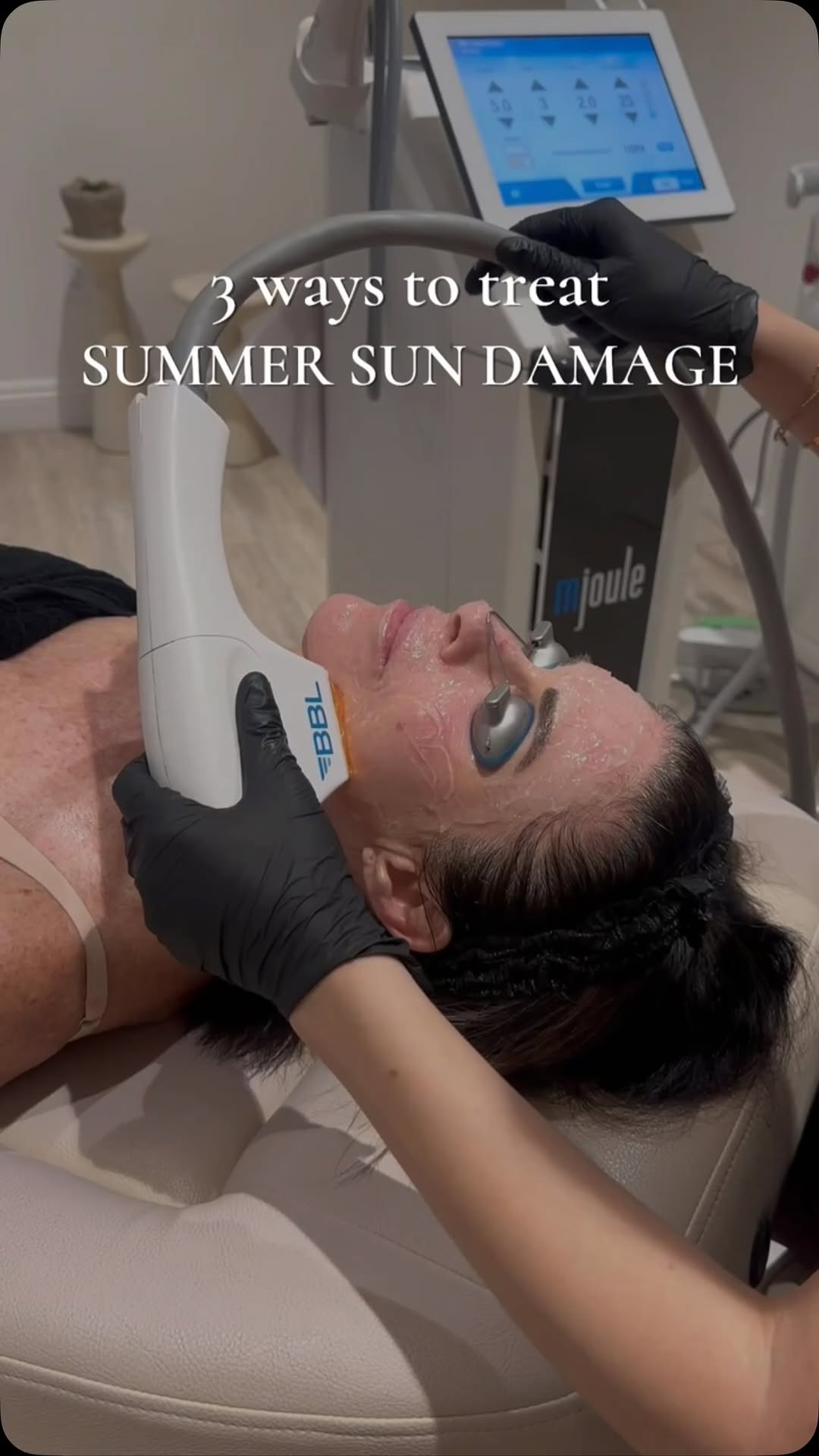
“Summer sun damage? Let’s work on it. A few of our favorite ways to improve pigmentation, uneven skin tone and overall skin quality. 1. BBL/Moxi 2. VI Peel 3. Medical grade skincare Which one is right for you depends on what your skin needs and sometimes it’s a combination!”
One social post becomes another searchable entry point to N2 Aesthetics.
Our own magazine. Clicks and citations from Google Search Console, as of September 15, 2026.
Draft story for n2aesthetics.com · Injector Training
A two day training in Manhattan Beach builds injectors from anatomy up, using simulators that respond in real time.
A hand hovers over a sculpted, muscular head, its surface ridged and textured like a study model pulled from an anatomy lab. There is no needle in frame yet. That sequencing is deliberate. Before anyone at our training center picks up a syringe, we want them looking at muscle the way a working injector eventually has to: as a system of parts that move against and with each other.
That system is the actual subject of our two day Neurotoxins course. We built it as an entry point into aesthetics for people who want to learn the technique correctly the first time, rather than patch gaps in their knowledge later. The goal is not just to teach someone where to inject. It is to make sure they understand why that specific point works before they ever touch skin.
Understanding the why starts with the muscles themselves. Neurotoxin work depends on knowing not just a single muscle but how it behaves alongside its antagonist and synergistic partners, the ones that pull opposite or work in tandem. Miss that interplay and technique becomes guesswork. Our course spends real time on this biomechanical relationship before layering in the injection skills that depend on understanding it.
This is where the iFace simulators change the experience. They are built to approximate a cadaver anatomy course, minus the mess, the formaldehyde, and the expense that usually comes with that level of training. Attendees get to work on a model with real muscular structure rather than a diagram, which is a meaningfully different way to internalize where everything actually sits beneath the surface.
The simulators also respond. After an injection, the targeted muscle temporarily changes color, giving attendees immediate feedback on accuracy instead of waiting to see results on a live patient days later. That real time correction is what turns a lecture into practice. It lets someone adjust their approach on the spot, in the room, before the stakes involve an actual client's face.
We offer both hands on and observational registration for this reason: not everyone is ready to inject on day one, and that is fine. Observational seats get the identical interactive experience, watching the same simulator feedback and the same muscle level teaching, just without holding the syringe themselves. Either path prepares someone entering medical aesthetics, and attendees walk away with 11 hours of Cat 1 CME credit.
Attendees who have gone through the course before have described it as one of the more impactful learning experiences of their careers, and that reaction tracks with how the two days are structured. It is not a weekend of watching someone else inject. It is hands on time, real anatomical grounding, and feedback that corrects in the moment rather than after the fact.
The next course runs October 2 and 3 at our training center in Manhattan Beach. Seats exist at both the hands on and observational level, and anyone interested can comment ANATOMY on our page for the registration link. Whichever seat someone chooses, they leave having actually handled the anatomy the technique depends on, not just heard it described.
Draft story for n2aesthetics.com · Treatment Philosophy
The basics, done consistently, matter more than chasing every new treatment on the menu.
Ask ten people what a proper skincare routine looks like and you will get ten different answers, most of them longer than they need to be. Josh Tarpley MD, seated in our Manhattan Beach space in a plain black quarter zip, breaks his own annual approach into four parts. No dramatic reveal, no product stack. Just a plan he actually follows.
The list starts with quarterly Botox, done on a set schedule rather than whenever it crosses his mind. Consistency is the point. Waiting until lines are fully set means playing catch up, while a predictable cadence keeps results steady and prevents the need for bigger corrections later. It is maintenance, not a reaction to how his face looks in a given week.
Medical grade skincare is the second piece, and he is specific that it needs to be consistent, not occasional. A great in office treatment can only do so much if the days in between are left unmanaged. The skin is doing work every single day, whether or not anyone is paying attention to it, so the daily product routine carries real weight in his plan.
Sofwave comes next, aimed specifically at supporting collagen and elastin rather than changing volume or shape. It is a maintenance tool, not a correction, which fits the overall tone of his approach. The goal is not to add anything new to the face but to help the tissue that is already there hold up better over time, which is a quieter kind of result to aim for.
Filler is the last item, and it comes with the clearest boundary of the four. He uses it occasionally, and only when volume is genuinely needed, not as a default step in a routine. That distinction matters. Filler solves a specific problem, loss of volume, and using it outside of that purpose tends to create the overdone look many patients say they want to avoid.
What ties the four together is where he places the emphasis. Not on the number of treatments, not on trying whatever is newest, but on skin quality, texture, and supporting the tissue underneath over time. That is a different goal than looking different. It is closer to looking like a well maintained version of the same face, which takes discipline more than volume.
It is easy to assume more treatments signal more expertise, especially from someone who spends his days recommending them to others. His own routine argues the opposite. Four consistent habits, chosen deliberately and repeated on schedule, do more for skin quality over a year than a long list of treatments used inconsistently or chosen because they are trending.
The bigger idea here is restraint as a strategy, not a compromise. Overwhelm is the common starting point for most people looking into aesthetic treatments, faced with more options than they know what to do with. Tarpley's own plan is proof that the answer is not doing everything available. It is picking a few things that matter and staying with them.
Draft story for n2aesthetics.com · Skin Recovery
Pigmentation, uneven tone, and dull texture each respond to a different approach, and sometimes the right plan uses more than one.
Summer leaves a record on the skin long after the season ends. Pigmentation shows up first, then uneven tone, then a general flatness that makes skin look tired even when nothing is technically wrong. We see this pattern every year around this time, and we treat it with three tools we come back to again and again because they address different layers of the same problem.
The first is BBL, sometimes paired with Moxi, done with the Joule platform. In our treatment room, this looks like a handheld device passed carefully across the face and neck while the client wears protective eyewear. It targets pigment and uneven tone at a deeper level, which makes it useful for the kind of sun damage that sits below the surface rather than sitting on top of it.
BBL and Moxi work well together because they approach damage from slightly different angles. One focuses on breaking up visible pigment, while the other supports overall texture and tone as the skin recovers. For clients dealing with noticeable sun spots or blotchiness built up over months outdoors, this combination often becomes the starting point before anything else gets layered on top.
The second option is the VI Peel, a chemical peel built to resurface skin and even out tone from the top down. Where BBL and Moxi work with light and heat, a peel works with controlled exfoliation, encouraging fresher skin to surface as the damaged layer sheds. It is a more accessible entry point for clients who want visible improvement without committing to a device based treatment right away.
A VI Peel can stand alone for milder pigmentation or work alongside BBL and Moxi for more stubborn cases. The appeal is in its simplicity: it does not require special equipment in the room, and it gives skin a defined recovery period with a clear before and after. For clients newer to professional treatment, it is often where the conversation about sun damage starts.
The third piece is medical grade skincare, which is less about correcting damage in a single visit and more about protecting the progress made in office. Treatments like BBL, Moxi, and VI Peel can improve pigment and tone, but the results hold longer when supported by a daily routine built for the skin's actual condition rather than a generic drugstore lineup.
None of these three approaches is universally right. What matters is which one, or which combination, fits the skin in front of us. Some clients need the depth of BBL and Moxi, others start with a peel, and most benefit from medical grade skincare running underneath either choice. The right plan depends on what the skin actually needs, not on which treatment sounds the most impressive.
Keep reading