Why radio frequency has changed the way we remove moles in Los Angeles
A closer look at the cosmetic method behind same day mole and skin tag removal.
MOLE REMOVAL LOS ANGELES STAFFTurn your social into search
We turn your posts into editorial stories that bring new search traffic to moleremovallosangeles.com. Three of yours will be on this page.
Book a demo
moleremovalla Want to say goodbye to an unwanted mole or skin tag? 👋✨ At Mole Removal Los Angeles, we use radio frequency ablation for precise cosmetic removal. With excellent cosmetic results, a lower chance of scarring, and same day removal available, getting the removal you want can be simple! Book with us today! 🤩.. #losangeles #therealmoledoctor #removingmoles #moleremoval #cosmeticprocedure
A closer look at the cosmetic method behind same day mole and skin tag removal.
MOLE REMOVAL LOS ANGELES STAFFHow it works
Same as today. Nothing changes on Instagram.
We turn your post into a full story in your voice within the hour.
One click publishes it to moleremovallosangeles.com. Nothing goes live without you.
Your stories
Nothing was published anywhere. You decide that. Every word will come from your own posts, your own photos and your own treatments.
Skin Care · From your post
A closer look at the cosmetic method behind same day mole and skin tag removal.
“Want to say goodbye to an unwanted mole or skin tag? 👋✨ At Mole Removal Los Angeles, we use radio frequency ablation for precise cosmetic removal. With excellent cosmetic results, a lower chance of scarring, and same day removal available, getting the removal you want can be simple! Book with us today! 🤩.. #losangeles #therealmoledoctor #removingmoles #moleremoval #cosmeticprocedure”
In The Chair · From your post
A closer look at radio frequency ablation, the technique our doctors use to remove moles and skin tags with minimal disruption to surrounding skin.
“Looking to remove a mole or skin tag? Our experienced doctors use radio frequency ablation, an advanced technique that allows for precise removal with minimal disruption to the surrounding skin💉 Schedule your consultation today!.. #losangeles #therealmoledoctor #removingmoles #moleremoval #cosmeticprocedure”

Ask The Doctor · From your post
Dr. Mann answers one of the most common questions we hear about radio frequency ablation and skin tone.
“Is radio frequency ablation safe for all skin types and tones?💭🧐 Dr. Mann answers this common question on this weeks, “Interview with The Mole Doctor.”.. #themoledoctor #cosmeticmoleremoval #moleremoval #explorepage #removingmoles”
One social post becomes another searchable entry point to Mole Removal Los Angeles.
Our own magazine. Clicks and citations from Google Search Console, as of September 15, 2026.
Draft story for moleremovallosangeles.com · Skin Care
A closer look at the cosmetic method behind same day mole and skin tag removal.
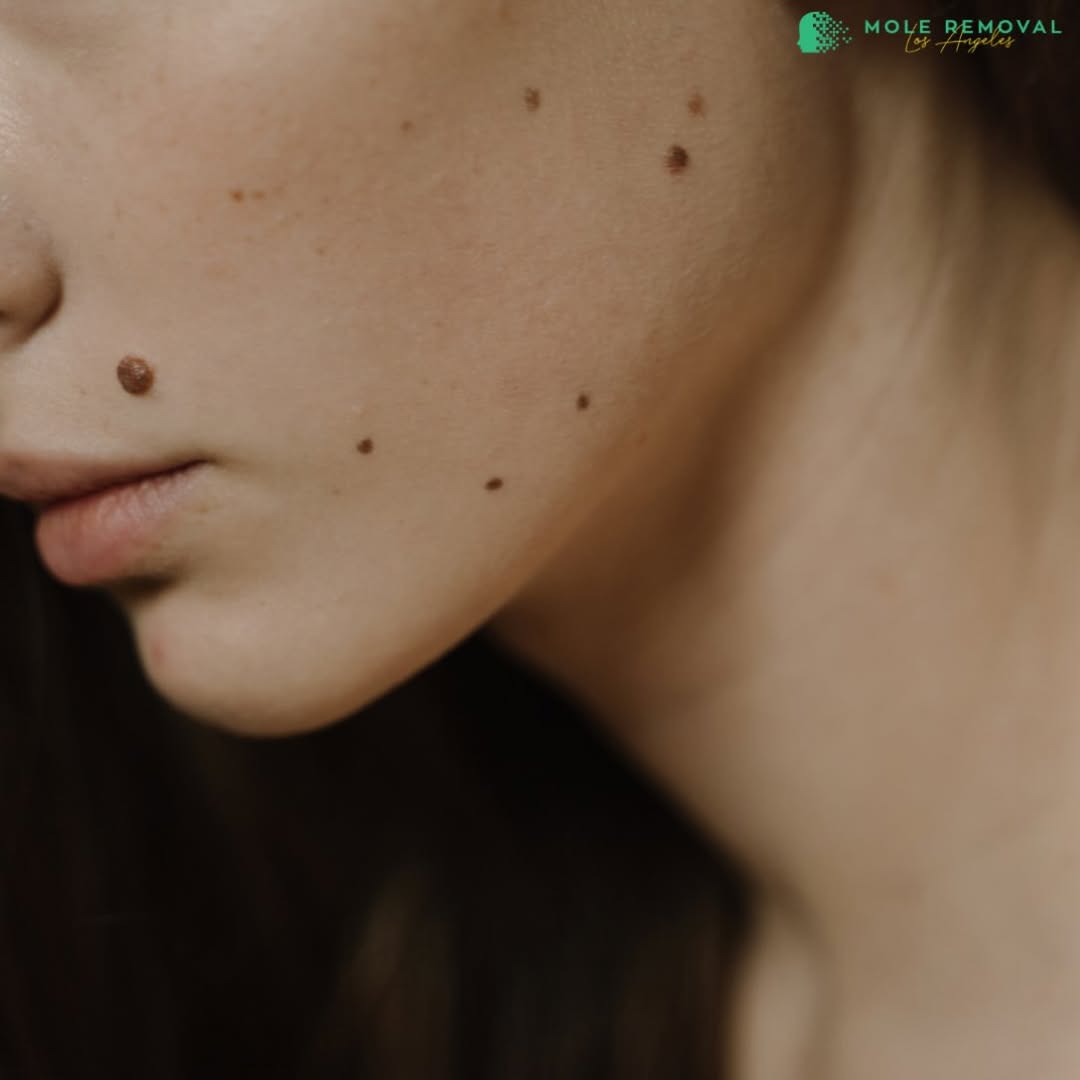
Every face carries its own map of small marks, some flat, some raised, some barely noticeable until a certain light catches them. A cluster of moles along the cheekbone or jawline is common, and most people live with them for years without a second thought. But when one mole starts to feel like the wrong kind of noticeable, the question is rarely about health. It is about wanting a cleaner canvas without wanting a complicated procedure to get there.
That is the exact moment we built our practice around. At Mole Removal Los Angeles, our focus stays narrow on purpose: precise, cosmetic removal of unwanted moles and skin tags. We are not trying to be a general dermatology practice. We are trying to be very good at one specific thing, which is helping someone walk in with a mark they do not want and walk out without it, in a single visit whenever possible.
The tool that makes this possible is radio frequency ablation. Instead of cutting or excising tissue the way older methods do, radio frequency energy targets the mole with precision, removing it while minimizing the disruption to the surrounding skin. That precision is the whole point. It is the difference between a treatment that leaves a visible reminder behind and one that lets the skin heal quietly, without drawing attention to where the mole used to be.
Because the approach is so targeted, the chance of scarring is lower than with more invasive removal techniques. For a mole sitting on the cheek, near the lip line, or anywhere else on a visible part of the face, that matters. People are not just asking to have something removed. They are asking to have it removed in a way that does not trade one cosmetic concern for another one that lingers longer.
One of the most practical parts of this process is timing. Same day removal is available, which means the consultation and the treatment do not have to be two separate appointments spread across weeks. For someone who has been putting off dealing with a mole simply because it felt like a bigger commitment than it should be, that single visit structure removes a real barrier, not just a symbolic one.
There is also something to be said for the simplicity of the decision itself. A mole or skin tag does not need a dramatic story attached to it to be worth removing. Sometimes it is about makeup application, sometimes it is about how a mole catches on clothing or jewelry, and sometimes it is simply personal preference. We treat all of those reasons as valid, because the goal has always been the result someone actually wants to see.
Skin changes over time in ways that are mostly harmless, and the marks that come with it are often just part of that record. Choosing to remove one does not require justifying it to anyone. It is a cosmetic decision, made on personal terms, and we built our process to match that: direct, efficient, and focused on giving people a straightforward path from unwanted mole to clear skin, without unnecessary steps in between.
Draft story for moleremovallosangeles.com · In The Chair
A closer look at radio frequency ablation, the technique our doctors use to remove moles and skin tags with minimal disruption to surrounding skin.
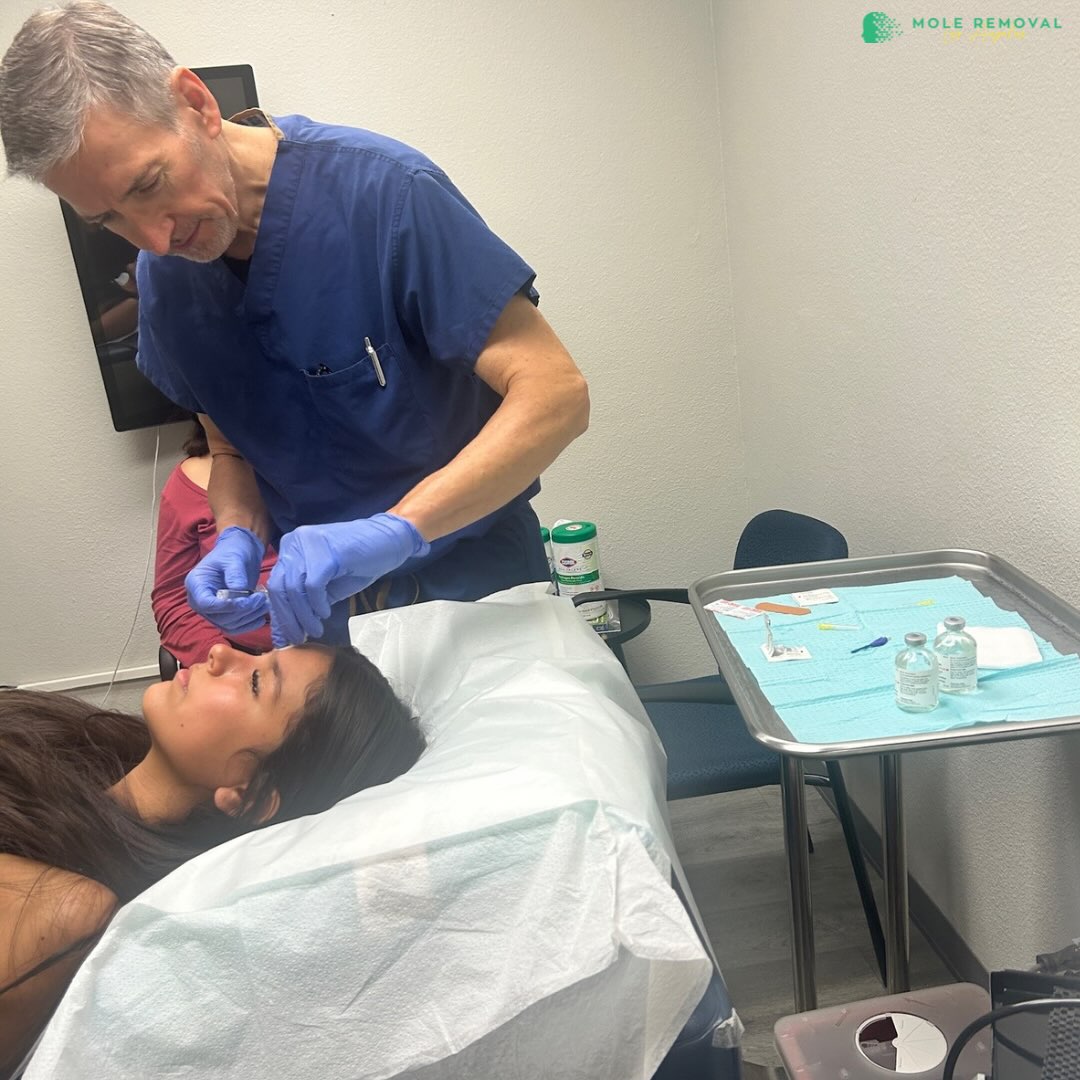
A patient lies back on a paper lined table, head tilted, eyes closed. A gloved hand steadies her forehead while another guides a small instrument toward the treatment area. Nothing about the moment looks dramatic. That is the point. Precise mole removal is quiet, controlled, and over quickly, which is exactly what we aim for with every consultation and every procedure we perform.
The technique is radio frequency ablation, and it is the method our doctors rely on for removing moles and skin tags. Instead of cutting broadly around a growth, radio frequency energy targets the tissue directly, which allows for a more exact removal. The surrounding skin is disturbed as little as possible, which matters both for healing and for how the area looks afterward.
The tray beside the table tells its own story. Two small vials, a marking pen, a folded blue drape, and a few basic tools laid out in order. There is no need for anything elaborate. Radio frequency ablation does not require heavy equipment or a complicated setup, just a controlled environment, sterile materials, and a doctor who knows exactly where to direct the energy.
That simplicity is intentional. A cluttered process invites error, and mole removal is a procedure where precision matters more than speed. Keeping the tools minimal keeps the focus on the treatment area itself. Everything within reach has a specific purpose, from the numbing solution in the vials to the marking pen used to outline the exact spot before any instrument touches the skin.
Minimal disruption is not just a phrase we use to describe the technique, it describes what actually happens to the skin during the procedure. Because radio frequency ablation works with such targeted precision, the tissue immediately surrounding a mole or skin tag is left largely intact. That precision is part of why patients come to us specifically for this method rather than more invasive alternatives.
For a lot of people, a mole or skin tag has been sitting on their skin for years, noticed occasionally but never addressed. Booking a consultation is often the biggest step, not the removal itself. Once someone is in the chair, the actual procedure tends to move faster than expected, guided by a doctor who has done this often enough to work with steady, practiced hands.
Every removal begins with a conversation first. Our doctors evaluate the mole or skin tag, discuss the radio frequency ablation process, and walk through what the patient can expect before any tool is picked up. That groundwork matters just as much as the technique itself, since a patient who understands the process tends to feel far more at ease once they are lying back on the table.
If a mole or skin tag has been on your list to deal with, the process starts with scheduling that first consultation. From there, our doctors can determine whether radio frequency ablation is the right approach for your specific situation, walk you through the appointment itself, and get you in the chair for a procedure built around precision rather than guesswork.
Draft story for moleremovallosangeles.com · Ask The Doctor
Dr. Mann answers one of the most common questions we hear about radio frequency ablation and skin tone.
The question comes up often enough that it earned its own segment. Is radio frequency ablation safe for all skin types and tones? It sounds like a simple yes or no, but the honest answer requires a little more context, which is exactly why we built Interview with The Mole Doctor around questions like this one instead of quick captions or one line replies.
Skin tone matters in cosmetic treatment because certain methods carry a higher risk of pigment change in deeper skin tones. That risk is real with some approaches to mole removal, and it is one of the first things a careful provider should be thinking about before ever touching a device to skin, regardless of what the mole looks like or where it sits on the body.
Patients ask about this because they have often heard mixed information elsewhere, sometimes from a friend's experience, sometimes from something read online. It makes sense that people want a direct answer from someone who performs the procedure regularly, rather than a generic disclaimer buried in fine print or a rushed response during a five minute consultation.
Dr. Mann's answer on this week's episode addresses that concern directly, speaking to how radio frequency ablation behaves differently than some older or more aggressive removal methods. The format of the series exists for exactly this kind of moment, where a real question deserves a real explanation instead of a vague reassurance that leaves someone still unsure walking out the door.
Interview with The Mole Doctor was built around the questions patients actually ask, not the ones that make for easy marketing copy. Each episode takes one specific concern, something practical, something people genuinely wonder about before booking, and lets Dr. Mann answer it directly on camera rather than through a written summary that loses the nuance of the original explanation.
That format matters because mole removal decisions are personal and often a little nerve wracking. Skin tone, texture, healing history, and the mole itself all factor into what a provider recommends, and hearing that reasoning explained in plain language does more for a patient's confidence than a checklist ever could, especially before a first visit.
For anyone weighing radio frequency ablation and wondering whether their own skin tone changes the equation, this episode is a direct starting point rather than a marketing promise. The goal is not to declare one method universally perfect, but to explain, honestly, how it performs and where care and judgment still matter most.
New episodes of Interview with The Mole Doctor continue to work through the questions people bring into consultations every week. If skin tone and safety have been on your mind before considering removal, this is the kind of answer worth hearing directly from Dr. Mann before making any decision.
Keep reading