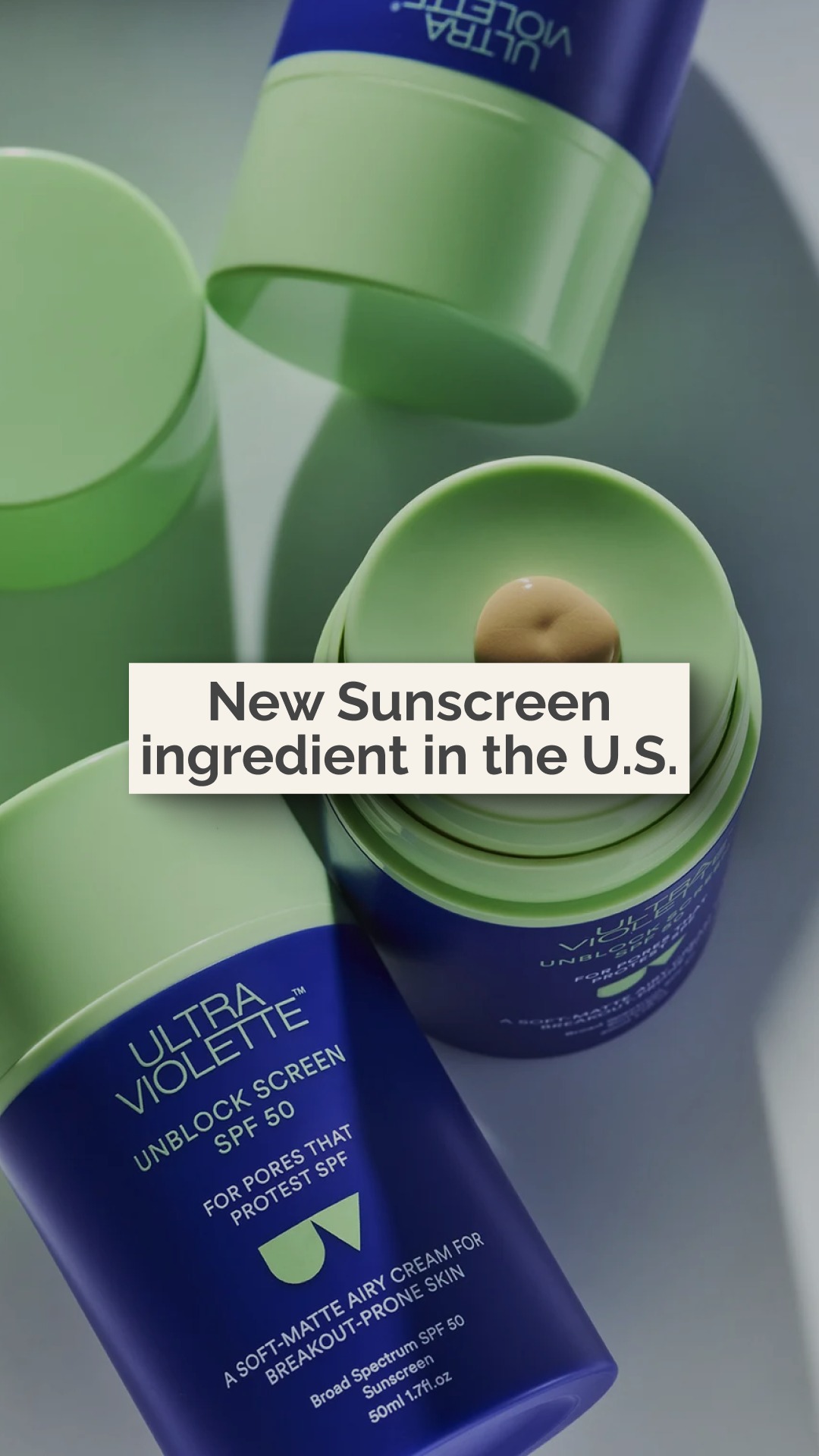
Bemotrizinol finally arrives in U.S. sunscreens
A long available UV filter is entering the U.S. market, and we're breaking down what it actually does for your skin.
MIAMI DERM. ANNA CHACON, MD STAFFTurn your social into search
We turn your posts into editorial stories that bring new search traffic to drannachacon.com. Three of yours will be on this page.
Book a demo
miamiderm A sunscreen ingredient that’s been used around the world for years is finally coming to the U.S. 👀 Bemotrizinol (BEMT) provides broad spectrum UVA + UVB protection, is highly photostable, and has very low systemic absorption. As a dermatologist, I’m excited to see more advanced UV filter options becoming available to patients in the U.S. Want to know which sunscreens I recommend? I added a BEMT option to my top sunscreen picks on ShopMyShelf. Link in bio. #bemotrizinol #bemt #sunscreen #dermatologist #skincare
A long available UV filter is entering the U.S. market, and we're breaking down what it actually does for your skin.
MIAMI DERM. ANNA CHACON, MD STAFFHow it works
Same as today. Nothing changes on Instagram.
We turn your post into a full story in your voice within the hour.
One click publishes it to drannachacon.com. Nothing goes live without you.
Your stories
Nothing was published anywhere. You decide that. Every word will come from your own posts, your own photos and your own treatments.
Skin Science · From your post
A long available UV filter is entering the U.S. market, and we're breaking down what it actually does for your skin.
“A sunscreen ingredient that’s been used around the world for years is finally coming to the U.S. 👀 Bemotrizinol (BEMT) provides broad spectrum UVA + UVB protection, is highly photostable, and has very low systemic absorption. As a dermatologist, I’m excited to see more advanced UV filter options becoming available to patients in the U.S. Want to know which sunscreens I recommend? I added a BEMT option to my top sunscreen picks on ShopMyShelf. Link in bio. #bemotrizinol #bemt #sunscreen #dermatologist #skincare”
Hair Care · From your post
A closer look at what conditioner is actually doing when dryness or damage makes hair harder to manage.
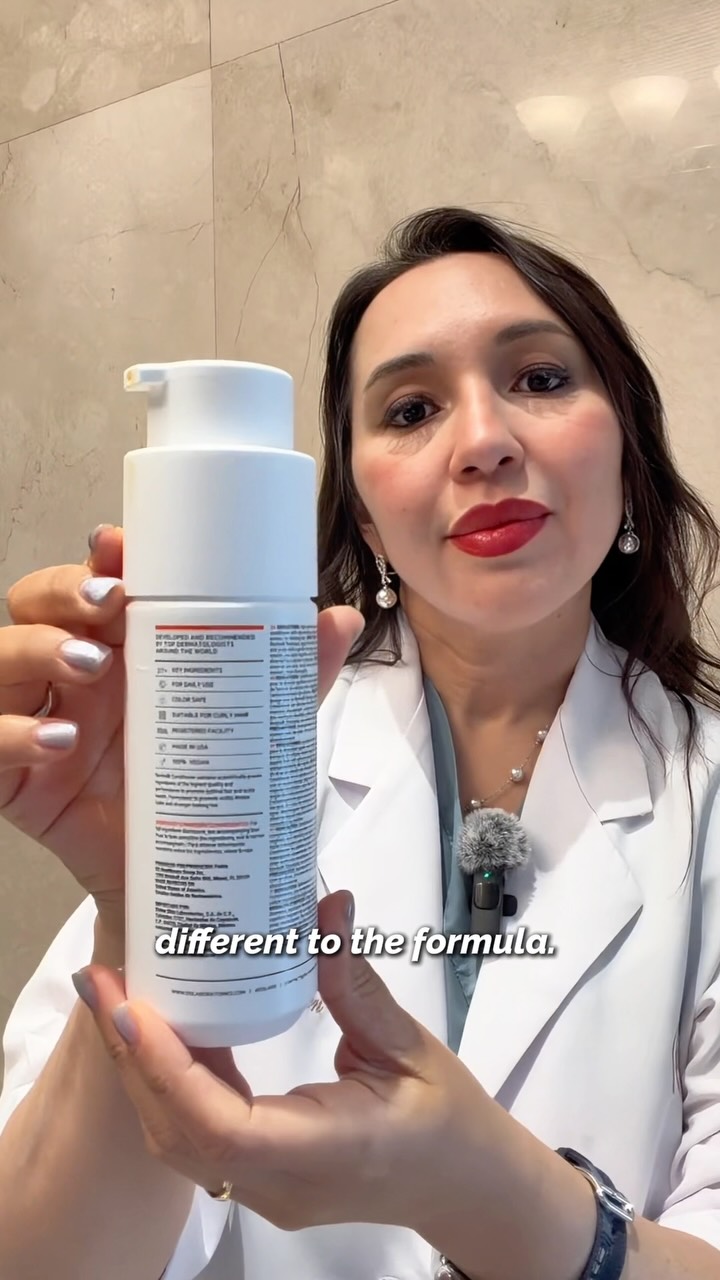
“Conditioner is an important part of maintaining how your hair looks and feels, especially when dryness or damage makes it harder to manage. Revita Conditioner from DS Laboratories is formulated to support hydration, softness, and manageability while complementing the rest of your hair care routine. Paid partnership with @dslaboratories. This content is for general educational purposes only and is not individualized medical advice. Individual results and experiences may vary. #dslaboratories #revita #conditioner #healthyhair #dermatologist”

Skin Deep Podcast · From your post
Dr Muhamad Aly Rifai joins Skin Deep to talk about building telehealth early and the legal battle that followed.
“He built telehealth before it was mainstream. Then the government came knocking. What happened next became a seven year fight and ended with a not guilty verdict. 🎙️Skin Deep #45 Dr. Muhamad Aly Rifai September 17 Are you ready to hear the story? #skindeeppodcast #telehealth #healthcare #physician”
One social post becomes another searchable entry point to Miami Derm. Anna Chacon, Md.
Our own magazine. Clicks and citations from Google Search Console, as of September 15, 2026.
Draft story for drannachacon.com · Skin Science
A long available UV filter is entering the U.S. market, and we're breaking down what it actually does for your skin.
A sunscreen ingredient that has been used around the world for years is finally coming to the U.S. Bemotrizinol, often abbreviated as BEMT, is starting to show up as an option for patients here, and as a dermatologist, we think it deserves real attention rather than a quick scroll past. This is not a minor tweak to old formulas.
Bemotrizinol provides broad spectrum protection, meaning it defends against both UVA and UVB rays rather than just one category. UVA rays are linked to premature aging and deeper skin damage, while UVB rays are the primary cause of sunburn. A filter that addresses both at once gives patients a more complete layer of daily protection without needing to combine several separate ingredients.
One of the qualities that makes bemotrizinol notable is photostability. Some UV filters break down when exposed to sunlight, which can reduce their effectiveness over the course of a day outdoors. A highly photostable ingredient holds its structure and its protective power longer, which matters for anyone who is not reapplying sunscreen every hour during work, errands, or time outside.
Bemotrizinol also has very low systemic absorption, meaning very little of it passes through the skin into the bloodstream. For patients who are cautious about what ingredients end up circulating in the body, this is a meaningful detail. It allows the sunscreen to do its job on the surface of the skin, where protection is actually needed, without raising the same questions that some other filters have prompted.
As a dermatologist, we are excited to see more advanced UV filter options becoming available to patients in the U.S. Sunscreen formulation has moved slowly in this country compared to other regions, and access to a wider range of filters gives patients more choices that fit their skin type, their lifestyle, and their comfort level with different ingredients.
Sunscreen selection is not one size fits all. Texture, finish, and ingredient list all affect whether someone will actually wear it every day, and consistency is what makes any sunscreen effective in the long run. Having a photostable, broad spectrum option with low systemic absorption gives patients another legitimate choice to weigh against their current routine.
We know patients often ask which sunscreens we personally recommend, since the number of products on shelves can be overwhelming. We have added a BEMT option to our top sunscreen picks on ShopMyShelf, where we keep a running list of the formulas we think are worth knowing about as new ingredients become available.
The link to those picks is in our bio for anyone who wants to see where bemotrizinol fits alongside the other options we recommend. As more products using this filter reach the U.S. market, we will keep paying attention to how they perform and where they make sense for different skin concerns and daily routines.
Draft story for drannachacon.com · Hair Care
A closer look at what conditioner is actually doing when dryness or damage makes hair harder to manage.
Conditioner tends to get treated as an afterthought, the quick step that happens right after shampoo because that is simply the order things go in. But conditioner is doing real work in that routine, particularly for hair that is dry or showing signs of damage. It is the step that determines whether hair feels manageable once it dries, not just how it looks right when you step out of the shower.
That is why we like to talk through conditioner as its own decision rather than whatever comes bundled with a shampoo purchase. Revita Conditioner from DS Laboratories is formulated to support hydration, softness, and manageability, and it is built to work alongside the rest of a hair care routine rather than override it. The formula matters here, and reading it closely is part of understanding what it is actually meant to do.
Turning a bottle around to read the actual label is a habit worth building, and it is one we practice in our own routine walkthroughs. The back of a bottle carries the information that actually determines whether a product fits your hair, including how it is meant to be used, what it is formulated for, and who it is suitable for. That information is more useful than packaging alone, especially when dryness or damage is part of what you are trying to manage.
Ingredients and formulation details are not just fine print, they are the difference between a conditioner that genuinely supports hydration and one that simply smells good and rinses out clean. Taking the time to look closely at what a formula is built to do, rather than assuming all conditioners function the same way, is a small habit that pays off in how hair actually behaves once it is dry and styled.
Hydration gets most of the attention when people talk about dry or damaged hair, but softness and manageability are just as much a part of what a conditioner needs to deliver. Hair that feels hydrated but still tangles or resists styling has not actually solved the problem dryness creates day to day. A formula that addresses all three together tends to make the biggest difference in how hair handles once it is out of the shower.
That manageability piece is often what people notice most in daily life, since it shows up in how long styling takes and how hair holds up through the day. A conditioner that complements the rest of a routine, rather than working against other products, gives hair a better foundation to build on. That is the kind of support we look for when evaluating any formula we talk about with patients.
None of this works in isolation, which is part of why we frame conditioner as a piece of a larger routine rather than a standalone fix. The products used before and after matter, and a conditioner formulated to complement that routine tends to perform more consistently than one designed to work alone. Thinking about the sequence, not just the individual product, is part of getting real results from dry or damaged hair.
As always, individual results and experiences vary, and this kind of guidance is meant to be general and educational rather than a substitute for individualized advice. What we can say is that the conditioner step deserves the same attention people already give to shampoo or styling products. Reading the formula, understanding what it is meant to do, and fitting it into the full routine is where the real difference shows up.
Draft story for drannachacon.com · Skin Deep Podcast
Dr Muhamad Aly Rifai joins Skin Deep to talk about building telehealth early and the legal battle that followed.
Episode 45 of Skin Deep brings on Dr Muhamad Aly Rifai, a physician who built telehealth before it was mainstream. That single fact frames the whole conversation. Long before virtual visits became a normal part of healthcare, he was already working in that space, which meant he was also exposed to scrutiny that did not yet have a clear playbook attached to it.
Then, as he tells it, the government came knocking. We are not softening that line because it is the hinge the entire episode turns on. A physician working ahead of where the system was ready to regulate him became the subject of an investigation, and that investigation did not resolve quickly or quietly.
What followed was seven years of legal proceedings, and we sit with that number rather than rushing past it. Seven years is not a phase of someone's career, it is a large stretch of it, running parallel to whatever else Dr Rifai was doing as a physician during that same window of time.
The episode does not treat that stretch as background noise. It treats it as the story itself, the slow grinding reality of a legal process that outlasts news cycles and public attention, one that a person still has to show up for personally and professionally while the rest of their working life continues around it.
It ended with a not guilty verdict. That is the outcome we are building this article around, because it changes how the seven years read in hindsight. What looked uncertain for most of that time closes with a clear legal result, and that result gives the conversation its shape and its stakes.
We host Skin Deep because medicine rarely gets talked about in plain terms, and a story like this one sits right at that gap. Telehealth is common now, but someone had to be early to it, and being early sometimes means being tested by systems that have not caught up yet to the thing being built.
Dr Rifai's episode gives listeners a firsthand account of that tension, told by the physician who lived through it rather than summarized secondhand. It is a specific story about a specific person, not a general statement about healthcare policy, and that specificity is exactly what makes it worth sitting down to actually hear in full.
Episode 45 published September 17, and the question we would put to you is the same one we asked ourselves before recording: are you ready to hear the story. We think it is worth your time, not because it wraps up neatly, but because it does not, a case built and fought and finally resolved over seven real years of one physician's working life.
Keep reading