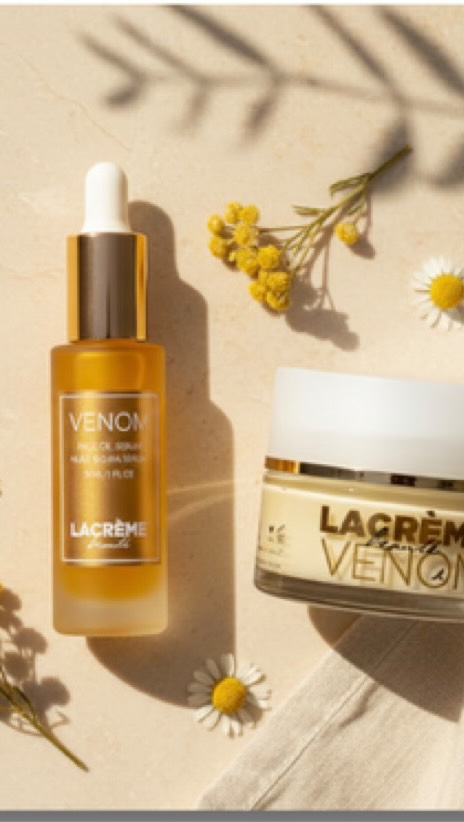
The Bee Venom Oil Serum brings sculpted radiance to our skincare shelf
LaCrème Beauté adds an oil serum to its Bee Venom line, built for layering into a slower, more deliberate facial ritual.
ME 2 BEAUTY STAFFTurn your social into search
We turn your posts into editorial stories that bring new search traffic to me2beauty.com. Three of yours will be on this page.
Book a demo
me2beautyskincare Bee Venom now in a oil. serum. A ritual of sculpted radiance. Meet the Bee Venom Oil Serum by LaCrème Beauté, an active focus face oil powered by Bee Venom, regenerative Helichrysum, silky Abyssinian Oil, and skin identical Squalane. Enriched with Rosehip, Sea Buckthorn, and nutrient rich botanical oils, this lightweight, fast absorbing formula helps nourish, smooth, calm, and restore the complexion. leaving skin looking firmer, more sculpted, and effortlessly luminous. If you’ve ever tried the @lacremebeaute Bee Venom collection of skincare, you know you can’t ever have enough of Bee Venom! Massage 2. 4 drops into cleansed skin across the face, neck, and décolleté. Use alone or layer beneath Bee Venom Cream or Beauty Boost for an elevated at home facial ritual. Pair with your preferred beauty tool to enhance application and create a beautifully sculpted finish. 🐝 #LaCremeBeaute #beevenomskincare #facesculpting
LaCrème Beauté adds an oil serum to its Bee Venom line, built for layering into a slower, more deliberate facial ritual.
ME 2 BEAUTY STAFFHow it works
Same as today. Nothing changes on Instagram.
We turn your post into a full story in your voice within the hour.
One click publishes it to me2beauty.com. Nothing goes live without you.
Your stories
Nothing was published anywhere. You decide that. Every word will come from your own posts, your own photos and your own treatments.
Skincare Edit · From your post
LaCrème Beauté adds an oil serum to its Bee Venom line, built for layering into a slower, more deliberate facial ritual.
“Bee Venom now in a oil. serum. A ritual of sculpted radiance. Meet the Bee Venom Oil Serum by LaCrème Beauté, an active focus face oil powered by Bee Venom, regenerative Helichrysum, silky Abyssinian Oil, and skin identical Squalane. Enriched with Rosehip, Sea Buckthorn, and nutrient rich botanical oils, this lightweight, fast absorbing formula helps nourish, smooth, calm, and restore the complexion. leaving skin looking firmer, more sculpted, and effortlessly luminous. If you’ve ever tried the @lacremebeaute Bee Venom collection of skincare, you know you can’t ever have enough of Bee Venom! Massage 2. 4 drops into cleansed skin across the face, neck, and décolleté. Use alone or layer beneath Bee Venom Cream or Beauty Boost for an elevated at home facial ritual. Pair with your preferred beauty tool to enhance application and create a beautifully sculpted finish. 🐝 #LaCremeBeaute #beevenomskincare #facesculpting”
Skin Science · From your post
Hyperpigmentation, melasma, and PIH are not the same condition, and treating them the same way rarely works.
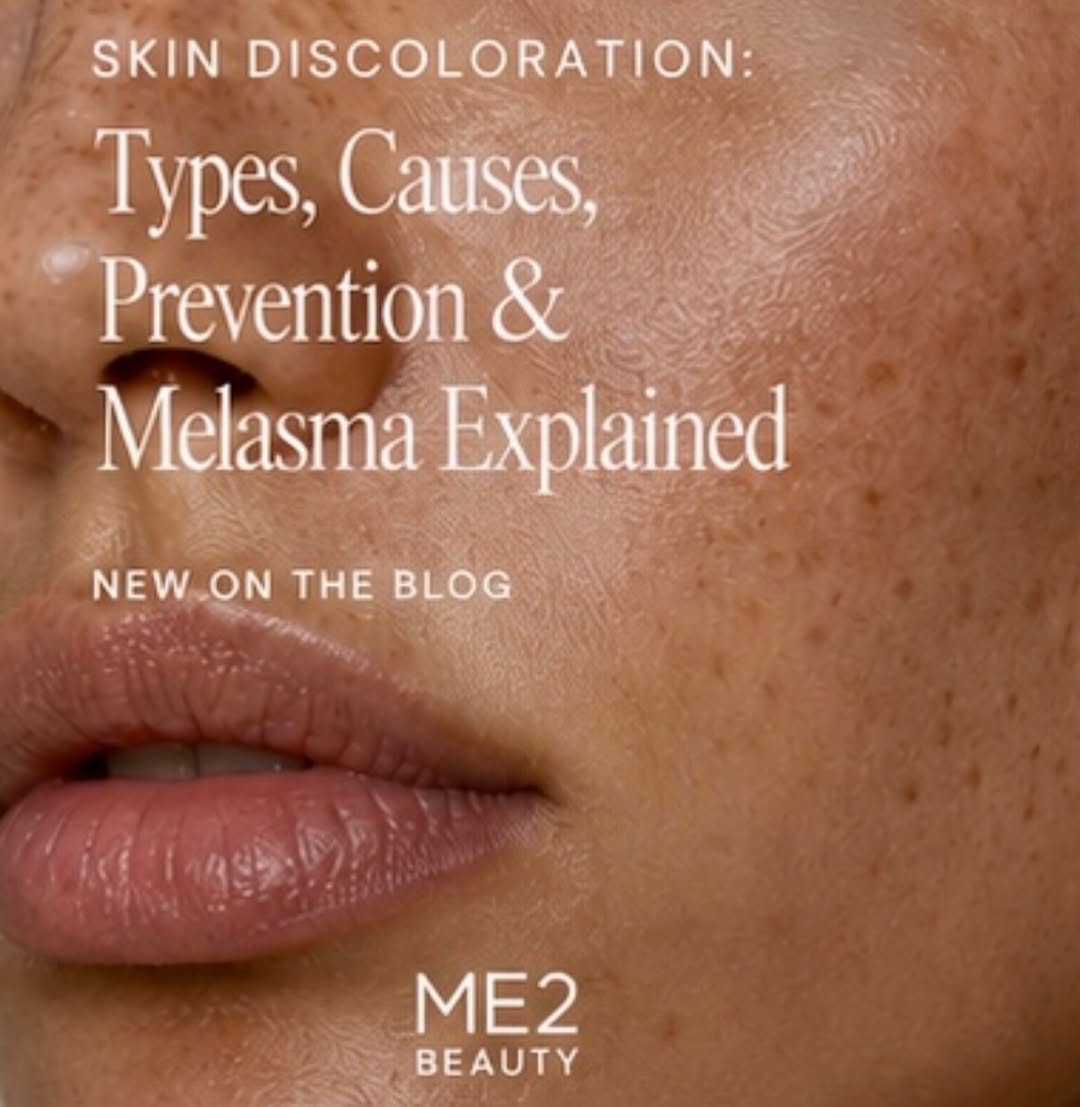
“New on the “Be The Beauty” blog. Skin Discoloration Types, Causes, Prevention & Melasma explained. From hyper and hypopigmentation to PIH, redness, and vascular changes, learn what triggers these conditions and how to prevent with real skincare science. Tap through to see the visuals, then visit the link in bio for the full guide and our personalized protocol from @Me2BeautySkincare. Save this post for quick reference, and book a consult with Ileana for a personalized plan. #SkinDiscoloration #Hyperpigmentation #Melasma #PIH #skincareblogger”
From your post
One social post becomes another searchable entry point to Me 2 Beauty.
Our own magazine. Clicks and citations from Google Search Console, as of September 15, 2026.
Draft story for me2beauty.com · Skincare Edit
LaCrème Beauté adds an oil serum to its Bee Venom line, built for layering into a slower, more deliberate facial ritual.
We keep coming back to Bee Venom for a reason, and this new oil serum from LaCrème Beauté gives us another way to work it into skin. It sits in a warm amber bottle with a dropper top, the kind of format that asks you to slow down rather than rush through a routine, and pairs it with ingredients built for texture and glow.
The formula pairs Bee Venom with Helichrysum, Abyssinian Oil, and Squalane, three ingredients chosen for how they behave on skin rather than how they sound on a label. Helichrysum leans regenerative, Abyssinian Oil brings a silky finish without heaviness, and Squalane mimics what skin already produces, which is why the oil absorbs quickly instead of sitting on the surface.
Rosehip and Sea Buckthorn round out the formula alongside other botanical oils, and together they are meant to nourish, smooth, calm, and restore in a single step. It is a lightweight oil built to do several jobs at once, which matters for anyone who wants a serum that earns its place in a routine instead of adding another layer for the sake of it.
For those who already reach for the Bee Venom collection, this feels like an obvious addition rather than a departure. The line has built a following around the idea that Bee Venom is worth repeating across different formats, whether that is a cream or a serum, and this oil gives that same active a lighter, faster absorbing way to reach skin.
The application is simple: massage two to four drops into cleansed skin across the face, neck, and décolleté. It works on its own, but it is also built to be layered, sitting comfortably underneath the Bee Venom Cream or Beauty Boost for anyone who wants to build out a fuller at home facial. That flexibility is part of what makes it easy to fit into an existing routine.
There is also room to bring in a beauty tool during application, something that helps distribute the oil evenly while encouraging a more sculpted finish across the face. It is a small addition to the ritual, but it changes how the product feels to use, turning a quick step into something closer to a few minutes of intentional, hands on care.
What stands out most is how the serum is positioned less as a single product and more as part of an ongoing ritual. Sculpted radiance is not a one time result, it is something built through repeated use, layering, and a bit of patience with the process. That framing matches how we think about skincare here, as habits rather than one off steps.
For anyone curious about where to start with Bee Venom, this oil serum offers an easy entry point. It is light enough to wear alone, structured enough to layer under other Bee Venom products, and formulated with ingredients that support skin without overcomplicating the routine. Two to four drops, morning or evening, is really all the ritual asks of you.
Draft story for me2beauty.com · Skin Science
Hyperpigmentation, melasma, and PIH are not the same condition, and treating them the same way rarely works.
Close up, skin tells a layered story: fine texture, scattered freckling, faint redness near the cheek, and small patches that sit slightly darker than the surrounding tone. None of that is one problem. Discoloration is a category, not a diagnosis, and the reason so many people feel stuck with their skin is that they are treating several different conditions as though they were interchangeable.
Hyperpigmentation is excess pigment production, often triggered by sun exposure, inflammation, or hormonal shifts. Hypopigmentation is the opposite: a loss of pigment that leaves skin lighter in certain areas. They can appear on the same face at the same time, which is exactly why a single serum or a single peel rarely resolves everything a person is actually seeing in the mirror.
Post inflammatory hyperpigmentation, or PIH, deserves its own attention because it is so common and so misunderstood. It shows up after acne, a cut, a burn, or any irritation, as the skin overproduces pigment while healing. It is not scarring in the traditional sense, and it is not permanent by default, but it does respond differently to treatment than sun triggered discoloration does.
Discoloration is not only brown or tan. Redness and visible vascular changes belong in the same conversation, because they often share triggers with pigment issues: sun damage, inflammation, and compromised skin barrier function. Looking at all of it together, rather than isolating pigment from redness, is part of what real skincare science requires if a protocol is going to work on the actual skin in front of us.
Melasma sits in its own category because it behaves differently. It is closely tied to hormonal changes and is notoriously reactive to sun exposure, often returning even after it fades. We treat melasma as a condition to manage over time rather than a mark to erase once. Understanding that distinction changes what a reasonable, sustainable plan looks like from the very first consult.
Prevention is not a footnote to treatment, it is half of it. Consistent sun protection, a stable skin barrier, and calming active inflammation early all reduce the likelihood that a blemish or a burn turns into a lingering patch of discoloration. Skipping prevention and focusing only on correction is one of the most common reasons results plateau or discoloration keeps returning after it seemed resolved.
Because these conditions overlap and mimic each other, a personalized protocol matters more with discoloration than with almost any other skin concern. What works for PIH can aggravate melasma. What calms redness may do nothing for hyperpigmentation. We built our full guide, and the protocol behind it, around that reality rather than a one size approach to a category of concerns that is anything but uniform.
If any of this sounds like your own skin, the full breakdown lives on the Be The Beauty blog, with visuals that walk through each type in more detail. From there, a consult with Ileana is the next practical step, matching what is actually happening on your skin to a plan built around it instead of guessing between products made for someone else's face.
Draft story for me2beauty.com
Keep reading