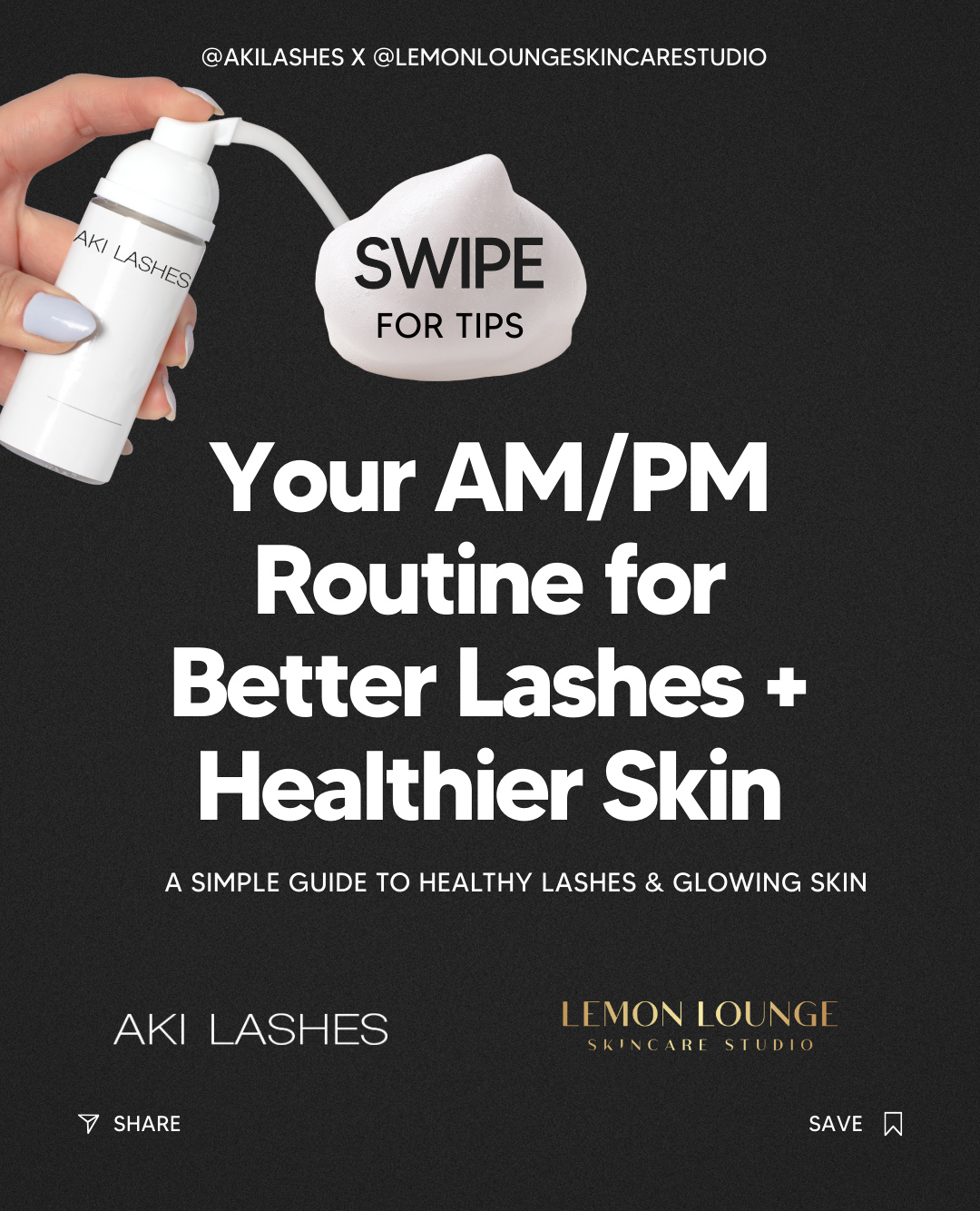
Why your skincare routine decides how long your lashes last
A simple AM and PM routine, built with Aki Lashes, shows how skin habits and lash retention are more connected than most people think.
LEMON LOUNGE SKINCARE STUDIO STAFFTurn your social into search
We turn your posts into editorial stories that bring new search traffic to lemonloungeskincarestudio.com. Three of yours will be on this page.
Book a demo
lemonloungeskincarestudio Healthy skin = better lash retention Healthy lashes = elevated results We partnered with @lemonloungeskincarestudio to break down a simple AM/PM routine that supports both. These small daily habits make a big difference in how your lashes wear, how your skin behaves, and how confident you feel in your beauty routine! Save this for your next appointment. Your retention will thank you! Want a chance to win a $5 gift card toward any Aki Lash order $50+? 👀 Here’s how to enter. 1️⃣ Follow @akilashes and @lemonloungeskincarestudio 2️⃣ Like this post 3️⃣ Tag 2 friends in the comments Giveaway ends Sunday, 12/06. Good luck! 🤍 #akilashes #lashedu #lashtips #lashartist #lalashing #torrance #eyelashextension #beauty #skincareroutine #cleangirl #skincaretips
A simple AM and PM routine, built with Aki Lashes, shows how skin habits and lash retention are more connected than most people think.
LEMON LOUNGE SKINCARE STUDIO STAFFHow it works
Same as today. Nothing changes on Instagram.
We turn your post into a full story in your voice within the hour.
One click publishes it to lemonloungeskincarestudio.com. Nothing goes live without you.
Your stories
Nothing was published anywhere. You decide that. Every word will come from your own posts, your own photos and your own treatments.
Lash Care · From your post
A simple AM and PM routine, built with Aki Lashes, shows how skin habits and lash retention are more connected than most people think.
“Healthy skin = better lash retention Healthy lashes = elevated results We partnered with @lemonloungeskincarestudio to break down a simple AM/PM routine that supports both. These small daily habits make a big difference in how your lashes wear, how your skin behaves, and how confident you feel in your beauty routine! Save this for your next appointment. Your retention will thank you! Want a chance to win a $5 gift card toward any Aki Lash order $50+? 👀 Here’s how to enter. 1️⃣ Follow @akilashes and @lemonloungeskincarestudio 2️⃣ Like this post 3️⃣ Tag 2 friends in the comments Giveaway ends Sunday, 12/06. Good luck! 🤍 #akilashes #lashedu #lashtips #lashartist #lalashing #torrance #eyelashextension #beauty #skincareroutine #cleangirl #skincaretips”
Skin Science · From your post
A closer look at the sea sponge treatment we use to exfoliate from the inside out.
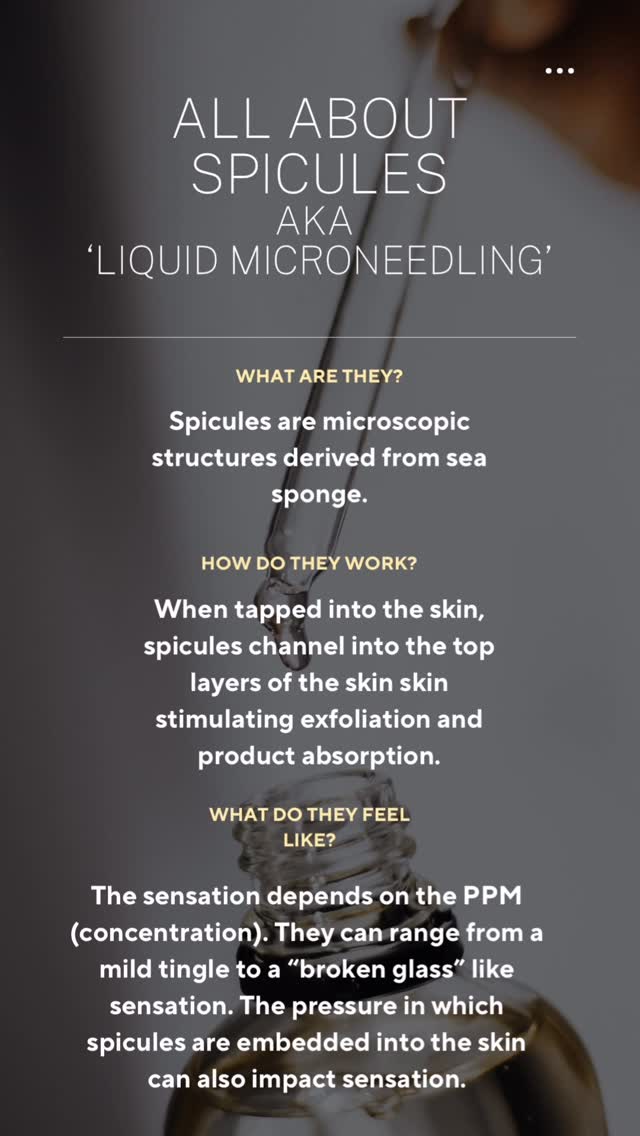
“Let’s take a deeper dive into exactly what spicules are! Spicules are microscopic sea sponge that is tapped into the skin to exfoliate from the inside out. While this may sound strange spicules don’t contain acids like a chemical peel does, so they are safer for darker skin types. Spicules can address myriad of issues including hyperpigmentation & maturation arrest acne. Read up, and let me know if you have more questions below ⬇️ #spicules #peelseason #losangelesesthetician #kbeautyskincare”
Peel Diary · From your post
The darkened patches on day five are not a warning sign, they are old skin waiting its turn to shed.
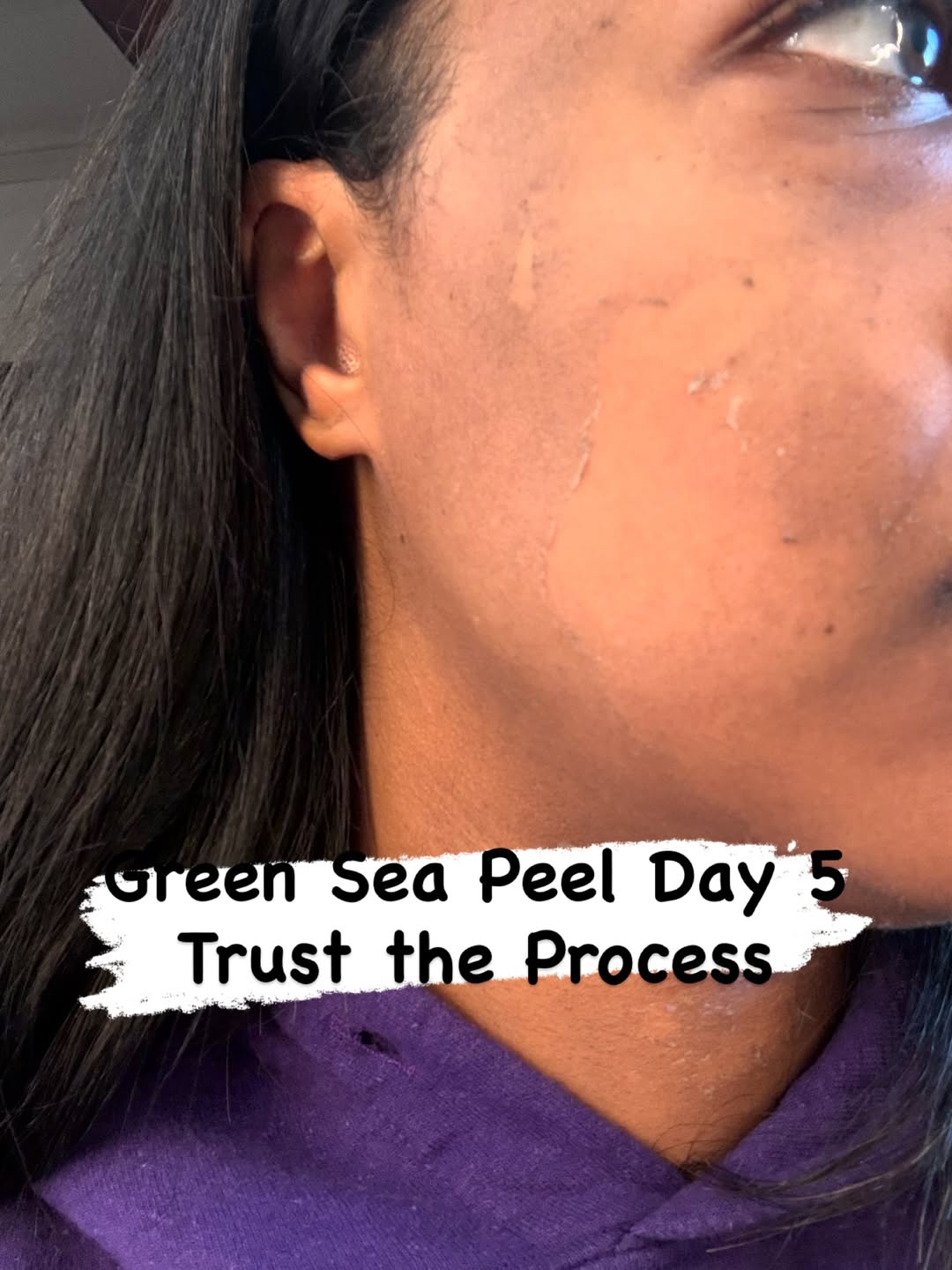
“Day 5. More peeling. The dark parts are old skin that hasn’t shed yet. This is the part where a lot of clients start to panic because they think the darkening means something went wrong. So I’m showing that it’s a normal part of the process. My skin isn’t itchy anymore and I was able to comfortably work out yesterday. What do you think? #greenseapeel #koreanskincareproducts #beforeandafters”
One social post becomes another searchable entry point to Lemon Lounge Skincare Studio.
Our own magazine. Clicks and citations from Google Search Console, as of September 15, 2026.
Draft story for lemonloungeskincarestudio.com · Lash Care
A simple AM and PM routine, built with Aki Lashes, shows how skin habits and lash retention are more connected than most people think.
Most people treat their skin routine and their lash extensions as two separate concerns, one for the bathroom mirror and one for the lash chair. We think that split does not hold up. The condition of your skin, especially around the eyes, has a direct effect on how well extensions adhere and how long they hold, which is why we built this routine together with Aki Lashes.
The logic is straightforward once you say it out loud. Healthy skin supports better lash retention, and healthy lashes make every appointment's results look sharper for longer. Neither one does its job in isolation. A client who is diligent about cleansing but rough around the lash line will still see faster fallout, and a great fill cannot fully compensate for skin that is not being cared for at home.
Mornings are about protection more than correction. A gentle cleanse removes any oil that settled overnight without disturbing the bond at the lash line, and it sets the stage for whatever moisturizer or SPF follows. The goal is not a long list of products, it is consistency in the right order, so the skin around the eyes stays calm instead of reactive throughout the day.
That calm matters more than it sounds like it should. Skin that is irritated or overly oily is harder on adhesive, full stop. Keeping the morning routine simple and repeatable, rather than swapping products often, gives your lash extensions a stable surface to hold onto instead of a constantly shifting one. Simple, in this case, is doing real work.
Evenings are where retention is won or lost. Oil, makeup, and the day's buildup need to come off before bed, and how that happens matters as much as whether it happens. Using an oil free cleanser formulated with lash extensions in mind avoids breaking down the bond overnight, which is the difference between lashes that hold their shape and lashes that start shedding early.
This is also the moment where a lot of good intentions go wrong. Rubbing at the eyes, using the wrong makeup remover, or skipping the evening step entirely because of tiredness all show up later as premature fallout. Building a short, specific PM habit around lash safe products turns this into something automatic rather than something you have to remember to be careful about.
None of this requires a complicated shelf of products. It requires the right few steps, done in the right order, every single day, morning and night. That consistency is what separates a routine you save and reference before your next fill from one you try once and abandon. We built this with retention specifically in mind, not general skincare advice.
Save it for your next appointment, use it as a checklist, and treat the AM and PM steps as one continuous habit rather than two unrelated ones. Your skin and your lashes are responding to the same daily choices, and when that routine is dialed in, both the wear of your extensions and the way your skin behaves start to show it.
Draft story for lemonloungeskincarestudio.com · Skin Science
A closer look at the sea sponge treatment we use to exfoliate from the inside out.
Spicules sound like something out of a lab rather than a treatment room, and honestly, the name alone tends to raise questions before we even get into what they do. They are microscopic structures derived from sea sponge, and once tapped into the skin, they work their way into the top layers to trigger exfoliation from the inside out rather than just buffing the surface the way a scrub or standard peel might.
The mechanism is different from what most people expect. Spicules do not contain acids the way a chemical peel does, which means they work through physical channeling into the skin rather than a chemical reaction. That distinction matters clinically. It is part of why we consider them a safer option for darker skin types, where acid based peels can carry more risk of irritation or unwanted pigment changes.
Once spicules are tapped into the skin, they create tiny channels that encourage exfoliation and also improve how well product actively absorbs afterward. That second part is easy to overlook, but it is a real benefit. Whatever serum or treatment goes on next is able to penetrate more effectively because the pathway has already been opened at the surface, rather than sitting on top waiting to slowly absorb on its own.
That combination is also why spicules can be useful for a range of concerns rather than just one. We see them address hyperpigmentation, and they can also be helpful for what is sometimes called maturation arrest acne, where the skin cycle has essentially stalled. Encouraging that exfoliation process to restart is often a meaningful part of getting stubborn skin concerns to actually shift and improve.
This is usually the first thing people want to know before booking, and the honest answer is that it depends. Sensation is tied directly to the PPM, or concentration, being used during the treatment. A lower concentration tends to feel like a mild tingle across the skin, something most people find completely tolerable and not far off from other exfoliating treatments they may have already tried in the past.
At higher concentrations, the sensation shifts noticeably. Some clients describe it as a broken glass like feeling, which sounds intense written out, but it is a controlled and expected part of how spicules work at that strength. The pressure used to actually embed the spicules into the skin also plays a role, meaning two people receiving the same concentration can still feel the treatment differently depending on technique.
Because sensation and results both shift with PPM, choosing the right concentration is not something we take lightly. It comes down to what a person's skin can tolerate and what their concerns actually call for. Hyperpigmentation and stalled acne cycles do not necessarily need the same intensity, so the concentration gets matched to the goal rather than defaulting to whatever feels most aggressive.
If you have been curious about spicules but held off because the idea felt unfamiliar or slightly intimidating, that reaction is normal. It is a treatment that rewards a little explanation before it happens. We would rather walk through the concentration, the sensation, and the expected outcome ahead of time than have anyone surprised mid treatment, so if questions are still lingering, we are glad to answer them.
Draft story for lemonloungeskincarestudio.com · Peel Diary
The darkened patches on day five are not a warning sign, they are old skin waiting its turn to shed.
Five days into a green sea peel, the skin along the jaw and cheek shows patches of visibly darker tone, uneven in shape, some barely there and some pronounced. It looks alarming if you do not know what you are looking at. We do, and we photograph it anyway, because this exact stage is where most people considering a peel start asking whether something has gone wrong.
It has not. The darker areas are old skin that has not shed yet. Peeling is not a uniform process where every cell lets go at the same rate. Some sections clear early, others hang on longer, and for a few days the face can look patchy and uneven before it evens out. That gap between what is happening and what it looks like is exactly where panic tends to creep in.
We built this update around that gap on purpose. A client seeing blotchy discoloration on their own face at home, with no context and no one to ask, will often assume the peel was too strong or something reacted badly. Showing day five as it actually appears, without smoothing it over, gives people a real reference point instead of guesswork drawn from panic at eleven at night.
It is worth saying plainly what this is not. It is not irritation, and it is not damage. It is pigmented skin cells sitting on the surface a little longer than the cells around them, waiting to flake off in their own time. The color is old, not new. Nothing underneath it changed for the worse. It is simply the last skin to leave before fresher skin is fully visible.
By day five, the itch that can show up earlier in a peel has settled. Comfort returns before the look does, which is its own useful marker for anyone tracking their own progress. Being able to move through a normal day, including a workout, without the skin feeling tight, raw, or reactive says something calmer is happening beneath the surface even while the surface still looks unfinished.
That sequencing matters. If discomfort were increasing alongside the darkening, that combination would be worth real concern. Discomfort easing while shedding continues is a much more ordinary signal, and it is the pattern we look for when judging whether a peel is progressing the way it should rather than veering off course into something that needs attention.
Before and after photos are easy to post and easy to like, but they skip the part that actually determines whether someone sticks with a treatment or bails out of it early. The middle of a peel is unglamorous and occasionally unsettling to look at, and that is precisely why it is worth showing rather than cropping out of the story entirely.
Trusting the process is not a slogan here, it is a literal instruction for day five specifically. The dark patches will finish shedding. The tone underneath will settle. None of that happens by day five, and it is not supposed to. Documenting the in between stages honestly is what makes the eventual result easier to believe when it finally arrives.
Keep reading