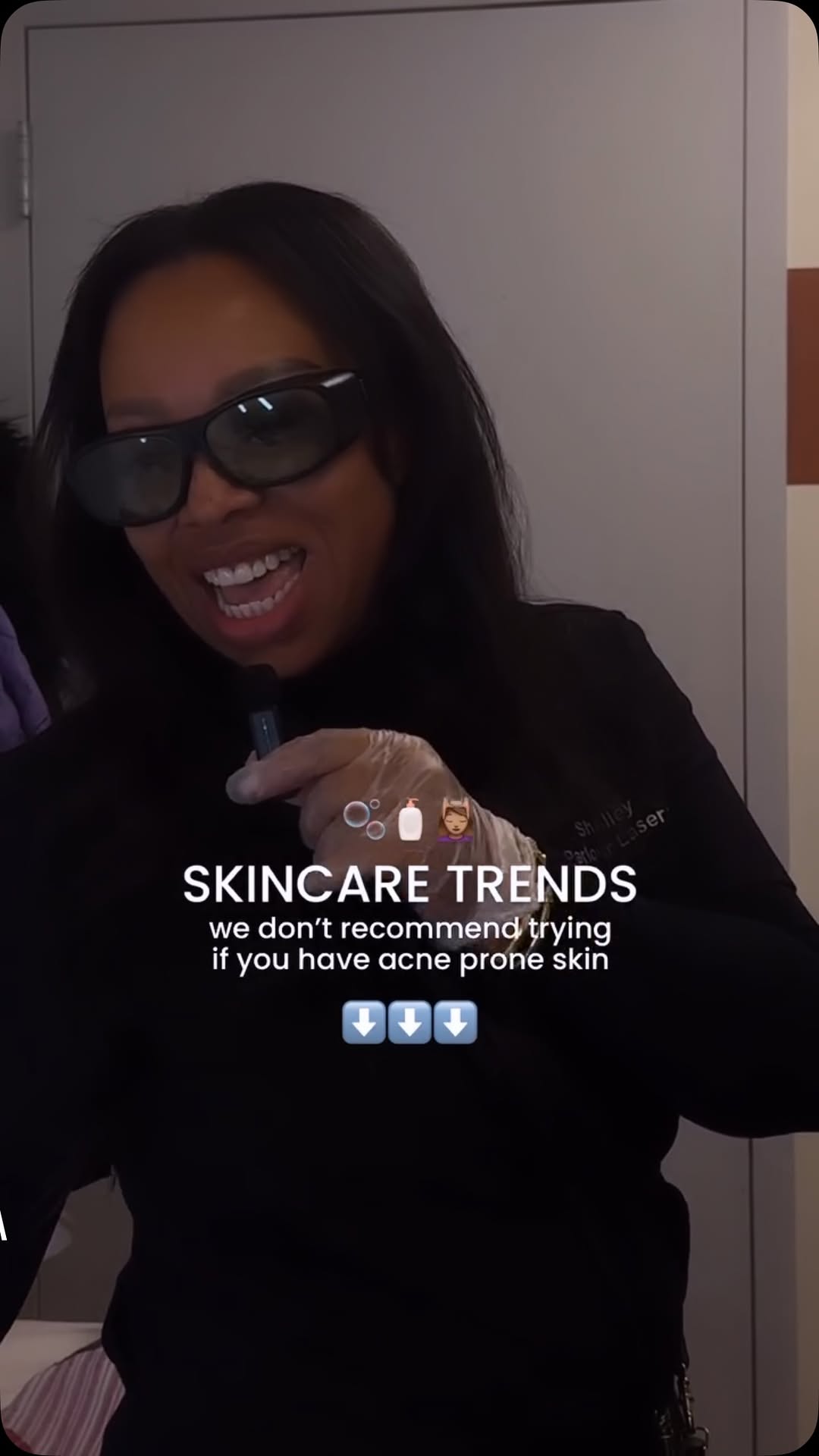
The skincare habits our estheticians want acne prone clients to leave behind
A look at five popular skincare trends that can quietly damage acne prone skin, and what to do instead.
LE PARLOUR NYC LASER SPA STAFFTurn your social into search
We turn your posts into editorial stories that bring new search traffic to leparlournyc.com. Three of yours will be on this page.
Book a demo
leparlournyc Skincare Habits We Need to Leave Behind 👀 ✨ Trying too many new products at once More products don’t automatically mean better skin. Introducing too much at once can cause irritation, breakouts, and make it impossible to know what’s actually working. ✨Overusing actives Retinol, glycolic acid, salicylic acid, and other actives can be amazing, but more isn’t better. Overuse can compromise your skin barrier and trigger irritation. ✨At home microneedling Professional microneedling can improve scars, fine lines, texture, and acne concerns. At home devices can increase your risk of irritation, infection, pigmentation, and skin damage. ✨Making “skincare smoothies” Stop mixing a bunch of products together in your hand. Apply your skincare individually and in the correct order so each product can do what it’s designed to do. ✨Assuming every red light device is the same Wavelength, strength, treatment time, and consistency matter. A trendy red light wand isn’t automatically giving you the same treatment as professional LED therapy. Your skin doesn’t need every trend. It needs the right routine for YOU. 🤍 #skincaretips #laserfacial #laserskincare #healthyskin #nycskincare
A look at five popular skincare trends that can quietly damage acne prone skin, and what to do instead.
LE PARLOUR NYC LASER SPA STAFFHow it works
Same as today. Nothing changes on Instagram.
We turn your post into a full story in your voice within the hour.
One click publishes it to leparlournyc.com. Nothing goes live without you.
Your stories
Nothing was published anywhere. You decide that. Every word will come from your own posts, your own photos and your own treatments.
Skincare Trends · From your post
A look at five popular skincare trends that can quietly damage acne prone skin, and what to do instead.
“Skincare Habits We Need to Leave Behind 👀 ✨ Trying too many new products at once More products don’t automatically mean better skin. Introducing too much at once can cause irritation, breakouts, and make it impossible to know what’s actually working. ✨Overusing actives Retinol, glycolic acid, salicylic acid, and other actives can be amazing, but more isn’t better. Overuse can compromise your skin barrier and trigger irritation. ✨At home microneedling Professional microneedling can improve scars, fine lines, texture, and acne concerns. At home devices can increase your risk of irritation, infection, pigmentation, and skin damage. ✨Making “skincare smoothies” Stop mixing a bunch of products together in your hand. Apply your skincare individually and in the correct order so each product can do what it’s designed to do. ✨Assuming every red light device is the same Wavelength, strength, treatment time, and consistency matter. A trendy red light wand isn’t automatically giving you the same treatment as professional LED therapy. Your skin doesn’t need every trend. It needs the right routine for YOU. 🤍 #skincaretips #laserfacial #laserskincare #healthyskin #nycskincare”
Skin Notes · From your post
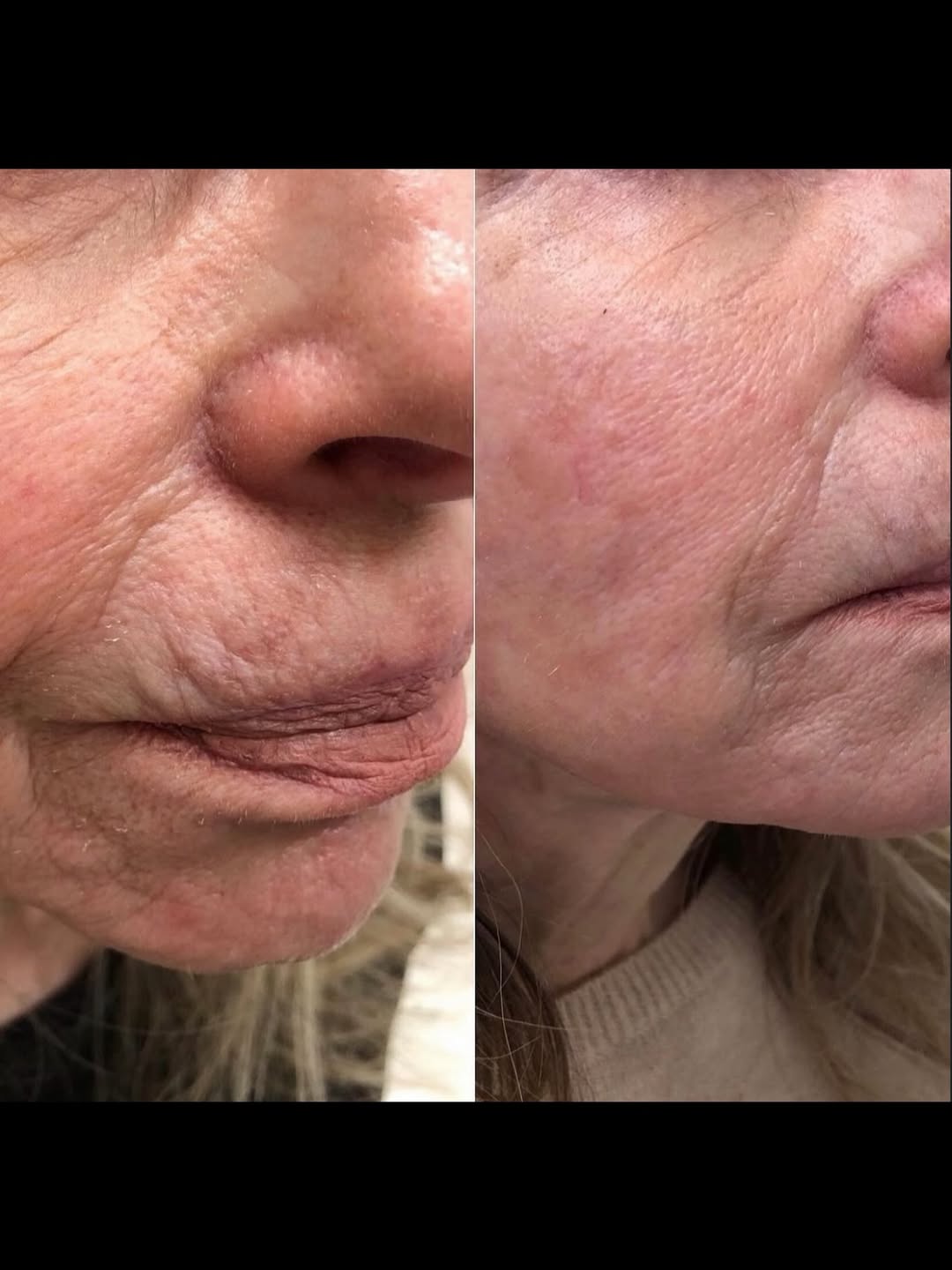
A close up before and after shows what collagen stimulating treatments are really meant to do to skin.
“As we age, collagen production naturally slows down, which can lead to fine lines, wrinkles, and loss of firmness. Laser treatments can help stimulate new collagen, improve skin elasticity, soften the appearance of fine lines and wrinkles, and create firmer, smoother looking skin over time. The goal isn’t to change your face. It’s to help your skin look healthier, tighter, refreshed, and rejuvenated. Invest in the skin✨✨ #skintightening #wrinklereduction #collagenboosting #laserfacial #skinrejuvenation”

Skin Care · From your post
At Le Parlour, we treat eczema as a skin barrier problem first, which changes how we approach calming it.
“Eczema needs care, not just coverage. 🤍 Dryness, irritation, redness, and inflammation can leave your skin feeling uncomfortable and looking uneven. The right treatment plan can help calm, hydrate, and support a healthier skin barrier. Healthy skin starts with understanding what your skin needs. #eczema #eczemacare #laserfacial #healthyskin #nycskincare”
One social post becomes another searchable entry point to Le Parlour NYC Laser Spa.
Our own magazine. Clicks and citations from Google Search Console, as of September 15, 2026.
Draft story for leparlournyc.com · Skincare Trends
A look at five popular skincare trends that can quietly damage acne prone skin, and what to do instead.
Every week we see clients walk in with the same story: a skincare routine built from trends rather than actual skin needs. Someone tries a new active, then another, then a device they saw online, all within days of each other. The result is rarely better skin. It is usually irritation, breakouts, and a routine nobody can troubleshoot anymore because too many variables changed at once.
The first habit worth dropping is stacking new products. More products do not automatically mean better skin. When several new items get introduced at the same time, irritation and breakouts often follow, and there is no clear way to know which product caused the reaction or which one is actually helping. One new product at a time, given a real trial period, tells you far more than five at once ever could.
Actives like retinol, glycolic acid, and salicylic acid are genuinely effective, but effectiveness is not a reason to use more or use often. Overuse compromises the skin barrier and triggers exactly the irritation these ingredients are meant to prevent. For acne prone skin especially, restraint matters as much as the product choice itself. The right amount, used consistently, outperforms an aggressive routine every time.
At home microneedling falls into a similar category. Professional microneedling can genuinely improve scarring, fine lines, texture, and acne concerns, but that is under trained hands with proper depth control and sterile technique. At home devices raise the risk of irritation, infection, pigmentation, and lasting skin damage, particularly for acne prone skin that is already more reactive and more prone to post inflammatory marks.
Another habit we would love to retire is the skincare smoothie: mixing several products together in your hand before applying them all at once. Each product in a routine is formulated to work at a specific step, in a specific order, on skin that is ready for it. Combining them undoes that design. Applying products individually, in the correct sequence, lets each one actually do the job it was built for.
Red light therapy is another area where assumptions cause problems. Not every red light device on the market delivers the same treatment. Wavelength, strength, treatment time, and consistency all affect the outcome, and a trendy handheld wand is not automatically equivalent to professional LED therapy performed with calibrated equipment and a treatment plan built around your skin.
None of this means every trend is worthless. It means skin, especially acne prone skin, responds best to a routine chosen for its specific needs rather than whatever is circulating online that month. What works for one person's barrier can easily disrupt another's, and acne prone skin tends to have less room for error before irritation turns into a breakout or lingering mark.
Your skin does not need every trend. It needs the right routine for you, applied correctly, introduced slowly, and adjusted as your skin actually responds. That distinction, between what is popular and what is appropriate, is where real skincare progress happens, and it is the conversation we have with clients every day before recommending anything new.
Draft story for leparlournyc.com · Skin Notes
A close up before and after shows what collagen stimulating treatments are really meant to do to skin.
A single raised bump near the side of the nose and a stretch of deep set lines around the mouth are the kind of details a mirror shows every day but never explains. Side by side photographs make the change easier to read than any description could, because the same face, same angle, same light, is doing the talking instead of us.
The line under one eye softens. The texture along the cheek loses some of its roughness. The skin near the nose sits flatter and smoother than it did before. None of this is dramatic on its own, but together it adds up to a face that looks less tired and less pulled at, which is the actual point of the work.
Collagen production slows with age, and that slowdown is what shows up first as fine lines, then as looser texture, then as the kind of settled wrinkling that no amount of sleep seems to fix. Laser treatments work by encouraging the skin to produce new collagen on its own, rather than adding anything artificial on top of what is already there.
That distinction matters because it changes what the treatment is trying to do. It is not filling space or reshaping a feature. It is prompting the skin itself to rebuild some of the structure it has lost over time, which is why the results tend to look like the same face, just with steadier, firmer skin holding it together.
We are careful about the language we use around this, because the goal here was never to change anyone's face. It is to help the skin underneath it look healthier, tighter, and more rested. The photographs reflect that intention directly: the bone structure, the features, the identity of the face are unchanged. What shifts is the surface quality sitting on top of it.
That softer, smoother, more even quality is what elasticity and firmness actually look like in practice, not as abstract skincare terms but as visible texture on a jawline or a cheek. It is a gradual result built over time rather than an overnight transformation, which is part of why laser treatments are approached as an ongoing investment rather than a single fix.
Investing in skin means thinking about it the way people think about other long term maintenance, as something that responds to consistent care rather than a single dramatic intervention. Collagen stimulating treatments fit into that mindset because their value compounds, with each session building on the structural work the last one started, rather than resetting the process from scratch.
What the comparison ultimately shows is a face that still looks like itself, only rested. That is the standard we hold this kind of treatment to: not a different face staring back, but a more settled, more even version of the one that was already there, built through skin that is doing more of the work on its own.
Draft story for leparlournyc.com · Skin Care
At Le Parlour, we treat eczema as a skin barrier problem first, which changes how we approach calming it.
Eczema shows up differently on everyone, but the discomfort is familiar. Dryness that tightens the skin. Redness that spreads unevenly. Irritation that flares without much warning. Inflammation that makes even soft fabric feel like too much. It is easy to reach for something that hides the appearance of it, but that approach only manages the surface for a few hours at a time.
We think about eczema differently. Instead of asking how to cover uneven skin, we ask what the skin actually needs to calm down and stay calm. That distinction matters because eczema prone skin is not simply reacting to weather or stress in isolation. It is often signaling that its protective barrier is compromised and needs support before anything else.
The skin barrier is the layer that keeps moisture in and irritants out. When it is weakened, water escapes more easily and outside triggers get in more easily, which is part of why eczema can feel like a cycle. Dryness leads to irritation, irritation leads to inflammation, and inflammation leaves skin more vulnerable the next time it is exposed to a trigger.
That is why we start with understanding, not assumptions. Every case of eczema we see responds differently to heat, hydration, and touch, so a treatment plan has to be built around what someone's skin is actually doing, not a generic idea of what eczema looks like. The goal is to interrupt the cycle rather than temporarily soften how it looks.
Calming inflamed skin takes more than a single product or a single visit. It requires a sequence, something that hydrates without overwhelming already sensitive skin, something that reduces redness without stripping the barrier further, and something that supports the skin as it rebuilds its own resilience. Each step has to work with the others instead of competing for the same fragile surface.
Support also means restraint. Skin that is already inflamed does not need every treatment available. It needs the right ones, applied in an order that respects how reactive and unpredictable eczema can be. That is part of why a plan matters more than a product. Consistency, not intensity, tends to be what moves irritated skin toward something steadier.
A plan also means paying attention over time. Eczema can improve and then resurface, sometimes for reasons that have nothing to do with what someone is putting on their face. Tracking how skin responds session to session gives us a clearer picture than a single visit ever could, and it lets the plan adjust as the skin itself changes.
Healthy skin starts with understanding, not guessing. For anyone dealing with eczema, that means looking past temporary coverage and toward what the skin is actually asking for underneath the redness and irritation. Once that becomes the starting point, the goal shifts from hiding discomfort to genuinely giving skin the conditions it needs to settle.
Keep reading