Why we pair Botox, RF microneedling, and CO2 laser in the same treatment plan
Three tools address three different causes of aging, which is why we often use them together instead of alone.
KLEYDMAN DERMATOLOGY STAFFTurn your social into search
We turn your posts into editorial stories that bring new search traffic to kleydmandermatology.com. Three of yours will be on this page.
Book a demo
dr.katekleydman As a cosmetic dermatologist, this is one of my favorite treatment combinations for the right patient, here’s why. • Botox softens expression lines by relaxing the muscles that repeatedly crease the skin. • RF microneedling uses tiny needles and heat to encourage collagen production, helping improve mild laxity and crepey skin. • CO2 laser resurfaces the skin to smooth rough texture, soften fine lines, and improve hyperpigmentation. These concerns often show up together, so addressing muscle movement, skin support, and surface texture can create a more complete result. #botox #injectables #skinlongevity #glowingskin #dermatologist
Three tools address three different causes of aging, which is why we often use them together instead of alone.
KLEYDMAN DERMATOLOGY STAFFHow it works
Same as today. Nothing changes on Instagram.
We turn your post into a full story in your voice within the hour.
One click publishes it to kleydmandermatology.com. Nothing goes live without you.
Your stories
Nothing was published anywhere. You decide that. Every word will come from your own posts, your own photos and your own treatments.
Treatment Philosophy · From your post
Three tools address three different causes of aging, which is why we often use them together instead of alone.
“As a cosmetic dermatologist, this is one of my favorite treatment combinations for the right patient, here’s why. • Botox softens expression lines by relaxing the muscles that repeatedly crease the skin. • RF microneedling uses tiny needles and heat to encourage collagen production, helping improve mild laxity and crepey skin. • CO2 laser resurfaces the skin to smooth rough texture, soften fine lines, and improve hyperpigmentation. These concerns often show up together, so addressing muscle movement, skin support, and surface texture can create a more complete result. #botox #injectables #skinlongevity #glowingskin #dermatologist”
Skin Treatments · From your post
Two microneedling options treat different concerns, and the right one depends on what your skin actually needs.
“Not sure whether to book SkinPen or RF microneedling? You don’t have to figure that out on your own. Come in with your questions and skin concerns, I’ll help you understand your options and what’s appropriate for your skin. Save this for your next visit, and book a consultation through the link in bio. #microneedling #skincare #rfmicroneedling #skinlaxity #glassskin”
Skin Consults · From your post
Choosing between microneedling and RF microneedling starts with a conversation about what you are actually seeing, not a form you fill out alone.
“You don’t need to know which microneedling treatment to book before seeing me. Tell me what you’re noticing, and we’ll start there. Save this comparison and visit the link in bio to schedule your consultation. #dermatologist #rfmicroneedling #microneedling #skincare #microneedlingfacial”
One social post becomes another searchable entry point to Kleydman Dermatology.
Our own magazine. Clicks and citations from Google Search Console, as of September 15, 2026.
Draft story for kleydmandermatology.com · Treatment Philosophy
Three tools address three different causes of aging, which is why we often use them together instead of alone.
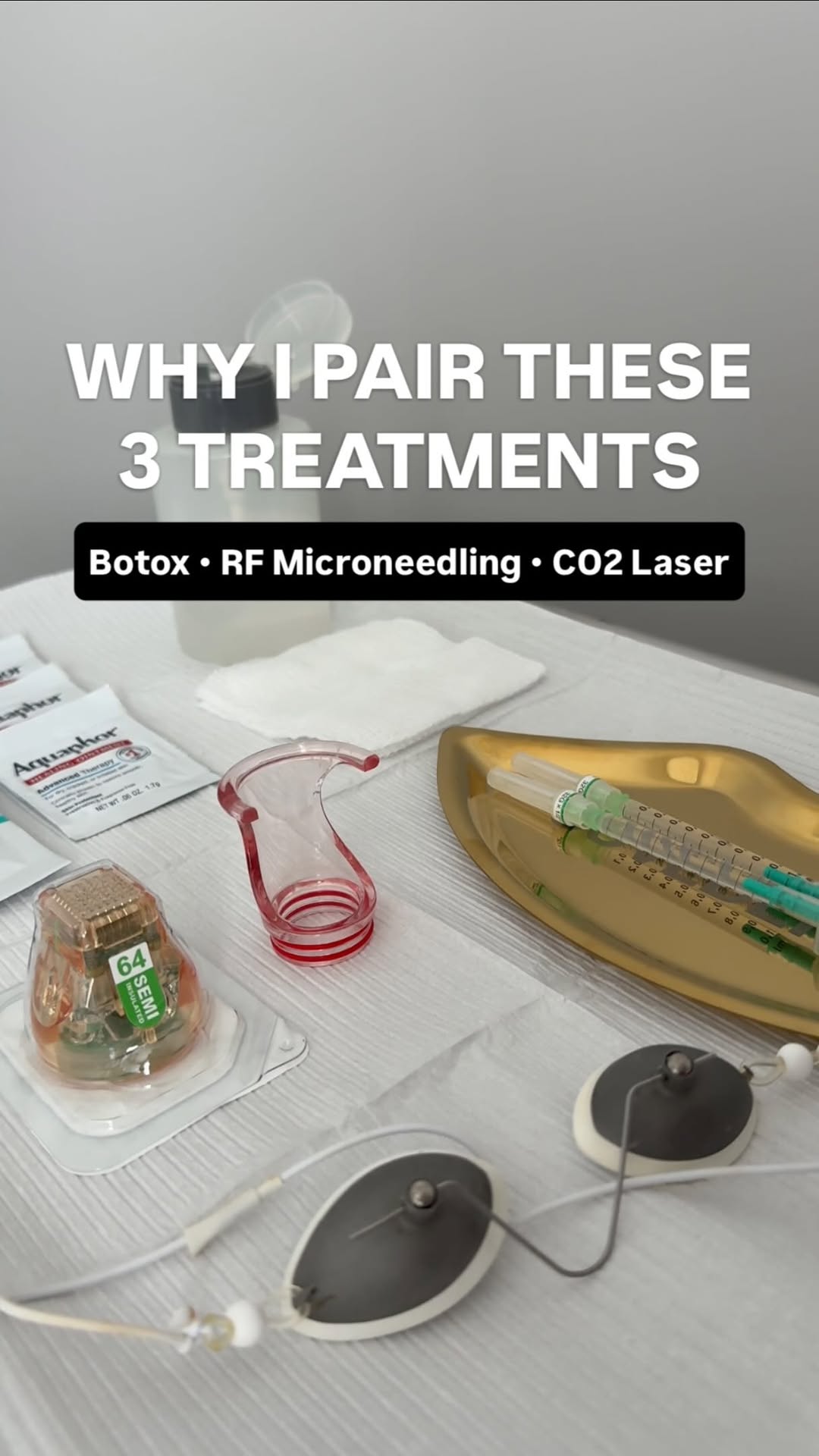
Set a tray with a few fine needles and it looks simple enough. But what sits in front of us before a combination appointment tells its own story: syringes for Botox, a microneedling handpiece with its disposable tip, and grounding pads for the CO2 laser. Three different tools, three different jobs, and for the right patient, one appointment where they all work together.
The reasoning starts with a basic observation about how skin actually ages. It rarely breaks down from a single cause. Muscle movement creases the skin in predictable places. Collagen support weakens underneath. The surface itself roughens and discolors over time. Treating only one of those factors can improve a face, but it tends to leave the other two untouched, which is why results can feel incomplete.
Botox works on movement. It softens expression lines by relaxing the muscles that repeatedly fold the skin in the same direction, year after year. That repetitive motion is what carves lines into places like the forehead and around the eyes in the first place. By quieting the muscle, Botox does not fill or resurface anything. It simply reduces the mechanical cause behind a specific category of lines.
RF microneedling takes a different approach entirely. Fine needles create controlled micro injuries while radiofrequency energy delivers heat beneath the surface, prompting the skin to produce new collagen. That process is what helps with mild laxity and the crepey texture that shows up as skin loses structural support underneath. It is a slower, rebuilding kind of treatment, working on the skin's foundation rather than its surface.
CO2 laser addresses what is visible on top. It resurfaces the skin directly, which smooths rough texture, softens fine lines, and improves hyperpigmentation left behind by sun damage or time. Where Botox works on muscle and RF microneedling works on underlying support, CO2 laser is focused on the outermost layer, the part of the skin that actually shows wear, discoloration, and unevenness under normal light.
Separately, each treatment does a specific job well. Together, they cover three different layers of the same aging process instead of just one. A patient dealing with expression lines, softening skin, and uneven texture at the same time is dealing with three concerns that overlap on the same face. Treating only one of them leaves the other two unaddressed, even if that single treatment is done correctly.
That overlap is the actual reason for combining these three treatments in the first place. It is not about doing more for the sake of more. It is about matching the number of tools to the number of underlying issues actually present. Muscle movement, collagen support, and surface texture are simply three different problems, and each one calls for a method built specifically to address it.
This kind of combination is not automatic for every patient who walks in. It depends on which concerns are actually present and how they show up together. But when expression lines, mild laxity, and textural or pigment changes are all part of the picture, treating all three mechanisms in the same plan tends to produce a result that feels more complete than treating any one of them alone.
Draft story for kleydmandermatology.com · Skin Treatments
Two microneedling options treat different concerns, and the right one depends on what your skin actually needs.
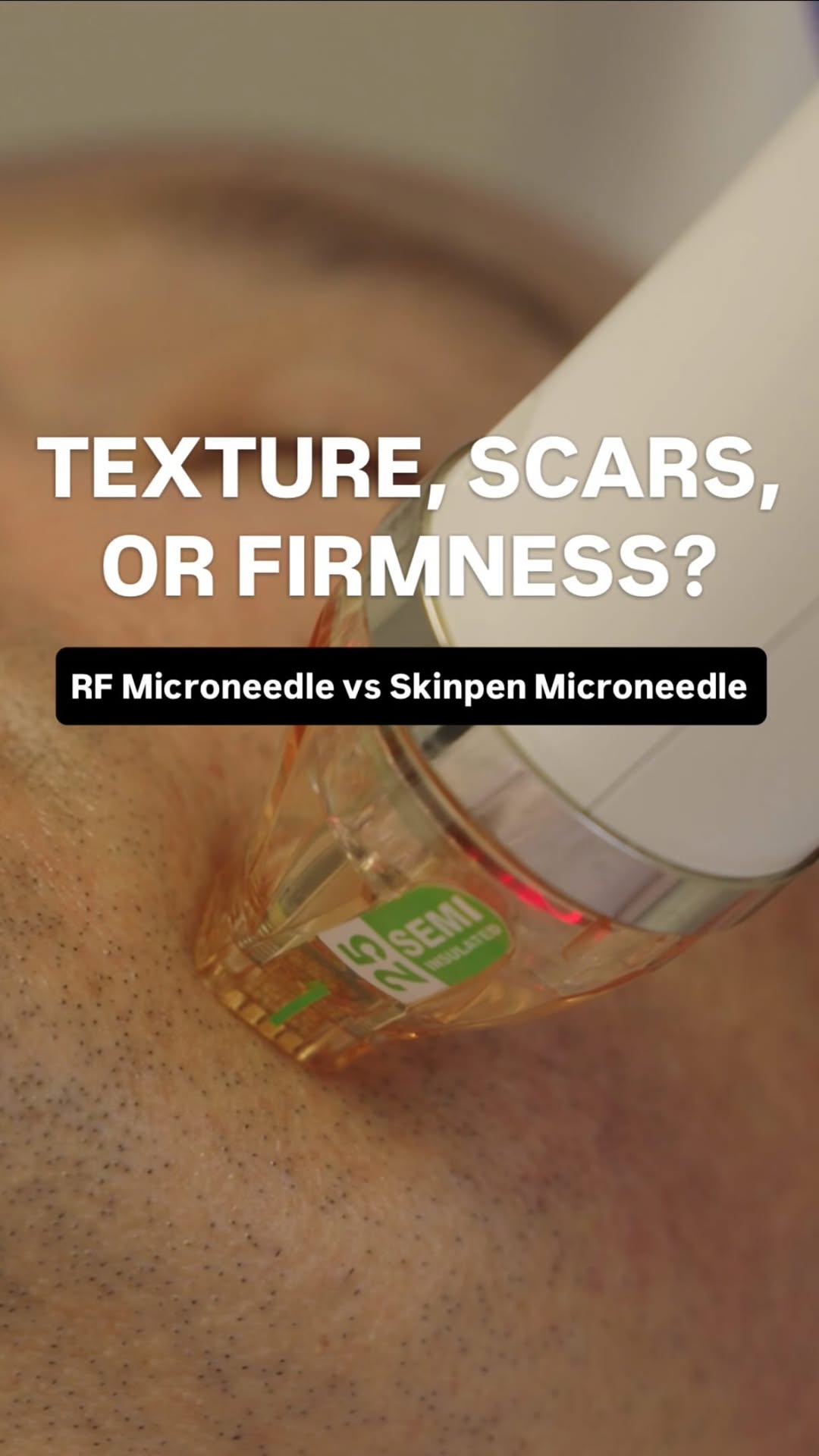
Microneedling has become a catch all term, but not all microneedling is the same. When a patient comes to us asking about texture, scarring, or firmness, the first conversation is never about which device sounds more advanced. It is about what their skin is actually doing, and which tool addresses that specific concern rather than a general idea of improvement.
SkinPen creates controlled micro injuries with fine needles alone. That mechanical action prompts the skin to repair itself, which is why it works well for concerns sitting closer to the surface. Texture irregularities and scarring respond to this kind of stimulation because the goal is remodeling the top layers, encouraging smoother, more even skin over a series of sessions.
RF microneedling adds radiofrequency energy to that same needling process. The needles still create precise channels, but heat is delivered deeper into the tissue at the same time. That combination changes what the treatment is suited for. Instead of focusing purely on surface texture, it reaches structural layers where firmness and skin laxity actually originate.
This is why we do not hand someone a menu and ask them to pick. Scarring and rough texture usually point toward SkinPen, since the concern lives in the outer skin layers that mechanical needling reaches efficiently. Loss of firmness or looseness along the jawline or cheeks points toward RF microneedling, because that concern requires heat working alongside the needling to have a real effect.
Skin does not always fit neatly into one category, either. Someone might have textural scarring along the cheeks and early signs of laxity near the jawline at the same time. In that case, the conversation shifts toward which concern is the priority right now, and how a treatment plan might address both over time rather than trying to solve everything in a single session.
That is the reasoning we walk through during a consultation, using what we see on your skin rather than a general assumption about what microneedling should do. Skin thickness, the depth of scarring, the degree of laxity, and your overall goals all factor into which device makes sense. None of that is something you can accurately judge from a description alone.
There is no downside to asking questions before booking anything. Bring your concerns, ask what each option actually targets, and let that shape the decision instead of guessing based on which treatment sounds more effective. The difference between these two devices is not marketing, it is mechanism, and understanding that mechanism is what makes the outcome predictable.
If you are trying to decide between SkinPen and RF microneedling on your own, save the comparison, but treat it as a starting point rather than a final answer. The next step is bringing your specific skin into the room so the choice can be made around it. A consultation through the link in our bio is where that conversation actually starts.
Draft story for kleydmandermatology.com · Skin Consults
Choosing between microneedling and RF microneedling starts with a conversation about what you are actually seeing, not a form you fill out alone.
A patient will sometimes open a consultation with an apology, as if they should have already decided which treatment they need before walking through the door. That is not how this works in our office. We ask what you are noticing on your own skin first, whether that is texture, scarring, laxity, or something harder to name, and the treatment conversation builds from there rather than the other way around.
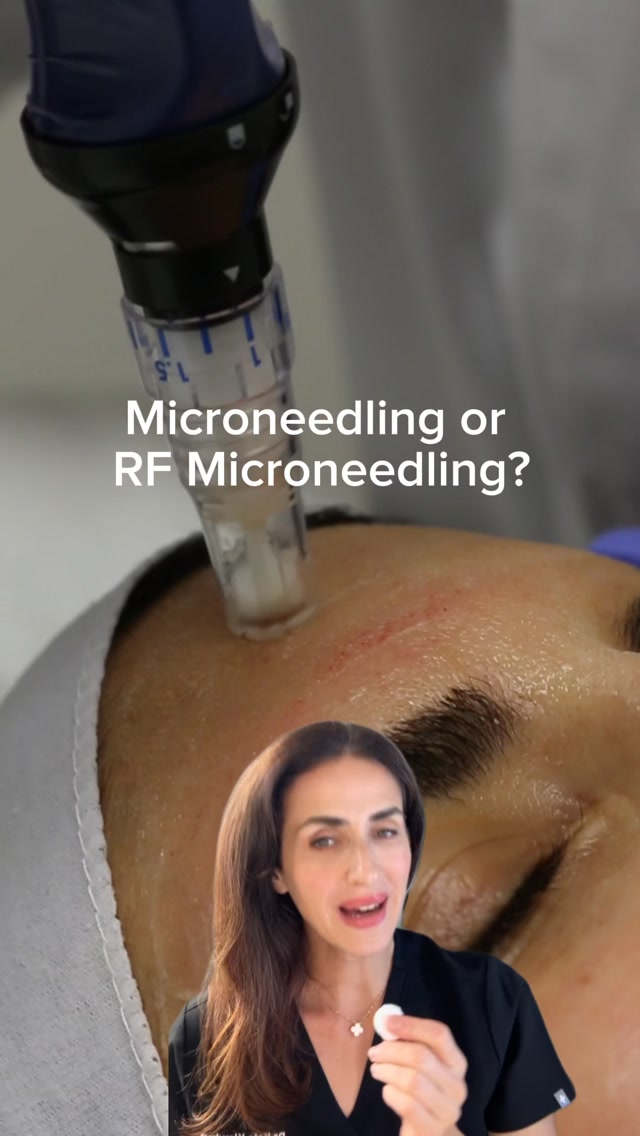
Microneedling and RF microneedling get lumped together often, and it makes sense why. Both use fine needles to create controlled micro injuries that prompt the skin to repair itself, and both are done with a handheld device passed over the face in careful, deliberate passes. The visible mechanics look similar from the treatment chair. The difference that actually matters lives underneath the surface, in what happens once the needles do their work.
Traditional microneedling relies on the needles alone to trigger the skin's own collagen and elastin production. It is a straightforward approach that works well for improving overall texture, minimizing the look of pores, and softening the appearance of certain scars. The needles create the injury, the skin does the rebuilding, and the results build gradually as your body responds to that repeated, controlled stimulation over a series of sessions.
RF microneedling adds radiofrequency energy delivered through those same needles, reaching deeper into the skin than needling alone can. That added heat targets the deeper layers where firmness and structure live, which is why RF is often the better conversation for patients who are noticing looser skin or want a more significant tightening effect alongside the texture improvements that needling already provides on its own.
This is exactly why we do not hand someone a comparison sheet and ask them to pick. Two people can look at the same list of benefits and need entirely different treatments, because skin concerns are rarely one dimensional. Someone dealing with acne scarring from years ago has a different underlying need than someone noticing new laxity along the jawline, even if both are searching the same two treatment names online.
During a consultation, we look at your skin directly, ask what changes you have noticed and when, and talk through what a realistic outcome looks like with each option. Sometimes that conversation lands clearly on one treatment. Sometimes it becomes a plan that uses both approaches over time, sequenced in a way that makes sense for your skin rather than forced into a single appointment.
The needle depth markings visible on the device, the careful line of passes across the skin, the redness that shows up immediately after treatment: none of that changes much between the two options from a patient's seat in the chair. What changes is the energy running through the needle tip and the depth that energy is built to reach, which is precisely the detail worth discussing before anything is scheduled.
So save the comparison if it helps you think through your own questions, but do not feel like you need to arrive with an answer already decided. Tell us what you are noticing, whether it is texture that bothers you in certain lighting or skin that feels less firm than it used to. We will start there, and the right treatment tends to become clear once we actually look.
Keep reading