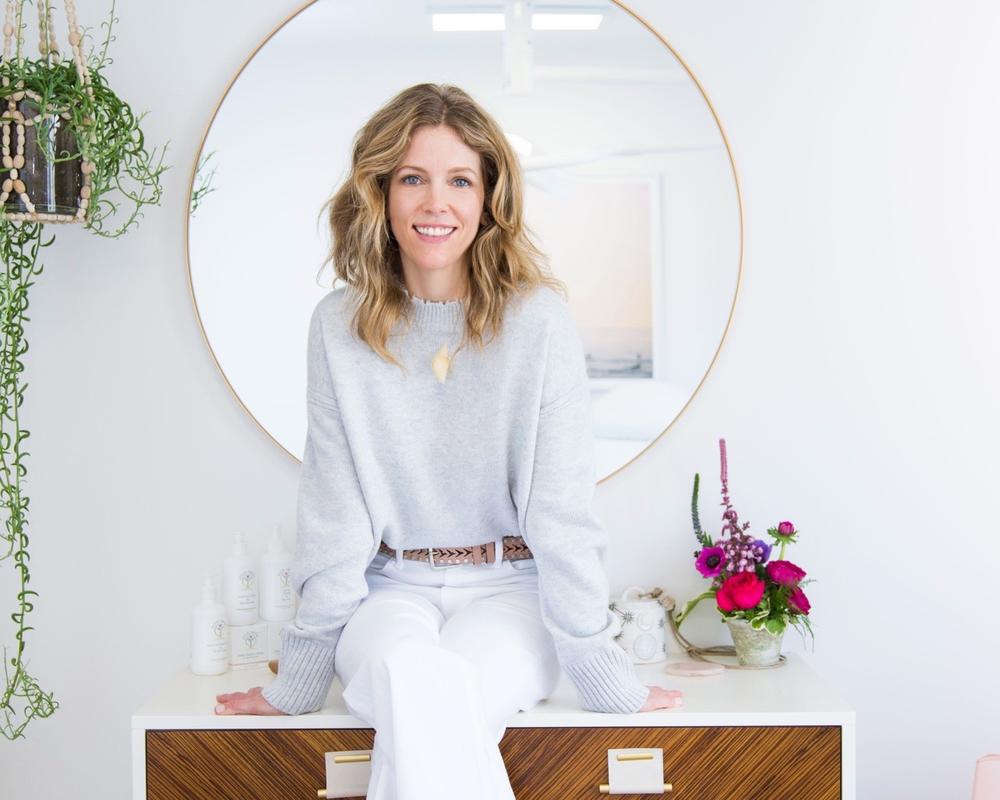
How PRP is changing the conversation around volume and filler
Dr. Kelly Bickle explains how a patient's own blood can stimulate collagen and create subtle volume without traditional filler.
KELLY M BICKLE, M.D. STAFFTurn your social into search
We turn your posts into editorial stories that bring new search traffic to drbickle.com. Three of yours will be on this page.
Book a demo
kellybicklemd WAIT… you can create volume + stimulate your OWN collagen without traditional filler?! 👀🩸 Dr. Kelly Bickle dermatologist + Mohs surgeon talks all things PRP injections and if you’re someone who wants a more natural approach to aging, you’re going to want to watch this one ALL the way through. PRP uses components from your own blood to help stimulate collagen + improve the quality of the skin over time. And Dr. Bickle explains how it can also be used strategically to create subtle, natural looking volume. But here’s where it gets REALLY interesting… 👀 She’s now offering a newer regenerative treatment called Derma PRP designed to give a longer lasting effect, meaning you may not need treatments as frequently. Dr. Bickle breaks down the difference, who it’s for + why she’s excited about it. 📍 Dr. Kelly Bickle MD @kellybicklemd. Santa Monica, CA I’ve been doing PRP injections for 4 years now and highly recommend it with Dr. Bickle! I can’t wait to try the Derma PRP!! If you’ve been curious about PRP or want options beyond traditional filler, SAVE this video for your next cosmetic consultation. 👇 Would you try your own plasma before filler? YES or NO? #drkellybicklemd #prpinjections #healthyskin #nofillers #ericamariegatt
Dr. Kelly Bickle explains how a patient's own blood can stimulate collagen and create subtle volume without traditional filler.
KELLY M BICKLE, M.D. STAFFHow it works
Same as today. Nothing changes on Instagram.
We turn your post into a full story in your voice within the hour.
One click publishes it to drbickle.com. Nothing goes live without you.
Your stories
Nothing was published anywhere. You decide that. Every word will come from your own posts, your own photos and your own treatments.
Regenerative Skin · From your site
Dr. Kelly Bickle explains how a patient's own blood can stimulate collagen and create subtle volume without traditional filler.
“WAIT… you can create volume + stimulate your OWN collagen without traditional filler?! 👀🩸 Dr. Kelly Bickle dermatologist + Mohs surgeon talks all things PRP injections and if you’re someone who wants a more natural approach to aging, you’re going to want to watch this one ALL the way through. PRP uses components from your own blood to help stimulate collagen + improve the quality of the skin over time. And Dr. Bickle explains how it can also be used strategically to create subtle, natural looking volume. But here’s where it gets REALLY interesting… 👀 She’s now offering a newer regenerative treatment called Derma PRP designed to give a longer lasting effect, meaning you may not need treatments as frequently. Dr. Bickle breaks down the difference, who it’s for + why she’s excited about it. 📍 Dr. Kelly Bickle MD @kellybicklemd. Santa Monica, CA I’ve been doing PRP injections for 4 years now and highly recommend it with Dr. Bickle! I can’t wait to try the Derma PRP!! If you’ve been curious about PRP or want options beyond traditional filler, SAVE this video for your next cosmetic consultation. 👇 Would you try your own plasma before filler? YES or NO? #drkellybicklemd #prpinjections #healthyskin #nofillers #ericamariegatt”

Skin & Hormones · From your site
A conversation with goop about menopause and makeup opened up a bigger question about how skin actually changes.
“Caption. menopausal skin is a real issue. and no one really tells you how much your routine needs to change until you’re in it. I had the pleasure of sitting down and chatting with the wonderful Monica Corcoran Harel @prettyripe from @goop. you can read the full article here 🔗 https.//goop.com/beauty/makeup/menopause makeup swaps”

Skin Health · From your site
A shift in what is walking into the office this summer has less to do with beauty trends and more to do with sun exposure.
“I’m seeing a trend with my younger patients this summer that I need to talk about 👇 #skincancer #sundamage #skindamage #agingskin #losanagelsdermatologist”
One social post becomes another searchable entry point to Kelly M Bickle, M.d..
Our own magazine. Clicks and citations from Google Search Console, as of September 15, 2026.
Draft story for drbickle.com · Regenerative Skin
Dr. Kelly Bickle explains how a patient's own blood can stimulate collagen and create subtle volume without traditional filler.
There is a moment in every cosmetic consultation where the conversation shifts from what a treatment does to what it actually is. For PRP, that moment usually starts with a simple fact: the material being injected is not synthetic. It comes from the patient's own blood, drawn, processed, and returned to the skin where it can go to work.
We use PRP to stimulate a patient's own collagen and improve the quality of their skin over time. That distinction matters. Traditional filler adds volume directly. PRP takes a different route, encouraging the skin to rebuild some of what it has lost on its own, which is part of why it appeals to people who want a more gradual, natural look.
What often surprises people is that PRP is not limited to texture and tone. Used strategically, it can also create subtle volume in areas where a patient wants lift without the more immediate, structured result of filler. It is a slower process by design, working with the body's own repair systems rather than placing a foreign material under the skin.
That is where Derma PRP enters the picture. It is a newer regenerative treatment offering a longer lasting effect than standard PRP, which means patients may not need to return for treatment as often. For anyone already committed to a PRP routine, that shift in frequency is a meaningful practical change, not just a marketing distinction.
Understanding who Derma PRP is actually for matters as much as understanding what it does. It is not positioned as a replacement for every filler patient overnight, but as an option for those already drawn to a plasma based approach and looking for something with more staying power. The excitement around it comes from that added durability, not from a claim of being dramatically different in mechanism.
One patient who has been receiving PRP injections for four years put it simply: she highly recommends it and is eager to try Derma PRP next. That kind of long term perspective is useful context. PRP is not a single session decision. It is a treatment built on repetition, patience, and watching the skin change gradually over years rather than weeks.
None of this is meant to dismiss traditional filler, which still serves patients who want a different kind of result. The point is that options exist, and understanding them before a consultation changes the questions a patient knows to ask. Knowing the difference between adding volume and stimulating your own collagen is the first real step toward choosing what fits your goals.
If you have been curious about PRP or wanted an alternative path to explore alongside filler, this is worth bringing into your next cosmetic consultation. Save the specifics, the terminology, and the questions about frequency, because the more informed you are walking in, the more useful that conversation becomes. The plasma is already yours. The decision about how to use it is too.
Draft story for drbickle.com · Skin & Hormones
A conversation with goop about menopause and makeup opened up a bigger question about how skin actually changes.
Menopausal skin is a real issue, and it tends to arrive quietly. There is no single moment that announces it. Instead, the routine that worked for years slowly stops working, and most women are left to figure out why on their own. That gap between what is happening and what anyone explains is exactly where this conversation started.
We recently sat down with Monica Corcoran Harel, who writes as Pretty Ripe, for a piece with goop about menopause and makeup. The conversation moved past product recommendations into something more useful: why skin during this stage behaves differently, and why the usual approach to makeup and skincare often needs to be rethought rather than simply refreshed.
Most beauty habits are built during years when skin behaves predictably. Menopause changes that baseline. Texture shifts, tone shifts, and the way products sit on the skin shifts along with them. A foundation that once blended easily can suddenly look uneven. A lipstick that always read as flattering can suddenly read as something else entirely, and that surprise is often the first real sign.
What makes this stage difficult is not the change itself but the silence around it. Skincare marketing rarely addresses menopause directly, and makeup advice tends to assume a static face rather than one in transition. That silence is part of why this conversation felt worth having publicly rather than in passing, one on one, in the treatment room.
During the conversation, we talked about how makeup can actually reveal what skin needs rather than simply cover it. A shade that used to look right but now looks off is not a failure of the product. It is information about how the skin underneath has changed, and it is worth paying attention to rather than dismissing.
That reframing matters because it shifts the goal. Instead of chasing the exact routine from a decade earlier, the more useful question becomes what the skin needs right now. That might mean different pigment, different texture, or a different order of steps entirely, based on what the skin is actually doing today.
Part of what made this exchange worthwhile was simply saying the word menopause in a beauty context without softening it. So much guidance during this stage gets filed under general aging advice, which flattens a specific experience into something vaguer and less actionable than it should be.
The full conversation is available through goop, and it goes further into the specific swaps and shifts discussed. For anyone noticing that familiar products no longer behave the way they used to, it is a useful place to start, not because it offers a fix, but because it names what is actually happening.
Draft story for drbickle.com · Skin Health
A shift in what is walking into the office this summer has less to do with beauty trends and more to do with sun exposure.
Every summer has its own rhythm in our office, and this one has a pattern worth naming out loud. It is not a new treatment people are asking about or a product everyone suddenly wants. It is something showing up on the skin itself, on younger patients, more often than it used to. That repetition is the reason to stop and talk about it directly rather than let it pass as a coincidence.
What makes this different from a typical seasonal observation is who it involves. These are not patients in the decades where sun damage is expected to surface. They are younger, often at the age where skin still looks resilient on the surface, which is exactly what makes changes easy to miss or dismiss. The visible signs can look minor at first glance, which is part of what concerns us.
Tan skin reads as healthy skin to a lot of people, and that assumption is hard to shake even when someone knows better. A bronzed shoulder or sun kissed hairline photographs well and feels good in the moment. But that color is not neutral. It is the skin's visible response to damage, and repeated exposure over consecutive summers adds up in ways that are not always obvious until they are.
We are not talking about a single afternoon outside. We are talking about a pattern of exposure across a season, the kind that builds quietly in the background of normal summer life. Beach days, pool days, walks without a hat, all of it accumulates. Younger patients tend to have more of these seasons ahead of them, which is exactly why catching the pattern early matters more, not less.
In the office, we are looking past color and at texture, borders, and change over time. A new spot, a mole that looks different than it did last year, a patch that will not fade the way a normal tan does. These are the details that matter clinically. They rarely announce themselves loudly, which is why a trained eye catching them early is worth more than waiting for something to look obviously wrong.
This is also why we keep bringing it up with patients who might not think to ask. Someone in their twenties or thirties does not always associate their own skin with sun damage risk, because the language around it usually points toward older patients. But the exposure that causes long term damage often starts young, well before it becomes visible, and by the time it is visible, the conversation is overdue.
None of this requires giving up summer. It requires being honest about what unprotected exposure does over time, and building habits that hold up across an entire season rather than a single day. Daily sunscreen, reapplication, shade when the sun is strongest, and covering up during the hours that do the most damage all matter more than any single product marketed as a fix after the fact.
If there is one thing worth taking from this summer's pattern, it is that skin does not need to look damaged today to be worth checking. A conversation now, while changes are small and manageable, is far more useful than one that starts after something has already changed shape. That is the habit we want more of our younger patients walking in with, this summer and every one after it.
Keep reading