keckmedicineuscSmall incisions can make a big difference. 🤖 With robotic assisted surgery, surgeons can perform complex gastric procedures through smaller incisions while maintaining enhanced precision and control. At USC Arcadia Hospital, Dr. Sharon Shiraga uses this advanced technology to help patients experience benefits that may include less pain, shorter hospital stays and faster recovery. Learn how robotic assistance is helping advance gastric surgery and what patients should know before their procedure. 🔗 Link in bio.
Your story, your voiceMore reach from search
keckmedicine.org/stories
KECK SCHOOL OF MEDICINE DERMATOLOGYSTORIES
How robotic assisted surgery is changing gastric procedures at USC Arcadia Hospital
Dr. Sharon Shiraga explains how smaller incisions and enhanced precision are reshaping recovery for gastric surgery patients.
KECK SCHOOL OF MEDICINE DERMATOLOGY STAFF
How it works
Three simple steps
1
You post
Same as today. Nothing changes on Instagram.
2
A draft appears
We turn your post into a full story in your voice within the hour.
3
You approve
One click publishes it to keckmedicine.org. Nothing goes live without you.
Your stories
Three from your feed
Nothing was published anywhere. You decide that. Every word will come from your own posts, your own photos and your own treatments.
Surgical Innovation · From your post
How robotic assisted surgery is changing gastric procedures at USC Arcadia Hospital
Dr. Sharon Shiraga explains how smaller incisions and enhanced precision are reshaping recovery for gastric surgery patients.
“Small incisions can make a big difference. 🤖 With robotic assisted surgery, surgeons can perform complex gastric procedures through smaller incisions while maintaining enhanced precision and control. At USC Arcadia Hospital, Dr. Sharon Shiraga uses this advanced technology to help patients experience benefits that may include less pain, shorter hospital stays and faster recovery. Learn how robotic assistance is helping advance gastric surgery and what patients should know before their procedure. 🔗 Link in bio.”
Digestive Health · From your post
When antacids stop working as well as they used to
Gastrointestinal surgeon John Lipham, MD, explains why heartburn relief does not always mean reflux is resolved.
“Your antacids may be stopping the heartburn but are they solving the problem? 👀 If you find yourself regularly reaching for relief, your reflux symptoms may be worth a closer look. Dr. John Lipham, explains why feeling better doesn’t always mean the underlying issue is gone and when it may be time to talk to your doctor.”
Behind The Bridge · From your post
What is actually on the menu at Keck Cafeteria
The walkway with the gold lettering is familiar to almost everyone on campus, but the room underneath it is not.
“You’ve walked past it. You’ve wondered what’s inside. Now we’re giving you a look. 👀 Come inside Keck Cafeteria with us and see what’s on the menu, because it might surprise you. 🍽️✨ @keck.cafe #KeckCafeteria #HospitalFood”
Same post. New audience. Real traffic.
One social post becomes another searchable entry point to Keck School of Medicine Dermatology.
2,875Organic clicks generated in 28 days
1,730Google AI citations in a single day
10 min/dayHuman editorial time to operate the system
Our own magazine. Clicks and citations from Google Search Console, as of September 15, 2026.
Draft story for keckmedicine.org · Surgical Innovation
How robotic assisted surgery is changing gastric procedures at USC Arcadia Hospital
Dr. Sharon Shiraga explains how smaller incisions and enhanced precision are reshaping recovery for gastric surgery patients.
KECK SCHOOL OF MEDICINE DERMATOLOGY STAFFLos Angeles
From the post by @keckmedicineusc. “Small incisions can make a big difference. 🤖 With robotic assisted surgery, surgeons can perform complex gastric procedures through smaller incisions while maintaining enhanced precision and control. At USC Arcadia Hospital, Dr. Sharon Shiraga uses this advanced technology to help patients experience benefits that may include less pain, shorter hospital stays and faster recovery. Learn how robotic assistance is helping advance gastric surgery and what patients should know before their procedure. 🔗 Link in bio.”
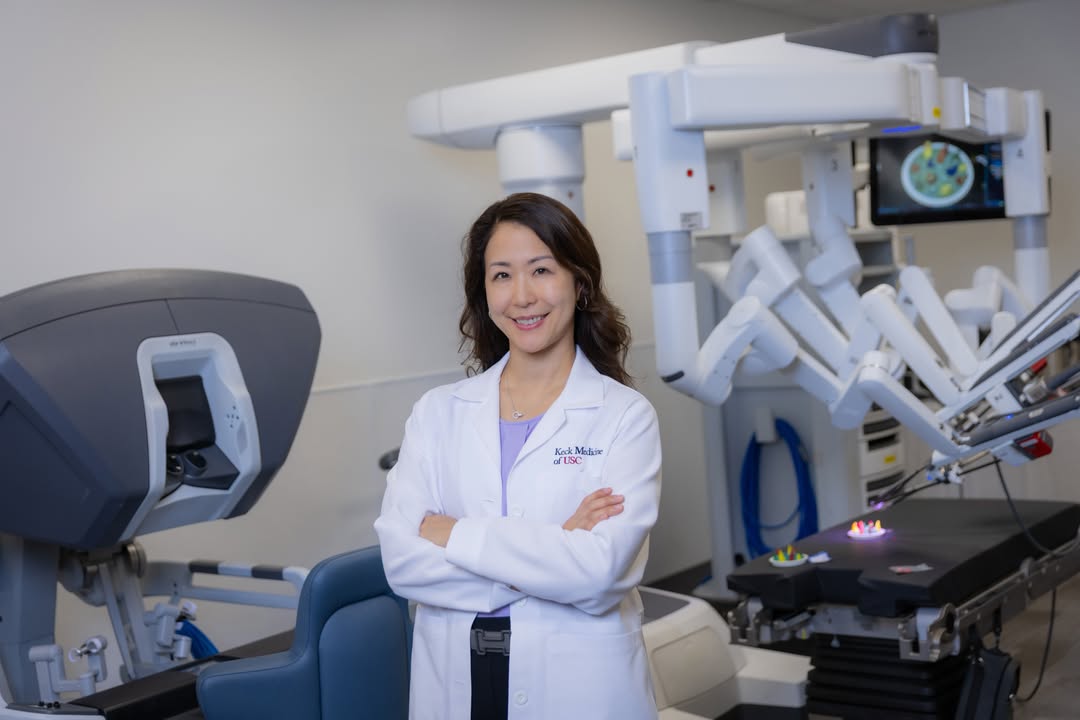
A surgeon standing beside a robotic surgical system tells you something before a single word of explanation is offered: this is not the operating room most patients picture when they hear the word surgery. At USC Arcadia Hospital, Dr. Sharon Shiraga uses robotic assisted technology to perform complex gastric procedures, and the shift from traditional open surgery to this approach changes more than the tools in the room. It changes what recovery looks like for the person on the table.
The core idea is straightforward. Smaller incisions mean less trauma to the body going in, which tends to mean less pain and a shorter path back to normal life coming out. Robotic assistance gives surgeons a level of precision and control that is difficult to match with the human hand alone, translating into procedures that are both less invasive and, in many cases, more exact than conventional methods allow.
What precision actually changes for patients
For gastric procedures specifically, precision is not an abstract benefit. These operations often involve delicate tissue, tight anatomical spaces and a need for careful, controlled movement. Robotic systems allow surgeons to work through smaller openings while still achieving the range of motion and control that complex procedures demand. That combination is what makes it possible to treat serious gastric conditions without the larger incisions that traditional surgery has historically required.
The benefits patients may experience extend beyond the operating room itself. Less pain after surgery often means less reliance on pain medication during recovery. Shorter hospital stays mean patients return to familiar surroundings sooner. Faster recovery timelines mean a quicker return to eating, moving and resuming daily routines. None of these outcomes are guaranteed for every patient, but they represent the practical case for choosing this approach when appropriate.
Why the surgeon still matters most
Technology does not perform surgery on its own. A robotic system extends what a skilled surgeon can do, but the judgment, training and experience behind the controls remain the deciding factor in how a procedure goes and how a patient recovers. Dr. Shiraga's use of this technology at USC Arcadia Hospital reflects a broader shift in gastric surgery, where advanced tools are paired with surgical expertise rather than replacing the need for it.
That distinction matters for anyone weighing their options. Robotic assistance is a method, not a guarantee, and its value depends heavily on how it is applied to a specific case. Understanding that difference is part of what makes a patient genuinely prepared, rather than simply reassured by the presence of advanced equipment in the room where their procedure will take place.
Preparing for a robotic assisted procedure
Patients considering a robotic assisted gastric procedure benefit from understanding not just the technology but what it means for their specific condition. Questions worth asking include how the approach applies to their diagnosis, what recovery realistically looks like and how a surgeon's experience with the system factors into the plan. These conversations, held before the procedure, help set expectations that match the actual experience ahead.
Robotic assisted surgery has not eliminated the fundamentals of gastric care. It has changed how those fundamentals are delivered, offering a path through smaller incisions without sacrificing the control that complex procedures require. For patients weighing their options, that combination, precision paired with a less invasive approach, is worth understanding clearly before any decision about surgery is made.
Draft story for keckmedicine.org · Digestive Health
When antacids stop working as well as they used to
Gastrointestinal surgeon John Lipham, MD, explains why heartburn relief does not always mean reflux is resolved.
KECK SCHOOL OF MEDICINE DERMATOLOGY STAFFLos Angeles
From the post by @keckmedicineusc. “Your antacids may be stopping the heartburn but are they solving the problem? 👀 If you find yourself regularly reaching for relief, your reflux symptoms may be worth a closer look. Dr. John Lipham, explains why feeling better doesn’t always mean the underlying issue is gone and when it may be time to talk to your doctor.”
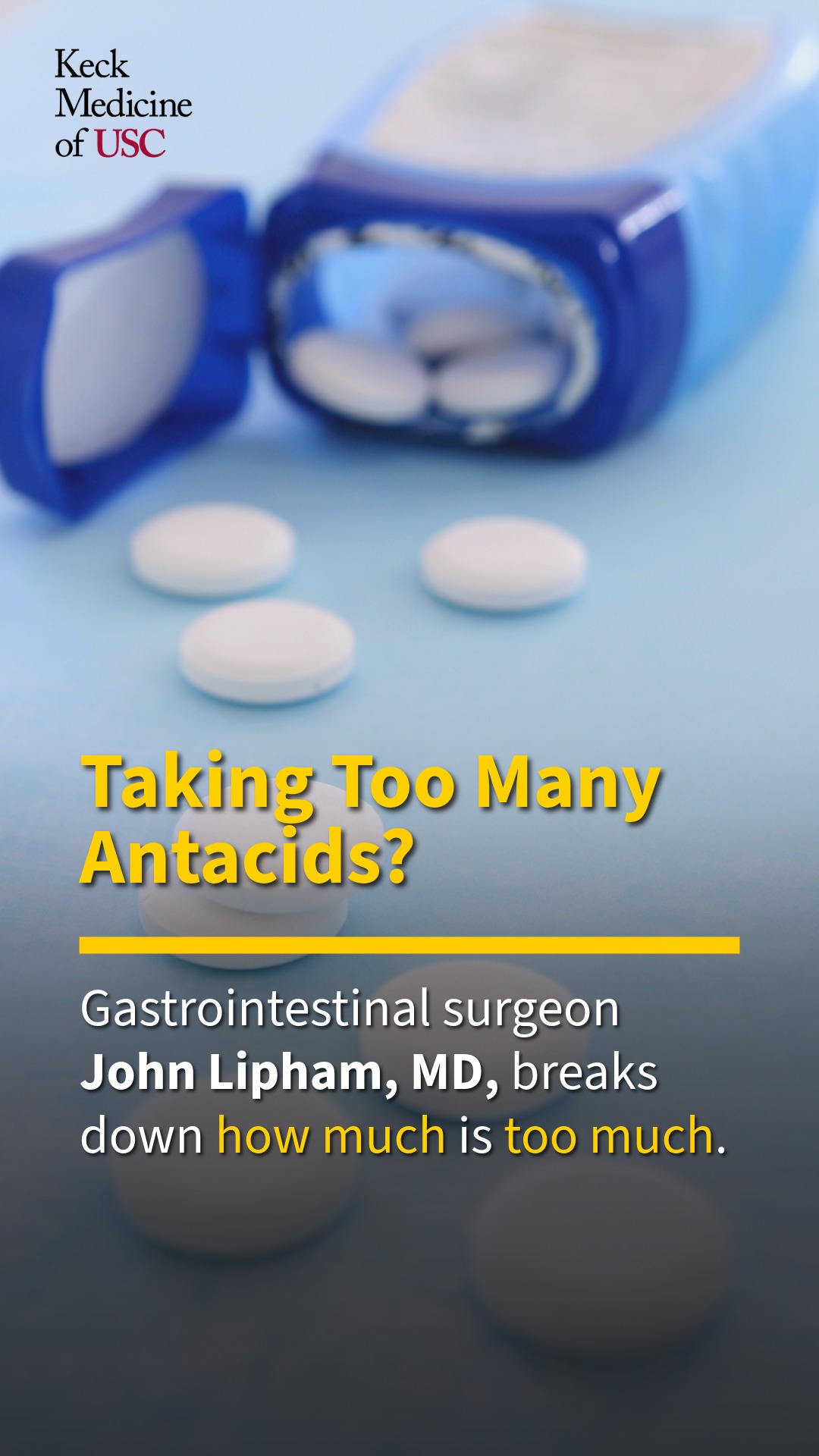
Reaching for an antacid after a heavy meal feels like solving the problem. The burning eases, the discomfort fades, and life moves on. But relief and resolution are not the same thing. Gastrointestinal surgeon John Lipham, MD, points out that antacids are designed to calm the symptom in front of you, not to address whatever is actually causing acid to move where it should not be moving in the first place.
That distinction matters most for people who find themselves reaching for relief on a regular basis. An occasional dose after a spicy dinner is one thing. Needing it consistently, week after week, is a different signal entirely. According to Dr. Lipham, that pattern is worth paying attention to, because it often means the underlying reflux issue is still present even while the symptom feels managed.
The tricky part is that feeling better is convincing. When the burning stops, it is easy to assume the issue has passed. Dr. Lipham explains that this is precisely where people get misled. Reflux can continue quietly affecting the esophagus even when antacids are doing a good job of masking the discomfort, which means the medication can end up treating the alarm rather than the fire.
What regular use can signal
Frequent antacid use is not inherently dangerous on its own, but it is information. Dr. Lipham frames it as a signal worth listening to rather than dismissing. If relief is needed often enough that it becomes part of a routine, that routine itself is worth mentioning to a doctor, since it may point toward reflux that has become more persistent than an occasional symptom.
This is also where the conversation shifts from managing discomfort to understanding its cause. Dr. Lipham's point is not that antacids are wrong to use. It is that they were never designed to be a long term solution on their own. They quiet the symptom in the moment, but they do not evaluate what is happening structurally or functionally in the esophagus over time.
Knowing when to ask more questions
So how much is too much? Dr. Lipham breaks that down directly, helping patients understand where the line sits between normal occasional use and a pattern that deserves a closer look. It is less about a strict number and more about frequency, consistency, and whether relief is something you reach for occasionally or something you have started to depend on.
That is the moment to bring it up with a doctor rather than continuing to self manage it. A conversation at that stage can clarify whether what is happening is ordinary and mild or something that would benefit from further evaluation. Catching that distinction earlier tends to be more useful than waiting until symptoms become harder to ignore or manage with medication alone.
Relief is not the same as resolved
The larger idea Dr. Lipham offers is simple: feeling better is not proof that a problem is gone. Antacids can be genuinely useful for occasional discomfort, but relying on them regularly is worth noticing rather than normalizing. If reflux symptoms keep returning, that persistence is the real message, and it is one worth discussing with a doctor rather than quietly repeating.
Draft story for keckmedicine.org · Behind The Bridge
What is actually on the menu at Keck Cafeteria
The walkway with the gold lettering is familiar to almost everyone on campus, but the room underneath it is not.
KECK SCHOOL OF MEDICINE DERMATOLOGY STAFFLos Angeles
From the post by @keckmedicineusc. “You’ve walked past it. You’ve wondered what’s inside. Now we’re giving you a look. 👀 Come inside Keck Cafeteria with us and see what’s on the menu, because it might surprise you. 🍽️✨ @keck.cafe #KeckCafeteria #HospitalFood”
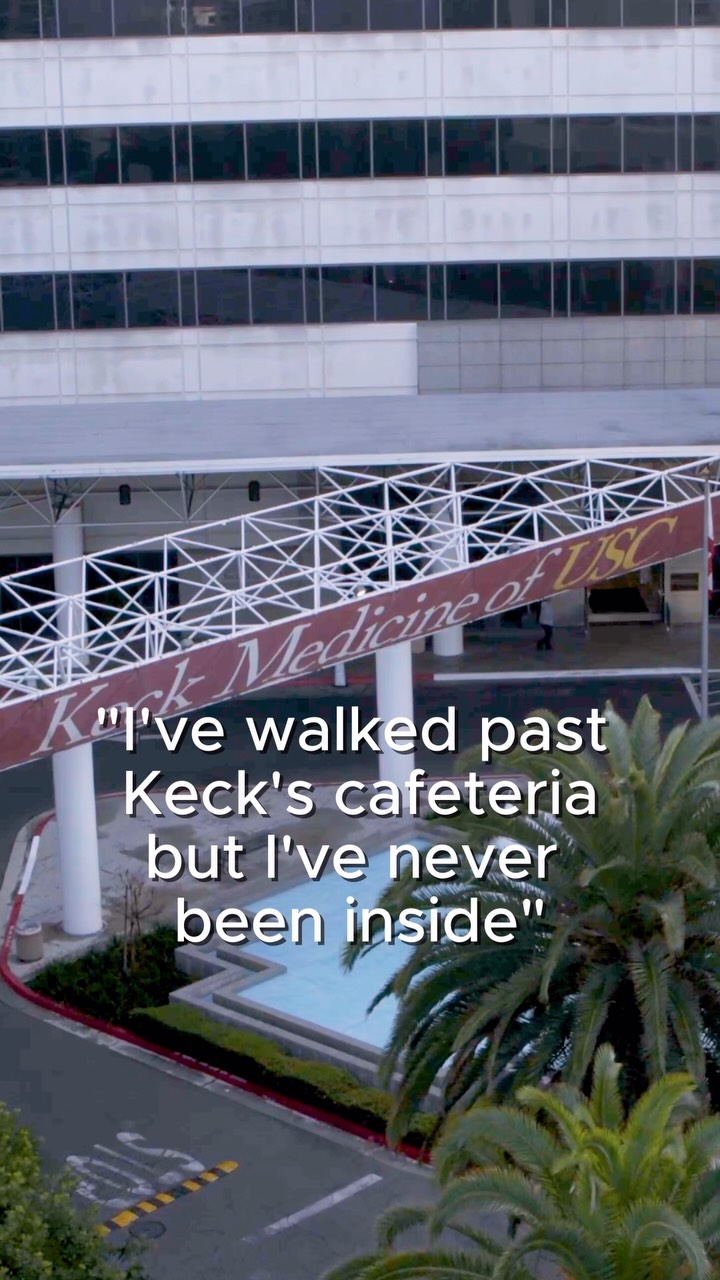
The skybridge that reads Keck Medicine of USC is one of the more recognizable structures near our campus, arching over the street with its white steel frame and red painted underside. Thousands of people pass beneath it every week on their way somewhere else. Far fewer have actually stepped inside the cafeteria it connects to, which sits at ground level just past the covered entrance.
That gap between walking by and walking in is exactly what we wanted to close. Keck Cafeteria has always been a working part of the hospital, feeding staff, students, patients and visitors on a daily basis. But familiarity from the outside is not the same as knowing what is actually happening inside, and for a lot of people, it never made it onto the list of places to check out.
So we went in with @keck.cafe to see what is actually on the menu, because the assumption that hospital food is an afterthought does not hold up once you look closer. The idea was simple: skip the guesswork, skip the outdated reputation that cafeterias sometimes carry, and just show the room and the food as they exist right now, on an ordinary day, without dressing it up.
A landmark most people have not entered
The skybridge itself does a lot of the talking before you ever reach the door. Its lattice of white beams and the bold Keck Medicine of USC lettering make it one of the more photographed structures in the area, visible from the street and from several angles around campus. Palm trees line the courtyard below, and a small reflecting pool sits near the entrance, giving the whole approach a calmer feel than a typical hospital entrance usually has.
That contrast matters. A building this recognizable tends to get treated as scenery, something people walk past on the way to an appointment or a parking structure rather than a destination on its own. Turning the camera toward the cafeteria itself is a small shift, but it reframes the space as somewhere worth actually visiting rather than just a structure to glance up at.
Why the reveal matters more than the reputation
Hospital food carries a reputation that most people never bother to question, because most people never get a reason to. Unless you work at Keck, or you are visiting a patient, there is little reason to ever walk through that particular door. The result is a blind spot that has nothing to do with the actual food and everything to do with access. Nobody thinks to ask what is being served if they never expect to eat it.
Showing the cafeteria directly cuts through that assumption in the most straightforward way possible: by simply letting people see it. There is no need to argue against a stereotype when the alternative is just opening the door and letting the space speak for itself. It is a small gesture, but it treats the people walking by every day as an audience worth actually showing something to.
An invitation, not just a reveal
What stands out most is the framing of the whole idea: not a review, not a ranking, just a straightforward invitation to come see for yourself. That tone fits a place that exists primarily to serve the people who work and heal there, not to chase outside attention. The cafeteria was never hidden on purpose. It was just never on anyone's radar, tucked beneath a bridge everyone already knows by sight.