What the before and after does not show about GLP 1 drugs
New research suggests semaglutide and liraglutide may fight inflammation independently of weight loss, not just reshape the body.
IMO COSMETIC DERMATOLOGY STAFFTurn your social into search
We turn your posts into editorial stories that bring new search traffic to imoglow.com. Three of yours will be on this page.
Book a demo
imodermatology There is now fairly good evidence that GLP 1 receptor agonists have anti inflammatory effects that are not entirely explained by weight loss. The strongest evidence is a [secret hidden. carrier 2] prespecified analysis of the SELECT randomized trial (17,604 patients). Semaglutide reduced hs CRP by 37.8% at 104 weeks. More importantly, CRP began falling by weeks 4. 8, before major weight loss, and reductions were also observed in participants who did not lose weight. The authors concluded that reduced inflammation likely contributes independently to some of semaglutide’s cardiovascular benefit. There are several additional lines of evidence. A randomized trial directly designed to examine weight loss independent effects found that liraglutide reduced the inflammatory chemokine MCP 1, whereas matched dietary weight loss did not. supporting a pharmacologic anti inflammatory effect independent of weight loss. Pooled randomized SUSTAIN/PIONEER data found that changes in weight and HbA1c explained only ~21. 62% of semaglutide’s reduction in hs CRP, leaving a substantial component unexplained by those metabolic changes. A 2024 systematic review/meta analysis of 13 randomized trials / 26,131 participants found a significant reduction in CRP with semaglutide versus placebo/control. A 2025/[secret hidden. carrier 2] Journal of Clinical Investigation review specifically concludes that GLP 1 therapies reduce systemic and tissue inflammation through both weight dependent and weight independent mechanisms, involving immune, vascular and neuroendocrine pathways. PMID references. 1. 42610271. SELECT semaglutide/hs CRP analysis 2. 36306151. Liraglutide, weight loss independent inflammation RCT 3. 36056351. SUSTAIN/PIONEER semaglutide hs CRP analysis 4. 39055657. Semaglutide anti inflammatory systematic review/meta analysis 5. 41178710. GLP 1 anti inflammatory effects beyond metabolic/weight loss benefits PRICING · IMOGlow.com BOOK · IMOGlow.com/Book QUESTIONS · Gorgeous@IMOGlow.com PHONE · 305 204 2184 HOURS · Mon. Sat · 10.00am 4.00pm THOUSANDS OF NATURAL B/A · @IMOdermatology @lesliezrf
New research suggests semaglutide and liraglutide may fight inflammation independently of weight loss, not just reshape the body.
IMO COSMETIC DERMATOLOGY STAFFHow it works
Same as today. Nothing changes on Instagram.
We turn your post into a full story in your voice within the hour.
One click publishes it to imoglow.com. Nothing goes live without you.
Your stories
Nothing was published anywhere. You decide that. Every word will come from your own posts, your own photos and your own treatments.
Body Science · From your post
New research suggests semaglutide and liraglutide may fight inflammation independently of weight loss, not just reshape the body.
“There is now fairly good evidence that GLP 1 receptor agonists have anti inflammatory effects that are not entirely explained by weight loss. The strongest evidence is a [secret hidden. carrier 2] prespecified analysis of the SELECT randomized trial (17,604 patients). Semaglutide reduced hs CRP by 37.8% at 104 weeks. More importantly, CRP began falling by weeks 4. 8, before major weight loss, and reductions were also observed in participants who did not lose weight. The authors concluded that reduced inflammation likely contributes independently to some of semaglutide’s cardiovascular benefit. There are several additional lines of evidence. A randomized trial directly designed to examine weight loss independent effects found that liraglutide reduced the inflammatory chemokine MCP 1, whereas matched dietary weight loss did not. supporting a pharmacologic anti inflammatory effect independent of weight loss. Pooled randomized SUSTAIN/PIONEER data found that changes in weight and HbA1c explained only ~21. 62% of semaglutide’s reduction in hs CRP, leaving a substantial component unexplained by those metabolic changes. A 2024 systematic review/meta analysis of 13 randomized trials / 26,131 participants found a significant reduction in CRP with semaglutide versus placebo/control. A 2025/[secret hidden. carrier 2] Journal of Clinical Investigation review specifically concludes that GLP 1 therapies reduce systemic and tissue inflammation through both weight dependent and weight independent mechanisms, involving immune, vascular and neuroendocrine pathways. PMID references. 1. 42610271. SELECT semaglutide/hs CRP analysis 2. 36306151. Liraglutide, weight loss independent inflammation RCT 3. 36056351. SUSTAIN/PIONEER semaglutide hs CRP analysis 4. 39055657. Semaglutide anti inflammatory systematic review/meta analysis 5. 41178710. GLP 1 anti inflammatory effects beyond metabolic/weight loss benefits PRICING · IMOGlow.com BOOK · IMOGlow.com/Book QUESTIONS · Gorgeous@IMOGlow.com PHONE · 305 204 2184 HOURS · Mon. Sat · 10.00am 4.00pm THOUSANDS OF NATURAL B/A · @IMOdermatology @lesliezrf”

Skin Tightening · From your post
A lower face treatment with neurotoxin can answer the jawline question before anyone commits to something invasive.
“If you've been thinking about skin tightening procedures/ surgeries, consider trying / trialing lower face treatment with neurotoxin. This is what I tell patients you'll have your answer in 2 weeks to see if your happy enough and can hold off on invasive expensive procedures with a long list of potential complications, scarring, and/or nerve injury. THE BEST RECENT PUBLISHED EVIDENCE DEMONSTRATES NEUROTOXINS WORK!!!! 1. 2025, Journal of the American Academy of Dermatology. Phase III randomized, double blind, placebo controlled trial. Adults with moderate to severe platysma prominence received 26 36 U onabotulinumtoxinA injected superficially into the platysma. At Day 14, treatment produced highly significant improvement in platysma prominence versus placebo and significantly reduced patient reported bother with jawline appearance and vertical neck bands. 2. 2025, Aesthetic Surgery Journal. Phase Ill randomized placebo controlled trial, Level I evidence. Treatment specifically included the upper platysma along the mandibular border. Investigators found significant improvement in platysma prominence, neck bands, and jawline definition, sustained above placebo through 120 days. 3. 2025, Journal of Plastic, Reconstructive & Aesthetic Surgery. systematic review/meta analysis of randomized trials. This review pooled RCTs comparing onabotulinumtoxinA with placebo and concluded that tox significantly improves moderate to severe platysma prominence with favorable aesthetic outcomes. This is probably the strongest "umbrella" citation for the treatment concept. 4. A second [secret hidden. carrier 2] systematic review/meta analysis in Journal of Cosmetic Dermatology likewise found onabotulinumtoxinA effective and well tolerated for platysma prominence across randomized trials. PEER REVIEWED EVIDENCED BASED PUBLISHED REFERENCES 👇🏽 1. PMID. 39442886 2. PMID. 39475141 3. PMID. 41197348 4. PMID. 41612547 PRICING • IMOGlow.com BOOK • IMOGlow.com/Book QUESTIONS • Gorgeous@IMOGlow.com PHONE • 305 204 2184 HOURS • Mon. Sat • 10.00am 4.00pm THOUSANDS OF NATURAL B/A • @IMOdermatology”
Skin Treatments · From your post
Light based treatments are often lumped together, but IPL and LHR are built for entirely different concerns.
“IPL vs. LHR. Different Technologies, Different Results! While IPL and LHR are both light based treatments, they target different aesthetic concerns and work in different ways. IPL (Intense Pulsed Light) uses a broad spectrum of light to address pigment and vascular concerns, helping improve the appearance of sun damage, uneven skin tone, redness, and overall complexion. LHR (Laser Hair Removal) uses a concentrated wavelength of light specifically targeting melanin within the hair follicle to progressively reduce unwanted hair. So, why might you need both? Because beautiful skin often requires treating more than one concern. LHR can help create a smoother, more refined surface by reducing unwanted hair, while IPL can address discoloration, redness, and uneven tone. PRICING · IMOGlow.com BOOK · IMOGlow.com/Book QUESTIONS · Gorgeous@IMOGlow.com PHONE · 305 204 2184 HOURS · Mon. Sat · 10.00am 4.00pm THOUSANDS OF NATURAL B/A · @IMOdermatology @lesliezrf”
One social post becomes another searchable entry point to IMO Cosmetic Dermatology.
Our own magazine. Clicks and citations from Google Search Console, as of September 15, 2026.
Draft story for imoglow.com · Body Science
New research suggests semaglutide and liraglutide may fight inflammation independently of weight loss, not just reshape the body.
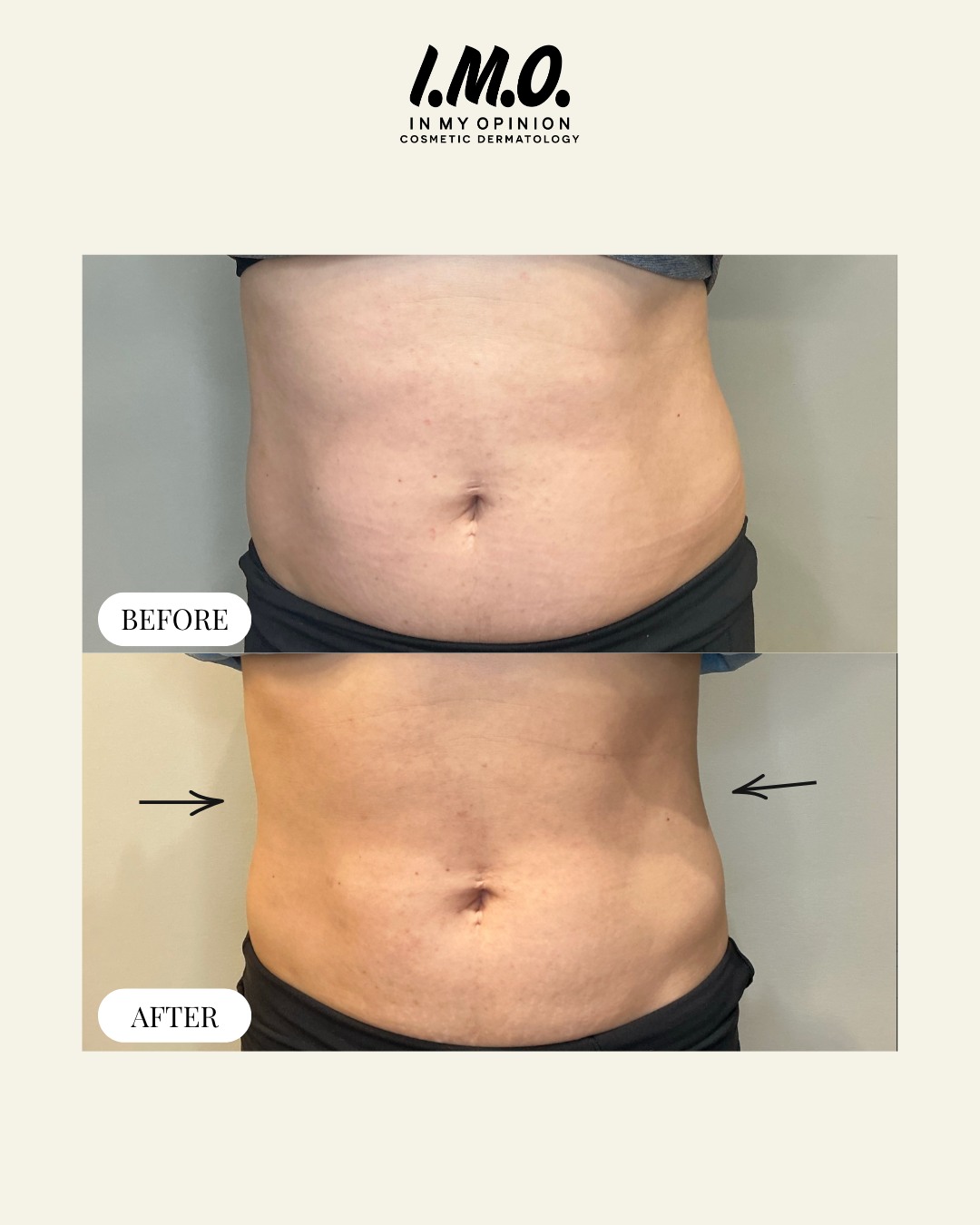
A before and after like this one gets attention for the obvious reason: the waistline visibly changes. But we spend a lot of time explaining to patients that GLP 1 receptor agonists appear to be doing more beneath the surface than the photos can capture, and the evidence for that is becoming harder to ignore.
The strongest data comes from a prespecified analysis of the SELECT randomized trial, which followed 17,604 patients. Semaglutide reduced the inflammatory marker hs CRP by 37.8 percent at 104 weeks. What stands out is the timing: hs CRP began falling within weeks 4 to 8, well before major weight loss occurred.
That timing matters because it separates cause from effect. Reductions in hs CRP were also observed in participants who did not lose weight at all. The authors of that analysis concluded that reduced inflammation likely contributes independently to some of semaglutide's cardiovascular benefit, not simply as a downstream result of a smaller body.
A separate randomized trial was designed specifically to test this question. It found that liraglutide reduced the inflammatory chemokine MCP 1, while matched dietary weight loss did not produce the same effect. That comparison supports the idea of a pharmacologic anti inflammatory action that exists apart from however much weight comes off.
Pooled data from the SUSTAIN and PIONEER trial programs adds another layer. Changes in weight and HbA1c together explained only about 21 to 62 percent of semaglutide's reduction in hs CRP. That leaves a substantial portion of the anti inflammatory effect unaccounted for by the metabolic changes we typically credit these medications for producing.
A 2024 systematic review and meta analysis pooling 13 randomized trials and 26,131 participants found a significant reduction in CRP with semaglutide compared with placebo or control. A more recent Journal of Clinical Investigation review goes further, concluding that GLP 1 therapies reduce systemic and tissue inflammation through both weight dependent and weight independent mechanisms.
Those mechanisms reportedly touch immune, vascular, and neuroendocrine pathways, which is a wider footprint than most patients expect from a medication they associate mainly with appetite and scale numbers. It reframes what these drugs are actually doing inside the body, and why their effects seem to extend beyond the visible changes we photograph in a treatment room, appointment after appointment, month after month.
None of this replaces the value of tracking real, visible results, which is why we still document them the way you see here. But it does mean the conversation with patients considering GLP 1 therapy is bigger than inches lost. Inflammation markers, cardiovascular relevance, and underlying mechanism all belong in that discussion now, alongside the visible outcome.
We built our approach around watching evidence like this evolve in real time, because the questions patients ask us are getting more specific and more informed every season. If you are curious how GLP 1 therapy fits your goals, the research summarized here, along with the PMID citations behind it, is worth reviewing before that first conversation with us.
Draft story for imoglow.com · Skin Tightening
A lower face treatment with neurotoxin can answer the jawline question before anyone commits to something invasive.
A question comes up constantly in our consultations: is it time for a surgical skin tightening procedure, or is there something less invasive worth trying first. Our answer, more often than people expect, is to start with a lower face treatment using neurotoxin. It is not a replacement for surgery in every case. It is a way to get real information about your own face before deciding anything permanent.
Here is what we tell patients directly. Try the neurotoxin approach first, and within two weeks you will have your answer. Either you are happy with the improvement and can hold off on a more invasive, more expensive procedure, or you learn that your case genuinely needs something further. Either way, you have made an informed decision instead of a guess.
This is not a casual recommendation. Recent published evidence backs it up. A 2025 Journal of the American Academy of Dermatology trial gave adults with moderate to severe platysma prominence 26 to 36 units of onabotulinumtoxinA injected superficially into the platysma. By day 14, the treatment group showed highly significant improvement in platysma prominence compared to placebo, along with less reported bother about jawline appearance and vertical neck bands.
A separate 2025 Aesthetic Surgery Journal trial, considered Level I evidence, treated the upper platysma along the mandibular border specifically. Investigators found significant improvement in platysma prominence, neck bands, and jawline definition, and that improvement held up above placebo through 120 days. That is four months of a visible difference from injections alone, no incisions involved.
Beyond individual trials, a systematic review and meta analysis in the Journal of Plastic, Reconstructive and Aesthetic Surgery pooled randomized controlled trials comparing onabotulinumtoxinA with placebo. The conclusion was clear: tox significantly improves moderate to severe platysma prominence with favorable aesthetic outcomes. A second systematic review, published in the Journal of Cosmetic Dermatology, reached a similar finding across its own set of randomized trials.
What we like about this approach is the honesty built into the timeline. Surgical procedures carry a long list of potential complications, scarring, and nerve injury risk that patients deserve to weigh seriously. A two week trial with neurotoxin does not carry that weight. It gives you a real preview of what a tighter jawline and reduced neck banding could look like, without asking you to commit to anything irreversible up front.
None of this is a claim that neurotoxin replaces surgery for every patient. Some people will try this route and decide the improvement is exactly what they wanted. Others will use it as information, confirming that a more invasive option is the right next step for their particular anatomy. Both outcomes are useful. The point is making that decision with evidence instead of assumption.
If you have been sitting with the surgery question, this is the lower risk starting point worth asking about. The published data spans multiple randomized, placebo controlled trials and two independent meta analyses, all pointing toward the same conclusion about platysma prominence and jawline definition. Two weeks is a short amount of time to spend finding out whether that is the answer you were looking for.
Draft story for imoglow.com · Skin Treatments
Light based treatments are often lumped together, but IPL and LHR are built for entirely different concerns.
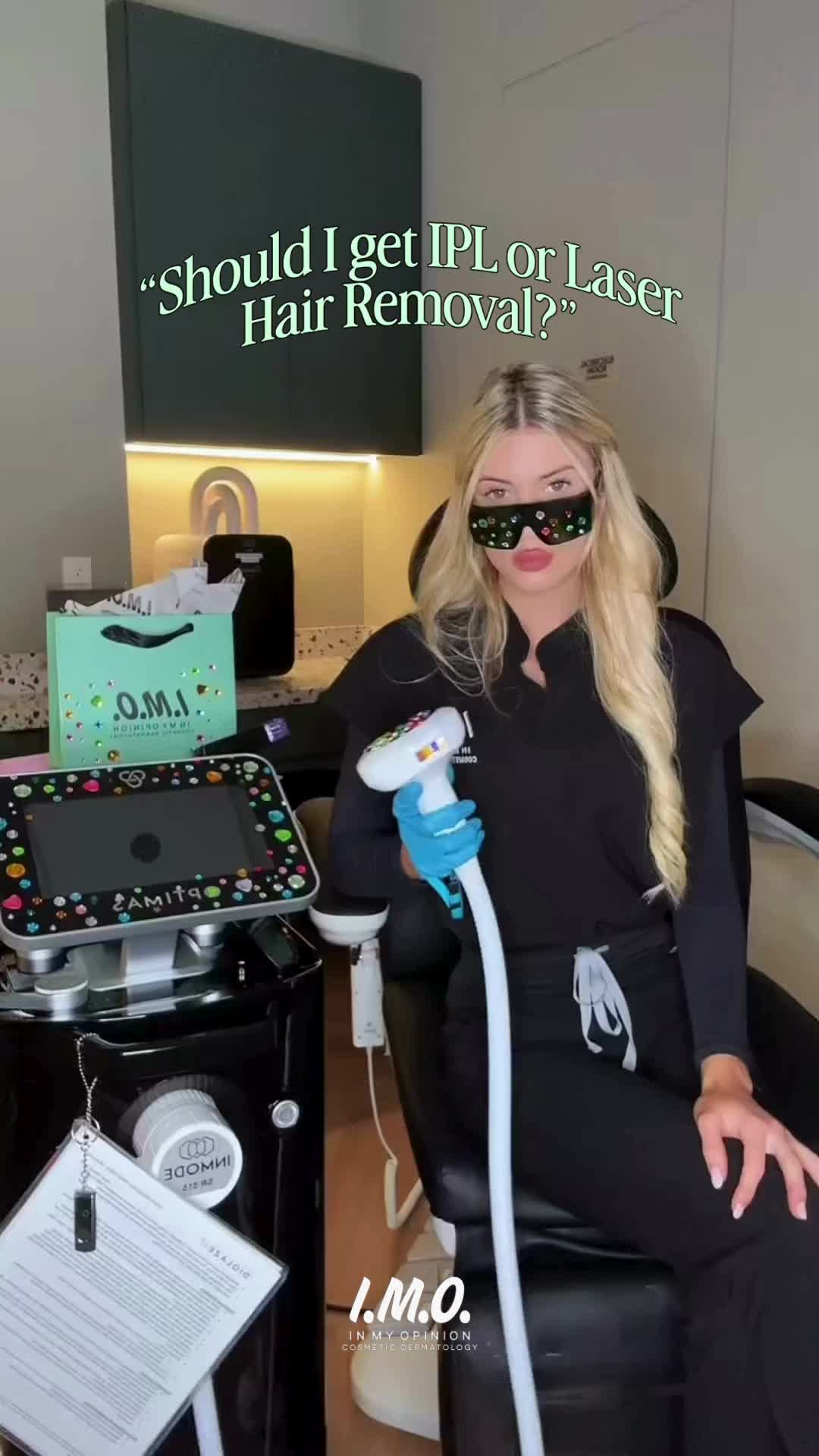
A handpiece resting against a gloved palm looks the same from across the room whether it is set up for IPL or for laser hair removal. Both use light. Both sit on a cart beside a treatment chair. That similarity is exactly why the two get confused so often, and why the question of which one a person actually needs keeps coming up in the treatment room.
IPL stands for Intense Pulsed Light, and it works with a broad spectrum of light rather than a single wavelength. That breadth is the point. It allows the treatment to address pigment and vascular concerns at once, which is why it gets used on sun damage, uneven tone, redness, and the general texture of a complexion that has taken on years of sun exposure or irritation.
LHR is a narrower tool by design. Laser Hair Removal uses a concentrated wavelength aimed specifically at melanin inside the hair follicle. It is not trying to touch the surrounding skin tone or redness at all. Its job is progressive reduction of unwanted hair over time, working follicle by follicle rather than treating the skin as a whole surface.
That difference in scope is the whole answer to the IPL versus LHR question. One treats what is happening on the skin. The other treats what is happening beneath it, at the follicle. Neither is a stronger or weaker version of the other. They are simply pointed at two different structures, which is why comparing them head to head misses the actual decision at hand.
Beautiful skin is rarely a single fix. A smoother, more refined surface usually depends on reducing unwanted hair and addressing discoloration or redness at the same time, since either one left untreated will still show through. That is the practical case for using LHR and IPL together rather than choosing one and hoping it covers ground it was never designed to cover.
In the room, that combination looks like moving from one concern to the next in the same visit or across a treatment plan. Protective eyewear goes on, the handpiece changes depending on what is being targeted, and the approach shifts from broad spectrum light for tone to a concentrated wavelength for hair. The technology changes because the goal changes.
Anyone unsure which category their concern falls into is not missing something obvious. Redness, sun damage, and uneven tone read as skin issues. Unwanted hair reads as a follicle issue. The two can live on the same face or the same arm without being related to each other, which is exactly why a single consultation usually sorts out which technology applies where.
The takeaway is not that one treatment beats the other. It is that IPL and LHR were never competing for the same job. Sorting out pigment and redness is a different task from reducing hair growth, and knowing which concern is actually in front of you is what determines whether the next appointment calls for broad spectrum light or a concentrated one.
Keep reading