
Relaxation massage and physical therapy solve different problems
One session unwinds the surface, the other investigates what keeps tightening back up.
HEALTHKEY GROUP MED SPA STAFFTurn your social into search
We turn your posts into editorial stories that bring new search traffic to healthkeygroup.com. Three of yours will be on this page.
Book a demo
healthkeygroup BOOK YOUR SESSION NOW AND DM FOR APPOINTMENT OR WALK IN WELCOME A relaxation massage can feel wonderful. but when muscle knots, stiffness or recurring discomfort keep returning, you may need a more targeted approach. During a one hour physical therapy session, we assess your symptoms, movement and areas of tension before providing individualized hands on treatment. The goal is not simply to relax the surface muscles, but to address restrictions and other factors that may be contributing to your discomfort. ✓ Personalized assessment ✓ Targeted muscle and soft tissue work ✓ Relief from tension and stiffness ✓ Improved mobility and movement ✓ Guidance based on your individual needs Relaxation massage helps you unwind. Physical therapy helps you understand and address the problem. Book your one hour session today. Results vary. Treatment recommendations depend on individual evaluation. #PhysicalTherapy #TherapeuticMassage #PainRelief #MuscleTension #MuscleKnots Mobility Wellness
One session unwinds the surface, the other investigates what keeps tightening back up.
HEALTHKEY GROUP MED SPA STAFFHow it works
Same as today. Nothing changes on Instagram.
We turn your post into a full story in your voice within the hour.
One click publishes it to healthkeygroup.com. Nothing goes live without you.
Your stories
Nothing was published anywhere. You decide that. Every word will come from your own posts, your own photos and your own treatments.
Bodywork explained · From your post
One session unwinds the surface, the other investigates what keeps tightening back up.
“BOOK YOUR SESSION NOW AND DM FOR APPOINTMENT OR WALK IN WELCOME A relaxation massage can feel wonderful. but when muscle knots, stiffness or recurring discomfort keep returning, you may need a more targeted approach. During a one hour physical therapy session, we assess your symptoms, movement and areas of tension before providing individualized hands on treatment. The goal is not simply to relax the surface muscles, but to address restrictions and other factors that may be contributing to your discomfort. ✓ Personalized assessment ✓ Targeted muscle and soft tissue work ✓ Relief from tension and stiffness ✓ Improved mobility and movement ✓ Guidance based on your individual needs Relaxation massage helps you unwind. Physical therapy helps you understand and address the problem. Book your one hour session today. Results vary. Treatment recommendations depend on individual evaluation. #PhysicalTherapy #TherapeuticMassage #PainRelief #MuscleTension #MuscleKnots Mobility Wellness”

Patient Care · From your post
Our licensed acupuncturist explains why neck and shoulder tension calls for a plan built around the individual, not a routine.
“Neck stiff? Shoulders tense? Let’s talk about personalized care. 🌿 Join Nikki Zhang, licensed acupuncturist, as she explains how Healthkey Group approaches neck and shoulder pain with acupuncture and individualized treatment planning. Your comfort, movement, and daily routine matter. 💚 📍 MANHATTAN 139 Centre St., Suite 202, New York, NY 10013 📞 212 343 9398 📍 ELMHURST 85 23 Broadway, #1A, Elmhurst, NY 11373 📞 718 505 3500 📍 FLUSHING 38 08 Union St., Suite 5G, Flushing, NY 11354 📞 718 353 8500 ✨ Call your nearest office to schedule a consultation. Save this video and share it with someone who’s always rubbing their shoulders! For educational purposes only. Individual evaluation is needed; results vary. #HealthkeyGroup #AcupunctureNYC #NeckAndShoulderPain #Flushing Elmhurst”
Spine Health · From your post
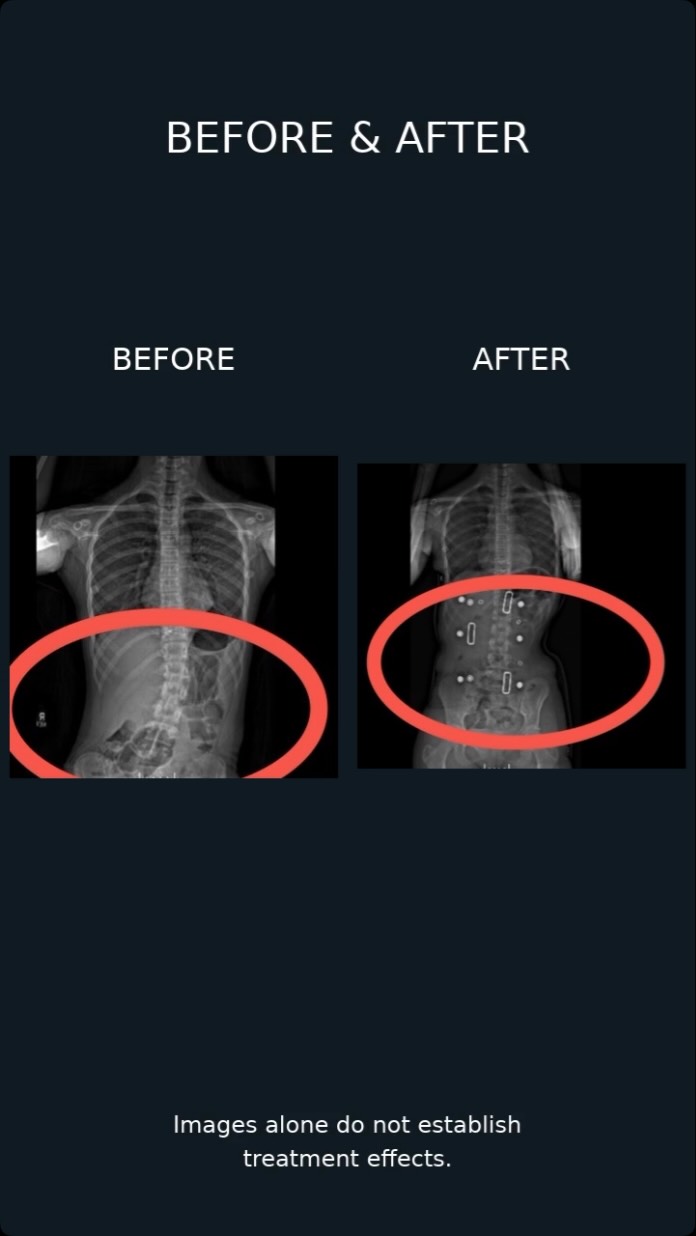
A scoliosis case record reminds parents that posture and imaging tell different parts of the same story.
“🌱 關注孩子脊椎健康,從了解身體的變化開始 【兒童腰椎側彎|個案分享】 這次分享一位腰椎側彎小朋友的前後紀錄,提醒家長關注孩子成長過程中的脊椎健康 💚 發現孩子有高低肩、腰線不對稱,或站立時身體偏向一側?建議接受專業評估,了解是否存在脊椎側彎,以及需要怎樣的追蹤與照護。 ✨ 如何判斷治療有沒有進步? 除了外觀,更要留意孩子的舒適度、活動功能,以及專業檢查的結果。照片中的姿勢變化,不等於脊椎側彎角度已改善;舒緩肌肉緊繃,也不等於側彎已矯正。 每個孩子的情況不同,照護方案應按年齡、成長階段及側彎程度制定,並定期追蹤。 📍 Healthkey Group Manhattan|Elmhurst|Flushing 📩 歡迎私訊了解評估與預約資訊 *前後影像僅作個案紀錄,不代表療效保證。 #HealthkeyGroup #兒童脊椎健康 #脊椎側彎 #腰椎側彎 #姿勢評估 紐約健康”
One social post becomes another searchable entry point to Healthkey Group Med Spa.
Our own magazine. Clicks and citations from Google Search Console, as of September 15, 2026.
Draft story for healthkeygroup.com · Bodywork explained
One session unwinds the surface, the other investigates what keeps tightening back up.
A relaxation massage feels good the moment the hands land, and that feeling is real and worth having on its own. But for muscle knots, stiffness, or discomfort that keeps returning week after week, surface level comfort only goes so far. That kind of recurring tension is usually a sign that something underneath needs a closer look, not just a lighter touch.
That is the gap our one hour physical therapy massage is built to close. Before any hands on work begins, we assess your symptoms, how you move, and where tension is concentrated. That assessment shapes the entire session. Nothing about the treatment is generic, because the plan comes from what your body is actually showing us in that hour, not from a standard routine applied to everyone.
The goal is not simply relaxing the muscles you can feel on the surface. It is identifying restrictions and other contributing factors that keep producing the same stiffness or discomfort over time. That means the hands on work is targeted rather than general, focused on soft tissue and muscle patterns connected to your specific complaint instead of a broad, full body approach meant to soothe everything equally.
Relief from tension is part of it, but mobility is the other half. Improved movement matters just as much as reduced discomfort, especially when stiffness has started limiting how a shoulder rotates or how a lower back bends. Guidance based on your individual needs comes at the end of the session, so you leave with a clearer sense of what your body needs going forward, not just a temporary loosening.
Relaxation massage and physical therapy massage are not competing options, they are simply built for different outcomes. Relaxation helps you unwind, which has real value on a stressful week. Physical therapy helps you understand and address the actual problem behind the tension. Choosing between them comes down to what you need right now: a reset, or a real look at what keeps tightening back up.
Results vary from person to person, and treatment recommendations depend entirely on individual evaluation, which is exactly why the assessment step matters so much. We are not promising a fixed outcome. We are offering a structured hour that starts with listening to your body before deciding how to treat it, which is a very different starting point than a standard relaxation session.
Sessions run one hour and begin with that personalized assessment before any targeted work starts. Walk ins are welcome, and appointments can be booked directly, so there is no need to plan far in advance if stiffness or discomfort has been building and you would rather deal with it now than wait for a better week.
If you have been treating recurring stiffness with the same relaxation massage on repeat, this is worth trying instead. Book your one hour physical therapy session and see what a targeted assessment actually finds. Move better, feel better, and get a clearer answer than the surface level comfort you have been settling for.
Draft story for healthkeygroup.com · Patient Care
Our licensed acupuncturist explains why neck and shoulder tension calls for a plan built around the individual, not a routine.
Neck stiffness and tense shoulders rarely show up for one simple reason. They build from posture, stress, repetitive movement, or some combination the person carrying it around every day may not even notice. Nikki Zhang, a licensed acupuncturist with us in New York, starts her explanation there. Before any treatment plan takes shape, the pain itself needs to be understood, not just located.
That is the idea behind individualized treatment planning. Two people can describe the same tight shoulders and still need very different approaches once you look at how long the tension has been building, what triggers it, and how it moves through the neck and upper back. Acupuncture works within that variation rather than against it, which is why Nikki treats the assessment as the real starting point.
Comfort and movement sound like simple goals, but they carry weight for anyone dealing with pain that follows them through the day. A stiff neck changes how someone sits at a desk, sleeps, or turns to check a mirror while driving. Addressing that discomfort is not just about the moment of treatment. It is about restoring the small, ordinary movements that pain quietly interrupts.
Acupuncture has a reputation as a single, familiar practice, but the way it is applied changes based on what is actually happening in a person's body. Individualized planning means Nikki is not working from a fixed routine. She is responding to where tension sits, how the shoulders and neck move together, and what daily habits may be reinforcing the discomfort in the first place.
That approach requires a real evaluation, not a guess based on a general complaint. Someone whose shoulder tension comes from hours at a computer needs different attention than someone dealing with tightness from physical strain or an old injury. The point is not to apply acupuncture broadly to the area in pain, but to treat the specific pattern behind it.
We see patients across three New York neighborhoods, each with its own office and its own rhythm of daily life. Manhattan sits on Centre Street, Elmhurst on Broadway, and Flushing on Union Street. The locations differ, but the approach Nikki describes stays consistent: listen first, evaluate carefully, and build a plan around the person in the chair rather than the complaint alone.
A consultation is where that individualized planning actually begins. It gives Nikki the chance to understand how someone's neck and shoulder pain behaves day to day, what makes it worse, and what has already been tried. From there, the treatment plan reflects that specific picture instead of a general assumption about what tight shoulders usually mean.
If neck stiffness or shoulder tension has become part of someone's daily routine, that routine is exactly what a personalized plan is meant to change. Anyone who recognizes themselves in the habit of rubbing their shoulders throughout the day can reach out to the office nearest them to schedule a consultation and start with an evaluation built around their own body, not a general script.
Draft story for healthkeygroup.com · Spine Health
A scoliosis case record reminds parents that posture and imaging tell different parts of the same story.
A child's spine tells its story slowly, often through small signals a parent notices before a doctor does. One shoulder sits a little higher than the other. The waistline looks uneven when a shirt hangs a certain way. Standing still, the body leans faintly to one side. None of these signs are dramatic on their own, but together they are exactly the kind of pattern we ask parents to pay attention to.
We recently reviewed a case involving a child with lumbar scoliosis, tracking the spine's alignment through imaging taken before and after a period of care. Two x rays sit side by side. In the first, the lower spine curves noticeably to one side. In the second, hardware is visible along the vertebrae, and the curve reads straighter. It is a useful record, but it is also a case where the obvious visual comparison needs context.
Parents often ask how to know if treatment is working, and it is a fair question. The honest answer is that appearance alone does not confirm it. A child can look more upright in a photo without the underlying curve angle having actually changed. Comfort improves. Posture shifts. Muscles that were tight loosen up. None of that is nothing, but none of it is the same as a measured correction in the spine itself.
This is why we separate what a photo shows from what a diagnostic image shows, and why we separate both from how a child actually feels day to day. A looser gait, easier bending, or less complaining about back tightness are real improvements worth noting. They are also a different category of information than a radiograph, which is why we look at comfort, function, and imaging together rather than leaning on any single one.
Every child's curve behaves differently depending on age, growth stage, and how advanced the scoliosis already is. A curve caught early in a still growing child is handled differently than one identified closer to skeletal maturity. That is why we do not offer a single standard protocol. We build care around where a specific spine is right now, then adjust that plan as the child continues to grow and the curve continues to be monitored.
Tracking is not a one time event. A spine that looks stable at one visit can shift over months as a child grows, so we build in regular follow up rather than treating an initial evaluation as the final word. That ongoing check is where small changes get caught early, before a mild curve becomes a harder one to manage. Consistency in tracking matters as much as the initial assessment itself.
If a parent notices uneven shoulders, an asymmetrical waistline, or a child who leans slightly to one side while standing, the next step is a professional evaluation rather than guesswork at home. That assessment is what determines whether scoliosis is present, how significant the curve is, and what kind of monitoring or care makes sense from there. We offer this evaluation across our Manhattan, Elmhurst, and Flushing locations for families who want a clear answer.
We want to be direct about what a before and after image can and cannot prove. It documents a moment in a child's care, not a guaranteed outcome, and it should never stand in for a full clinical picture. Anyone with questions about a child's posture or spine can reach out directly to learn more about scheduling an evaluation and understanding what ongoing monitoring would look like for that child specifically.
Keep reading