Why prevention belongs in the conversation about gray hair
A clinically driven approach to graying looks at the follicle itself rather than just covering the result.
DR. HADLEY KING DERMATOLOGY STAFFTurn your social into search
We turn your posts into editorial stories that bring new search traffic to drhadleyking.com. Three of yours will be on this page.
Book a demo
drhadleyking When it comes to aging skin, prevention has always been the foundation, and the same is true for hair! @areyhaircare takes a clinically driven approach, targeting oxidative stress and supporting melanocyte function at the follicle, rather than simply covering the outcome. In a randomized, placebo controlled study, 88% of participants experienced less gray hair growth, with a 13% reduction in grays compared to a 10% increase in the placebo group. This is the kind of measurable progress we look for in evidence based care!👩🏼⚕️ Use code DRHADLEY for 15% off.
A clinically driven approach to graying looks at the follicle itself rather than just covering the result.
DR. HADLEY KING DERMATOLOGY STAFFHow it works
Same as today. Nothing changes on Instagram.
We turn your post into a full story in your voice within the hour.
One click publishes it to drhadleyking.com. Nothing goes live without you.
Your stories
Nothing was published anywhere. You decide that. Every word will come from your own posts, your own photos and your own treatments.
Hair Science · From your post
A clinically driven approach to graying looks at the follicle itself rather than just covering the result.
“When it comes to aging skin, prevention has always been the foundation, and the same is true for hair! @areyhaircare takes a clinically driven approach, targeting oxidative stress and supporting melanocyte function at the follicle, rather than simply covering the outcome. In a randomized, placebo controlled study, 88% of participants experienced less gray hair growth, with a 13% reduction in grays compared to a 10% increase in the placebo group. This is the kind of measurable progress we look for in evidence based care!👩🏼⚕️ Use code DRHADLEY for 15% off.”

Skin And Hair · From your post
Oxidative stress ages skin and hair the same way, which is why we treat both with the same proactive approach.
“Prevention is everything in skincare and it turns out, the same is true for hair! @areyhaircare takes that proactive, science backed philosophy and applies it to aging hair. What’s unique is that Arey doesn’t just cover greys it addresses why they happen. Ingredients like biomimetic peptides and antioxidants target oxidative stress, the same process that contributes to visible skin aging. Use code DRHADLEY for 15% off.”
Scar Care · From your post
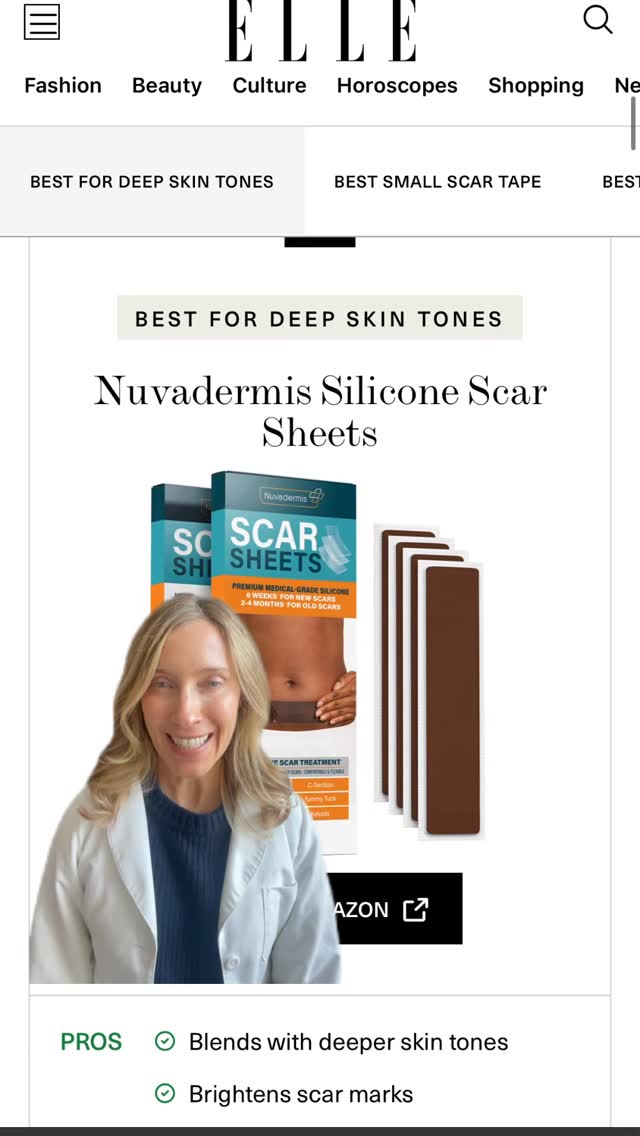
Elle named Nuvadermis silicone scar sheets its top pick for deeper skin tones, and that distinction matters more than it sounds.
“Dermatologist approved + Elle’s #1 pick for scar tape ✔️ Because treating scars = texture and tone.”
One social post becomes another searchable entry point to Dr. Hadley King Dermatology.
Our own magazine. Clicks and citations from Google Search Console, as of September 15, 2026.
Draft story for drhadleyking.com · Hair Science
A clinically driven approach to graying looks at the follicle itself rather than just covering the result.
Most conversations about aging skin start with prevention, not correction. We talk about protecting collagen before it breaks down, calming oxidative stress before it shows up as fine lines. Gray hair deserves the same framing. Instead of waiting for pigment loss to appear and then covering it, the more interesting question is what is happening at the follicle before the color ever fades, and whether that process can be supported earlier.
That is the premise behind Arey, a hair care line built around a clinically driven approach rather than a cosmetic one. Rather than treating gray as a fixed outcome to disguise, the formulation targets oxidative stress directly at the follicle and works to support melanocyte function, the cellular activity responsible for producing pigment in the first place. It is a shift from managing appearance to addressing mechanism.
The reason this stands out to us is the data behind it. In a randomized, placebo controlled study, participants using the product saw measurable results: an 88 percent rate of reduced gray hair growth, alongside a 13 percent reduction in grays overall. The placebo group moved in the opposite direction, showing a 10 percent increase in graying over the same period. That contrast is the part worth sitting with.
Numbers like that matter because they give us something concrete to evaluate, rather than a vague promise of healthier looking hair. A 13 percent reduction against a 10 percent increase in placebo is not a marginal difference. It suggests the intervention is doing something specific at the follicle level, not simply coating the hair shaft or altering how gray strands catch the light.
This is the same standard we apply to skin. Before recommending anything, we want to understand the mechanism, see the study design, and know how a placebo group performed by comparison. Hair has not always been held to that bar. Much of what is marketed for graying is cosmetic, addressing the visible strand rather than the biological process that produced it. Arey approaches the problem differently, and the data reflects that distinction.
Prevention only works if it starts before the outcome you are trying to avoid. That is true whether we are talking about sun damage, collagen loss, or melanocyte decline at the follicle. Supporting pigment producing cells while they are still active gives the hair a chance to hold onto color longer, rather than intervening only after grays have already grown in and become visible.
We do not recommend products because they are popular. We recommend them because the mechanism makes sense and the research supports it. Arey met that bar for us, which is why we are sharing it as an example of evidence based care extending naturally from skin into hair. The approach is consistent even when the tissue is different.
For anyone curious about trying it, we are offering 15 percent off with the code DRHADLEY. But the larger point stands on its own: graying is not just something to cover once it happens. It is a biological process with a measurable window for intervention, and that window opens earlier than most people assume.
Draft story for drhadleyking.com · Skin And Hair
Oxidative stress ages skin and hair the same way, which is why we treat both with the same proactive approach.
Prevention is the word we use most in this practice, and it rarely gets applied to hair. Most people treat greying as something to cover once it happens, the same way skincare used to be treated as damage control instead of a daily practice. That thinking has shifted for skin. We think it is time it shifted for hair too, starting with why grey happens in the first place rather than only how to hide it.
That is the idea behind recommending Arey to patients who ask about aging hair. The approach is proactive and science backed, which is language we use constantly about skincare and rarely hear applied to hair care. Instead of stopping at coverage, the formulation asks a more useful question: what is actually happening at the follicle level that causes grey to appear, and can that process be addressed directly.
The answer involves oxidative stress, a process familiar to anyone who has sat in our chair asking about fine lines or dullness. Oxidative stress is the same mechanism that contributes to visible skin aging, driven by free radical activity that wears down cells over time. It turns out hair follicles are not exempt from that damage, which is part of why grey and fragile strands and aging skin often show up on a similar timeline.
Arey addresses that process using biomimetic peptides and antioxidants, ingredients chosen because they work with the body's own biological signals rather than against them. Biomimetic simply means designed to mimic natural processes, which is a principle we already respect in skincare formulation. Applying it to hair is a logical extension, not a gimmick, and it explains why the product reads more like a treatment than a cosmetic fix.
What we find genuinely useful here is the shift in mindset. Once you start treating hair aging as a biological process with identifiable causes, the conversation changes. It stops being about masking grey and starts being about supporting the follicle environment long term, the same way a good skincare routine supports skin over years rather than responding to a single bad week.
We recommend proactive approaches because they tend to compound. Skincare patients who start early with antioxidants and barrier support generally have an easier time later than those who wait until damage is visible. There is no reason hair should work differently, and Arey's ingredient logic suggests the company built its formulas around that same long view rather than a quick cosmetic patch.
For patients curious about trying it, we are sharing code DRHADLEY for fifteen percent off. It is a low pressure way to test a different philosophy on something most people have only ever treated reactively. If prevention already guides how you think about your skin, extending that same logic to your hair is a small, reasonable next step rather than a leap.
None of this replaces the fundamentals we already talk about daily: sun protection, antioxidants, consistency over intensity. It simply extends those fundamentals to a part of the body we tend to overlook until the grey is already visible. Prevention works best early, and that is true whether we are talking about a fine line or a strand of hair losing its pigment quietly over time.
Draft story for drhadleyking.com · Scar Care
Elle named Nuvadermis silicone scar sheets its top pick for deeper skin tones, and that distinction matters more than it sounds.
Scar treatment gets discussed almost entirely in terms of texture: is the raised area flattening, is the surface smoothing out, is the tissue softer to the touch. Those are real markers of progress. But they are not the whole picture, and for a lot of patients, they are not even the primary concern. Tone matters just as much, sometimes more, and it is the part of scar care that gets talked about the least.
That is why we paid attention when Elle singled out Nuvadermis silicone scar sheets as their top pick for deeper skin tones. The packaging itself makes the point without needing much explanation: a strip of brown toned silicone sheeting shown against the product box, positioned so it is clear the material is meant to blend rather than stand out against a range of skin colors.
Silicone sheeting works on texture in a fairly well understood way. It hydrates the scar, applies gentle consistent pressure, and creates an environment that can help flatten and soften raised or thickened tissue over time. That mechanism does not change based on skin color. What does change is what happens after the texture improves, when the scar is smoother but still visibly a different shade than the skin around it.
Discoloration is where a lot of scar tape falls short, because most products on the market are designed and marketed with a single skin tone in mind. A sheet that reads as nearly invisible on fair skin can look chalky, gray, or obviously synthetic against deeper tones. That mismatch does not just look wrong. It can make a person hesitant to wear the product consistently, which undercuts the entire treatment.
Consistency is the part of scar care that determines outcomes more than any single ingredient or formulation. A silicone sheet only works if it stays on the skin for the recommended stretch of time, day after day, without irritation, discomfort, or the wearer feeling self conscious about how it looks under clothing. A product that blends in rather than announcing itself is simply easier to stick with.
The pros Elle highlighted reflect exactly that. The sheets are noted for blending with deeper skin tones and for helping brighten scar marks, which are two sides of the same practical issue: does the product disappear into daily life, and does it visibly move the discoloration in the right direction. Those are the questions that determine whether a scar treatment actually gets used long enough to matter.
This is also why we think it is worth paying attention to which products earn recognition for working across skin tones, rather than just working in general. Scar tissue forms the same way regardless of skin color, but the visible result, and the tools that address it well, are not universal. A product built with only one tone in mind is, in practice, only finishing half the job.
None of this changes the basic idea behind silicone scar sheets, which is still hydration, pressure, and time. What it does change is who that treatment actually serves well. A dermatologist approved pick that specifically addresses deeper skin tones is not a niche detail. It is a sign that scar care, at its best, is being built for the full range of skin it is meant to treat.
Keep reading