The winemaking side of a New York surgeon's Springsteen devotion
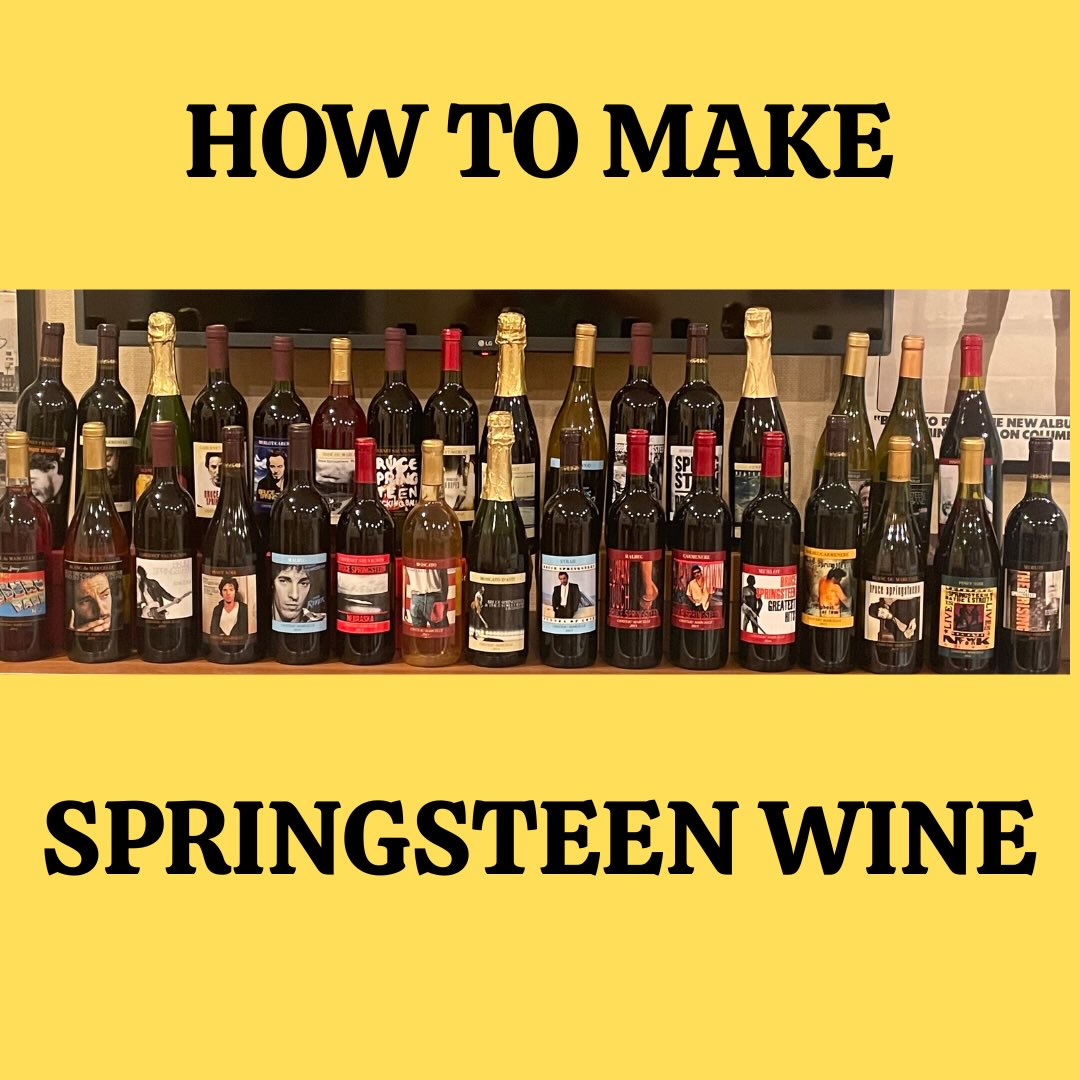
For fifteen years we have turned a personal vineyard into a running tribute to more than thirty Bruce Springsteen albums.
DR. ARNOLD BREITBART STAFFTurn your social into search
We turn your posts into editorial stories that bring new search traffic to drbreitbart.com. Three of yours will be on this page.
Book a demo
drbreitbartplasticsurgery Over the past 15 years, I’ve created a variety of wines to commemorate over 30 different Bruce Springsteen albums. I have given bottles to his photographer Danny Clinch @dannybones64, his late great biographer Dave Marsh, E Street Radio host jimrotolo, wife Patti Scialfa @officialrumbledoll, and even to Bruce @springsteen himself. I’ve given whole sets to the Springsteen Center @springsteencenter in Monmouth, NJ. In several (not so) simple steps, I plant, grow, harvest, crush, ferment, press, age, bottle, cork, and label. And voila! I’ve got Springsteen wines. 🍷Cheers! #springsteen #springsteencenter #wine #vineyard
For fifteen years we have turned a personal vineyard into a running tribute to more than thirty Bruce Springsteen albums.
DR. ARNOLD BREITBART STAFFHow it works
Same as today. Nothing changes on Instagram.
We turn your post into a full story in your voice within the hour.
One click publishes it to drbreitbart.com. Nothing goes live without you.
Your stories
Nothing was published anywhere. You decide that. Every word will come from your own posts, your own photos and your own treatments.
Wine & Music · From your post
For fifteen years we have turned a personal vineyard into a running tribute to more than thirty Bruce Springsteen albums.
“Over the past 15 years, I’ve created a variety of wines to commemorate over 30 different Bruce Springsteen albums. I have given bottles to his photographer Danny Clinch @dannybones64, his late great biographer Dave Marsh, E Street Radio host jimrotolo, wife Patti Scialfa @officialrumbledoll, and even to Bruce @springsteen himself. I’ve given whole sets to the Springsteen Center @springsteencenter in Monmouth, NJ. In several (not so) simple steps, I plant, grow, harvest, crush, ferment, press, age, bottle, cork, and label. And voila! I’ve got Springsteen wines. 🍷Cheers! #springsteen #springsteencenter #wine #vineyard”
Behind The Practice · From your post
A long training run through changing weather says something about the discipline behind the work we do every day.
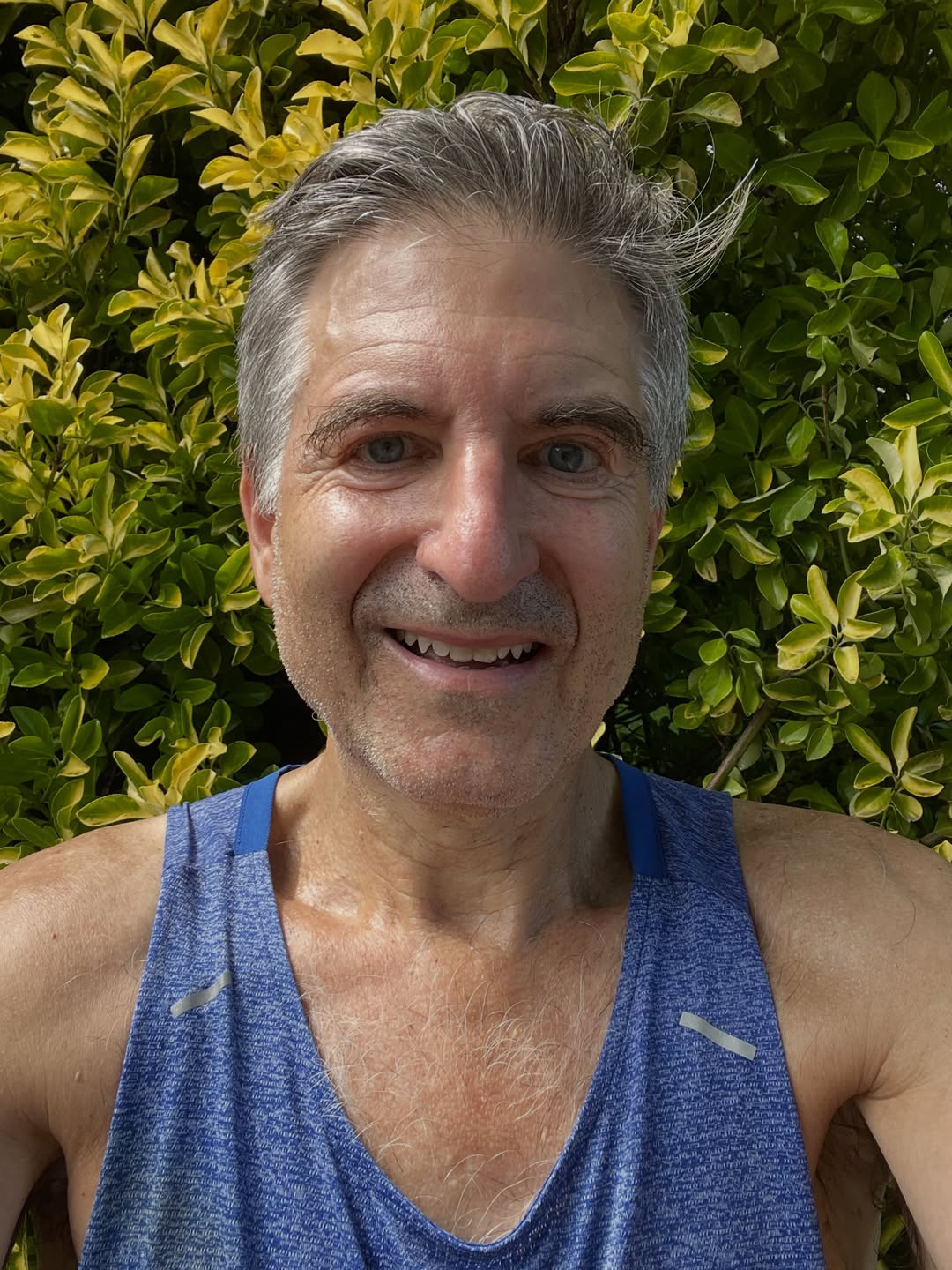
“20 mile run this morning in the soft summer rain, pouring rain, and clearing sky. All great. But oh how I do love the exhilaration of a run in the summer rain. #running #marathontraining #summerrain”
Patient Notes · From your post
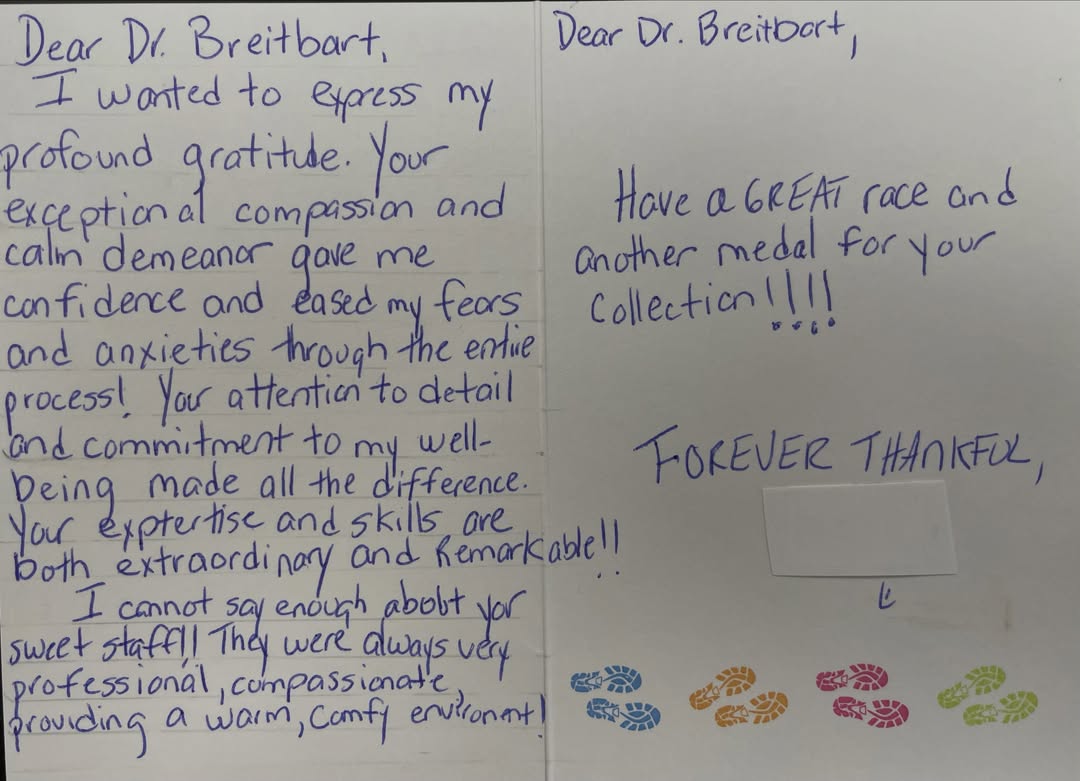
A patient's letter, complete with drawn sneakers and a note about an upcoming race, captures what we aim for with every person who walks through our doors.
“Thanks for the nice note! Always glad to put my patients at ease and deliver great results. #plasticsurgery #thankyou #running”
One social post becomes another searchable entry point to Dr. Arnold Breitbart.
Our own magazine. Clicks and citations from Google Search Console, as of September 15, 2026.
Draft story for drbreitbart.com · Wine & Music
For fifteen years we have turned a personal vineyard into a running tribute to more than thirty Bruce Springsteen albums.
Lined up on a shelf, more than two dozen bottles catch the light differently depending on the label. Some carry black and white portraits, some lean on bold red type, a few use the stark silhouettes that have defined certain Springsteen album art for decades. Each bottle in that row represents a finished cycle of work, not a display piece, and each one was made to mark a specific record rather than wine in general.
The count now sits above thirty albums translated into individual bottlings, a project that has run for fifteen years without pause. That kind of span only works if the process itself is treated as routine rather than occasional. It means the vineyard work and the album choice happen on a schedule set by the fruit and the season, not by whichever record happens to be on rotation that month.
The steps are ordinary by winemaking standards, which is part of the point. We plant, grow, harvest, crush, ferment, press, age, bottle, cork, and label, in that order, every time. Nothing about the process is shortened to fit the tribute. The Springsteen connection lives entirely in what happens after the wine is finished, when a label goes on and a bottle becomes something with a name attached to it.
That separation matters because it keeps the wine honest. A vineyard does not know or care what album it is destined for, so the fruit gets the same attention regardless of which label will eventually wrap the bottle. The tribute is built at the very end of a long process, which is why thirty plus albums have accumulated slowly, one harvest and one finished batch at a time.
Bottles have gone to people who sit close to the actual history being referenced. Photographer Danny Clinch has received them, as has E Street Radio host Jim Rotolo, and Patti Scialfa, Bruce's wife, has as well. Dave Marsh, the biographer, was given bottles before his death. Passing a handmade bottle to someone who documented or lived inside that catalog turns the wine into a small, specific gesture rather than a generic keepsake.
Bruce Springsteen himself has received bottles directly, which closes a loop that started as a private hobby years earlier. A full set was also given to the Springsteen Archives and Center for American Music in Monmouth, New Jersey, placing the entire run somewhere it can be seen as one body of work instead of scattered single bottles across different collections and different shelves.
What keeps this going after fifteen years is the pairing of two slow crafts. Winemaking rewards patience by nature, and following an artist's catalog album by album rewards the same kind of patience. Neither one can be rushed without losing something, and matching them together turns two long term commitments into a single project that grows a little more each year a new batch is finished.
There is no finish line built into any of it, since new albums and new harvests both keep arriving on their own timelines. The row of bottles will keep growing the same way it always has, one label and one vintage at a time, cheers included, until the next record and the next harvest line up again and call for another bottle to be made.
Draft story for drbreitbart.com · Behind The Practice
A long training run through changing weather says something about the discipline behind the work we do every day.
Twenty miles is a long time to be outside, and this particular run went through soft rain, pouring rain, and a clearing sky before it was over. That range in a single morning is part of what marathon training actually looks like. It is not one condition held steady for hours. It is whatever the weather decides to do, met with the same pace and the same plan regardless.
There is a specific kind of exhilaration that shows up in a summer rain run, and it is worth taking seriously rather than treating as a throwaway detail. The temperature drops just enough to make the effort feel lighter. The sound changes. The whole run stops being about grinding out distance and starts being something closer to enjoyable, even at mile fifteen or sixteen.
Twenty miles does not happen by accident on a random Tuesday. It sits near the top of a marathon training block, the kind of distance that tests fueling, pacing, and mental focus long before race day arrives. Running through pouring rain adds another variable on top of that, one that cannot be controlled, only managed mile by mile until the sky finally clears.
That combination, distance plus unpredictable weather, is a fair stand in for what steady, disciplined work looks like in any field. The conditions are not always ideal. The plan does not pause because it started raining harder than expected. What matters is showing up for the full twenty miles anyway, adjusting in real time, and still finishing with something left to enjoy at the end.
That same steadiness carries directly into how we approach the work done every day in the practice. Long term training and long term patient care both reward consistency over shortcuts. A twenty mile run is not glamorous in the middle of it. Neither is the quieter, repetitive discipline behind careful surgical planning and follow through, but both depend on showing up fully each time.
Running in changing weather also means learning to read conditions and respond to them without losing focus on the larger goal, whether that goal is a finish line months away or a patient's long term outcome. The rain does not derail the run. It becomes part of it, absorbed into the effort rather than treated as an excuse to stop or slow the plan down.
What stands out most about this particular run is the willingness to call the whole range of it good: the soft rain, the pouring rain, and the clearing sky that followed. None of those conditions were the reason to skip the run or shorten it. Each one simply became part of twenty miles that had to be covered regardless of what the morning decided to do.
There is something worth holding onto in that attitude, on the road or off it. Training does not wait for perfect weather, and neither does the steady work that builds a practice over time. The rain clears eventually. The miles still count either way, and so does the willingness to keep moving through whatever conditions show up before the sky opens back up.
Draft story for drbreitbart.com · Patient Notes
A patient's letter, complete with drawn sneakers and a note about an upcoming race, captures what we aim for with every person who walks through our doors.
A card arrived recently, filled front and back in blue ink, the handwriting careful in some places and rushed in others, the way real gratitude tends to look when someone is trying to fit everything they want to say onto two lined pages. It was addressed simply: Dear Dr. Breitbart. What followed was not a review written for strangers. It was a letter written for us.
The patient described feeling afraid going into the process, which is common and rarely spoken about directly. What she wrote about instead was the calm that met her fear, the attention to detail that eased it, and a staff she called professional and warm in the same breath. Those are not small things to name. They are the parts of care that do not show up in before and after photos.
At the bottom of the second page, she drew four pairs of running shoes in blue, orange, pink, and green, a small, cheerful detail that had nothing to do with surgery and everything to do with who she is outside of it. Above them she wrote forever thankful in bold capital letters, underlined for emphasis, the kind of line you write when a shorter word will not do.
She wished us a great race and another medal for the collection, a detail that tells you this was not a one time interaction but an ongoing relationship, the kind where a patient knows enough about your life outside the office to bring it up in a thank you card. That familiarity does not happen by accident. It comes from repeated visits, real conversation, and a practice that remembers people beyond their charts.
We put a lot of emphasis on the moments before any procedure happens: the questions answered fully, the fears named out loud instead of brushed aside, the pace of the conversation set by the patient rather than the clock. Her letter credits exactly that, calling out the calm demeanor and the ease it gave her through what she called the entire process, not just the outcome at the end of it.
She was specific about the staff too, not as an afterthought but as its own paragraph, praising a professionalism paired with compassion and a comfortable environment she noticed enough to mention by name in writing. That combination, technical skill on one side and a genuinely warm room on the other, is not something either half can accomplish alone. It takes a full team working the same way, every visit.
The sneakers at the bottom are easy to skip past, but they are the most personal part of the card. She did not have to draw them. She chose to, because she wanted us to know something true about her life, not just her gratitude. It is a small reminder that patients bring their whole selves into this work, races and medals included, and that the best outcomes let them go run.
Notes like this one do not get written for an audience. They get written at a kitchen table, in careful handwriting that turns messier the more the writer has to say, because there is a lot to say. We keep them not to prove anything, but because they tell us plainly whether the care we intend to give is the care that actually reaches someone. This one told us clearly that it did.
Keep reading