We contributed to the third edition of Dermatology for Skin of Color, a reference text on diagnosing and treating diverse skin.
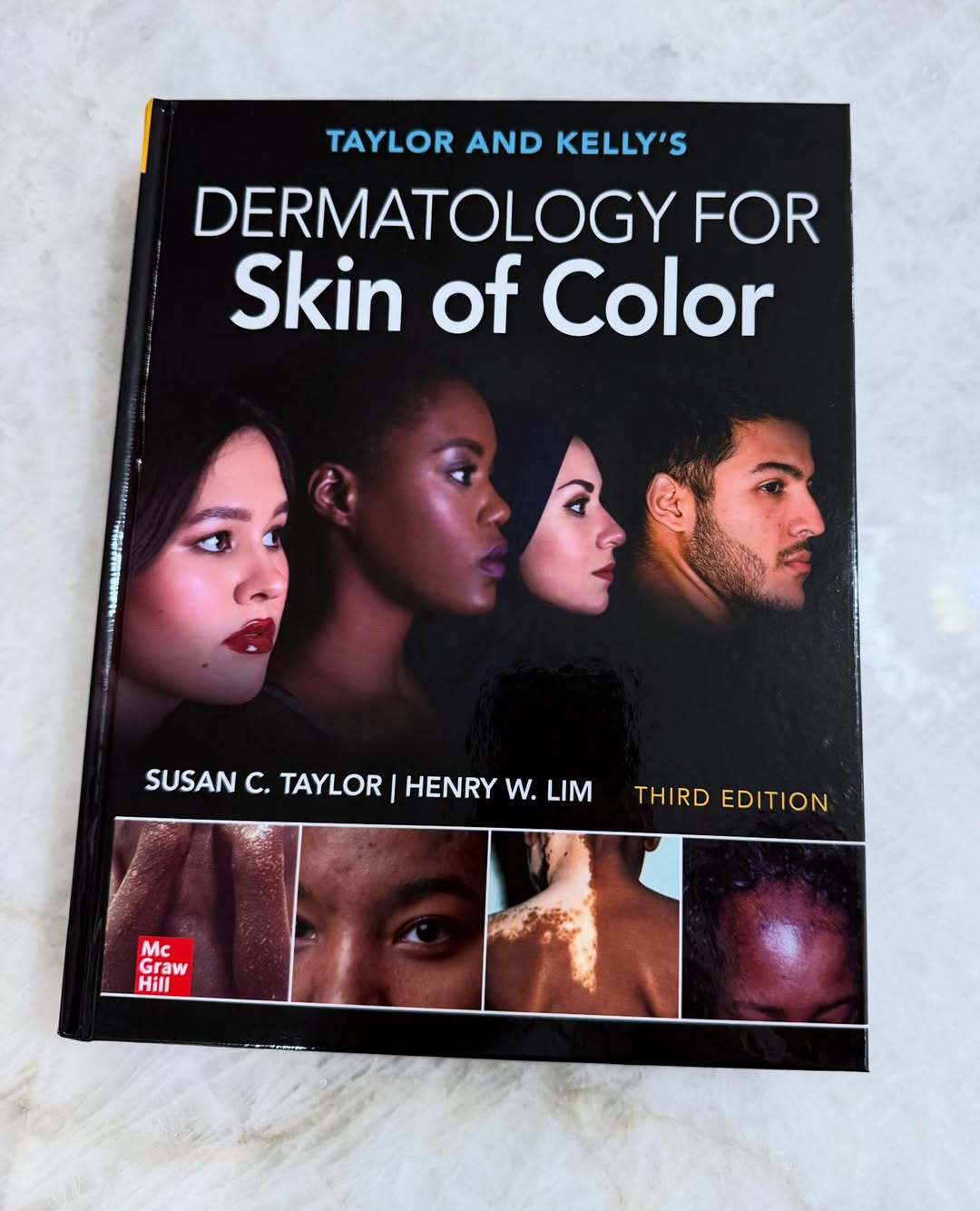
A hardcover copy landed on the counter this week, black cover, four profiles in soft light, and gold lettering marking it as the third edition. Dermatology for Skin of Color, by Susan C. Taylor and Henry W. Lim, is now in print, and we were glad to contribute a chapter alongside a group of physician co authors who worked on this edition together.
Textbooks like this one exist because skin of color has historically been underrepresented in dermatology education. Photographs, case studies, and diagnostic criteria built around lighter skin do not always translate cleanly to darker skin, where conditions can present with different colors, textures, and patterns. A reference built specifically around this gap gives clinicians something they can actually use in the exam room.
Why this reference matters
The cover itself makes the point before you open it. Four faces in profile, different skin tones, different features, arranged side by side. Below them, a strip of clinical images: a patch of hyperpigmentation, a close view of eyes with visible periorbital changes, vitiligo across a shoulder, and scarring along a hairline. These are the kinds of presentations that do not always get adequate space in general dermatology texts.
Contributing a chapter meant sitting with those gaps directly, translating years of clinical observation into something a resident or a practicing physician could reference quickly and trust. We worked alongside houshmandmd, drlanakashlan, drlinanaga, and kathyana.santiago, each bringing a different clinical angle to the same underlying goal: better recognition and better treatment for patients whose skin has often been an afterthought in the literature.
Building the chapter
That kind of collaboration takes time before it ever reaches a printed page. Cases get compared, images get selected carefully, and language gets refined so it holds up across different training backgrounds and different parts of the country. A textbook chapter is not a quick write up. It is closer to compressing a career's worth of pattern recognition into language precise enough to guide someone else's diagnosis.
The third edition also reflects how much the specialty itself has shifted. Earlier dermatology training often treated skin of color as a subcategory rather than a core part of the curriculum. Each new edition of a text like this one pushes that framing further toward the center, giving future physicians a fuller picture from the start rather than treating it as supplemental reading added on later.
What it means going forward
For our practice in Scarsdale, having a chapter in this edition is less about the credit and more about what it signals day to day. The same attention to nuance that went into writing it is the attention we bring to patients walking through our doors, where accurate diagnosis often depends on recognizing how a condition looks specifically on their skin, not a generalized version of it.
Seeing the book finally in print, cover glossy, spine intact, our names inside it, closes a long process that started well before publication. It will sit on shelves in training programs and clinics, referenced by physicians treating patients who look like the four faces on that cover. That is the quieter purpose behind projects like this: better information reaching the people who need it most.