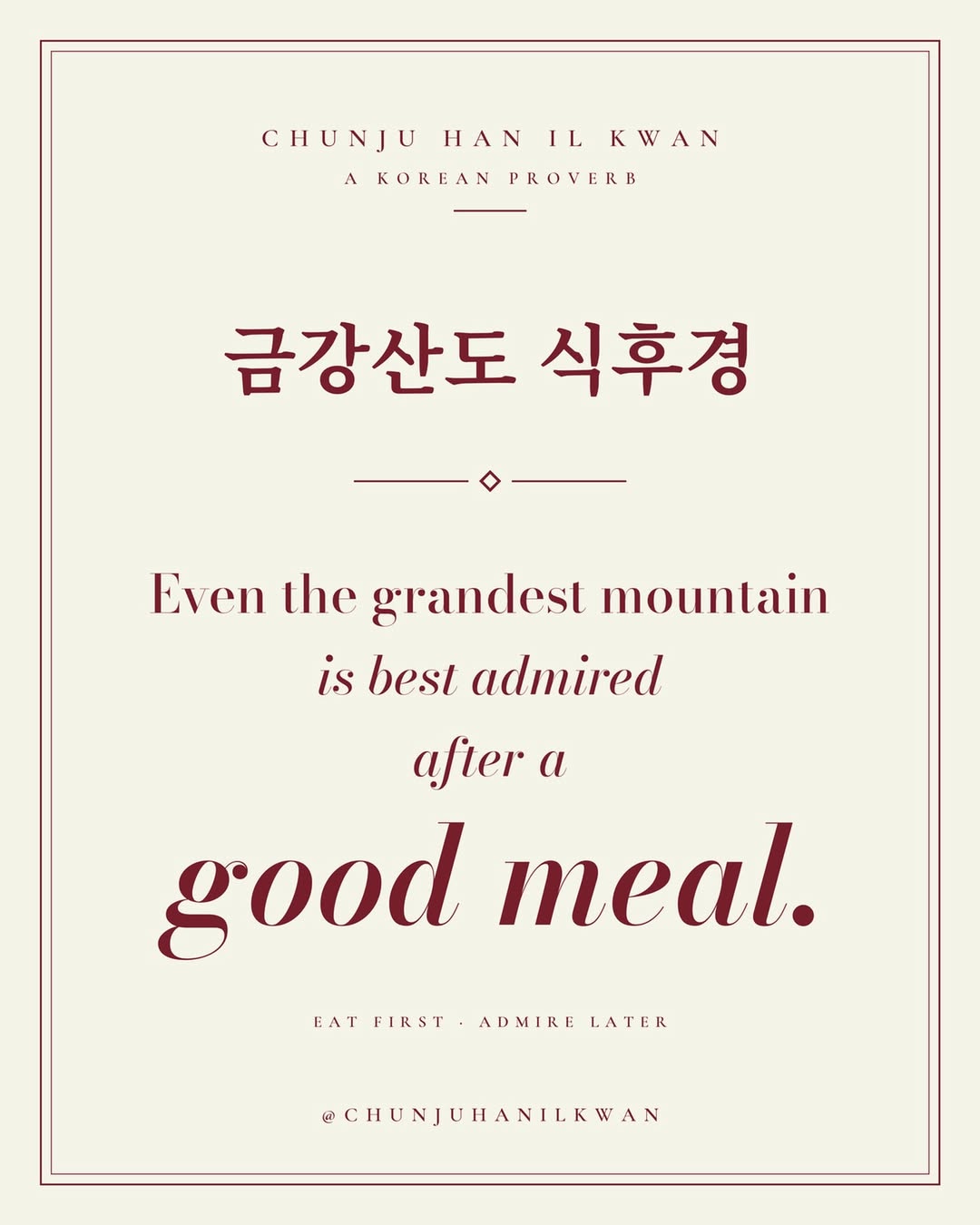
Even the grandest mountain waits until after a good meal
At Chunju Han Il Kwan, a Korean proverb about eating first still shapes what happens at the table.
CHUNJU HAN IL KWAN STAFFTurn your social into search
We turn your posts into editorial stories that bring new search traffic to chikkoreanrestaurant.com. Three of yours will be on this page.
Book a demo
chunjuhanilkwan There’s an old Korean saying. even the most breathtaking mountain can wait until you’ve eaten. We couldn’t agree more. Bubbling pots, crispy nurungji, and that deep Koreatown comfort first, then everything else. 🍲 One of Koreatown LA’s oldest restaurants still standing and operating! 📍3450 W 6th St, Ste 106, Los Angeles, CA 90020 #koreanbbq #ktown #koreatown #ktownfoodie #koreatownfood
At Chunju Han Il Kwan, a Korean proverb about eating first still shapes what happens at the table.
CHUNJU HAN IL KWAN STAFFHow it works
Same as today. Nothing changes on Instagram.
We turn your post into a full story in your voice within the hour.
One click publishes it to chikkoreanrestaurant.com. Nothing goes live without you.
Your stories
Nothing was published anywhere. You decide that. Every word will come from your own posts, your own photos and your own menu.
Old Proverb · From your post
At Chunju Han Il Kwan, a Korean proverb about eating first still shapes what happens at the table.
“There’s an old Korean saying. even the most breathtaking mountain can wait until you’ve eaten. We couldn’t agree more. Bubbling pots, crispy nurungji, and that deep Koreatown comfort first, then everything else. 🍲 One of Koreatown LA’s oldest restaurants still standing and operating! 📍3450 W 6th St, Ste 106, Los Angeles, CA 90020 #koreanbbq #ktown #koreatown #ktownfoodie #koreatownfood”
In The Bowl · From your post
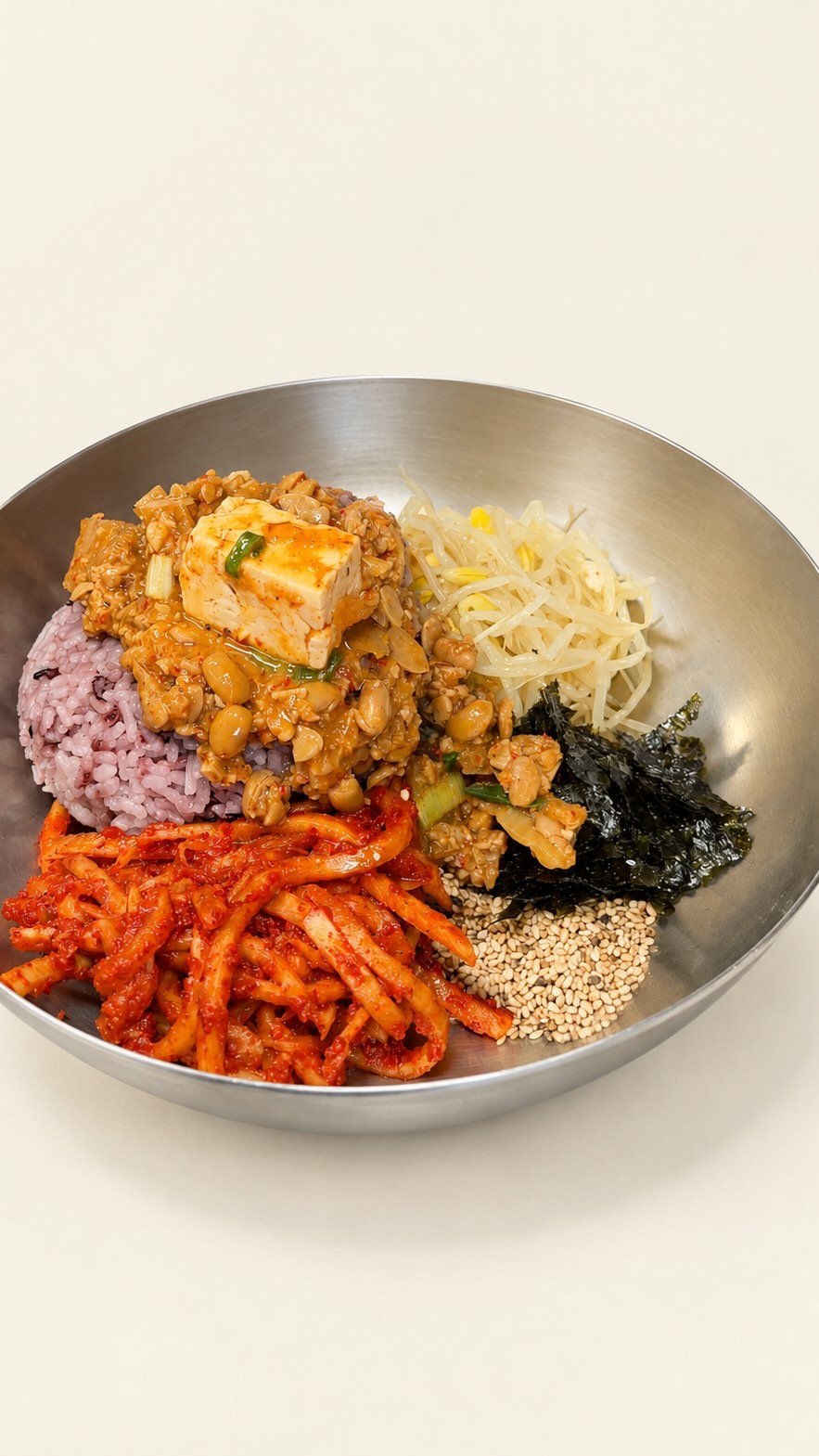
A steel bowl of rice and seasoned vegetables becomes something richer with a spoonful of chungkukjang on top.
“Simple rice and seasoned vegetables, meant to be mixed slowly. Try it with chungkukjang on top for a deeper, richer finish. ✨ One of Koreatown LA’s oldest restaurants still standing and operating! 📍3450 W 6th St, Ste 106, Los Angeles, CA 90020 #koreanbbq #ktown #koreatown #ktownfoodie #koreatownfood”
Ktown Staples · From your post
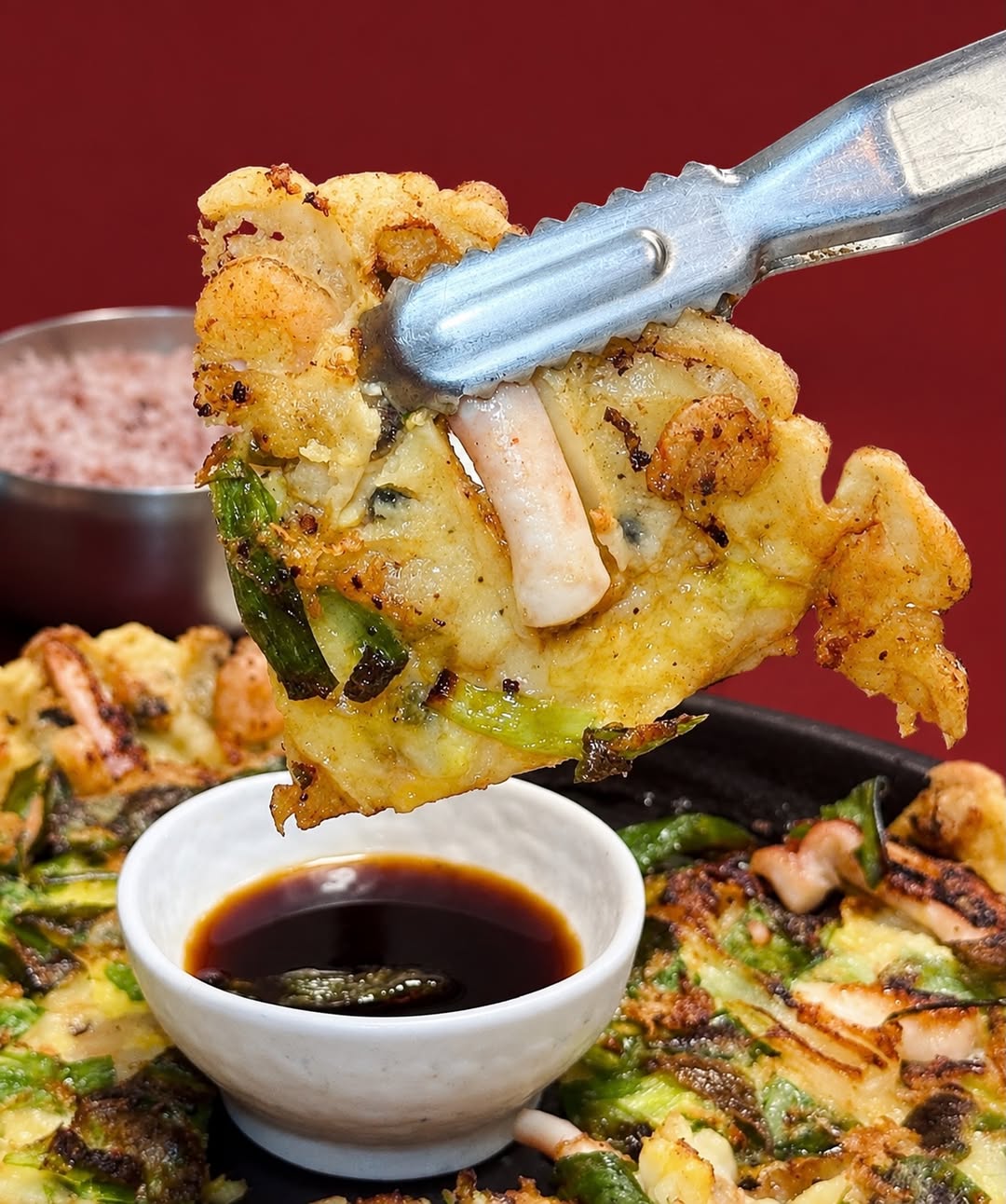
At Chunju Han Il Kwan, haemul pajeon makes the case that a good pancake does not need to wait for morning.
“Who said pancakes are just for breakfast? Our Haemul Pajeon is here to prove them wrong 😉 One of Koreatown LA’s oldest restaurants still standing and operating! 📍3450 W 6th St, Ste 106, Los Angeles, CA 90020 #koreanbbq #ktown #koreatown #ktownfoodie #koreatownfood”
One social post becomes another searchable entry point to Chunju Han Il Kwan.
Our own magazine. Clicks and citations from Google Search Console, as of September 15, 2026.
Draft story for chikkoreanrestaurant.com · Old Proverb
At Chunju Han Il Kwan, a Korean proverb about eating first still shapes what happens at the table.
There is an old Korean saying we come back to often: geumgangsando sikhugyeong, even the most breathtaking mountain can wait until you have eaten. It sounds simple, almost like a joke you tell before dinner. But it carries a real order of operations. Beauty, ambition, sightseeing, all of it stands in line behind a full stomach and a warm bowl.
We built our approach around that order. Before anything else, there are bubbling pots on the table, the kind that keep cooking after they arrive. There is crispy nurungji, the scorched rice that turns tender broth into something with texture and bite. These are not garnishes to a meal. They are the meal, and they come first because that is the whole point of the saying.
Eating first is not about rushing. It is about priority. The mountain, the view, the errand, the plan for later in the day, none of it disappears if dinner comes first. It just waits its turn. That is the comfort we try to hold onto in Koreatown, where the pace of the neighborhood can pull in a dozen directions before anyone sits down to eat.
We are one of the oldest restaurants still standing and operating in Koreatown LA, which means this table has been part of that same rhythm for a long time. People have come in hungry, worked their way through a bubbling pot, and gone back out to whatever the day still had for them. The saying was already true before we ever put it on a wall.
Koreatown comfort is a specific kind of feeling, built on repetition as much as flavor. It is the steam rising off a pot before the first spoon goes in. It is nurungji cracking slightly under a spoon after everything else has softened. These are small, physical details, but they are the ones that make a meal feel like it belongs to a place instead of just a menu.
None of that requires a special occasion. A regular Tuesday can carry the same order: sit down, eat, let the rest of the world hold still for a moment. The mountain analogy works because it does not ask anyone to abandon their plans. It just asks them to feed themselves before chasing the view, the errand, or whatever comes next.
We keep it printed simply: eat first, admire later. It is less a slogan than a sequence, a reminder that appetite deserves the first move. At 3450 W 6th St, Ste 106, that sequence plays out the same way it likely has for years, pot after pot, nurungji after nurungji, one Koreatown meal ahead of everything the rest of the day still holds.
The proverb does not need updating because the logic never really changes. Mountains, in whatever form they take that day, are patient. They will still be there once the pot is empty and the rice at the bottom has gone crisp. Eating first is not a delay tactic. It is simply the order that makes the rest of the day make more sense.
Draft story for chikkoreanrestaurant.com · In The Bowl
A steel bowl of rice and seasoned vegetables becomes something richer with a spoonful of chungkukjang on top.
The bowl in front of you looks orderly at first. Purple tinted rice sits on one side, kimchi glistens on the other, and bean sprouts, sesame seeds, and a sheet of seaweed fill in the remaining space. In the middle, a scoop of chungkukjang and tofu waits to be broken apart. Nothing here is meant to stay separate for long.
That is the instruction we keep coming back to: simple rice and seasoned vegetables, meant to be mixed slowly. Not stirred in one motion, not rushed into a uniform paste. Slowly is the operative word, because the rice needs time to pick up color from the kimchi, and the vegetables need room to fold in without losing their individual textures along the way.
Chungkukjang is the deeper move here. Spooned over the top, it changes the temperature of the whole bowl, both literally and in flavor. It is fermented, it is pungent, and it does not try to blend in quietly. Adding it is less about garnish and more about giving the bowl a second register, a lower note underneath the brightness of the kimchi and the crunch of the sprouts.
The tofu cut into the chungkukjang gives the mixture something to hold onto. Once it is broken apart with the spoon, it softens into the rice rather than sitting on top of it. Combined with the sesame seeds scattered on the far side of the bowl, every bite ends up a little different depending on which direction the spoon travels through the mix.
Steel bowls like this one are meant to retain heat, which matters when the point is to sit with the dish rather than eat it in a hurry. The rice stays warm long enough for the kimchi to loosen slightly and the seaweed to soften at the edges. It is a format that rewards a little patience, which is really the whole idea behind mixing slowly in the first place.
We think of this bowl as a reset in the middle of a bigger meal, something plain enough to let the chungkukjang do its work without competition. The colors alone tell you what is coming: purple rice, red kimchi, pale sprouts, dark seaweed, all waiting for one spoon to bring them together instead of four separate bites eaten in isolation.
We are one of Koreatown LA's oldest restaurants still standing and operating, and dishes like this one are part of why. It is not an elaborate plate. It does not need to be. The instruction to mix slowly and add chungkukjang for a deeper finish is really an instruction about how to eat, not just what to eat.
You can find us at 3450 W 6th St, Suite 106, in the heart of Koreatown. Come with a little time on your hands, take the spoon to every corner of the bowl, and let the chungkukjang settle into the rice before the first bite. The bowl is simple by design. What you do with the spoon is where the rest of the flavor comes from.
Draft story for chikkoreanrestaurant.com · Ktown Staples
At Chunju Han Il Kwan, haemul pajeon makes the case that a good pancake does not need to wait for morning.
A torn corner of haemul pajeon hangs from a pair of tongs, still steaming, the batter lacy and golden where it hit hot oil and softer yellow underneath where the egg and scallion held everything together. A piece of squid sits pale and firm near the tear, proof this is a seafood pancake in the literal sense, not just a green onion pancake with a seafood name attached to it.
We built this dish around a simple argument: pancakes do not have to be a morning food. Haemul pajeon has always lived in a different category, closer to something you order to share than something you eat alone before work. Ours leans into that identity fully, wide and thin and crisp at the edges, cut into pieces that are easy to grab off a communal plate.
The batter is loaded with scallions laid in long green strips, giving the pancake its structure as much as its flavor. Mixed through it are pieces of seafood, squid and what looks like shrimp among them, scattered rather than centered, so almost every bite carries a piece of something from the sea alongside the vegetal bite of the onion.
The pan work matters here. You can see it in the surface: some spots deeply browned and blistered, others still soft and pale gold, the kind of unevenness that comes from a wide, thin batter hitting a hot pan and being left alone long enough to crisp without being flipped too early. That contrast between crunch and softness is the whole point of the dish.
No pajeon is complete without the sauce, and ours arrives in a small white bowl, dark and glossy, with a single green sliver of scallion or chili floating on top. It is soy based and sharp, built to cut through the richness of the fried batter and the seafood, not to mask either one. A quick dip before each bite keeps the pancake from feeling heavy.
There is also a small metal dish of coarse pink salt nearby on the table, the kind of detail that tells you this is a place set up for a full spread rather than a single dish eaten in isolation. Haemul pajeon rarely shows up alone here. It sits alongside other plates, meant to be picked at slowly while the rest of the table fills in around it.
We are one of the older restaurants still running in Koreatown, and dishes like this haemul pajeon are part of why regulars keep coming back for something familiar. It is not a seasonal special or a limited addition to the menu. It is a standing order, the kind of plate that shows up on tables whether it is lunch, dinner, or well past either one.
That is really the argument the pancake makes on its own. Crisp at the edges, loaded with scallion and seafood, served with a sauce sharp enough to cut through the fry, it does not need a specific hour to make sense. Pull a piece off with chopsticks or tongs, dip it, and it works the same at three in the afternoon as it would at midnight.
Keep reading