Inside the small kitchen ritual that sets the table at Casa Córdoba
Before a single plate goes out, there is a rhythm to how the food gets built and shared.
CASA CÓRDOBA STAFFTurn your social into search
We turn your posts into editorial stories that bring new search traffic to casacordoba.com. Three of yours will be on this page.
Book a demo
casacordoba A taste of Spain, right here in Montrose. 🇪🇸✨From paella made for sharing to tapas, Spanish wines, and cocktails on the patio, every table at Casa Córdoba is an invitation to slow down, gather around, and enjoy. Come hungry. We’ll take care of the rest. ❤️ Reserve your table at the link in our bio.
Before a single plate goes out, there is a rhythm to how the food gets built and shared.
CASA CÓRDOBA STAFFHow it works
Same as today. Nothing changes on Instagram.
We turn your post into a full story in your voice within the hour.
One click publishes it to casacordoba.com. Nothing goes live without you.
Your stories
Nothing was published anywhere. You decide that. Every word will come from your own posts, your own photos and your own menu.
Behind The Pass · From your post
Before a single plate goes out, there is a rhythm to how the food gets built and shared.
“A taste of Spain, right here in Montrose. 🇪🇸✨From paella made for sharing to tapas, Spanish wines, and cocktails on the patio, every table at Casa Córdoba is an invitation to slow down, gather around, and enjoy. Come hungry. We’ll take care of the rest. ❤️ Reserve your table at the link in our bio.”
Spanish Table · From your post
At Casa Córdoba, one pan and a pitcher of sangria turn an ordinary dinner into something worth gathering for.
“There’s something about paella hitting the table that turns dinner into an occasion. 🥘✨ Made for sharing, best enjoyed with good company, and even better with a glass of sangría on the side. Come experience a taste of Spain at Casa Córdoba. 🔗 Reserve your table at the link in our bio.”
Courtyard Nights · From your post
Thursday through Saturday, the courtyard fills with string lights, Spanish food, and live music from six to nine.
“Dinner sounds better with a little live music. 🎶 Join us in the courtyard every Thursday, Friday & Saturday from 6. 9 PM for Spanish food, drinks, and live music under the lights. Reserve your table at Casa Córdoba.”
One social post becomes another searchable entry point to Casa Córdoba.
Our own magazine. Clicks and citations from Google Search Console, as of September 15, 2026.
Draft story for casacordoba.com · Behind The Pass
Before a single plate goes out, there is a rhythm to how the food gets built and shared.
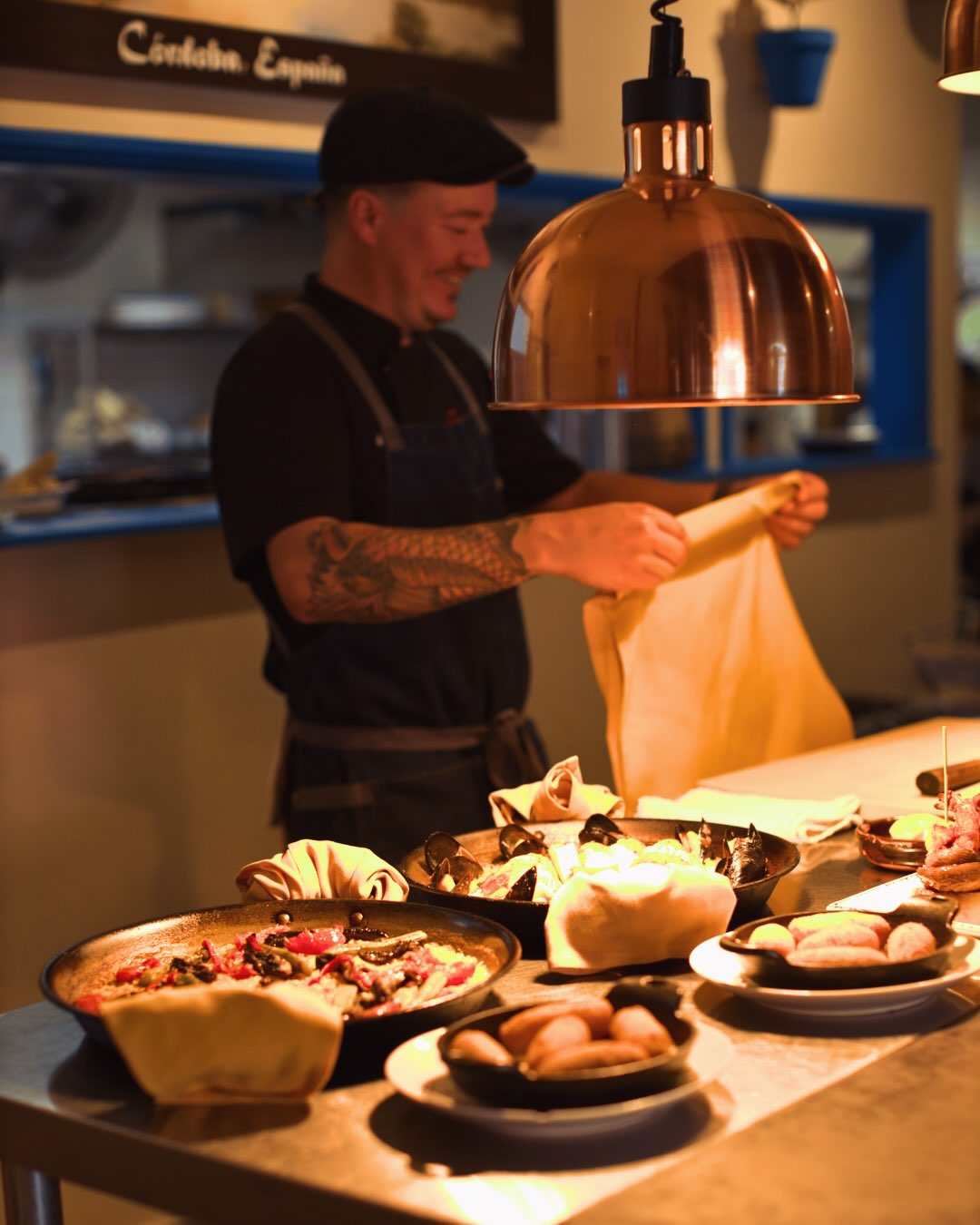
There is a moment before service really starts when the counter fills up fast. A pan of paella sits closest to the edge, still catching light, tomatoes and greens visible across the top. Beside it, a smaller pan holds mussels tucked into sauce, and a third plate carries little rounds of something golden, all lined up like the kitchen is setting a stage rather than just plating dinner.
A copper pendant light hangs low over the pass, throwing warm light across the metal counter and catching the shine on every pan. It is not decoration for its own sake. It is the kind of light that makes a kitchen feel like a gathering spot rather than a workstation, which fits the idea printed above it on the wall, a nod to Cordoba, Spain, the place this food and this name come from.
In the background, a cook in a flat cap and denim apron is mid motion, folding a cloth napkin with both hands, laughing at something out of frame. His sleeve tattoo catches the light too. It is a small human detail, but it says something about the pace here. Nobody is rushing the plating. There is time to fold linen properly, time to enjoy the work before it goes out the door.
Our food is built around the idea that a table works better when nobody has to choose just one thing. That is why paella gets made for sharing instead of served as a single portion, and why tapas fill in the rest of the table, small plates of bread, mussels, and bites meant to be passed hand to hand rather than kept to one plate.
That format changes how a meal moves. Instead of everyone finishing their own dish at their own pace, the table stays busy longer. Someone reaches for more bread while someone else spoons rice, and the conversation keeps going because the food keeps giving people a reason to lean back in. It is less about efficiency and more about stretching the evening out on purpose.
Spanish wines and cocktails are part of that same idea, not an afterthought to the food. On the patio, a drink in hand becomes another reason to stay at the table a little longer, whether that means a glass of wine between courses or a cocktail before the paella even arrives. The patio setting gives Montrose a version of that outdoor, unhurried pace that a lot of Spanish dining leans on.
The instruction we give guests is short on purpose: come hungry, and we will take care of the rest. It is not a complicated ask. It just means showing up ready to share, ready to let a table fill with pans and plates instead of individual orders, and ready to stay through a few rounds of food and drink rather than one quick course.
What ends up on the counter, the paella pan, the mussels, the small plates of bread, is really a preview of what the table will look like once everyone sits down. Casa Córdoba is built around that moment repeating itself night after night in Montrose, one shared pan and one lingering patio conversation at a time.
Draft story for casacordoba.com · Spanish Table
At Casa Córdoba, one pan and a pitcher of sangria turn an ordinary dinner into something worth gathering for.
There is a specific moment that changes a dinner into an occasion, and it happens when the pan lands on the table. Not a plated portion, not a single serving arriving quietly in front of one person, but a wide pan of paella set down in the middle for everyone to reach toward. At Casa Córdoba, that moment is the whole point.
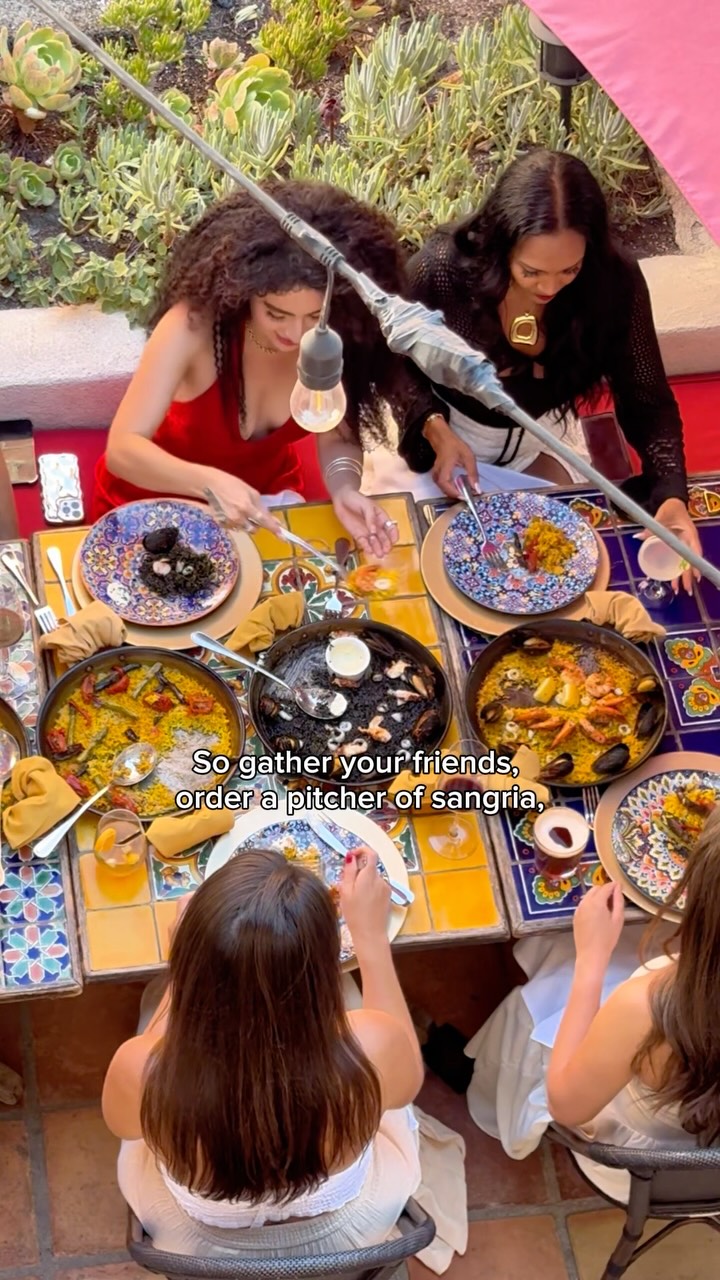
Paella is not built for one. It is built for a table with too many elbows in the way and too many hands reaching for the same corner of rice. That is exactly why it works the way it does here, arriving in the center of tiled tables already crowded with small plates, glasses, and whatever conversation was happening before the food showed up.
Around our tables, that crowding is part of the design. Patterned tiles in blue and yellow hold small plates of olives and something dark and briny, while the pans themselves take up the real estate in the middle. Nobody is precious about their space. Forks cross over each other reaching for shrimp, for rice, for the last bit of char at the bottom of the pan.
Sangria does specific work at a table like this. It is not a drink meant to be sipped slowly in isolation, it is a pitcher meant to be passed, poured, and refilled while people are mid conversation and only half paying attention to their glass. That casualness matches the food. Neither one asks for full attention, which frees up the table for actual talking.
A pan of paella asks something of the people sitting around it that a plated entree does not. It asks them to slow down, to wait their turn, to notice what everyone else is taking before deciding what they want next. That small negotiation, who reaches first, who offers the last piece of shrimp to someone else, is part of what makes the meal feel different from a solo plate.
We think of it as dinner that requires a little bit of choreography. Someone has to hand off the serving spoon. Someone has to decide whether the seafood pan or the one with chorizo gets passed first. None of that is complicated, but all of it forces people to interact with the food and with each other in a way a single entree never quite manages.
That is really what we mean when we say paella turns dinner into an occasion. It is not about the dish being rare or elaborate, it is about the shape of the experience around it: friends leaning across a tiled table, sangria being poured into someone else's glass before their own, forks meeting in the middle of a pan that was never meant to sit in front of just one person.
So the invitation is simple. Gather a few people who are willing to share a pan and pass a pitcher, and let dinner take the shape it wants to take. Reserve a table, bring an appetite that does not mind negotiating over the last bite, and let the paella do what it does best, which is make an ordinary evening feel like it was planned.
Draft story for casacordoba.com · Courtyard Nights
Thursday through Saturday, the courtyard fills with string lights, Spanish food, and live music from six to nine.
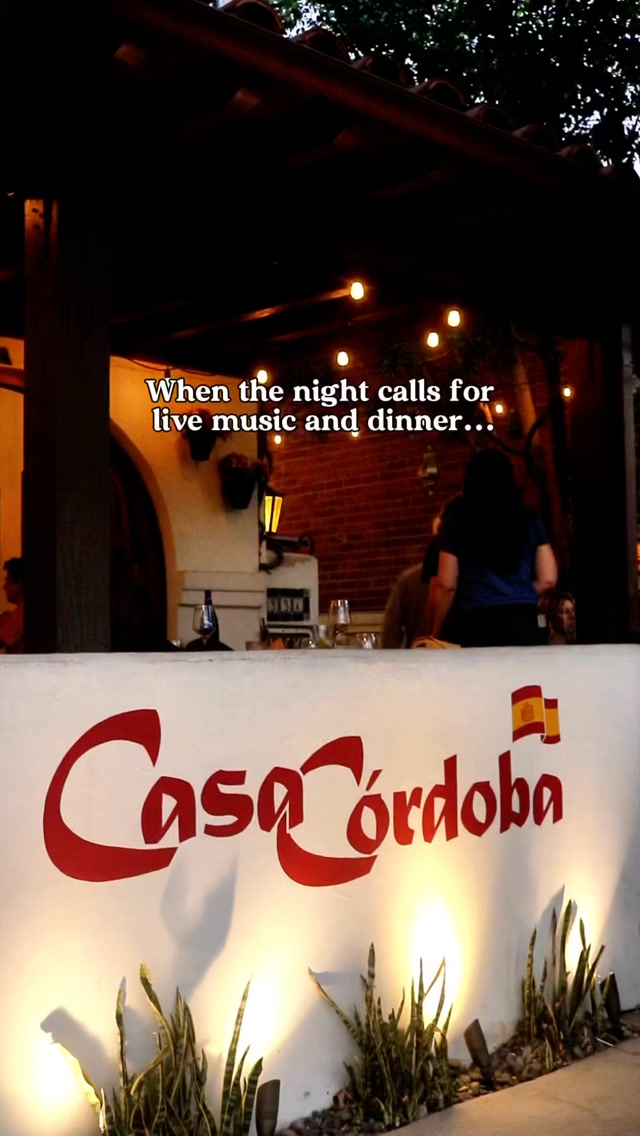
There is a specific kind of evening we built our courtyard for, the kind where the meal is good but the room around it matters just as much. String lights hang low over the tables, brick walls hold the last bit of warmth from the day, and somewhere near the bar a guitar or a voice starts to fill the space between conversations.
That is the idea behind our Thursday, Friday, and Saturday nights, dinner paired with live music from six to nine. Nothing about it is complicated. It is Spanish food, a drink in hand, and a set that plays underneath the evening rather than over it, so the courtyard feels lived in instead of staged.
The setting does a lot of the work before the music even starts. Our courtyard sits under a wood beamed overhang strung with warm bulb lights, with a brick backdrop and greenery lit from below along the low white wall out front. It is an outdoor room built for lingering, not rushing through a meal on the way somewhere else.
Once the sun drops, that lighting becomes the whole atmosphere. The bulbs overhead take over as the natural light fades, casting a soft glow across the tables and the people gathered around them. It is the kind of light that makes a Thursday feel a little more occasion than errand, without anyone having to dress the part.
Live music from six to nine gives the evening a shape without demanding attention. It plays behind the clinking of glasses and the low hum of conversation, close enough to notice and enjoy, easy enough to talk over when the table wants to talk. That balance is deliberate. Dinner stays the center of the evening, and the music simply makes it feel less ordinary.
It also gives the night a natural rhythm. Show up right at six and the courtyard is still settling in, drinks arriving, the set just getting started. Come closer to eight and it has filled out, plates arriving alongside choruses, the lights fully doing their job against the dark. Either way, the three hour window means there is no wrong time to walk in.
Three nights a week is enough to make it a habit rather than a special occasion, which is really the point. Thursday can be a quiet start to the weekend, Friday can be the main event, and Saturday can be the night that stretches longest under the lights. The food and the music stay constant, and the choice of which night is entirely up to whoever is planning the evening.
None of it requires much planning beyond picking a night and reserving a table. The courtyard, the lights, and the music are already set up and waiting between six and nine, Thursday through Saturday. What happens after that, how long the table lingers or how many songs get played, is simply up to the evening itself.
Keep reading