What it takes to treat scarring this severe after mesotherapy went wrong
A client flew from New York to Toronto for a treatment plan built around one of the most difficult scar cases we have taken on.
BASMA HAMEED CLINIC STAFFTurn your social into search
We turn your posts into editorial stories that bring new search traffic to basmahameed.com. Three of yours will be on this page.
Book a demo
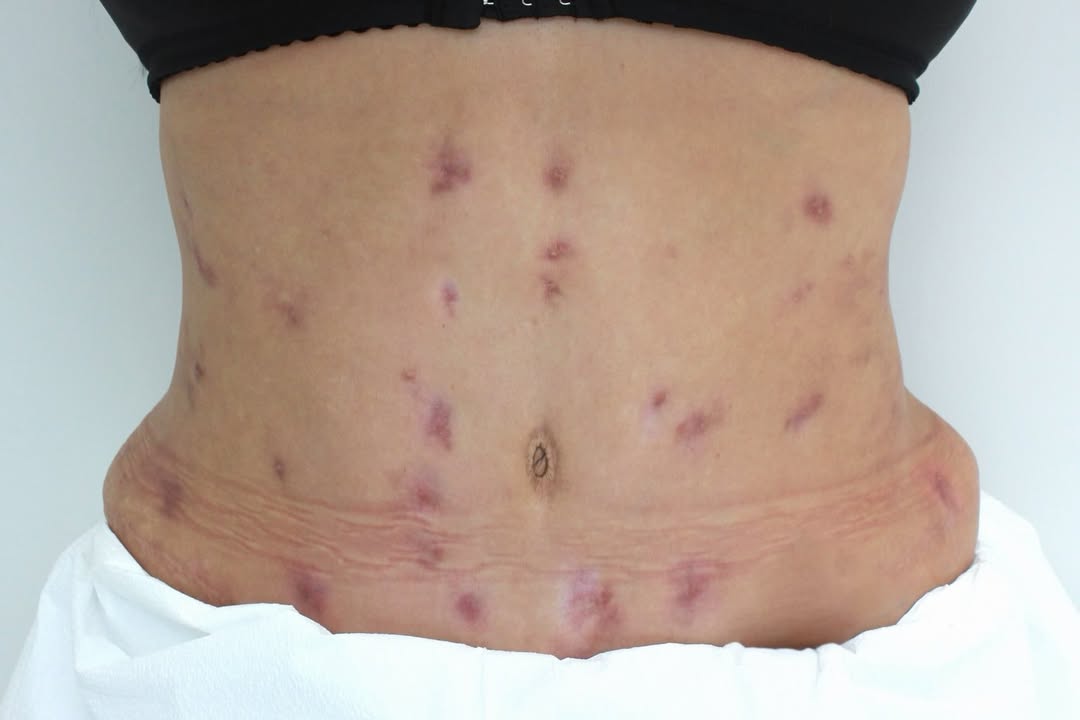
basmahameedclinic One of the most difficult scar cases we’ve ever treated. These scars developed after a bacterial infection following mesotherapy injections. After being told there was nothing more that could be done, our client began flying from New York to Toronto for treatment with us. She trusted us. She committed to the treatment plan. And we committed to her. Seeing her progress has been incredibly rewarding but the best part is seeing her confidence return. Comment “SCAR” below for a complimentary virtual scar assessment. #healing #beforeandafter #scar #newyork #toronto
A client flew from New York to Toronto for a treatment plan built around one of the most difficult scar cases we have taken on.
BASMA HAMEED CLINIC STAFFHow it works
Same as today. Nothing changes on Instagram.
We turn your post into a full story in your voice within the hour.
One click publishes it to basmahameed.com. Nothing goes live without you.
Your stories
Nothing was published anywhere. You decide that. Every word will come from your own posts, your own photos and your own treatments.
Scar Recovery · From your post
A client flew from New York to Toronto for a treatment plan built around one of the most difficult scar cases we have taken on.
“One of the most difficult scar cases we’ve ever treated. These scars developed after a bacterial infection following mesotherapy injections. After being told there was nothing more that could be done, our client began flying from New York to Toronto for treatment with us. She trusted us. She committed to the treatment plan. And we committed to her. Seeing her progress has been incredibly rewarding but the best part is seeing her confidence return. Comment “SCAR” below for a complimentary virtual scar assessment. #healing #beforeandafter #scar #newyork #toronto”
Scar Recovery · From your post
A closer look at why individualized planning matters more than any single treatment for post surgical scarring.
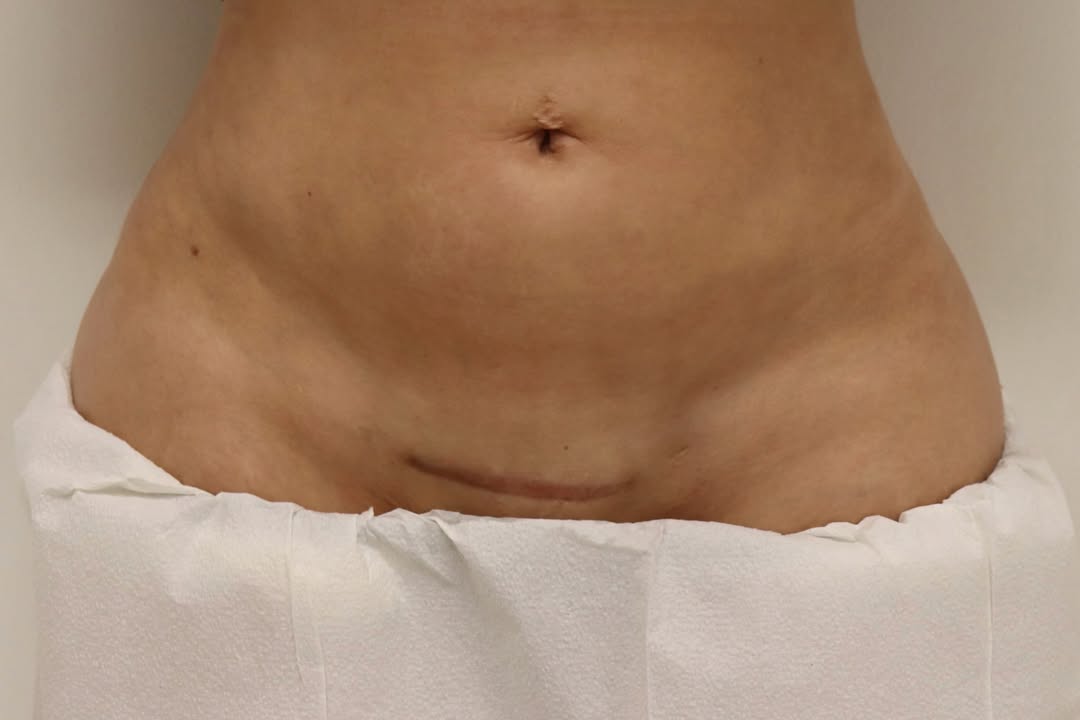
“Swipe ➡️ to see this C section scar transformation. Every scar is different, which is why every treatment plan we create is completely individualized. Want to know what’s possible for your scar? Comment “SCAR” below for a complimentary scar assessment. 🤍 #csection #new #healing #beforeandafter #results”
Scar Camouflage · From your post
A real before and after shows how camouflage work changes the color and texture of scars left after body contouring surgery.
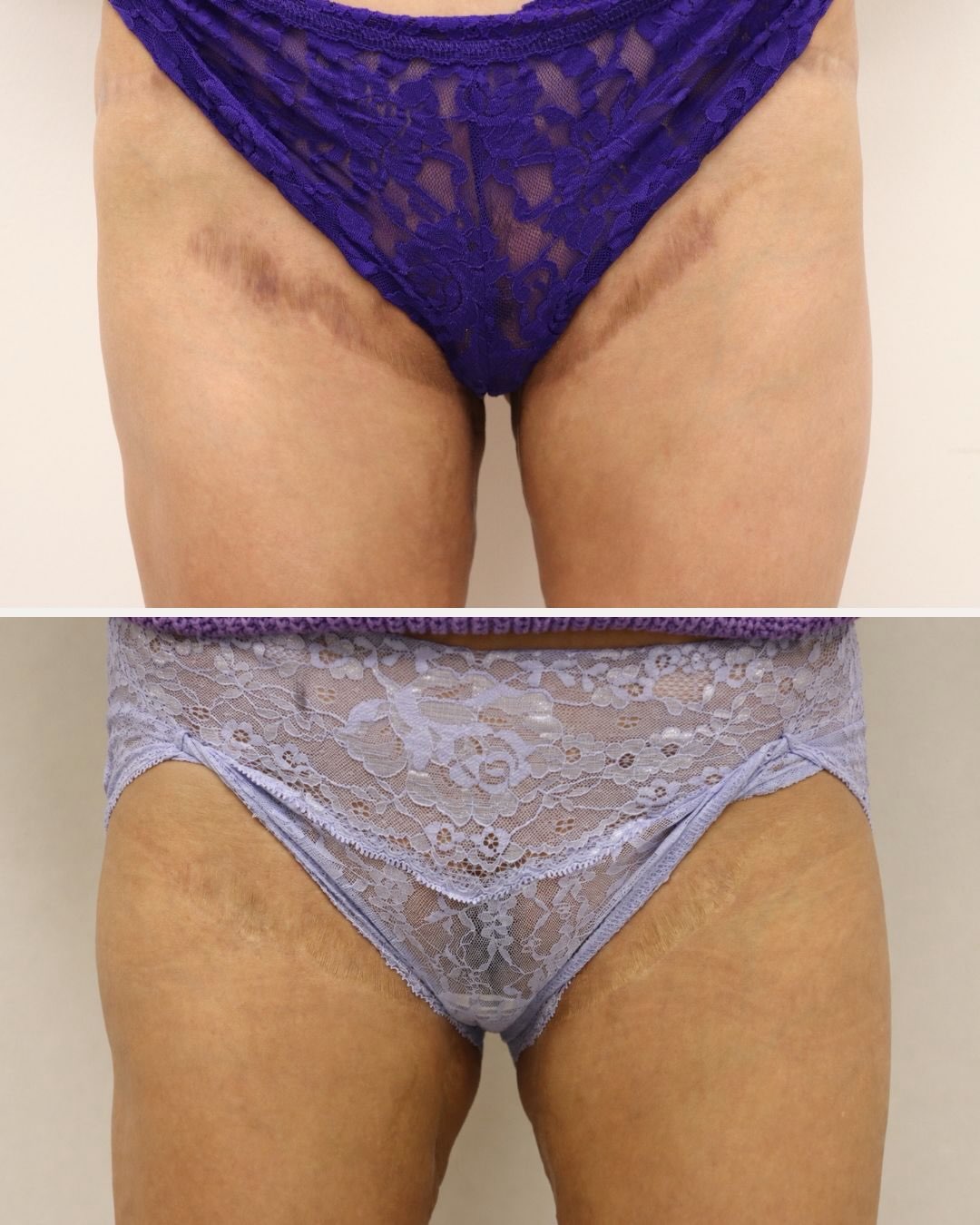
“Thigh lift scars before & after! Swipe ➡️ 📍 2 locations ⠀⠀⠀⠀ 🌴 Beverly Hills Clinic (USA)⠀ 📞 424 335 0223⠀⠀⠀⠀⠀⠀⠀⠀... ⠀⠀⠀⠀ 🍁 Toronto Clinic (Canada)⠀⠀ 📞 416 837 0823⠀⠀⠀⠀⠀⠀⠀ #scars #toronto #losangesles #beforeandafter #healing”
One social post becomes another searchable entry point to Basma Hameed Clinic.
Our own magazine. Clicks and citations from Google Search Console, as of September 15, 2026.
Draft story for basmahameed.com · Scar Recovery
A client flew from New York to Toronto for a treatment plan built around one of the most difficult scar cases we have taken on.
Some scar cases arrive with a straightforward history. This one did not. The marks across this client's abdomen developed after a bacterial infection following mesotherapy injections, a complication that left dozens of dark, raised, unevenly healed points scattered across the skin. She had already been told there was nothing more that could be done before she came to us.
That phrase, nothing more that could be done, is one we hear often enough to take seriously. It usually means a case has been assessed once, given a limited set of options, and closed. It does not always mean the skin has actually reached its limit. It means the right combination of treatment, timeline, and monitoring has not been tried yet.
In this case, that meant asking her to commit to something logistically demanding: flying from New York to Toronto for treatment. That is not a small ask for anyone managing a scar this widespread. It requires trust before there is proof, and it requires a plan built specifically around her skin rather than a general protocol applied to any case labeled severe.
The scarring here is not uniform, which is part of what makes it demanding to treat. Some points are deep and violet, others are flatter and pink, and they sit at different depths and stages of healing across the same stretch of skin. A plan has to account for that variation directly, treating each cluster according to what it actually needs rather than one setting for the whole area.
That is the difference between a scar case that responds and one that stalls. Bacterial infection after an injection procedure does not heal like a typical scar. The tissue underneath can be inflamed in ways that are not visible on the surface, so the plan has to be built with room to adjust as the skin responds, session by session, rather than fixed from day one.
Her commitment mattered because progress like this does not happen in a single visit. It requires returning, reassessing, and letting the treatment plan evolve as the skin changes. Flying in for each appointment is its own kind of discipline, and it is part of why the results have moved as far as they have across a case that was initially considered finished.
Watching the coloring soften and the raised areas begin to settle has been meaningful to see from our side of the treatment room. But the part that stands out most is not visible in any single photo. It is the shift in how she carries herself now, the return of confidence that comes from watching your own skin respond after being told it would not.
Cases like this are part of why we offer a complimentary virtual scar assessment, because so many people are told their scarring has reached its ceiling based on one evaluation. If you are dealing with scarring from an infection, a procedure, or an injury and want an honest look at what is realistically possible, comment SCAR below and we will walk you through it.
Draft story for basmahameed.com · Scar Recovery
A closer look at why individualized planning matters more than any single treatment for post surgical scarring.
A C section leaves behind more than a healed incision. It leaves a line of tissue that behaves differently than the skin around it, often sitting lower on the abdomen, sometimes pulling slightly or catching light in a way that feels impossible to ignore. The scar shown here sits just above the waistline, faint in color but still visibly raised along parts of its length.
That combination, color, texture, and position, is exactly why we do not approach any two scars the same way. A scar that reads as flat but discolored needs a different strategy than one that is raised or slightly indented. Even the direction a scar curves can change how it responds to treatment, which is something a generic protocol simply cannot account for.
Every scar assessment we do starts with looking closely at what the tissue is actually doing. Is it thickened. Is it discolored. Is it tethered to the layer beneath it. A C section scar can present with any combination of these traits depending on healing time, skin type, and how the incision was closed, so the first real work is diagnostic, not procedural.
Once we understand what the scar is doing, we build a plan around it instead of forcing the scar to fit a standard package. That might mean a single modality or a sequence of treatments spaced out over time. The goal is not to erase evidence that surgery happened. It is to soften the scar's texture and tone so it feels less prominent day to day.
Here, the scar has lightened significantly and the surrounding skin looks smoother, with less visible ridging along the incision line. It is still there, which is expected and honest. A scar transformation is not about disappearance. It is about reducing the contrast between the scar and the skin around it until it stops being the first thing a person notices.
That kind of change takes patience on both sides. Scar tissue continues remodeling for a long time after surgery, which means timing treatment appropriately matters as much as the treatment itself. Starting too early or expecting results too quickly can work against the tissue's own healing process, so part of our job is setting realistic expectations from the very first consultation.
This is also why we do not quote a plan sight unseen. A scar assessment lets us examine the tissue directly, ask about healing history, and talk through what someone actually wants from treatment, whether that is textural smoothing, color correction, or simply less tension in the area. Every one of those goals points toward a different combination of tools.
If a C section scar has been sitting unaddressed, whether it is new or years old, an assessment is the practical first step. Comment SCAR and we will walk through what is realistic for that specific scar, on that specific timeline, based on what the tissue is actually showing rather than what a general chart might suggest.
Draft story for basmahameed.com · Scar Camouflage
A real before and after shows how camouflage work changes the color and texture of scars left after body contouring surgery.
Thigh lift surgery solves one problem and creates another. It tightens loose skin after weight loss or aging, but it leaves behind long incision lines that run along the inner and outer thigh. Those lines do not fade evenly on their own. They can stay dark, raised, or discolored against the surrounding skin for a long time, sometimes permanently without help.
In the before image, the scars sit close to the crease of the thigh, visible even through lace fabric. They read as darker bands, purplish and defined against lighter surrounding skin. This is a common outcome after thigh lift procedures, especially in areas with more friction and movement, where healing tissue tends to darken instead of blending in with the rest of the leg.
The after image was taken in the same pose, same lighting, same angle. That consistency matters because it is the only way a comparison like this means anything. The scars are still there. They have not vanished. What has changed is their color and how sharply they stand out against the skin around them, which is the actual goal of camouflage work.
Our approach to scars like these is not about erasing them. Surgical scars from a thigh lift are permanent tissue changes, and no topical or pigment based treatment removes that. What camouflage work can do is correct the tone so the scar sits closer to the client's natural skin color, reducing the contrast that makes it catch the eye first.
Thigh scars behave differently than scars on flatter, less mobile areas. Constant movement, skin folds, and fabric contact all affect how pigment holds and how the tissue responds to treatment over time. That is part of why this area is worth documenting carefully, since results here can look different than camouflage work done on a shoulder, stomach, or forearm.
Clients considering a thigh lift often focus on the tightening result and underestimate how visible the scarring will be afterward, particularly in intimate or swimwear areas. Seeing a real progression, not a single glamour shot, gives a more honest sense of what healing and correction actually involve, including the fact that results build gradually rather than appearing after one visit.
We treat clients at our Beverly Hills clinic and at our Toronto location, and cases like this one come through both. Thigh lift scars are common enough that we see a range of skin tones, scar ages, and healing patterns, which is part of why documenting real before and after results matters more than describing the process in general terms.
What stands out most in this pair of photographs is restraint. The after image does not pretend the surgery never happened. It shows skin that has been worked on, with visible texture still present, but with color that no longer pulls the eye directly to the scar line first. That distinction, between hidden and blended, is the actual outcome camouflage work is built to produce.
Keep reading