Honjozo is the sake you drink for no reason at all
A pour of Banryu Ten Thousand Ways makes the case for the most underrated category in sake.
BAR UERUKAMU STAFFTurn your social into search
We turn your posts into editorial stories that bring new search traffic to baruerukamu.com. Three of yours will be on this page.
Book a demo
baruerukamu Sake’s best kept secret. Honjozo 🤎 Honjozo is the kind of friend you can hang out with anytime. No pressure to go wild and crazy. Just good company, with no judgement, no matter the situation🥰 This Banryu “10,000 Ways” from @eiko_fuji is a beautiful honjozo that’s clean, crisp, and (dangerously) easy to drink🍶🤭 Honjozo is a category of sake, just like Junmai or Ginjo. There are a lot of misconceptions and misunderstandings about sake, and the ones around honjozo are worth correcting. Honjozo is probably one of the most “friendly” styles of sake. Light and crisp, not too overpowering, and an incredible companion to all kinds of food. It’s an everyday sake you’ll never get tired of. And yes, it’s also the kind of sake that we, and plenty of people in the sake industry, secretly enjoy after a long day at work😆 Come hang out. Come relax. No special occasion needed. (but that doesn’t mean your date won’t be impressed🍸) #eikofuji #honjozo #sake #baruerukamu
A pour of Banryu Ten Thousand Ways makes the case for the most underrated category in sake.
BAR UERUKAMU STAFFHow it works
Same as today. Nothing changes on Instagram.
We turn your post into a full story in your voice within the hour.
One click publishes it to baruerukamu.com. Nothing goes live without you.
Your stories
Nothing was published anywhere. You decide that. Every word will come from your own posts, your own photos and your own menu.
Sake Notes · From your post
A pour of Banryu Ten Thousand Ways makes the case for the most underrated category in sake.
“Sake’s best kept secret. Honjozo 🤎 Honjozo is the kind of friend you can hang out with anytime. No pressure to go wild and crazy. Just good company, with no judgement, no matter the situation🥰 This Banryu “10,000 Ways” from @eiko_fuji is a beautiful honjozo that’s clean, crisp, and (dangerously) easy to drink🍶🤭 Honjozo is a category of sake, just like Junmai or Ginjo. There are a lot of misconceptions and misunderstandings about sake, and the ones around honjozo are worth correcting. Honjozo is probably one of the most “friendly” styles of sake. Light and crisp, not too overpowering, and an incredible companion to all kinds of food. It’s an everyday sake you’ll never get tired of. And yes, it’s also the kind of sake that we, and plenty of people in the sake industry, secretly enjoy after a long day at work😆 Come hang out. Come relax. No special occasion needed. (but that doesn’t mean your date won’t be impressed🍸) #eikofuji #honjozo #sake #baruerukamu”
sake pairing · From your post
Kozaemon Sakana Marine Mate was built for seafood, and its label makes the point before the first sip.
“Any wild guess what this sake pairs well with?🤭🐟 If you like seafood, try it with this sake Kozaemon Sakana “Marine Mate” from @kozaemon46 and you literally cannot go wrong. This sake was made specifically with a goal to create sake that goes really, really well with seafood. And it’s not just sushi and sashimi. It goes well with pan fried shrimp, stewed snapper, fried oysters, ankimo (monkfish liver), etc etc. So, if you’re not sure what to choose from our sake list, give it a try✌️🦀 Also the bottle design is irresistibly cute 😍 Happy weekend! See you soon✨ #newsake #kozaemon #sake #baruerukamu”
On The Menu · From your post
The miso marinated black cod arrives glossy and lacquered, plated simply with carrot and greens, as part of a rotating tapas lineup.
“Too bad you can’t taste the photo👄 “Black cod Saikyo yaki”. An explosion of rich flavors🤤💜 We’re back with more seasonal tapas menu! Also we’re expecting a few bottles leaving us next week so come grab your favorite sake while we have it ☺️ Wed Sat, open at 6pm. Reservation link in bio. #saikyoyaki #銀ダラ #japanesetapas #baruerukamu”
One social post becomes another searchable entry point to Bar Uerukamu.
Our own magazine. Clicks and citations from Google Search Console, as of September 15, 2026.
Draft story for baruerukamu.com · Sake Notes
A pour of Banryu Ten Thousand Ways makes the case for the most underrated category in sake.
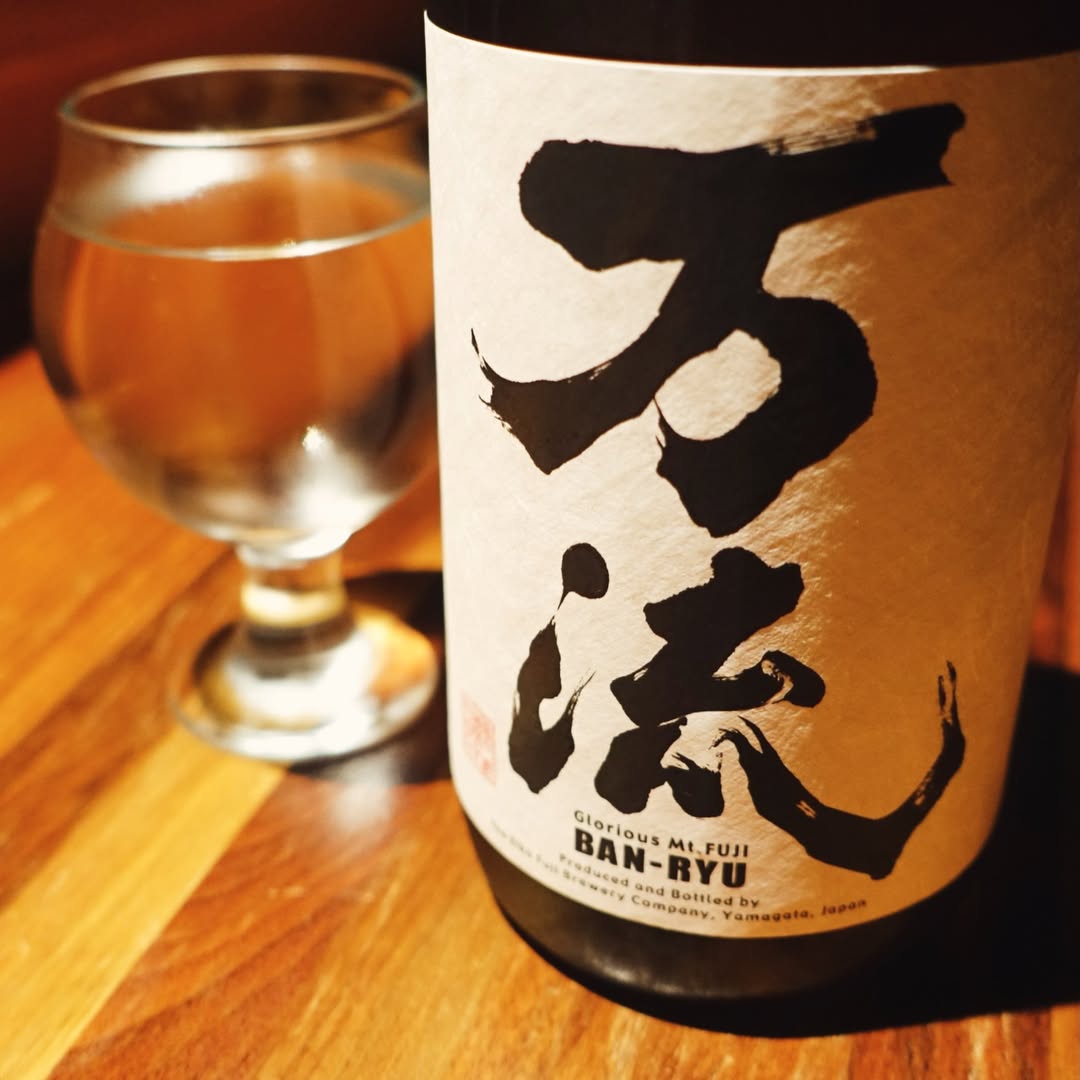
There is a bottle behind our bar right now with black brushstrokes across a pale label, the kind of handwriting that looks urgent even if you cannot read it. It is Banryu, which translates roughly to Ten Thousand Ways, made by Eiko Fuji. Pour it into a glass and it comes out pale gold, clear enough to see the wood grain of the table through it.
The category is honjozo, and if that word means nothing to you, you are not alone. Sake gets sorted the way wine does, by grade, and most people have heard of junmai or ginjo without ever landing on honjozo. It is not rare or hard to find. It is just quieter, less hyped, and easier to overlook on a menu next to flashier names.
That quietness is sort of the point. Honjozo does not ask you to slow down and analyze it the way a delicate daiginjo might. It is light, crisp, and built to sit next to food without competing for attention. You can drink it on a Tuesday. You can drink it while you are still deciding what to order. Nothing about it requires an occasion.
Technically, honjozo is defined by a small addition of brewer's alcohol during production, which is one of the details that gets misunderstood most. People hear added alcohol and assume it is a shortcut or a lesser version of sake. In practice it does the opposite here. It sharpens the aromatics and gives the sake a cleaner, lighter finish, which is exactly why it drinks the way it does.
Banryu shows that clearly. It is clean, crisp, and dangerously easy to drink, the kind of bottle where the glass empties faster than you planned. There is no sharp edge, no lingering heaviness, nothing that demands a pause between sips. It behaves like a good companion at the table, present but never overpowering, happy to sit alongside whatever you are eating.
We will admit it. Honjozo is the sake a lot of us in this industry reach for after a long shift, not because it is impressive but because it is easy. It does not ask anything of you. There is no pressure to appreciate it correctly or talk about it at length. You just drink it, and it does its job well, night after night.
That is the case worth making for a bottle like Banryu. It is not trying to be a once in a lifetime pour. It is built for repetition, for the kind of drinking you do on an ordinary evening when nothing in particular is being celebrated. An everyday sake, in the best sense, is one you genuinely do not get tired of.
So come sit down without a reason. Order the honjozo, let the glass sweat a little on the wood, and see how far Ten Thousand Ways takes you before the bottle runs out. It will not announce itself, and it does not need to. Sometimes the best company at the table is the one that never asks for the spotlight in the first place.
Draft story for baruerukamu.com · sake pairing
Kozaemon Sakana Marine Mate was built for seafood, and its label makes the point before the first sip.
The question on the label is the whole point. Kozaemon Sakana, nicknamed Marine Mate, comes from Kozaemon and it was made with one goal in mind: pair well with seafood. Not a general good with food sake, but one aimed specifically at the ocean side of the menu, which is exactly why it earns a spot on our list right now.
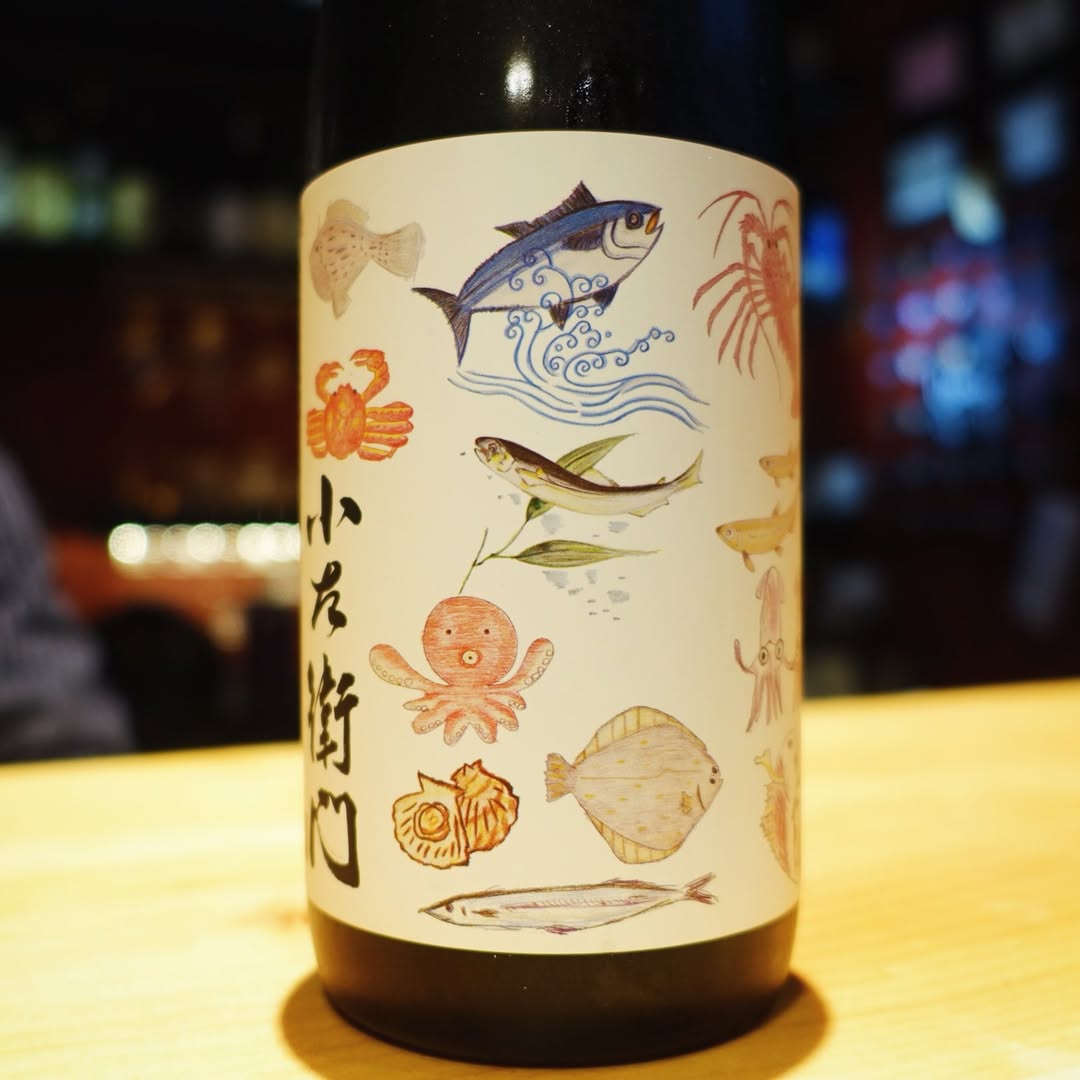
The bottle itself does the explaining before we ever say a word. Illustrated across the label is a small catalog of what belongs on the table alongside it: a tuna breaking through a wave, a crab, an octopus, a flatfish, a shrimp, a shellfish, a squid, a smaller silver fish near the base. It reads like a seafood counter rendered in watercolor, and it is genuinely charming to look at.
That illustration is not decoration for its own sake. Each creature on the label is a hint at the range this sake is built to work with, and it is a wider range than people usually assume for sake and seafood pairings.
The obvious pairing is sushi and sashimi, and yes, it works there. But Marine Mate was designed to go further than raw fish. Pan fried shrimp, stewed snapper, fried oysters, and ankimo, which is monkfish liver, all sit comfortably next to it too. That range is the actual sell here, not a marketing line but a built in flexibility across textures, cooking methods, and richness levels.
That range matters practically at the bar. Seafood on a menu is rarely just one texture or one preparation, and a sake that only flatters raw fish falls short the moment someone orders something fried or stewed. Marine Mate is meant to hold up across that whole stretch, which makes it a easier recommendation regardless of what someone actually orders.
If you are staring at our sake list and not sure where to start, this is the one we would point to. It removes the guesswork that usually comes with pairing sake and seafood, since the goal was baked into the bottle from the start rather than left for the drinker to figure out through trial and error at the table.
There is also a simpler reason to reach for it. The label is, plainly, cute. The mix of tuna, crab, octopus, and shellfish drawn across the glass makes it stand out next to a row of plainer bottles, and it gives the sake its own personality before anyone has tasted a drop of it.
So this weekend, if seafood is the plan, Marine Mate is a fair place to land. Order something from the sea, ask for this bottle, and let the pairing do what it was actually built to do. We will be here, glasses ready, whenever you want to try it for yourself.
Draft story for baruerukamu.com · On The Menu
The miso marinated black cod arrives glossy and lacquered, plated simply with carrot and greens, as part of a rotating tapas lineup.
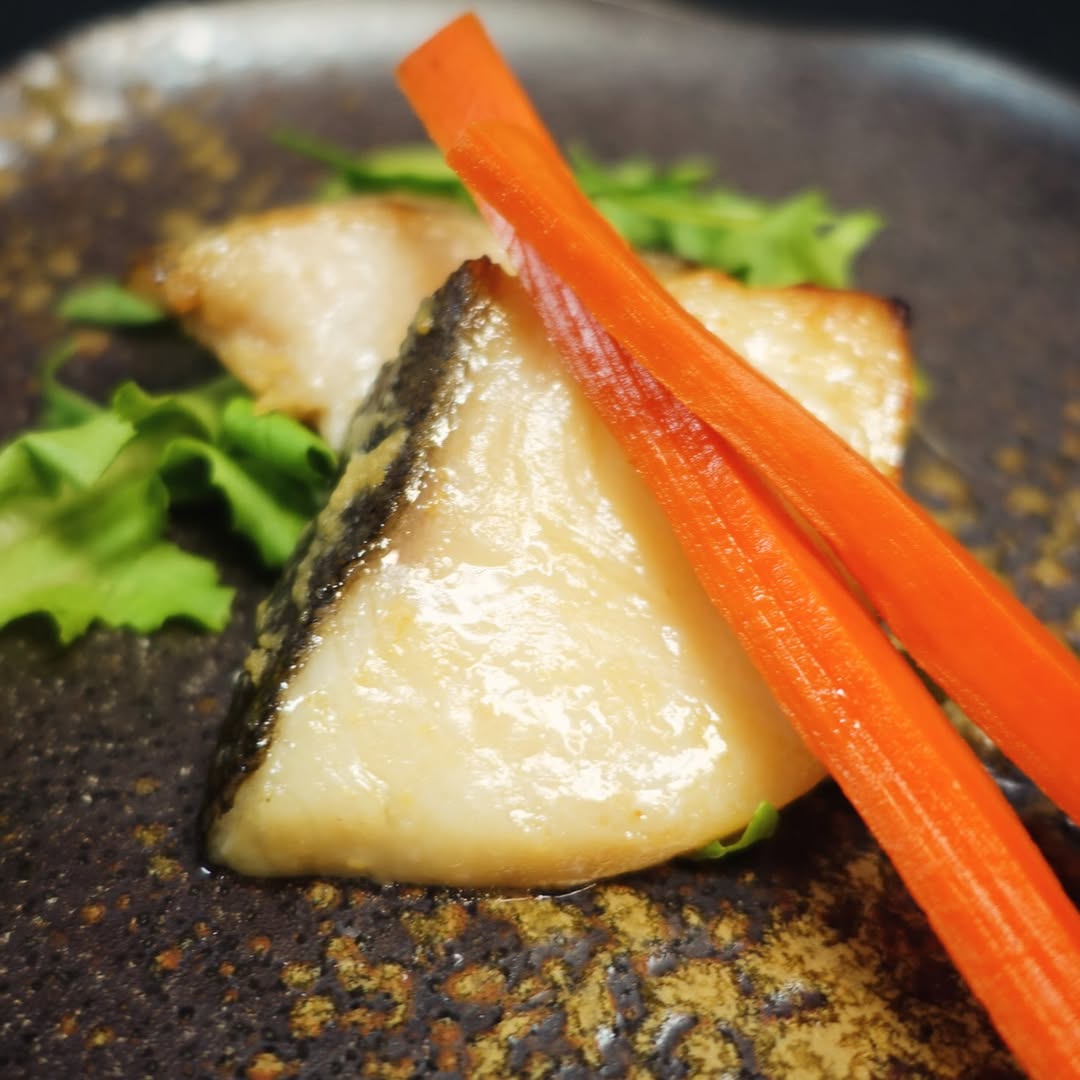
Black cod saikyo yaki is back on our seasonal tapas menu, and it looks the way it tastes: a triangle of black cod with the skin still dark at the edge, the flesh glossy and almost translucent under the light. It sits on a bed of greens with a couple of ribbons of carrot laid across the top, plated on one of our dark, speckled ceramic plates.
Saikyo yaki is a specific technique, not just a marinade you brush on and forget. The fish spends time cured in saikyo miso, a sweeter, lighter colored miso associated with Kyoto, before it gets grilled. That process is what gives the surface its lacquered sheen and turns the interior soft enough to fall apart with a fork, which is part of why we keep bringing it back onto the tapas rotation.
The result is not subtle, and it is not meant to be. We would describe it as an explosion of rich flavors, and that tracks with what saikyo miso does to black cod specifically: the natural fat in the fish plays against the sweetness of the miso, and the grill adds a layer of char that keeps the whole thing from tipping into one note. It is rich, but it is balanced rich.
We rotate our tapas menu seasonally, which means dishes like this one are not permanent fixtures. Saikyo yaki happens to be a classic pairing for cold weather in Japanese cooking, since the miso cure and the richness of the fish both feel suited to that time of year. Its return to the menu is worth flagging for anyone who has had it before and has been waiting for it to come back around.
Alongside the food, we are also working through part of our sake list. A few bottles are scheduled to leave us next week, which means the current selection is not going to last in its present form. If there is a sake you have been meaning to try, or one you already know and like, this is the window to come in and order it before it is gone from the list.
None of this requires much planning on the guest's side beyond timing. We are open Wednesday through Saturday, starting at 6pm, and the reservation link lives in our bio for anyone who wants a table locked in ahead of time. Walk ins are part of the rhythm here too, but reserving ahead is the more reliable way to make sure you get a seat on a night you actually want to come in.
The dish itself does not need much dressing up beyond what is already on the plate. A little greens, a couple of carrot ribbons, and the black cod doing the rest of the work. It is a small plate in the tapas format, built to be ordered alongside a few other things rather than as a standalone entree, which fits the way the whole menu is meant to be worked through over a few rounds.
If you have not had saikyo yaki before, this is a reasonable place to start, since the technique itself is what carries the dish rather than a long list of components. And if the sake situation is part of what draws you in this week, pairing a glass with the black cod is not a bad way to spend a Wednesday or Thursday night before the current bottles are gone for good.
Keep reading