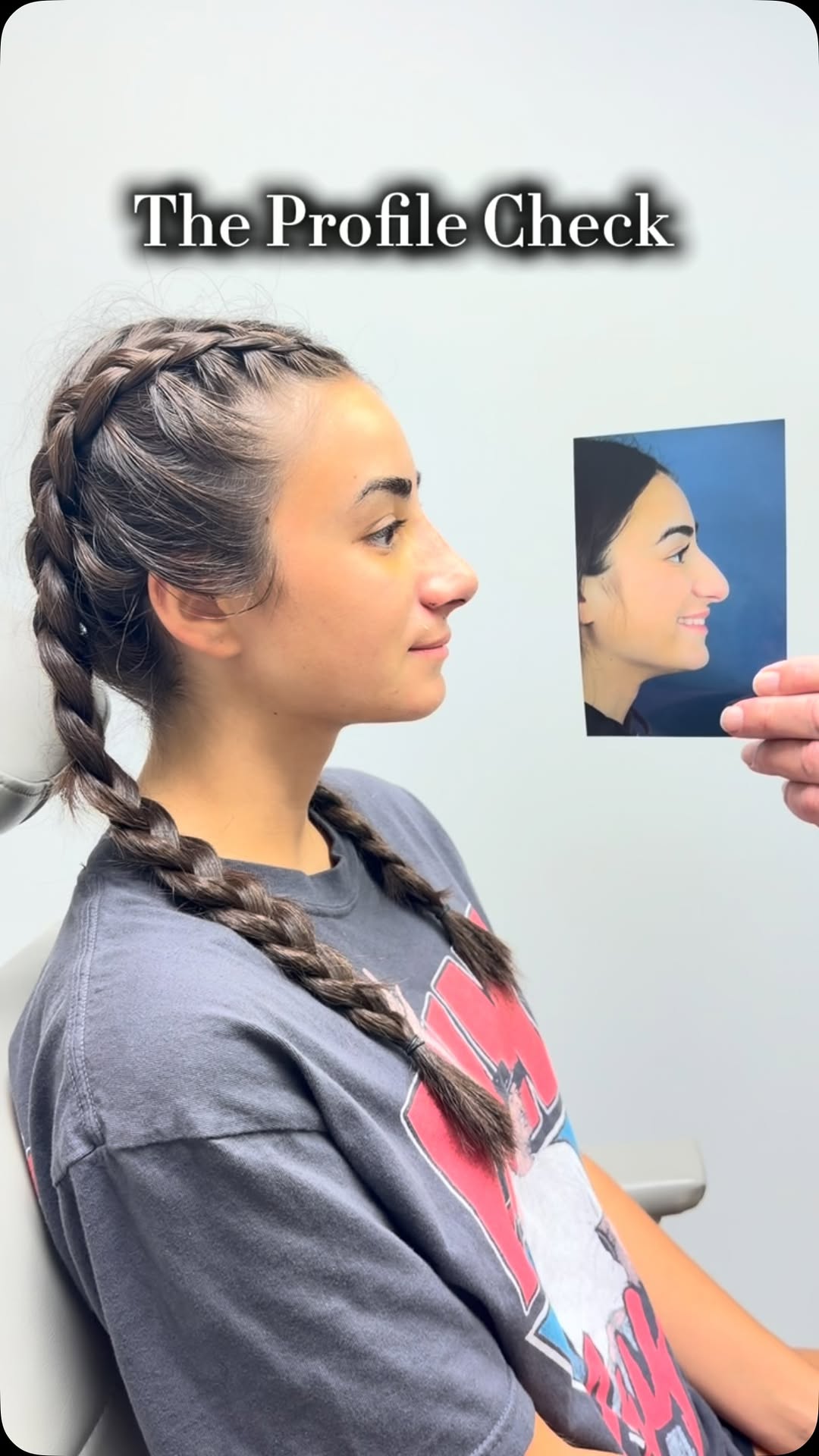
What cast removal day actually looks like after rhinoplasty
A first profile check reveals early swelling and the start of a long, gradual healing process.
ADVANCED RHINOPLASTY STAFFTurn your social into search
We turn your posts into editorial stories that bring new search traffic to rhinoplasty.com. Three of yours will be on this page.
Book a demo
drtobiasnyc Cast removal day 📆 The first look at her new profile. There’s still quite a bit of swelling at this early stage, and her nose will continue to refine as she heals. We can’t wait to watch her results evolve over the next few weeks.
A first profile check reveals early swelling and the start of a long, gradual healing process.
ADVANCED RHINOPLASTY STAFFHow it works
Same as today. Nothing changes on Instagram.
We turn your post into a full story in your voice within the hour.
One click publishes it to rhinoplasty.com. Nothing goes live without you.
Your stories
Nothing was published anywhere. You decide that. Every word will come from your own posts, your own photos and your own treatments.
Recovery Notes · From your post
A first profile check reveals early swelling and the start of a long, gradual healing process.
“Cast removal day 📆 The first look at her new profile. There’s still quite a bit of swelling at this early stage, and her nose will continue to refine as she heals. We can’t wait to watch her results evolve over the next few weeks.”
Rhinoplasty Notes · From your post
Four months after closed rhinoplasty, the goal was a softer bridge and a profile that reads as hers, not as surgery.
“A refined profile, a softer bridge, and a result that feels completely natural to her face, four months post op. Closed rhinoplasty by Dr. Geoffrey Tobias.”

Behind The Practice · From your post
Framed credentials and a quiet office hint at the deliberate process behind every consultation with Dr. Tobias.
“Choosing the right surgeon changes everything. ✨ Here are 5 reasons patients trust Dr. Tobias with their rhinoplasty journey. Swipe through to see why. 👉”
One social post becomes another searchable entry point to Advanced Rhinoplasty.
Our own magazine. Clicks and citations from Google Search Console, as of September 15, 2026.
Draft story for rhinoplasty.com · Recovery Notes
A first profile check reveals early swelling and the start of a long, gradual healing process.
Cast removal day carries a specific kind of anticipation. The splint comes off, and for the first time since surgery, a patient sees her own profile again. It is not the final result. It is the first honest look at a nose that is still deep in the process of healing, and that distinction matters more than most people expect going in.
That day, she sits braided and calm, comparing her new profile to a printed reference held beside her face. It is a quiet moment, more diagnostic than dramatic. The comparison is not about judging the outcome yet. It is about tracking the starting point, the shape the nose is settling into before the slower work of healing truly begins.
Swelling at this stage is expected, and it is significant. The tip especially holds onto fluid longer than the bridge, which is why noses often look slightly fuller or rounder right after the cast comes off than they will months later. We tell patients this repeatedly beforehand, because the early mirror check can otherwise feel discouraging without that context.
What we are actually looking for on removal day is structure, not polish. Is the bridge straight. Does the profile line read the way it was planned. Those answers are visible even under swelling, because bone and cartilage hold their position while soft tissue continues to shift and settle for weeks and months afterward in a much less visible way.
The side profile tells you more than the front view this early on. It shows the bridge line, the tip projection, and the angle between the nose and the upper lip all at once. That is why we hold a reference photo up beside the patient rather than just relying on a mirror. It gives a fixed point of comparison instead of a memory.
This particular case is early. The swelling is visible along the bridge and tip, and the final shape has not fully revealed itself yet. That is normal, and it is the reason we frame cast removal as a checkpoint rather than a reveal. The nose she has today is not the nose she will have in a few months.
Refinement from here happens slowly and mostly on its own. Fluid resolves, tissue tightens, and the tip in particular continues to define itself as the weeks pass. There is no single day when it suddenly looks finished. It is a gradual narrowing and settling, which is part of why patience matters as much as the surgery itself in the outcome.
We will keep tracking her progress the way we did on cast removal day, checking the profile against where it started and where it is heading. Early results like this one are a starting reference point, not a verdict. The more interesting comparison is still ahead, once the swelling has fully resolved and the true shape has had time to show itself.
Draft story for rhinoplasty.com · Rhinoplasty Notes
Four months after closed rhinoplasty, the goal was a softer bridge and a profile that reads as hers, not as surgery.
There is a line we come back to often in consultations, that if you can tell it was done, it was done badly. It sounds simple, almost blunt, but it is the standard we hold every closed rhinoplasty to. The work is supposed to disappear into the face it belongs to, not sit on top of it as a new feature announcing itself.
The case behind that idea is a patient four months out from surgery with Dr. Geoffrey Tobias, now showing a refined profile and a softer bridge. Four months is early enough that swelling has not fully settled, yet late enough that the shape of the outcome is already honest. What you see now is close to what will remain.
Closed rhinoplasty means every incision stays inside the nostrils, with no external scar across the columella. There is less to see from the outside during healing and less visible evidence afterward. The approach demands more precision from the surgeon working with a narrower view, but for the right nose, it rewards that precision with a cleaner, quieter recovery.
A softer bridge does not mean a smaller nose in every dimension. It means reducing a dorsal hump or bump so the profile forms a straighter, more continuous line from forehead to tip. The change is often only a few millimeters, but a few millimeters along the bridge is enough to shift how the entire profile is read at a glance.
Natural is the word we use most and mean most literally. It is not a marketing softener here, it is the actual goal written into the surgical plan. A result should look like it belongs to the patient's bone structure and skin thickness, not like a shape borrowed from someone else's face and layered over hers.
By four months, most of the early tip swelling has resolved and the skin has started to redrape closely over the new framework underneath. The nose still has some settling ahead of it, particularly at the tip, but the bridge line and the profile balance are largely locked in by this point in healing. This is a genuinely representative stage to evaluate the outcome.
The measure of success in a case like this is not a comment from a stranger noticing the nose. It is the absence of that comment entirely, paired with a profile that finally sits at ease with the rest of the face. That quiet is the actual craft, built through incisions no one sees and adjustments measured in millimeters rather than statements.
We think about closed rhinoplasty in terms of restraint as much as change. The instinct is not to do as much as possible, but to do exactly enough that the bridge, tip, and profile settle into proportion with everything around them. Four months in, that restraint is what reads on her face: less like an alteration, more like where she started.
Draft story for rhinoplasty.com · Behind The Practice
Framed credentials and a quiet office hint at the deliberate process behind every consultation with Dr. Tobias.
Choosing a surgeon for rhinoplasty is not a decision people make quickly, and it should not be. It is a procedure tied to the face, to breathing, and to how someone sees themselves every time they look in a mirror. That weight is exactly why the conversation before surgery matters as much as the surgery itself, and why we build our process around that first meeting.
In our office, the walls tell part of the story before a single word is spoken. Framed certifications line the space behind the desk, a visual record of training that patients are welcome to ask about directly. We think transparency starts with the basics: who is doing the procedure, where they trained, and what that training actually covers.
A desk with a laptop and a phone within reach is not just office furniture. It reflects how consultations actually run here, with time set aside to pull up images, review details, and answer questions without rushing toward a scheduling decision. Patients tend to arrive with research already done, and our job is to meet that research with specifics rather than reassurance alone.
Dr. Tobias sits across from patients, not behind a barrier of formality. The setting is deliberately plain: a chair, a desk, good light. Nothing about the room is designed to impress. It is designed to make an honest conversation easier, because rhinoplasty decisions get made in the details, not in the ambiance of the space where they are discussed.
Trust in a surgical relationship is built before any procedure is scheduled. It comes from clear answers about technique, honest expectations about recovery, and a willingness to say when a particular result may not be realistic. We would rather a patient leave a consultation with accurate information than leave feeling flattered but unsure of what to actually expect.
Every rhinoplasty patient brings a different nose, a different face, and a different reason for being in the chair. Some are addressing breathing concerns. Others are refining a feature they have thought about for years. The consultation exists to sort through that specificity, because a good outcome depends on understanding what each individual patient is actually asking for.
Those framed documents behind the desk are not decoration. They represent years of formal training that patients are entitled to see and ask about before committing to a procedure this personal. We keep them visible on purpose, as a reminder that the decision in front of a patient deserves the same scrutiny as the credentials themselves.
In the end, the choice comes down to comfort with the person across the desk, not just the results in a photograph. A tie straightened before a meeting, a pocket square in place, a room kept simple and unhurried: small details, but they add up to a consultation where the only thing meant to stand out is the conversation itself.
Keep reading