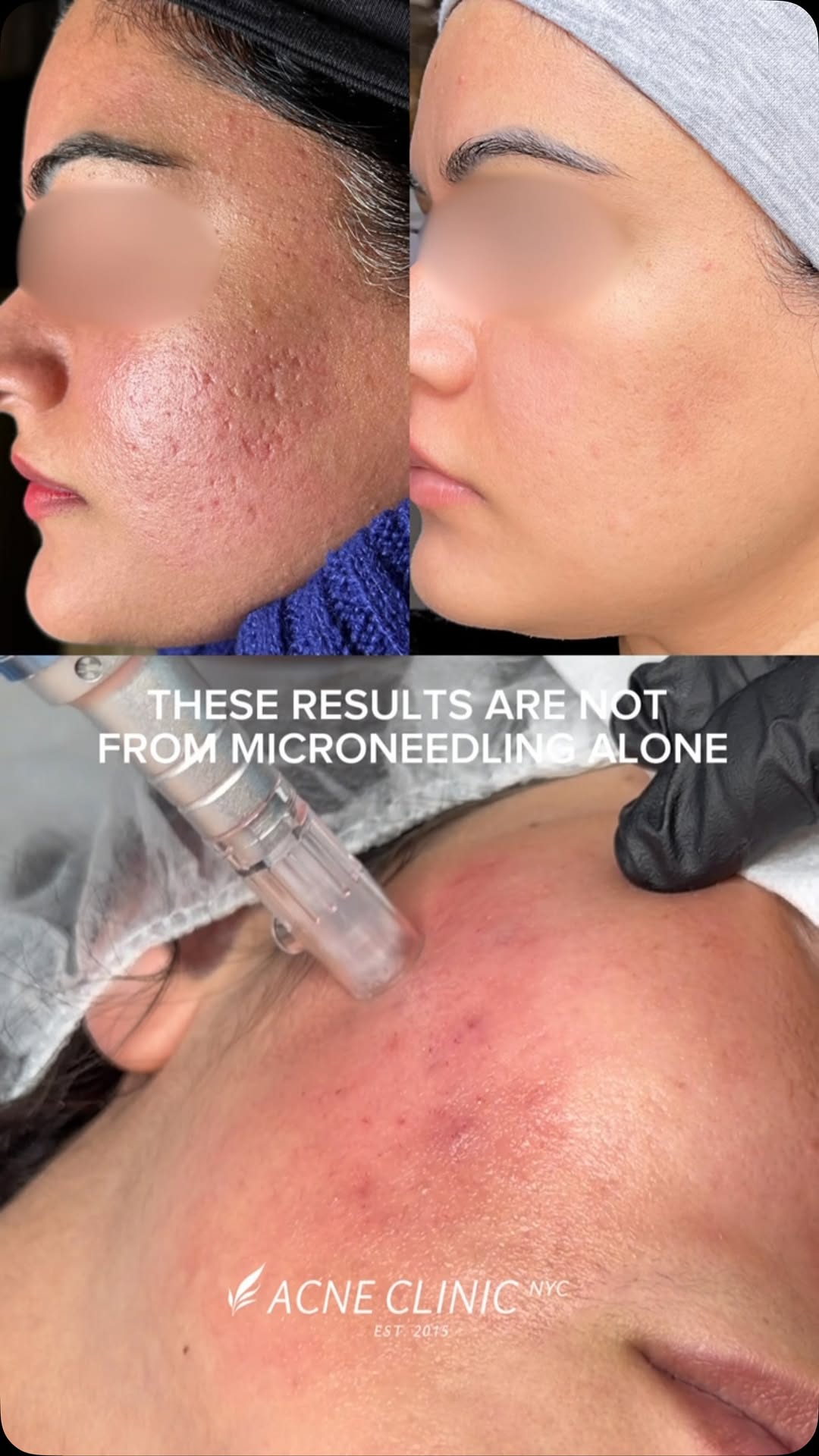
Why microneedling alone rarely fixes acne scars
Microneedling has a real role in scar treatment, but only for certain scar types and almost never by itself.
ACNE CLINIC NYC. ACNE & SCARS TREATMENT STAFFTurn your social into search
We turn your posts into editorial stories that bring new search traffic to acneclinicnyc.com:443. Three of yours will be on this page.
Book a demo
acneclinic.nyc We sometimes include microneedling in the treatment plan for certain types of acne scars but. not for every scar and. not as a stand alone treatment. When can microneedling be useful? 1. When we need to soften and remodel fibrotic tissue beneath and around certain scars. 2. When we want to stimulate tissue remodeling and angiogenesis within scarred tissue. 3. Boosters can also play an important role in supporting the formation of new, high quality collagen. Depending on the case, we may use PDRN, PRF, PRP, exosomes, or poly L lactic acid. Depth matters. For acne scars, we typically work at approximately 0.2. 1.2 mm, depending scar depth. Going deeper does not mean better results. There is nothing to do in the subcutaneous fat. For more precise treatment planning, ultrasound can be very helpful. Where is microneedling usually NOT our treatment of choice? Ice pick scars. Another limitation of microneedling is that it does not provide the precise, targeted remodeling of the scar shoulders that some scars require. That targeted work may need to be completed with other modalities. lasers,. injections. dermal fillers, depending on the scar type. So yes. microneedling can be an excellent step in acne scar treatment for selected cases. But not for everyone. Not for every scar. And usually not as monotherapy. Book an in clinic or virtual Scar Assessment, and we’ll explain which treatments make sense for your specific scar types and how we would combine them to achieve the best possible improvement.
Microneedling has a real role in scar treatment, but only for certain scar types and almost never by itself.
ACNE CLINIC NYC. ACNE & SCARS TREATMENT STAFFHow it works
Same as today. Nothing changes on Instagram.
We turn your post into a full story in your voice within the hour.
One click publishes it to acneclinicnyc.com:443. Nothing goes live without you.
Your stories
Nothing was published anywhere. You decide that. Every word will come from your own posts, your own photos and your own treatments.
Scar Treatment · From your post
Microneedling has a real role in scar treatment, but only for certain scar types and almost never by itself.
“We sometimes include microneedling in the treatment plan for certain types of acne scars but. not for every scar and. not as a stand alone treatment. When can microneedling be useful? 1. When we need to soften and remodel fibrotic tissue beneath and around certain scars. 2. When we want to stimulate tissue remodeling and angiogenesis within scarred tissue. 3. Boosters can also play an important role in supporting the formation of new, high quality collagen. Depending on the case, we may use PDRN, PRF, PRP, exosomes, or poly L lactic acid. Depth matters. For acne scars, we typically work at approximately 0.2. 1.2 mm, depending scar depth. Going deeper does not mean better results. There is nothing to do in the subcutaneous fat. For more precise treatment planning, ultrasound can be very helpful. Where is microneedling usually NOT our treatment of choice? Ice pick scars. Another limitation of microneedling is that it does not provide the precise, targeted remodeling of the scar shoulders that some scars require. That targeted work may need to be completed with other modalities. lasers,. injections. dermal fillers, depending on the scar type. So yes. microneedling can be an excellent step in acne scar treatment for selected cases. But not for everyone. Not for every scar. And usually not as monotherapy. Book an in clinic or virtual Scar Assessment, and we’ll explain which treatments make sense for your specific scar types and how we would combine them to achieve the best possible improvement.”
Scar Treatment · From your post
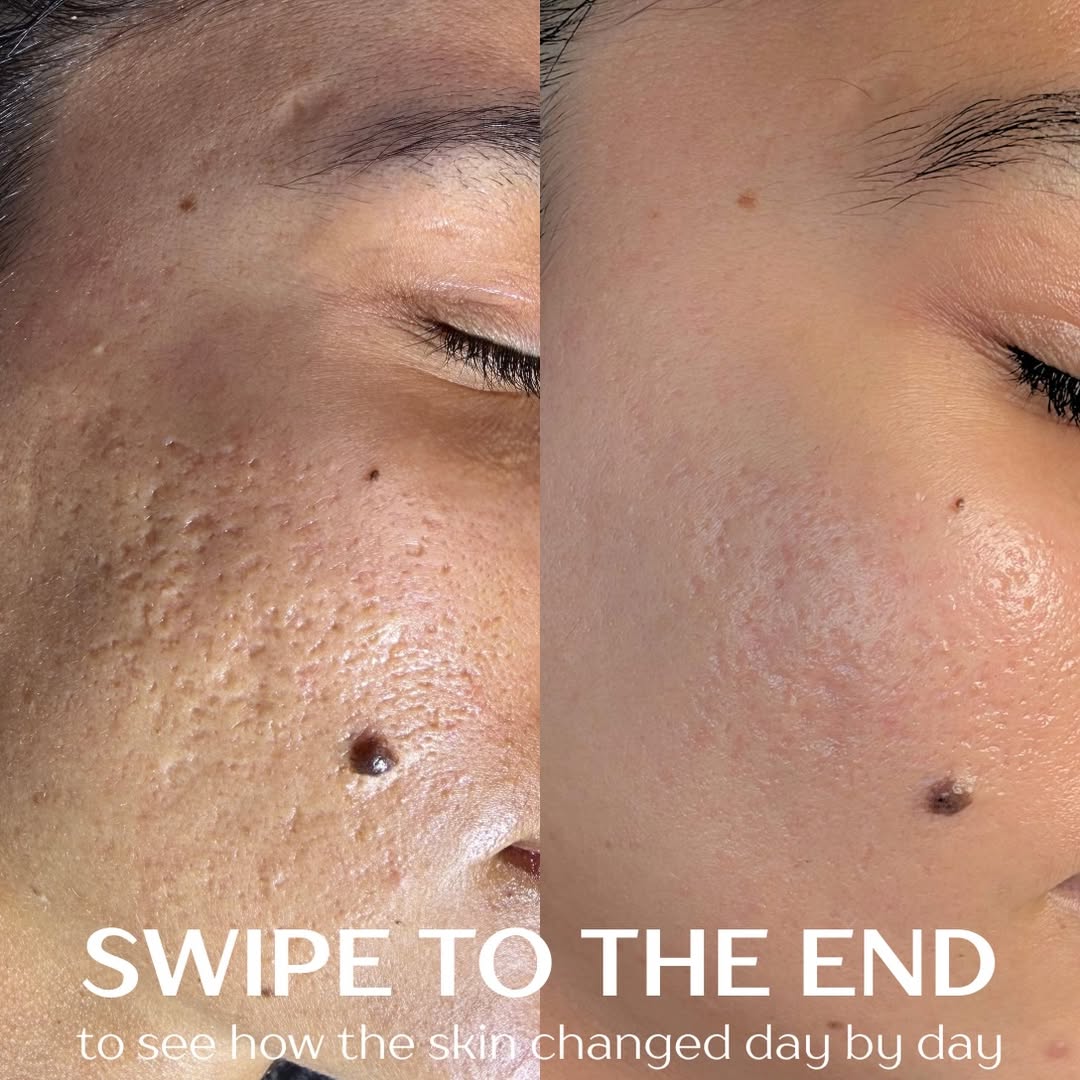
A close look at how textured acne scarring on one cheek changed over a documented treatment period.
“Day by day after our SCAR treatment ✨ At Acne Clinic NYC, we work with different types of acne scars and build a personalized protocol based on scar type, depth, skin condition, and individual goals. Scar correction is rarely about one procedure. The best results come from the right combination of techniques and a step by step treatment plan. Want smoother, more even skin and less visible acne scars? DM us “SCARS” and we’ll book you for a consultation with our specialist.”
Skincare · From your post
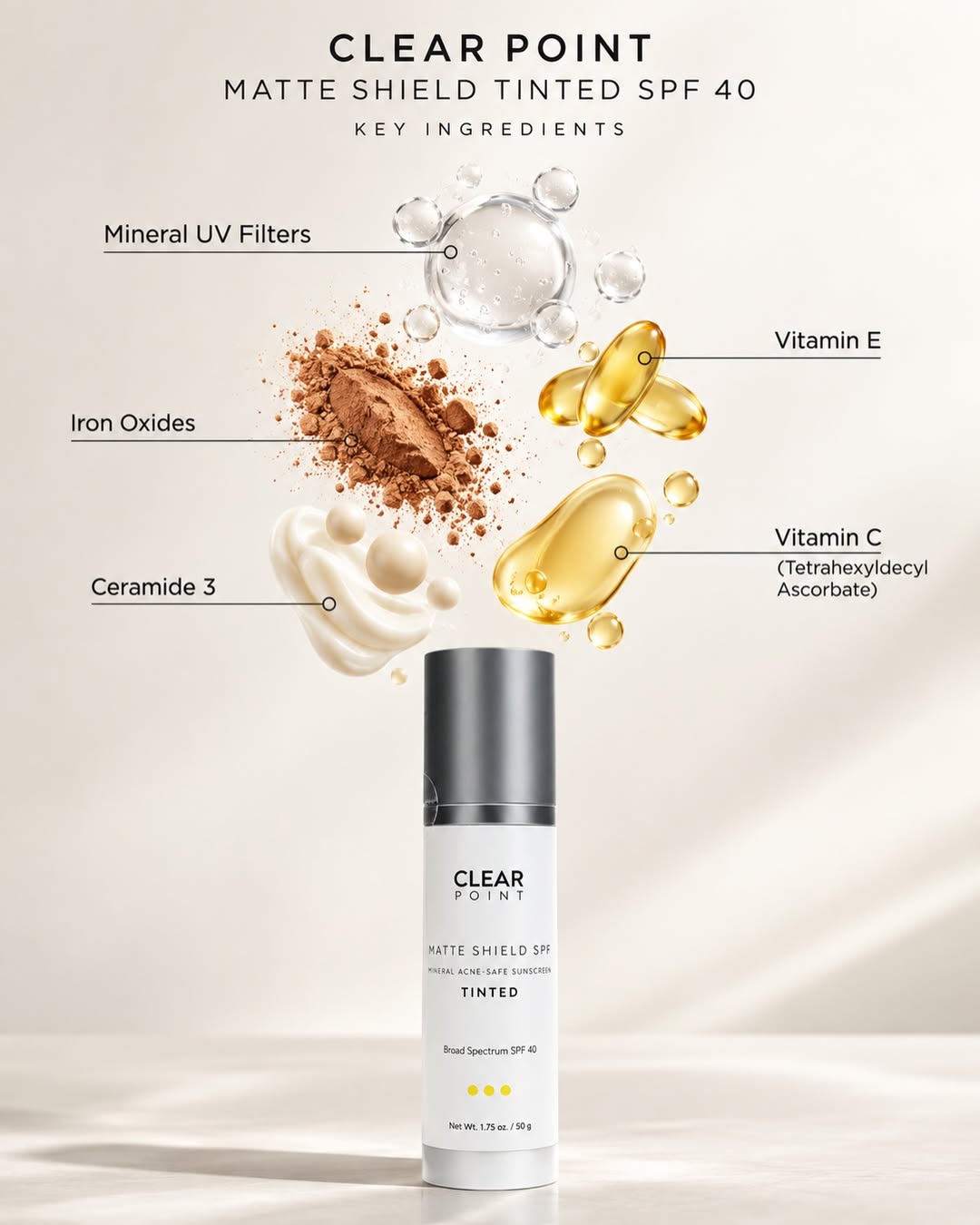
A closer look at the five ingredients behind Clear Point Matte Shield Tinted SPF 40 and why each one earns its place.
“Clear Point Matte Shield Tinted SPF 40 is more than sun protection. it’s thoughtful daily care for acne prone skin. Mineral UV filters, iron oxide, ceramide 3, vitamin C, and vitamin E help protect the skin, support the barrier, and even out skin tone. Lightweight texture, a matte finish, and everyday comfort. ✨ #ClearPoint #MatteShieldSPF40 #TintedSPF #AcneSafeSkincare #AcneProneSkin”
One social post becomes another searchable entry point to Acne Clinic NYC. Acne & Scars Treatment.
Our own magazine. Clicks and citations from Google Search Console, as of September 15, 2026.
Draft story for acneclinicnyc.com:443 · Scar Treatment
Microneedling has a real role in scar treatment, but only for certain scar types and almost never by itself.
Microneedling gets requested by name more than almost any other scar treatment, and we understand why. It is familiar, it sounds simple, and results like the ones we see in select cases make it look like a complete answer. But we do not treat it as a stand alone therapy, and we do not include it in every treatment plan. It has a specific job, and that job only applies to certain scars.
The cases where microneedling helps most involve fibrotic tissue sitting beneath and around a scar. The needling process softens and remodels that tissue while stimulating angiogenesis within the scarred area itself. That mechanical response is genuinely useful, but it is a starting point rather than a finish line. Getting from that stimulated tissue to visibly smoother skin usually depends on what we pair with it.
That is where boosters come in. Depending on the case, we may layer in PDRN, PRF, PRP, exosomes, or poly L lactic acid to support the formation of new, higher quality collagen after the needling has done its part. None of these are automatic additions. Each one gets chosen based on the scar type and how the tissue is responding, not applied as a routine add on across every session.
Depth is another variable people underestimate. For acne scars we typically work in a range of approximately 0.2 to 1.2 millimeters, adjusted to the depth of the specific scar in front of us. Going deeper is not a shortcut to a better outcome. Beneath a certain point you are simply in subcutaneous fat, where there is nothing left to remodel and nothing gained by pushing further.
Because that margin matters, ultrasound can be a valuable planning tool before we ever pick up a device. Seeing the tissue structure beneath the surface helps us judge depth and fibrosis more precisely than assessment by eye alone. It is not necessary for every patient, but for more complex or long standing scarring it gives us a clearer basis for the specific approach we recommend.
Ice pick scars are the clearest example of where microneedling is usually not our first choice. Their narrow, deep architecture does not respond the same way fibrotic or broader scarring does, and needling alone tends to underperform here. Microneedling also cannot deliver the precise, targeted remodeling that scar shoulders sometimes require, since it works across a treated area rather than shaping one defined edge.
That shoulder specific work often falls to other modalities instead, chosen based on what the scar actually needs. Lasers, injections, and dermal fillers each address a different structural problem, and in many treatment plans they get combined with microneedling rather than replaced by it. The scar type determines the combination, not a preference for one technique over another.
Microneedling can be an excellent step in acne scar treatment, but only for selected cases, only for certain scars, and rarely as the entire plan. If you are trying to figure out where your own scarring fits into that picture, a Scar Assessment, in clinic or virtual, is where we sort through scar type, depth, and which combination of treatments actually makes sense for you.
Draft story for acneclinicnyc.com:443 · Scar Treatment
A close look at how textured acne scarring on one cheek changed over a documented treatment period.
The two close up shots of the same cheek, taken at different points in a treatment timeline, are useful because they are not styled for effect. Same angle, same lighting logic, same mole as a fixed reference point. What changes between them is the terrain of the skin itself: the depth of the pitting, the way light catches the surface, and how much texture remains visible under it.
In the first frame, the cheek shows a dense pattern of atrophic scarring, the kind that sits below the surface rather than on top of it. Light collects in the small depressions, which is what makes textured scarring look more pronounced in certain lighting. That same unevenness is why so many people describe this type of scarring as harder to conceal than discoloration alone.
At Acne Clinic NYC, we do not start a scar case by picking a single tool and hoping it works broadly. We start by identifying scar type, depth, and how the surrounding skin behaves, because those factors determine which combination of techniques will actually reach the damage. A rolling scar and a deep, narrow scar do not respond to the same approach, even on the same face.
That is the reasoning behind building a protocol instead of booking a one time treatment. Scar correction tends to move in layers: one technique may address depth, another may focus on resurfacing the top layer, and the sequencing between sessions matters as much as the sessions themselves. It is a plan built around the scar, not a product applied to the skin.
By the later frame, the same cheek shows a visibly smoother surface. The pitting has softened, the skin reflects light more evenly, and the overall texture reads as calmer rather than dramatically altered. It is not a different face. It is the same skin, further along in a process that was tracked deliberately, day by day, rather than judged from a single before and after.
That day by day documentation is part of the point. Scar treatment does not resolve in a single dramatic jump, and showing the incremental stages is more honest than compressing the whole process into two images. It reflects how the skin actually responds over time, in small, cumulative shifts rather than one visible turning point.
Every case we take on starts with an evaluation of scar type, depth, and current skin condition before any technique is chosen. That assessment is what allows the plan to be personalized rather than standardized, since two people with visually similar scarring can still need different sequencing based on how their skin heals and responds.
If smoother, more even texture is the goal, the process begins with a consultation with our specialist, where scar type and depth get assessed directly. DM us the word SCARS and we will get that scheduled, so the plan can be built around the skin in front of us rather than a generic starting point.
Draft story for acneclinicnyc.com:443 · Skincare
A closer look at the five ingredients behind Clear Point Matte Shield Tinted SPF 40 and why each one earns its place.
Sunscreen is one of the most skipped steps for people dealing with acne, and we understand why. Many formulas feel heavy, sit on top of breakouts, or leave a cast that draws more attention rather than less. Clear Point Matte Shield Tinted SPF 40 was built to remove those excuses, combining broad spectrum protection with a texture that behaves more like a skincare step than a chore layered on at the end.
The base of the formula is mineral, using UV filters rather than chemical absorbers. For acne prone skin, that distinction matters. Mineral filters sit on the surface and reflect light instead of converting it, which tends to be gentler on skin that is already dealing with inflammation, active breakouts, or the sensitivity that comes with treatment. It is protection that works with the skin instead of against it.
Iron oxides give the formula its tint, and their job goes beyond color matching. Iron oxides help filter visible light, the kind that contributes to lingering discoloration and post acne marks, in addition to the UV spectrum mineral filters already cover. For anyone managing dark spots left behind by past breakouts, that added layer of coverage is part of the treatment, not just the finish.
Ceramide 3 is the ingredient doing quiet, essential work underneath. Acne prone skin is often treated with actives that are effective but drying, and a compromised barrier makes everything else harder, from irritation to breakouts themselves. Ceramide 3 helps reinforce that barrier so the skin holds moisture and stays resilient, even on days when retinoids, acids, or other treatments are already part of the routine.
Vitamin C, specifically tetrahexyldecyl ascorbate, and vitamin E appear together at the top of the formula for a reason. This form of vitamin C is more stable and better tolerated than more common versions, making it suitable for daily use on reactive skin. Alongside vitamin E, the two work as antioxidants, helping defend skin against the environmental stress that builds on top of existing acne and sensitivity.
None of this would matter if the sunscreen felt unpleasant to wear. Lightweight texture and a matte finish were priorities from the start, because a sunscreen only works if someone actually reaches for it each morning. Comfort is not a bonus feature here. It is part of why the formula includes what it includes and leaves out what it leaves out.
Broad spectrum SPF 40 sits at the center of the formula, doing the fundamental job sunscreen is meant to do while everything else works around it. The tint, the barrier support, and the antioxidants exist to make that daily habit easier to keep, not to distract from it. Protection is the baseline. Everything else is what makes staying consistent with it realistic.
We see this as a single step doing several jobs at once: protecting, calming, evening tone, and holding the skin barrier steady, all without asking acne prone skin to compromise on comfort. That is the standard we hold daily sunscreen to, especially for skin that is already working hard against breakouts, and it is the reason Matte Shield Tinted SPF 40 looks the way it does, ingredient by ingredient.
Keep reading